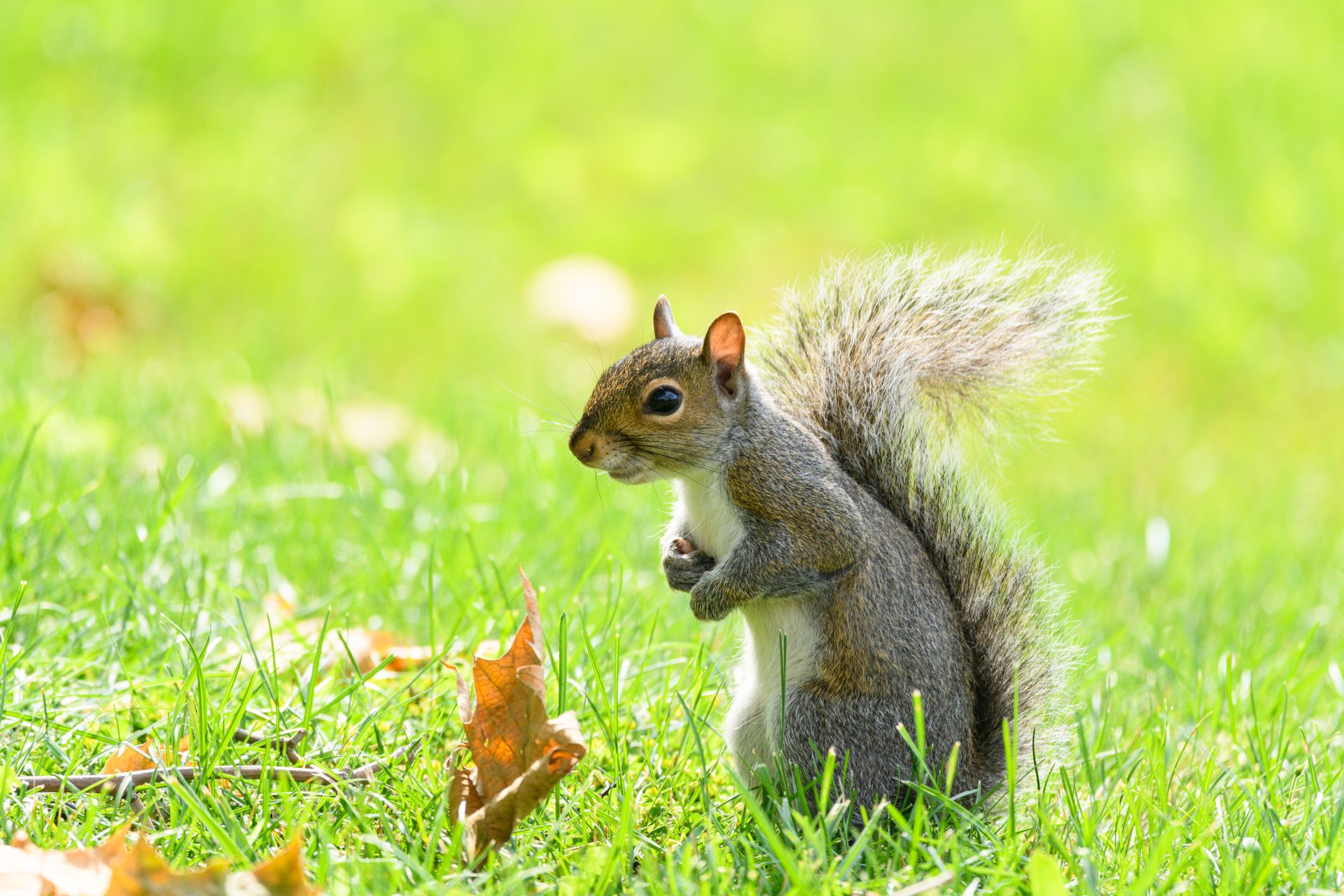
The eastern gray squirrel is a common sight in many North American neighborhoods, and understanding their behavior and diet can be fascinating. They are highly adaptable and can thrive in a variety of environments.
Eastern gray squirrels are primarily herbivores, which means they mainly eat plants and plant-based foods. They have been known to eat a wide variety of foods, including nuts, seeds, fruits, and vegetation.
One of the most interesting things about eastern gray squirrels is their ability to cache, or store, food for later use. They bury their food in various spots around their territory, often using their keen sense of smell to remember where they've hidden it.
Eastern gray squirrels are also known for their intelligence and agility, often climbing trees and navigating complex routes with ease. They are highly social animals and can be seen interacting with each other in their natural habitats.
Curious to learn more? Check out: What Does the Ruby Throated Hummingbird Eat
What Do Eastern Gray Squirrels Eat?
Eastern gray squirrels have a varied diet that changes with the seasons. In the late winter months, they spend more time feeding on the ground than red squirrels do.
Their diet consists of seeds and fruit of deciduous trees, which they store in food caches that they remember by scent. They also strip bark from beech and sycamore trees in the spring.
In the summer, flowers and buds make up about 60% of their diet. They forage for nuts, seeds, buds, and flowers of trees, with nuts being the main component of their diet.
Eastern gray squirrels recover about 85% of the nuts they store, which they bury in various locations. They also eat insects, young birds, and fungi, but these make up a smaller part of their diet.
They have an excellent sense of smell, which they use to locate food they've hidden away. This helps them recover their stored nuts and seeds, even if they forget exactly where they buried them.
Recommended read: Do Squirrels Attack Dogs
Behavior and Interactions
Eastern Gray Squirrels are incredibly agile and use their tails for balance. They're also masters of communication, using flicking their tails, body posture, warning calls, and various vocalizations to convey messages.
They have a complex social hierarchy based on age and gender, which is pretty fascinating. Eastern Gray Squirrel populations have social hierarchies that are based on age and gender.
One interesting behavior is that they'll pretend to hide food if they're being watched, trying to trick other animals into thinking they've found a cache. They're also quite clever at hiding their food, making several thousand caches a year.
Recommended read: Food Diet for Dogs
Do Grey Squirrels Eat Birds?
Grey squirrels are often blamed for eating bird nestlings and eggs, but it turns out the impact is minimal.
Only 0.5% of nests are affected by grey squirrels eating eggs and chicks on occasion.
Grey squirrels are also accused of taking over valuable tree cavities that could be used by birds for nesting.
However, a study found that they take over only a small fraction of potential nest sites.
This means that neither effect is likely to have much impact on native bird populations overall.
Suggestion: Eastern Grey Squirrel Habitat
Predators and Prey
In the wild, predators and prey have a delicate dance. Predators like lions and tigers rely on stealth and speed to catch their prey.
A single gazelle can be chased by multiple predators at once, making it harder for them to escape.
Cheetahs, on the other hand, are known for their incredible speed, reaching up to 70 miles per hour.
Gazelles have a unique way of communicating with each other through a series of bleats and grunts to warn others of potential predators.
In the Serengeti, the Great Migration brings together millions of wildebeests, zebras, and antelopes, making them a prime target for predators like lions and leopards.
Some prey animals, like the impala, have a unique ability to jump high and long to escape predators.
However, even with their impressive jumping ability, impalas can still fall prey to predators like cheetahs and leopards.
Creature Feature
Grey squirrels are incredibly agile and use their tails for balance. They can also climb trees with ease, which is impressive given their size.
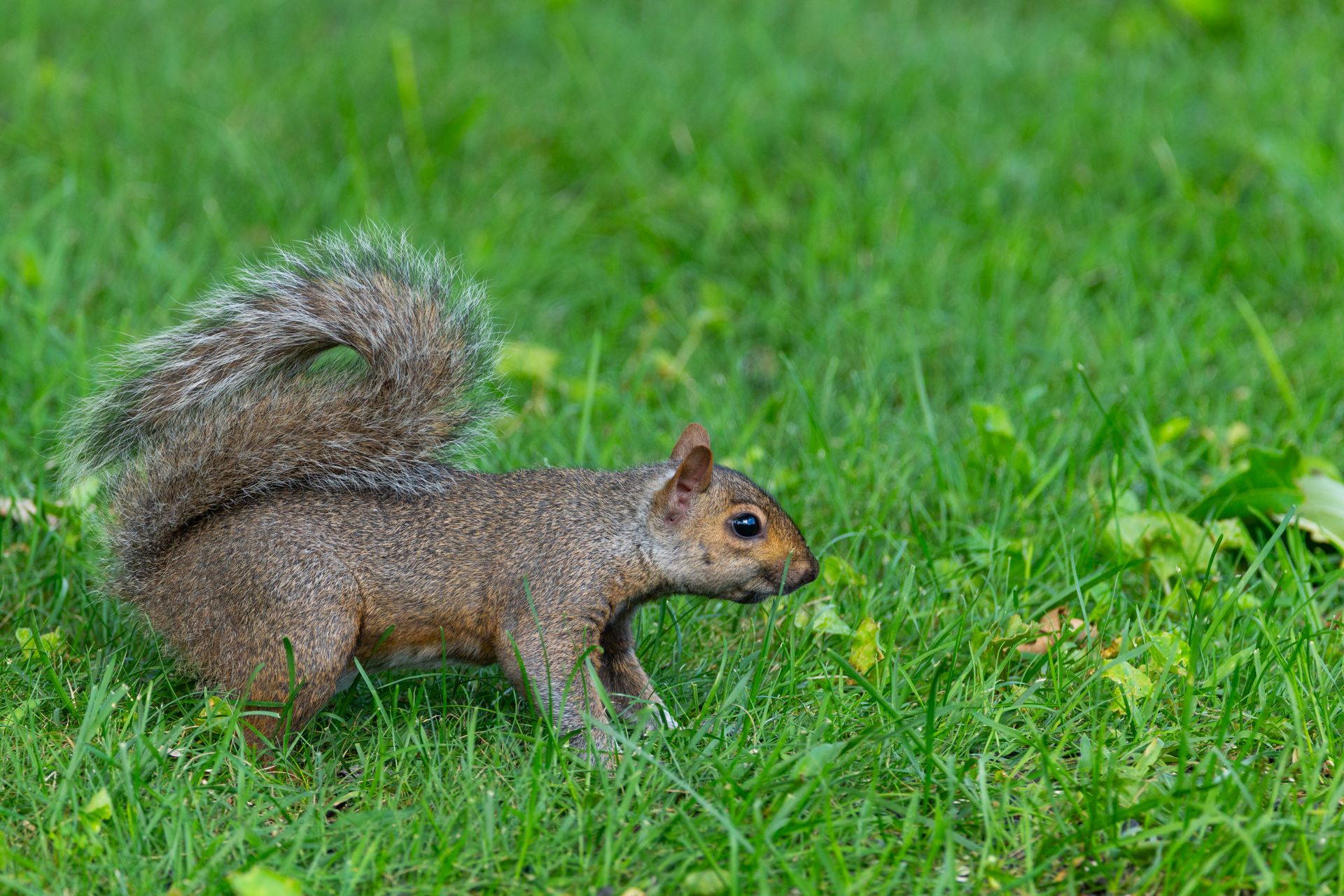
These bushy-tailed critters are known to play an important role in reforestation and seed dispersal. By burying their food in caches, they often forget where they've hidden it, which helps the environment by allowing new trees to grow.
Grey squirrels have a highly developed sense of smell, which they use to locate food they've hidden away. They can even pick up information about their fellow squirrels by smelling them.
As spring approaches, grey squirrels strip bark from beech and sycamore trees. In summer, flowers and buds form about 60 per cent of their diet.
Grey squirrels are most terrestrial in the late winter months, spending more time feeding on the ground than their red counterparts.
Here's a breakdown of the different components of a grey squirrel's diet:
- Nuts: by far the main component of their diet, especially during the colder part of the year.
- Fruits: including crabapples, berries, and other types of fruit.
- Seeds: such as maple and oak seeds.
- Buds: from trees like beech and sycamore.
- Flowers: including those from maple and oak trees.
- Young birds: on occasion, but it's worth noting that this has a negligible impact on native bird populations.
Featured Images: pexels.com