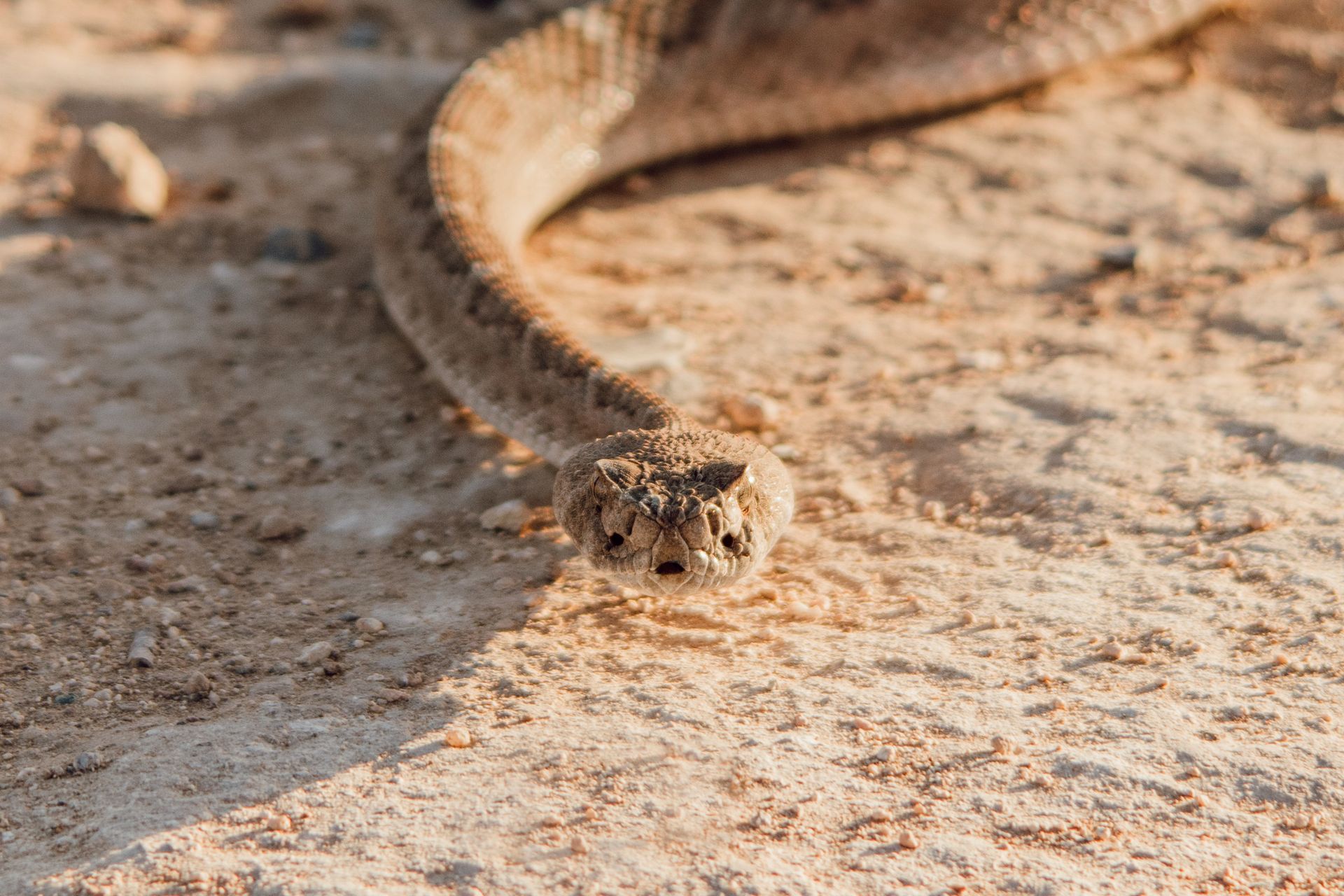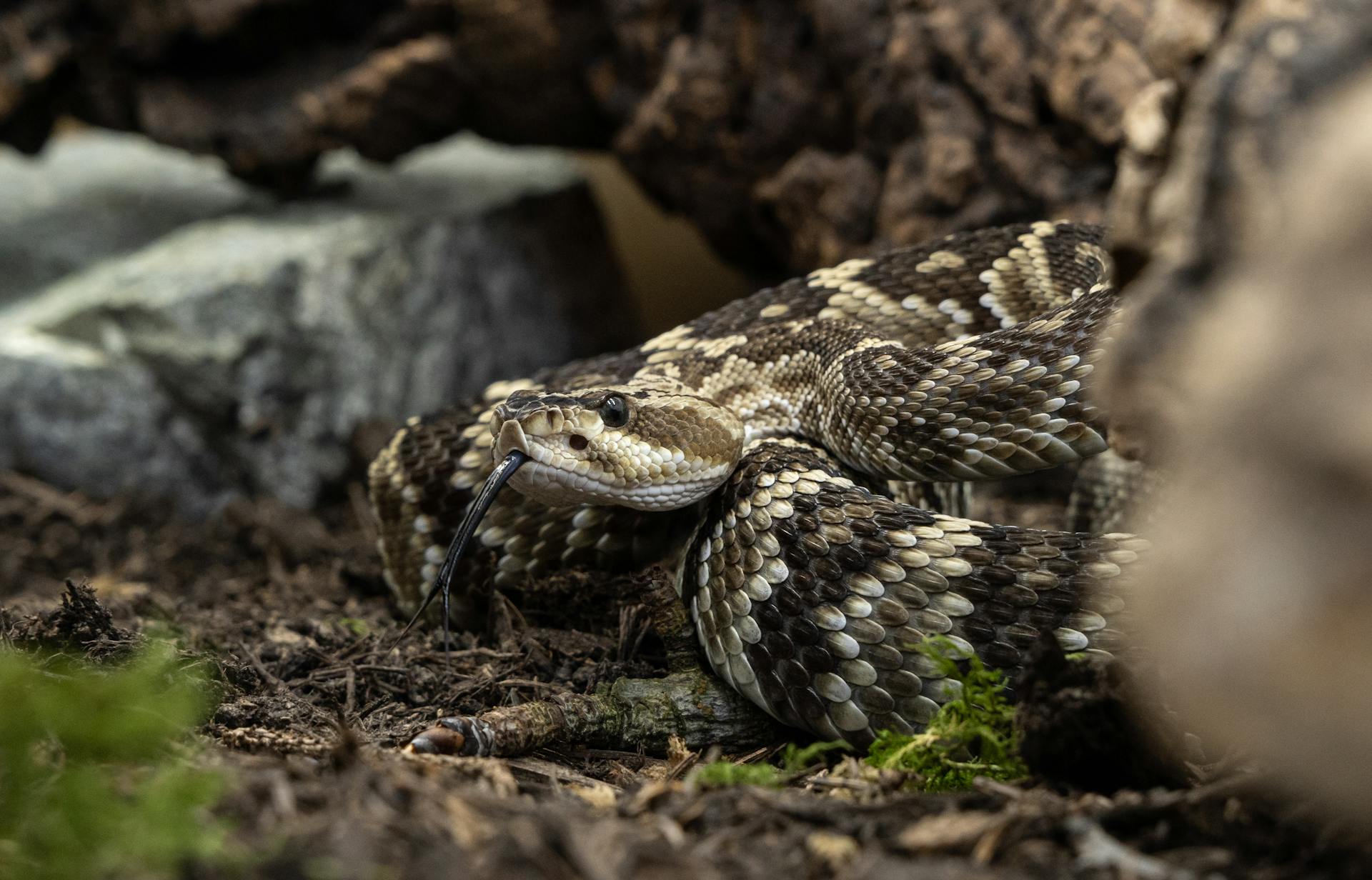
The eastern diamondback rattlesnake is a majestic creature that calls South Carolina home. This species is the largest venomous snake in North America, with some individuals reaching up to 8 feet in length.
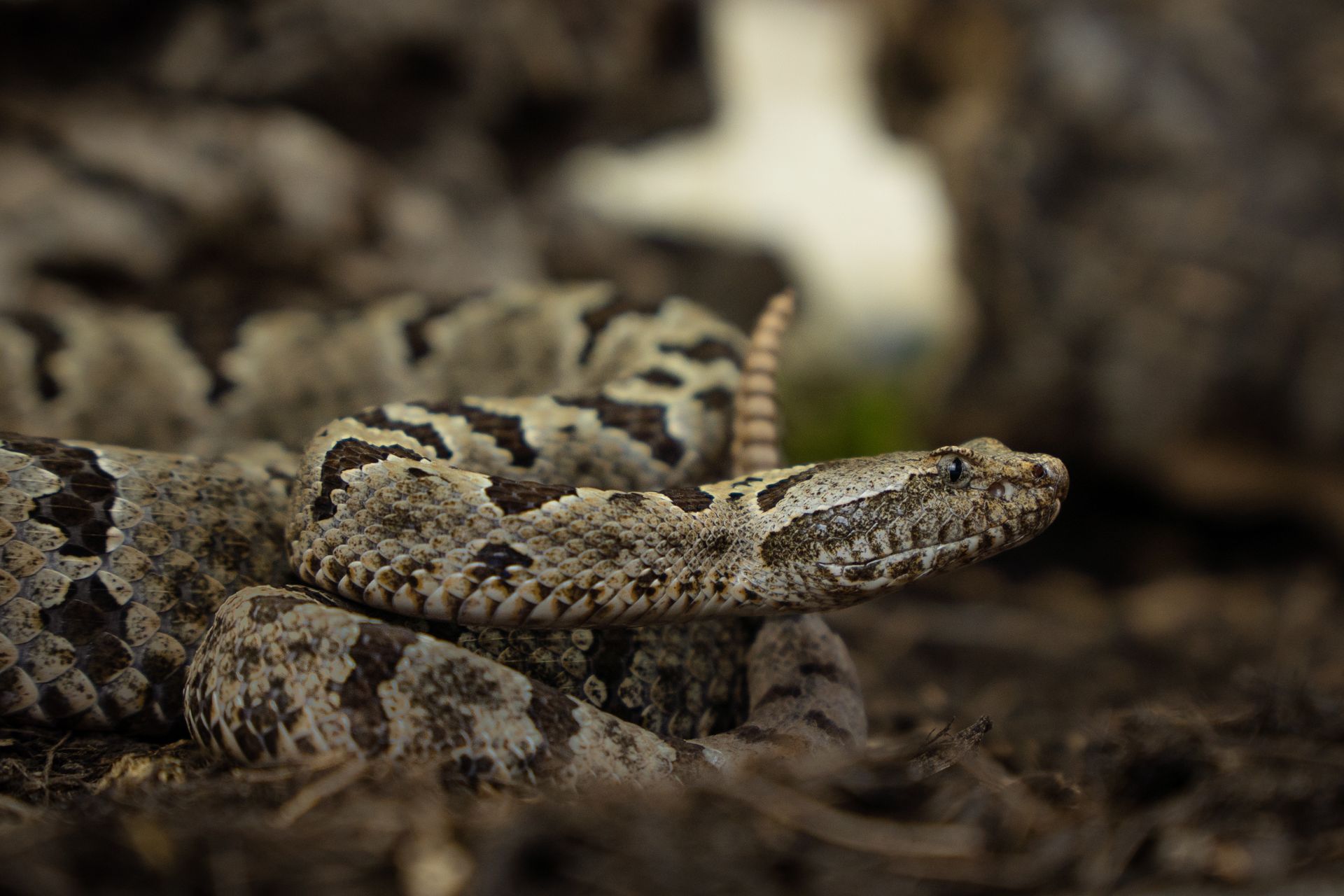
The eastern diamondback rattlesnake is a master of camouflage, often blending in seamlessly with its surroundings. Its diamond-shaped markings serve as a warning to potential predators.
In South Carolina, the eastern diamondback rattlesnake is a protected species, and harming or killing one is strictly prohibited. This is a testament to the state's commitment to conservation and wildlife preservation.
These incredible snakes are primarily found in the coastal regions of South Carolina, where the sandy dunes and scrubby vegetation provide the perfect habitat.
Eastern Rattlesnake
The Eastern Rattlesnake is a fascinating creature that can be found in the southeastern United States. It's the largest venomous snake in North America, with adults reaching lengths of over six feet.
These snakes have a distinctive diamond pattern on their back, which helps them blend in with their surroundings. They're tan to light brown in color, with dark diamonds outlined in lighter scales.
They're found in habitats with sandy, dry soils, such as coastal dunes, Sandhills, open pine forests, and hummock islands. They're experts at hiding in dense, grassy areas and can be found coiled at the base of vegetation waiting to ambush unsuspecting small mammals.
Eastern Diamond-backed Rattlesnakes have a strong preference for rabbits and rice rats, which they hunt using their heat-sensing pits and highly developed sense of smell.
In the winter months, these snakes will seek refuge in stump holes or burrows of other animals, often relying on Gopher Tortoise burrows for shelter.
Here are some key facts about the Eastern Diamond-backed Rattlesnake:
- Length: up to 6 feet (72in, 183cm)
- Color: tan to light brown with dark diamond pattern
- Habitat: sandy, dry soils in coastal dunes, Sandhills, open pine forests, and hummock islands
- Prey: rabbits, rice rats, and other small mammals
- Conservation Status: listed as least concern by the IUCN Red List, but declining across its range
Despite their fearsome reputation, Eastern Diamond-backed Rattlesnakes are actually beneficial to humans, controlling populations of crop-destroying pests like rats and mice. However, they're facing significant threats to their survival, including habitat destruction and fragmentation, as well as targeted human-caused mortalities.
Species Significance
The eastern diamondback rattlesnake has been overlooked in conservation efforts until recently, largely due to the sociological problems inherent in conserving a venomous species that threatens human life.
In South Carolina, the eastern diamondback rattlesnake is listed as a Species of Concern.
Collection, sale, and purchase of this species is allowed in South Carolina without restrictions.
Its status as a Species of Concern does not provide any legal protection.
Habitat and Biology
The eastern diamondback rattlesnake inhabits coastal lowlands from southeast North Carolina to the Florida Keys, with a western range as far as the eastern portion of Louisiana. Its preferred habitat is the longleaf pine ecosystem, which is currently endangered due to rapid conversion to loblolly pine plantations and urban areas.
This species of rattler is active during the day and at dusk, feeding primarily on rabbits and rats, and occasionally on mice, squirrels, and birds. Its dietary preference makes it important in controlling rodent populations, which can harm other species like ground nesting birds.
The eastern diamondback rattlesnake is a viviparous snake, meaning a female gives birth to live young, and this occurs in the fall, every two to three years, with average brood size ranging from 6 to 21.
For another approach, see: Dogs Eating Pine Cones
Physical Characteristics
The physical characteristics of the species are quite fascinating. They have a distinctive shell that can grow up to 5 centimeters in length.
Their shell is a crucial defense mechanism, providing protection from predators. It's made of a hard, calcareous material that's resistant to scratches and cracks.
The species' body is typically around 10-15 centimeters in length, with a flat, oval shape. This shape allows them to move easily through tight spaces.
Their legs are relatively short, but powerful, allowing them to dig into the soil and anchor themselves firmly.
Behavior and Habitat
The eastern diamondback rattlesnake is a creature of habit, and its habitat is crucial to its survival. It inhabits coastal lowlands from southeast North Carolina to the Florida Keys, and as far west as the eastern portion of Louisiana.
This snake's preferred habitat is the longleaf pine ecosystem, which is unfortunately endangered due to the rapid conversion of forests to loblolly pine plantations and urban areas. The removal of tree stumps is a major threat to the snakes, which use these stumps as refuge.
The eastern diamondback rattlesnake is active during the day and at dusk, making it a formidable hunter. It feeds primarily on rabbits and rats, and occasionally on mice, squirrels, and birds.
The breeding season for this species extends from August to September, and females give birth to live young in the fall, every two to three years. The average brood size ranges from 6 to 21 young.
During the coldest months of the year, rattlers spend their time in underground shelters, where they can stay safe and warm.
Life Cycle and Reproduction
The life cycle of this species is fascinating. They begin as eggs, which are typically laid in protected areas such as under rocks or in crevices.
As they develop, the eggs hatch into larvae, which are free-swimming and feed on small invertebrates.
The larvae go through a series of molts as they grow, eventually developing into juvenile stages that resemble the adults.
After several months, the juveniles reach maturity and begin to reproduce.
This species can reproduce year-round, with females able to store sperm from males for extended periods.
The females release eggs into the water column, which are then fertilized by the stored sperm.
The eggs are an important food source for many other species in the ecosystem.
The reproductive cycle of this species is closely tied to the availability of food and suitable habitats.
Curious to learn more? Check out: American Bald Eagle Food Chain
Featured Images: pexels.com