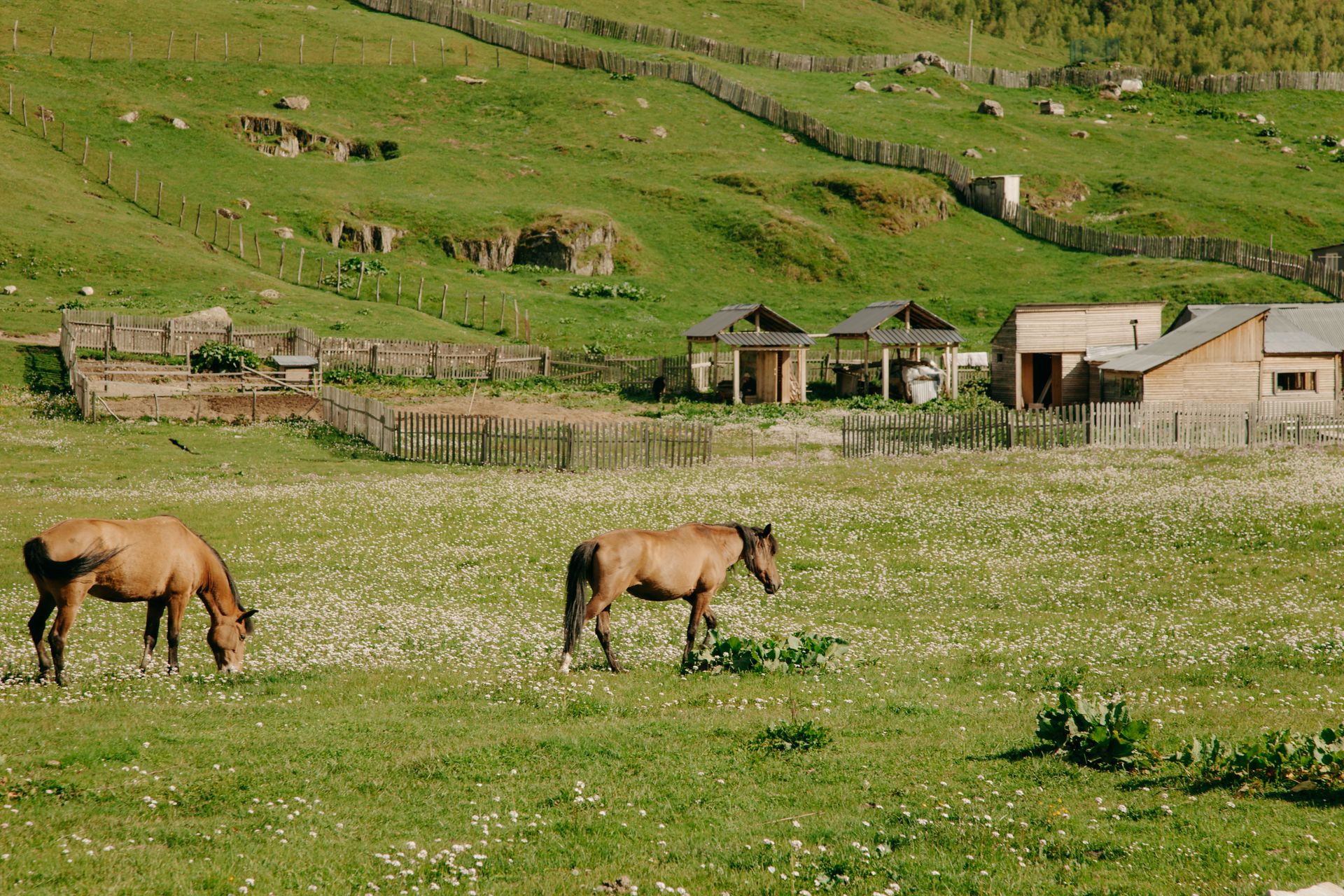
Dutch Warmbloods are known for their athleticism and versatility, making them an ideal choice for riders of all levels. They excel in various disciplines, including show jumping, dressage, and eventing.
Their impressive height, typically ranging from 16 to 17 hands, allows them to cover a lot of ground with ease. This makes them a favorite among competitors in high-level competitions.
Dutch Warmbloods are bred for their intelligence and willingness to please, which makes them a joy to train and work with. They are also known for their calm and even-tempered nature, making them a great choice for riders who want a reliable partner.
For more insights, see: Warmbloods
History and Origins
The Dutch Warmblood's history is a fascinating story of transformation and adaptation. Prior to World War II, there were two types of utility horses in the Netherlands: the Gelderlander and the Groninger.
These horses were bred for different purposes, with the Gelderlander being a more elegant horse often used as a carriage horse, while the Groninger was a heavy-set horse used primarily in agriculture. The Gelderlanders were often chestnut with flashy white markings, while the Groningers were almost always solid black, brown, or dark bay.
See what others are reading: What Are Appaloosa Horses Used for
After the war, the Dutch government and breeders began an organized effort to modernize warmblood breeding, with the goal of producing pleasure sport horses that were strong and obedient enough for farm work, yet stylish and elegant for carriage use and riding. This gave rise to the highly versatile Dutch Warmblood.
Today, the Dutch Warmblood is registered with the Royal Warmblood Studbook of the Netherlands (KWPN), which was formed in 1970 after local breed registries merged. Despite foreign influences, KWPN horses still have strong Dutch roots, as studies have shown limited genetic differentiation between KWPN horses and the modern Groniger and Gelderlander breeds.
Here are the three distinct types of horses bred in Holland today:
- The "Rijpaardtype" or Riding Horse Type, a distinctly modern, elegant sport horse bred for athleticism, good character, and soundness.
- The “Tuigpaardtype” or Show Driving Type, an extravagant, stylish, high-stepping carriage horse.
- The “Basistype” or Basic type, a stylish all-round horse reminiscent of the earlier Gelderlander, useful for riding, driving, and farm work.
History and Origins
The Dutch Warmblood has a rich history that dates back to the Netherlands prior to World War II. The two native breeds that existed at that time were the Gelderlander and the Groningen.
The Gelderlander was an elegant horse of medium stature, frequently chestnut with flashy white markings, bred as a carriage and draft horse. The Groningen, on the other hand, was a larger, heavy-set horse used primarily in agriculture.
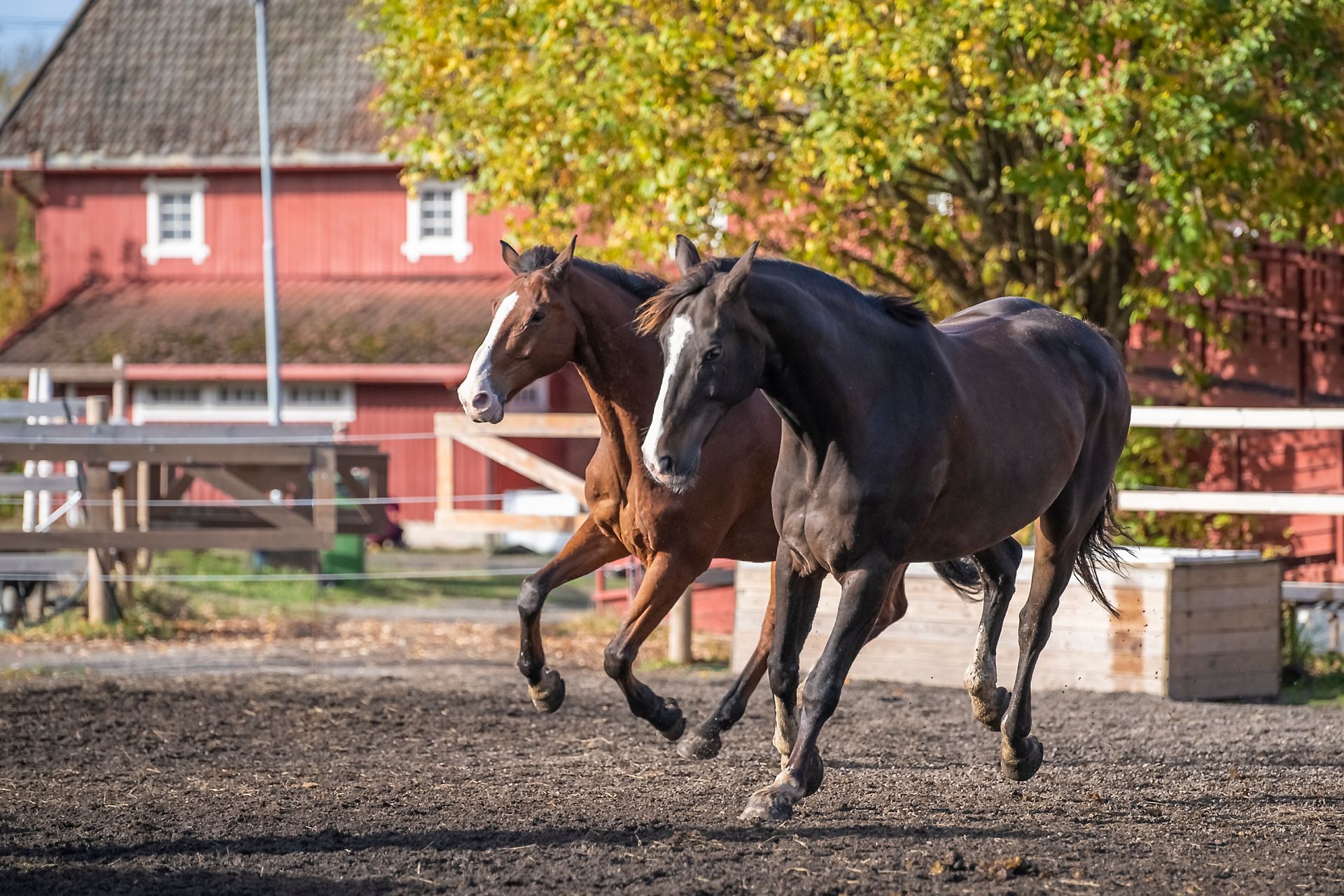
After the war, cars and tractors largely replaced the Gelderlander and Groningen horses, prompting a shift in breeding goals towards producing pleasure sport horses. People still wanted a horse that was strong and obedient enough to assist with farm work, yet they also preferred it to be stylish and elegant for carriage use and riding.
This gave rise to the highly versatile Dutch Warmblood. The modern Dutch Warmblood evolved from these two native Dutch breeds, along with some imported breeds.
Today, the Dutch Warmblood is registered with the Koninklijk Warmbloed Paardenstamboek Nederland (the Royal Warmblood Studbook of the Netherlands). This studbook was formed in 1925 by the merger of the Gelderlander Horse Studbook and the NWP.
Here are the three distinct types of horses bred in Holland today:
- The "Rijpaardtype" or Riding Horse Type, a distinctly modern, elegant sport horse bred for athleticism, good character, and soundness.
- The “Tuigpaardtype” or Show Driving Type, an extravagant, stylish, high-stepping carriage horse.
- The "Basistype" or Basic type, a stylish all-round horse reminiscent of the earlier Gelderlander, useful for riding, driving, and farm work.
The Dutch Warmblood's ancestry is a testament to the country's rich equestrian history and its ability to adapt to changing times.
Kwpn Keurings
KWPN Keurings are a critical part of the Dutch Warmblood breeding program, ensuring that only approved horses are selected for breeding. These inspections, or keurings, evaluate horses based on conformation, movement, jumping ability, and dressage aptitude.
Curious to learn more? Check out: Breeding Friesian Horses
During a keuring, horses are assessed at different ages and for different disciplines. Foals, yearlings, and two-year-olds are evaluated for premium grading, with 1st Premium awarded to the highest quality horses that exceed breed standard, and 2nd Premium awarded to horses that meet breed standard but have some faults or lack of quality.
Horses must meet specific criteria to be eligible for studbook inspections at keurings, which can vary depending on age and intended discipline. Stallions, for example, must meet performance standards and pass a veterinary examination with radiographs and endoscopy.
The KWPN predicates system recognizes horses that meet specific criteria of excellence, with predicates such as Ster, Keur, and IBOP awarded to horses that demonstrate superior conformation, movement, and jumping ability.
Here are some of the key KWPN predicates and their meanings:
- Ster (Star): Awarded to mares, geldings, and stallions based on superior conformation and movement or jumping ability.
- Keur: Awarded to Ster mares with eligible conformation who have completed IBOP (one-day performance) tests or met equivalent sport requirements.
- IBOP: Awarded to horses that complete the IBOP test, which evaluates their aptitude in riding or driving disciplines.
- PROK: Awarded to horses that have passed a radiographic examination, indicating that they meet requirements for bone quality and joint health.
- D-OC: A predicate for riding-type horses identified through DNA testing as having a low genetic predisposition to OCD.
- Elite: Granted to Keur mares that also possess the D-OC or PROK predicate.
- Preferent: Awarded to KWPN mares that have produced at least three Ster predicate offspring.
Breed Overview
The Dutch Warmblood breed is known for its impressive height, ranging from 15 hands (60 inches) to 17 hands (68 inches). This makes them a versatile and athletic breed.
Explore further: Best Breed of Horse
Their well-proportioned build, deep chest, and powerful legs are just a few of the characteristics that make them stand out. They have a muscular neck and strong legs that support their impressive height.
In terms of temperament, Dutch Warmbloods are known for being calm, gentle, and even-tempered. They are often described as intelligent, easygoing, and willing to work with their humans.
Here are some key breed characteristics:
These characteristics make them suitable for a variety of activities, including jumping, dressage, and carriage driving. They are also a popular choice for recreational riding and hunting.
Physical Characteristics
Dutch Warmbloods are known for their athletic build, with an average height of 16.2 hands tall. They are generally long-legged and substantial, with a smooth topline and dry, expressive head.
Their rectangular-shaped frame is a key characteristic, with a well-proportioned and long-lined body. Most Dutch Warmbloods have a light head/neck connection, long, arched neck, and muscled topline.
A fresh viewpoint: Long Hair Dutch Shepherd
A strong, well-muscled back and loin formation are also typical, along with correct and clean legs. Overall, Dutch Warmbloods have an attractive impression, making them a popular choice for equestrian sports.
Here are the common conformation traits of Dutch Warmbloods:
- Rectangular-shaped frame
- Well-proportioned and long-lined body
- Light head/neck connection
- Long, arched neck and muscled topline
- Strong, well-muscled back and loin formation
- Correct and clean legs
- Attractive overall impression
Characteristics
The Dutch Warmblood is a breed known for its unique characteristics, which set it apart from other horses. They are generally black, brown, bay, chestnut, or grey, with white markings common.
Most Dutch Warmbloods range in height from 15 hands to 17 hands, with mares needing to be at least 15.5 hands and stallions 15.75 hands to become breeding horses. There is no upper limit on height, but horses above average height are less desirable for sport.
A key feature of the Dutch Warmblood is its rectangular-shaped frame, with a well-proportioned and long-lined body. This is a result of strict breeding standards.
The breed is known for its smooth topline and dry, expressive head, with a strong, well-muscled back and loin formation. Correct and clean legs are also a characteristic of the Dutch Warmblood.
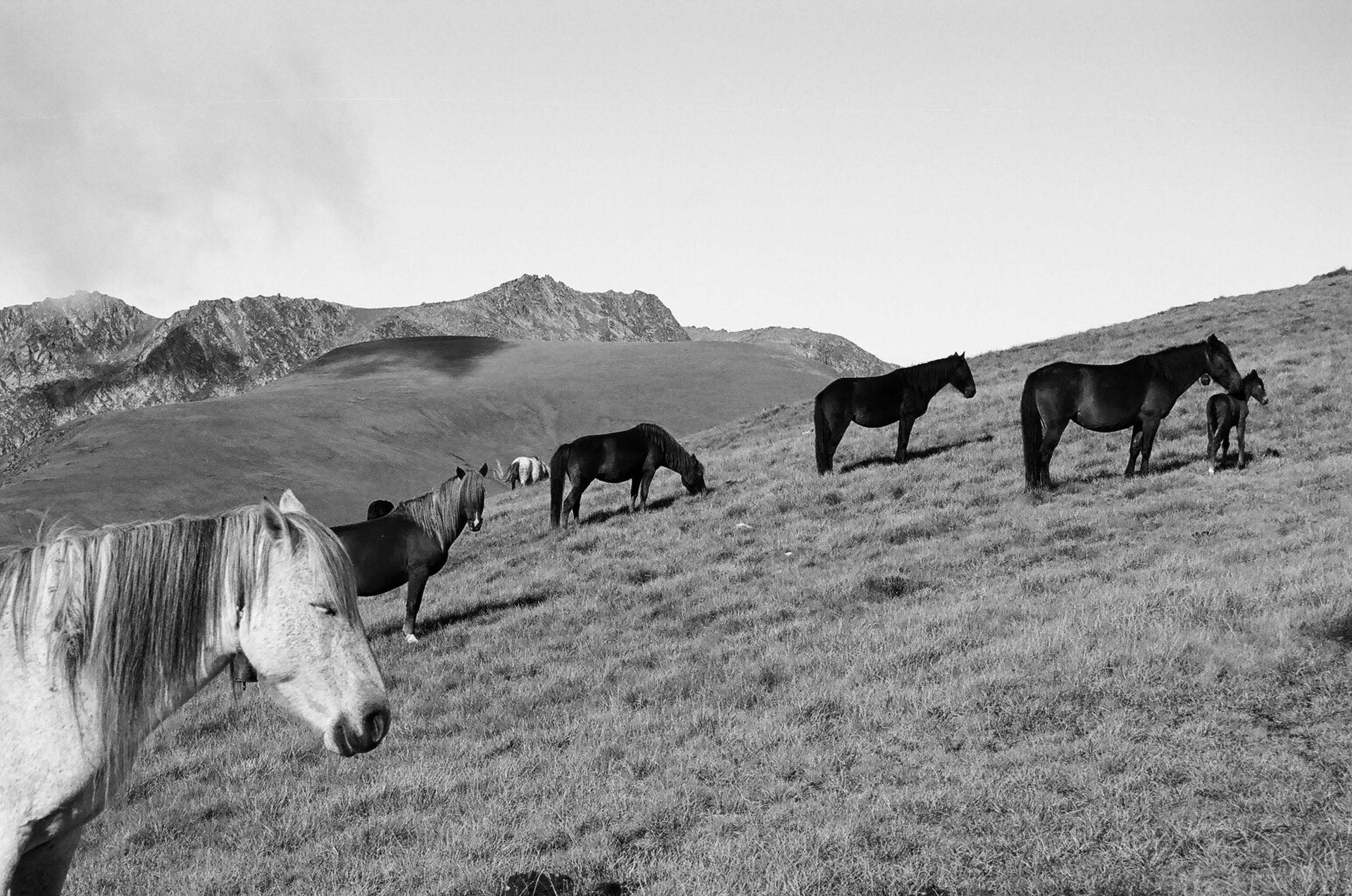
One of the most distinctive traits of the Dutch Warmblood is its temperament. They are generally intelligent, easygoing, and willing to work with their humans, making them a pleasure to ride and handle.
Here are some common conformation traits found in the Dutch Warmblood breed:
- Rectangular-shaped frame
- Well-proportioned and long-lined body
- Light head/neck connection
- Long, arched neck and muscled topline
- Strong, well-muscled back and loin formation
- Correct and clean legs
- Attractive overall impression
The average Dutch Warmblood weighs around 1,430 pounds, making them a sturdy and robust breed.
Colors and Markings
The Dutch Warmblood is a stunning breed, and their colors and markings are just as impressive.
Most Dutch Warmbloods can be found in solid colors, including black, bay, brown, gray, and chestnut. These colors are the most common, and you'll see them time and time again.
White markings are a frequent sight in the breed, adding a touch of elegance to their coats. From small star-shaped markings to larger patches, white markings add visual interest to the Dutch Warmblood's appearance.
The tobiano pattern, which produces white patches on a darker background, can also arise in the breed. This pattern is a result of the influence of the approved stallion Samber.
Typical coat colors in Dutch Warmbloods include:
- Black
- Bay
- Brown
- Chestnut
- Grey
The KWPN has also accepted and approved horses with tobiano pinto patterns, adding to the breed's already impressive color palette.
Temperament and Behavior
Dutch Warmbloods are renowned for their calm and even-tempered nature, making them suitable for various equestrian disciplines.
Their friendly disposition towards people makes them easy to handle, and they have a strong willingness to perform. They're also intelligent and honest, which is essential for high-performance careers.
However, some Dutch Warmbloods can be more sensitive and reactive, which can make them more spooky. Certain bloodlines have reputations for passing on particular temperaments and quirks, but individual personalities can vary.
The likelihood of a horse developing OCD (Osteochondritis Dissecans) can be influenced by its parentage, and the KWPN uses DNA testing to give genomic breeding value scores for OCD risk in offspring. Horses with a genomic value of 95 or higher are eligible for the D-OC predicate, indicating a lower risk of passing on OCD to offspring.
Temperament
Warmblood breeds are renowned for their calm, even-tempered, and cooperative nature, making them suitable for a variety of equestrian disciplines.
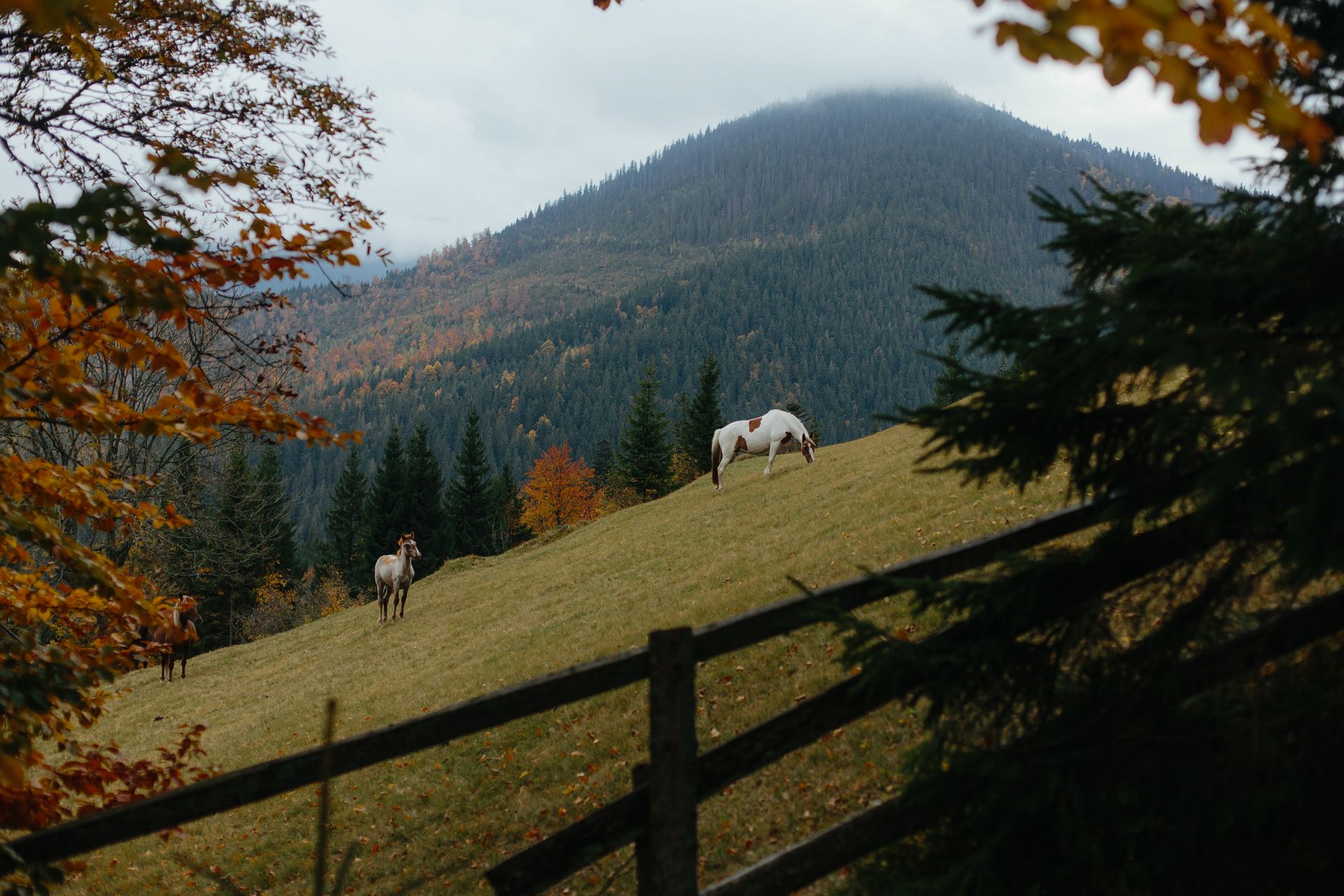
Their friendly disposition towards people makes them easy to handle, but some Dutch Warmbloods can be more sensitive and reactive, which can make them more spooky.
The KWPN breeding goals aim to produce a horse with a good character, a strong willingness to perform, and a friendly disposition towards people.
These horses also have to be intelligent, honest, and reactive to succeed at the top levels of their sport.
Certain bloodlines have reputations for passing particular temperaments and quirks, but personalities vary between individual horses.
Always work with a trusted trainer when horse shopping to help find a horse suitable for you.
Horses with a genetic predisposition to OCD can pass this condition to their offspring, and the KWPN uses DNA testing to give genomic breeding value scores for OCD risk.
The Piaffe
The Piaffe is a special dressage move that the G3 Dutch Warmblood can perform.
This move can be activated by pressing the spacebar, but only when the horse is standing still.
If the horse is not standing still, it will jump instead of performing the Piaffe.
Uses and Applications
Dutch Warmbloods have been ranked #1 in jumping by the World Breeding Federation for Sport Horses (WBFSH) in 2010.
They excel internationally in jumping and dressage, thanks to their prominent withers and powerful legs.
In fact, several Olympic medalists bred in the Netherlands, including Royal Kaliber, Montender, and Authentic (Nimrod), have been Dutch Warmbloods.
Dutch Warmbloods are also suitable for carriage driving and hunter competitions, where they're judged on their movements and mannerisms.
Their calm nature and spirit make them reliable recreational horses that are easy to work with, regardless of a person's equine experience.
The Dutch Warmblood stallion Moorlands Totilas held the world record for the highest dressage score in Grand Prix Freestyle Dressage.
Valegro, a British rider's horse, is the current World Record holder for Grand Prix Freestyle Dressage and is KWPN sired by Negro.
Health and Care
Elite performance horses like Dutch Warmbloods require attentive care and management to stay healthy and perform at their best. This includes regular veterinary check-ups to detect issues early, vaccinations to protect against infectious diseases, and dental care to maintain optimal chewing and oral health.
A thorough daily grooming routine is also essential to promote a shiny coat and healthy skin. Consistent hoof care by a skilled farrier is key to maintaining hoof balance and preventing lameness.
Here are some essential health and care considerations for your Dutch Warmblood:
- Routine veterinary check-ups and lameness exams
- Vaccinations and parasite control
- Dental care and regular tooth floating
- Farrier care and hoof maintenance
- Grooming and regular exercise
By following these guidelines, you can help ensure your Dutch Warmblood stays happy and healthy.
Pssm
PSSM is a muscle disorder that affects various horse breeds, including Dutch Warmbloods. There are two types of PSSM, each with distinct characteristics.
Type 1 PSSM is caused by a genetic mutation leading to excessive storage of glycogen in the muscles. This is a clear genetic link.
Type 2 PSSM, on the other hand, has a less understood cause and is characterized by abnormal glycogen storage or location. This type is often associated with myofibrillar myopathy.
In Dutch Warmbloods, PSSM2 is much more common than PSSM1. Only 8% of warmbloods diagnosed with PSSM have the known genetic mutation.
Warmbloods with PSSM typically show signs of muscle soreness and an abnormal gait. They are less likely to experience tying up compared to non-warmblood breeds affected by PSSM2.
Care and Management
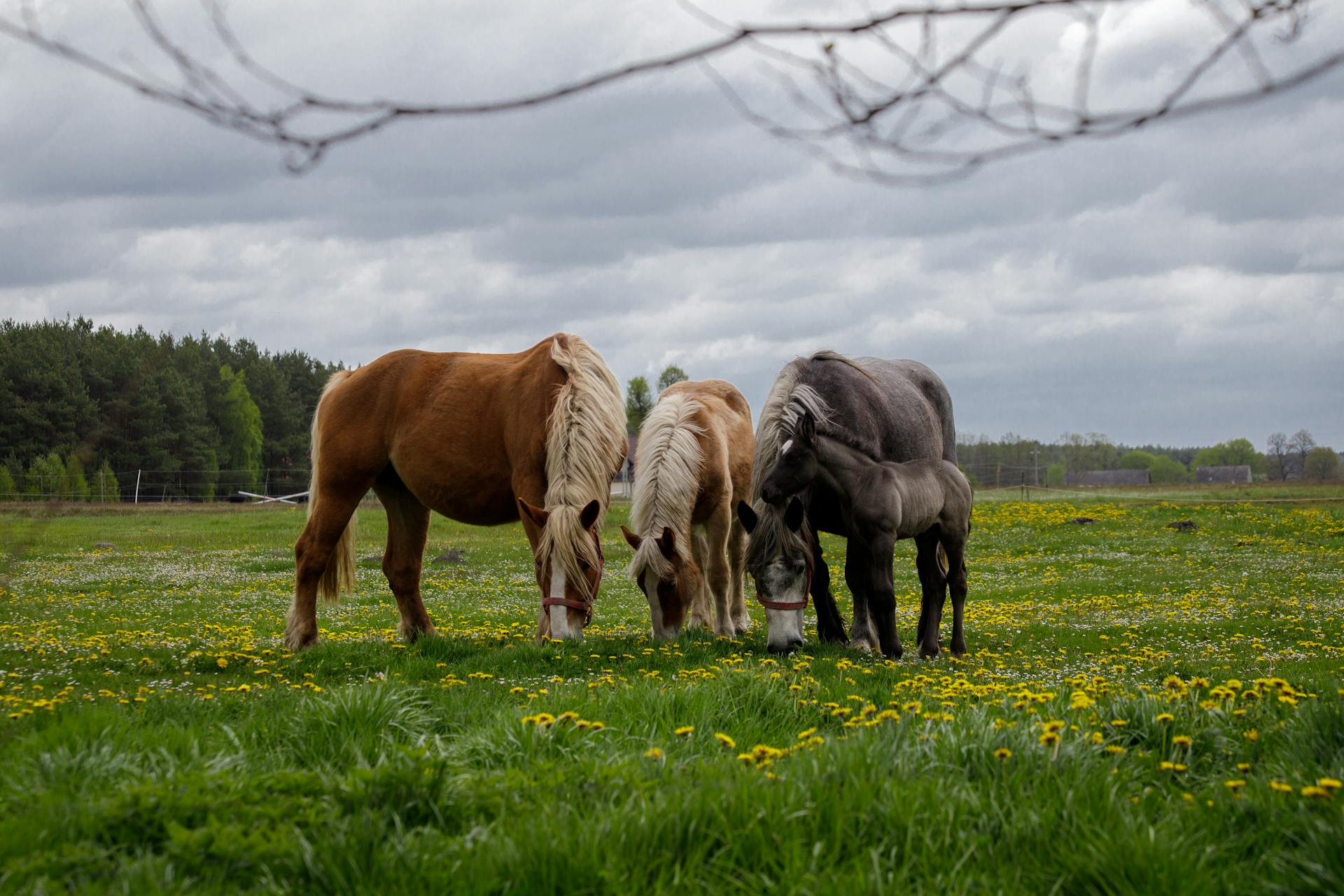
Elite performance horses like Dutch Warmbloods require attentive care and management to stay healthy and perform at their best. Regular veterinary visits are crucial to detect issues promptly, with lameness exams identifying early signs of injuries in both recreational and competition horses.
Veterinary check-ups should be a top priority, with a recommended schedule including vaccinations to protect against infectious diseases. Dental care is also essential, with regular exams and tooth floating maintaining optimal chewing and supporting oral health.
Farrier care is vital for maintaining hoof balance and preventing lameness, with consistent hoof care by a skilled farrier key to preventing issues. A thorough daily grooming routine enhances the natural beauty of Dutch Warmbloods, promoting a shiny coat and healthy skin.
Some Dutch Warmbloods may need additional veterinary maintenance, such as joint injections and therapies, to manage pain and existing joint disease. Performance horses live in stalls, but prolonged confinement can increase stress levels, so a daily turnout schedule is necessary to provide free exercise, grazing, and social interaction.
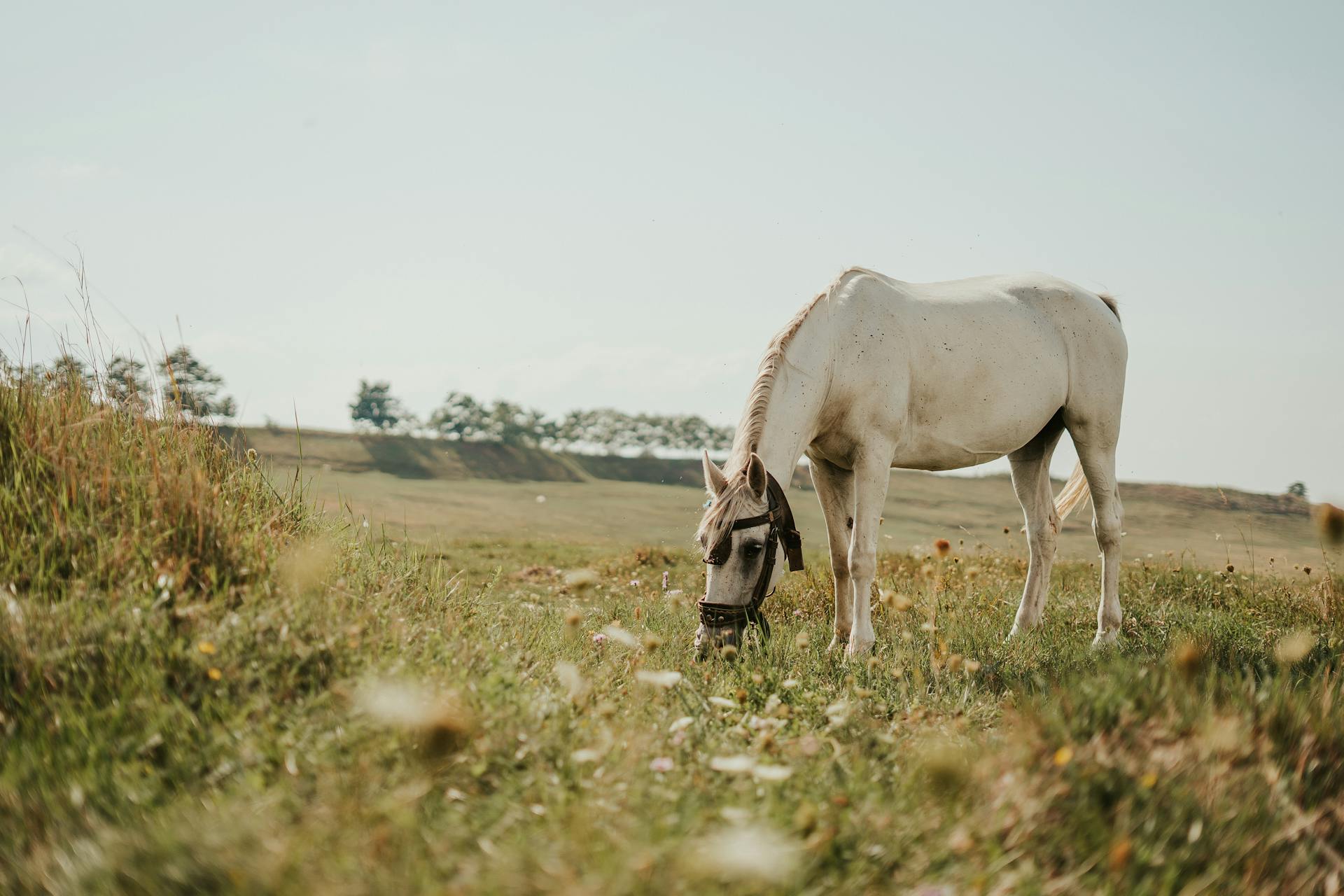
Here are some key aspects of care and management to consider:
- Regular veterinary visits
- Vaccinations
- Dental care
- Farrier care
- Grooming
- Turnout schedule
By working with your veterinarian and other equine health practitioners, you can develop a preventative health program tailored to your horse's needs. This will help ensure your Dutch Warmblood stays healthy and performs at its best.
For your interest: Dutch Shepherd Health Issues
Grooming and Maintenance
Grooming is essential for your Dutch Warmblood. A daily brushing will remove dirt and debris and evenly distribute the horse's oils across its body.
Regular grooming sessions will keep your horse healthy and help you strengthen your bond with the animal. Daily hoof inspections and cleanings are also necessary.
Your Dutch Warmblood is a versatile breed, known for being athletic and generally healthy. This makes them a reliable and trainable companion.
Here are some key characteristics of Dutch Warmbloods:
- Versatile
- Athletic and generally healthy
- Reliable and trainable
Buying and Owning
Buying a Dutch Warmblood can be a significant investment, ranging from $5,000 to $25,000 on average.
The cost can vary greatly, depending on factors like age, training, and pedigree, with some horses from champion jumping bloodlines costing well into six figures.
It's essential to spend time with the horse before making a decision, discussing its health, temperament, and level of training with the breeder or rescue organization.
Ask to try out the horse yourself, if possible, and look for any signs of injury or illness that may not have been disclosed.
How to Adopt or Buy a Horse
Adopting or buying a horse requires careful consideration and research. The cost can vary greatly, ranging from $5,000 to $25,000 on average, depending on age, training, and pedigree.
It's essential to spend time with the horse at the breeder or rescue organization to assess its temperament and level of training. Discuss the horse's health and any existing issues with the breeder or organization.
A pre-purchase or pre-adoption examination by a veterinarian is highly recommended to confirm the horse's health and suitability for its intended use. This can give you peace of mind and ensure you're making an informed decision.
Consider reading: Dutch Shepherd Training
Is the Horse Right for You?
The Dutch Warmblood is a versatile breed that can thrive in various environments and riding styles. Its calm temperament makes it an excellent choice for riders of all experience levels.
One of the standout features of the Dutch Warmblood is its reliability, which makes it a solid breed for owners who need a trustworthy companion.
Its adaptability to the needs of its owner is a significant advantage, whether you're looking for a horse for riding or competing.
Champion Horses and Registry
Some of the most successful show jumping horses have come from the Royal Warmblood Studbook of the Netherlands. The Dutch warmblood stallion Totilas is known as one of the top dressage horses in the world and has broken multiple world records.
The Dutch warmblood breed has a rich history, descending from two historic horse breeds from the Netherlands. The modern KWPN studbook is relatively young compared to other warmblood registries.
The KWPN, or Royal Warmblood Studbook of the Netherlands, plays a crucial role in maintaining the breed standards, overseeing breeding practices, and promoting the breed internationally. The KWPN has four registration options for its horses, including the Foal book (vb), Register A (reg A), Register B (reg B), and Studbook (stb).
Breed Registry
The Dutch Warmblood breed has a strong foundation thanks to the Royal Warmblood Studbook of the Netherlands, the KWPN. This organization plays a crucial role in maintaining breed standards and overseeing breeding practices.
The KWPN of North America, or KWPN-NA, serves as a bridge between North American breeders and the KWPN, ensuring that breeding and registration processes align with Dutch practices.
There are several registration options for KWPN horses, depending on their pedigree and inspection results. These options include the Foal book, Register A, Register B, and Studbook.
Here are the four registration options in more detail:
- Foal book (vb): reserved for foals, not yet inspected or registered
- Register A (reg A): for horses with a strong pedigree and good inspection results
- Register B (reg B): for horses with a less strong pedigree or average inspection results
- Studbook (stb): for top-level horses with excellent pedigree and inspection results
Champion Horses
The Royal Warmblood Studbook of the Netherlands has produced some of the most successful show jumping horses in the world.
Dutch Warmbloods like Royal Kaliber and Hickstead have won Olympic medals in show jumping.
Royal Kaliber and Hickstead are notable examples of the breed's success in the sport.
The Dutch Warmblood stallion Totilas is known as one of the top dressage horses in the world and has broken multiple world records.
Ferro and Udon are recent medalists in dressage, highlighting the breed's talent in the discipline.
Uraeus, a Dutch Warmblood stallion, played the role of Brego in "The Lord of the Rings" and had previously competed in dressage before his film career.
Frequently Asked Questions
What two breeds make a Dutch Warmblood?
The Dutch Warmblood is a cross between the Gelderlander and the Groningen breeds, two Dutch horses with distinct origins and characteristics.
What is the difference between a Thoroughbred and a Dutch Warmblood?
Thoroughbreds are known for their high energy and intense nature, while Dutch Warmbloods are generally more calm and even-tempered. This difference in temperament is due to their distinct breeding histories and characteristics.
Featured Images: pexels.com