Dogs have been domesticated for thousands of years, with evidence suggesting that they were first domesticated between 15,000 to 30,000 years ago.
The process of domestication is believed to have started with gray wolves that were attracted to human camps and settlements, where they scavenged food waste and learned to coexist with humans.
These early interactions between humans and wolves likely involved a mix of fear and caution, with humans trying to protect their food and wolves trying to get closer to the source.
As humans and wolves spent more time together, certain wolf behaviors and traits became more desirable to humans, such as docility and smaller size.
Here's an interesting read: Domesticated Dogs
History of Domestication
The history of domestication in dogs is a fascinating topic that has been studied by geneticists and archaeologists for decades. It's believed to have begun around 25,000 years ago in one or several wolf populations in Europe, the high Arctic, or eastern Asia.
Dogs were derived from grey wolves during the initial phases of domestication, and the wolf population(s) that were involved are likely to be extinct. Despite numerous genetic studies, there's no firm consensus regarding the timing or location(s) of domestication.
The earliest generally accepted dog remains were discovered in Bonn-Oberkassel, Germany, and were dated to 14,223 years ago. This suggests that in Western Europe, there were morphologically and genetically "modern" dogs in existence around 14,500 years ago.
A dog was buried along with two humans in Bonn-Oberkassel, and the dog had died young after suffering from canine distemper. This suggests that the humans had developed emotional and caring bonds with their dogs.
Here's a timeline of dog domestication:
- 25,000 years ago: Dog domestication begins in one or several wolf populations in Europe, the high Arctic, or eastern Asia.
- 14,223 years ago: The earliest dog remains are discovered in Bonn-Oberkassel, Germany.
- 15,000 years ago: Dogs are domesticated in the Near East, where they enter into relationships with wild populations of aurochs, boar, sheep, and goats.
- 10,000 years ago: Agriculture is developed, resulting in a sedentary lifestyle and phenotype divergence of the dog from its wolf ancestors.
Dogs were not only domesticated in Europe, but also in East Asia, where an initial phase of dog domestication began 33,000 years ago. This is supported by mitochondrial DNA studies, which show that the dog lineage in China or Southeast Asia is distinct from that of European dogs.
Genetic Changes
Genetic changes have occurred in dogs since domestication. These changes are a result of selective breeding and adaptation to new environments.
The genetic divergence between dogs and wolves occurred over a short period of time, making it difficult to date. This divergence is believed to have occurred with an extinct Late Pleistocene wolf being the nearest common ancestor to the dog.
Studies have found that modern dogs from Southeast Asia and South China show greater genetic diversity than those from other regions. This suggests that this was the place of their origin. However, the exact origin of dogs is still a topic of debate, with some studies suggesting Central Asia or the Middle East as possible origins.
Dogs have undergone significant genetic changes since domestication, including adaptations to high altitude and low oxygen conditions. This is evident in the parallel evolution of genes between dogs and humans, with 311 genes showing signs of positive selection in dogs related to digestion, neurological processes, and cancer.
Curious to learn more? Check out: Domestication of Dogs Has Led to
Time of Genetic Divergence
The time of genetic divergence between dogs and wolves is a tricky thing to pin down. This is because the genetic split between the dog's ancestor and modern wolves occurred over a short period of time, making it difficult to date.
Studies indicate that this divergence is referred to as incomplete lineage sorting. This means that the time of the divergence is hard to determine.
The fact that modern wolves are not directly ancestral to the dog adds to the complexity of the issue. The dog's ancestor is actually an extinct Late Pleistocene wolf.
The short time frame of the divergence means that few mutations have occurred between dog and wolf. This makes it even harder to determine when domestication took place.
Intriguing read: Closest Domestic Dog to a Wolf
Genetic Changes
Genetic studies have found that modern dogs from Southeast Asia and South China show greater genetic diversity than those from other regions, suggesting that this was the place of their origin.
This diversity is not limited to Southeast Asia, as African village dogs also show greater genetic diversity than breed dogs. However, a study found that the genetic bottlenecks associated with the formation of breeds strongly reduce genetic diversity, making comparisons between purebred and village dogs not entirely accurate.
Genetic adaptations to specific environments have shaped the cognitive and behavioral spheres of dogs. For example, studies have highlighted genetic adaptations to high-altitude oxygen levels in dogs living in the Himalayas and on the Tibetan plateau.
The Y chromosome has been employed in many studies concerning animal populations, including dogs. A study based on 151 dogs revealed the existence of five Y-chromosome haplogroups, while a more extensive analysis conducted on hundreds of canine samples showed a high diversity of Y-chromosome haplotypes in Africa, India, Central Asia, and South-Western Asia.
A genetic study found that the grey wolf is the closest living relative of the dog. However, the genetic divergence between the dog's ancestor and modern wolves occurred over a short period of time, making it difficult to date.
Here are some of the key genetic changes that have occurred in dogs:
These genetic changes have likely played a significant role in the domestication of dogs and their ability to adapt to new environments.
Domestication Process
The domestication process in dogs is a complex and multi-stage phenomenon that has been shaped by various selective pressures over thousands of years. Genetic studies suggest that dogs were domesticated from grey wolves around 32,000 to 11,000-16,000 years ago.
One of the key factors that contributed to the domestication of dogs was the wolf's ability to hunt in packs, share risk, and cooperate with each other. This allowed them to thrive in the mammoth steppe and become the top predators. Some wolves even followed great reindeer herds, eliminating the weak and sick animals, and improving the herd's overall health.
The first domesticated animals were likely attracted to human-generated waste, which provided a new food source. Alternatively, humans may have captured and bred newborn wolves, or formed mutualistic relationships with them through hunting strategies. Regardless of the initial process, dogs began to adapt to living among humans and eventually became an integral part of human society.
Related reading: Where Did the Domestic Dog Come from
The domestication process can be divided into two phases: the opening of an anthropogenic niche, which allowed wolves to associate with humans, and the gradual change in human-dog interactions, where dogs were selected for behavioral characteristics. This selection likely favored dogs that were biologically better prepared to develop social bonds with humans.
Discover more: Taxonomy of the Domestic Dog and Humans
Commensal Pathway
Domestication is a coevolutionary process where a population adapts to a novel niche with another species. This process is key to understanding how humans and animals formed their relationships.
The domestication of animals is a pivotal transition in human history, and dogs were the first domesticated species, entering into a domestic relationship with humans during the Pleistocene era. They were the only large carnivore to be domesticated.
The earliest association between dogs and humans may have allowed dogs to influence the course of early human history and the development of civilization. Dogs were derived from grey wolves during the initial phases of domestication.
The wolf population involved in domestication is likely to be extinct, and despite numerous genetic studies, there is no firm consensus on the timing or location of domestication. The number of wolf populations involved and the long-term effects of domestication on the dog's genome remain debated.
Around 10,000 YBP, agriculture was developed, leading to a sedentary lifestyle and phenotype divergence of dogs from their wolf ancestors. Two population bottlenecks have occurred to the dog lineage, one due to the initial domestication and one due to the formation of dog breeds.
Dogs were likely influenced by humans' scavenging habits, and early selection may have favored a wolf-like morphology. However, as humans became more sedentary, dogs may have undergone selection for smaller, phenotypically distinct dogs.
The most widely accepted earliest dog remains are those of the Bonn-Oberkassel dog, dating to 15,000 YBP. However, earlier remains dating back to 30,000 YBP have been described as Paleolithic dogs, but their status as dogs or wolves remains debated.
Recent research suggests that domestication occurred in the East, with dogs having a dual ancestry, meaning two separate populations of wolves contributed DNA to dogs. This is supported by the analysis of 72 ancient wolves' genomes, which found evidence of genetic and morphological differences between wolf populations that migrated with humans and those that remained in a single territory.
Additional reading: Breeds of Dogs That Look like Wolves
The migratory wolves theory proposes that some wolves followed great reindeer herds, eliminating the unfit and improving the herd. These wolves had become the first pastoralists, and humans may have teamed up with them, learning their techniques.
The remains of large carcasses left by human hunter-gatherers may have led some wolves to enter a migratory relationship with humans, leading to their divergence from those wolves that remained in a single territory. A closer relationship between these wolves and humans may have developed, such as hunting together and mutual defense.
Dogs have a much more flexible pack structure than wolves, and their diet consists mainly of human food waste, with hunting playing a minor role. They have been considered "optionally social", and their care of offspring differs significantly from that of wolves.
In contrast to wolves, dogs show a reduction in fear related to the domestication process, and they are less neophobic toward humans, requiring less early socialization to foster confident human-dog interactions.
Enter SE Asia & Oceania
Dogs entered Island Southeast Asia and Oceania around 10,000 to 5,000 years ago with Paleolithic maritime hunter-gatherers.
Ancient dog fossils from southern China show that most of the dogs fell within haplogroup A1b, which is also found in Australian dingoes and pre-colonial dogs of the Pacific.
The specimen from the Tianluoshan archaeological site in Zhejiang province, China, dates back to 7,000 years before present and is basal to the entire lineage of dogs.
Dogs were once widely distributed in southern China, then dispersed through Southeast Asia into New Guinea and Oceania, but were later replaced in China by dogs of other lineages.
The oldest archaeological remains of dogs in Island Southeast Asia and Oceania are a dog burial in Timor and dingo remains in Australia, both of which are dated to around 3,500 years before present.
Austronesian dogs were deeply valued as hunting companions, particularly for wild boar, and were carried by Austronesian voyagers into Near Oceania.
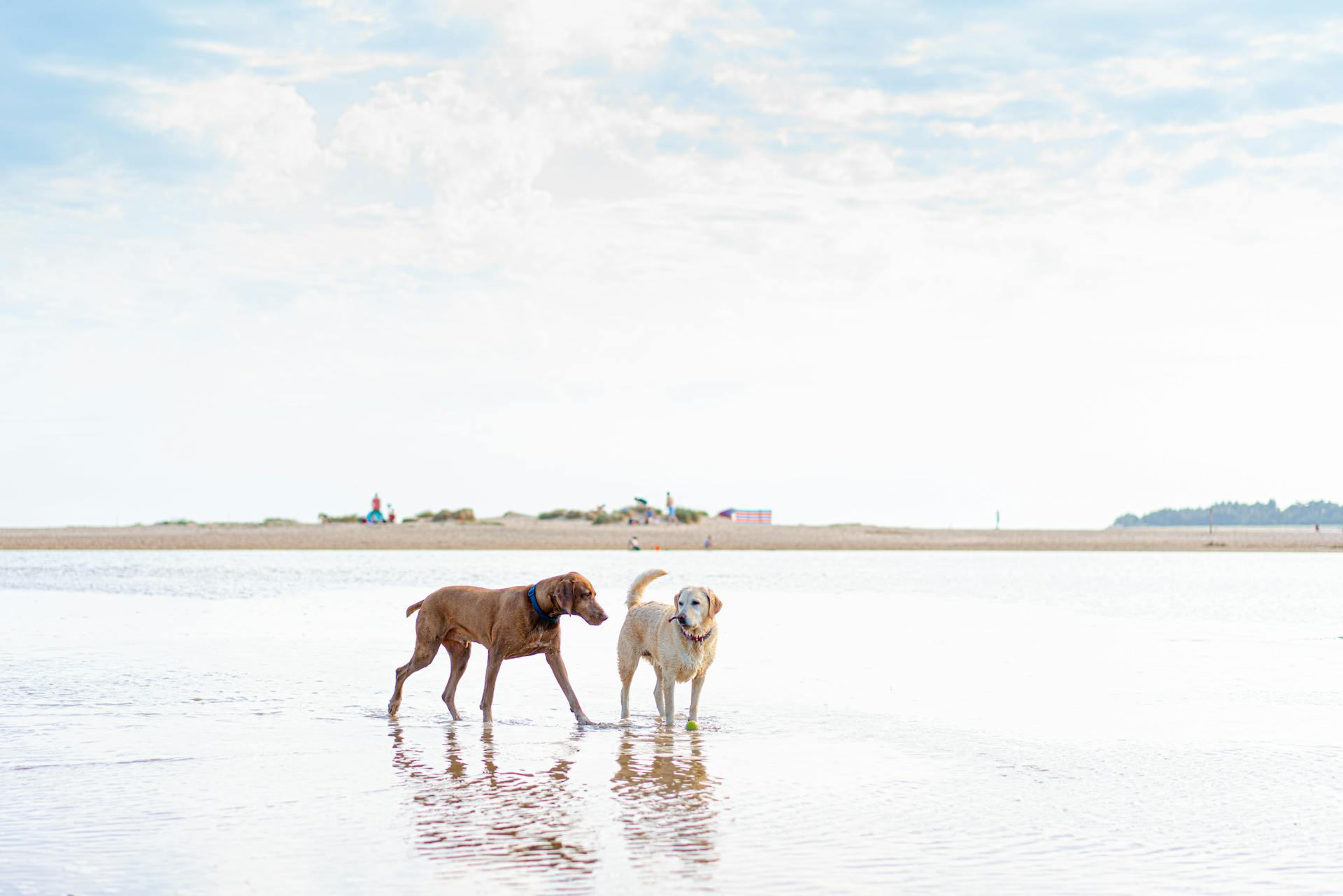
However, unlike in Island Southeast Asia, dogs lost their economic importance as hunting animals among Austronesians that reached the smaller islands in Melanesia and Polynesia, which had no populations of wild boar or other large mammals that could be hunted.
Dogs were later reintroduced from neighboring Papuan groups and were subsequently carried eastward into Polynesia by post-Lapita Austronesian migrations, reaching as far as Hawaii and Aotearoa.
Adaptation and Diversity
Dogs were initially selected for their ability to process lipids, which helped them thrive on the remains of carcasses left by hunter-gatherers. This dietary adaptation allowed them to access a new source of food and increased their prey capture rates.
The dog genome shows signs of positive selection, particularly in genes related to brain function and behavior, as well as lipid metabolism. This suggests that their brain and behavior were also evolving to adapt to their new environment.
As humans and dogs developed a closer relationship, dogs began to exhibit unique behaviors such as hunting together and mutual defense. This partnership likely led to the development of distinct wolf populations that specialized in following human herds and scavenging for food.
The genetic and morphological differences between these populations suggest that they were adapting to their new environment and developing distinct traits.
Morphological Diversity
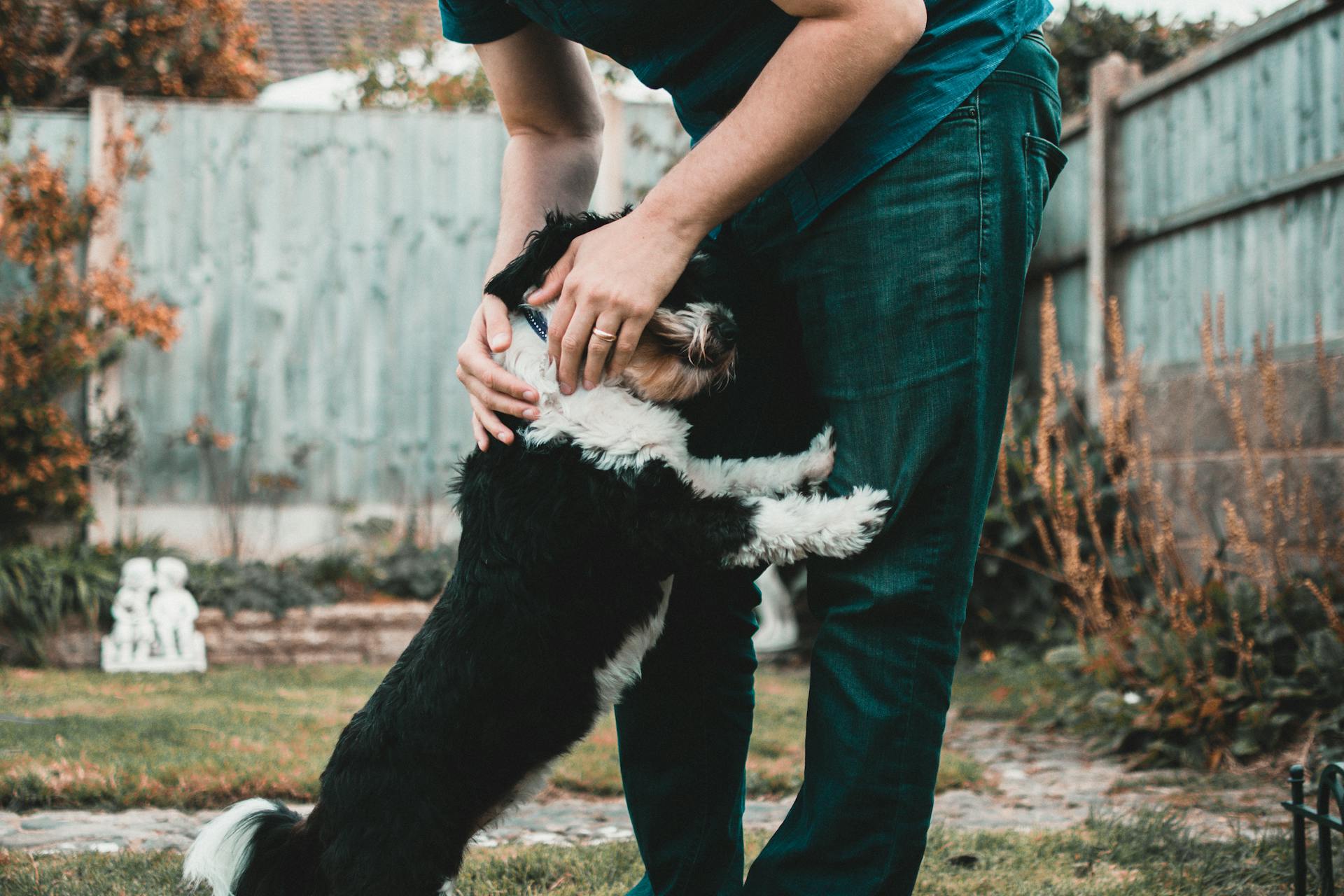
Morphological diversity in dogs has been shaped by thousands of years of domestication and selective breeding. The earliest dogs were likely wolf-like, but over time, humans chose to breed them for specific traits, leading to the incredible range of shapes and sizes we see today.
The fossil record suggests that early dogs may have had a wolf-like morphology, but as humans became more sedentary and dogs became closely associated with them, selection may have favored smaller, more distinct dogs.
One of the most significant changes in dog morphology is the reduction in body size. This is thought to have occurred before agriculture, and it's possible that early humans chose to breed smaller dogs for companionship or other reasons.
The remains of the Bonn-Oberkassel dog, dated to 14,223 YBP, show that dogs were already morphologically distinct from wolves by the Late Pleistocene era.
Here are some key differences between the morphology of early dogs and wolves:
- Size: Early dogs were likely smaller than wolves
- Skull shape: Dogs had a more rounded skull shape than wolves
- Dental characteristics: Dogs had a different dental structure than wolves
- Body proportions: Dogs had a more compact body shape than wolves
These changes in morphology are thought to have been driven by human selection for specific traits, rather than by genetic drift or other random processes.
Siberia to North America
Siberia to North America was a massive migration of plants and animals that occurred after the last Ice Age. This event is believed to have happened around 12,000 years ago.
The Bering Land Bridge, a landmass that connected present-day Russia and Alaska, played a crucial role in this migration. It's thought that animals such as mammoths and horses crossed the bridge to reach North America.
Many plant species also made the journey, including conifers and birch trees. These plants were able to adapt to the new climate and soil conditions in North America.
The migration of plants and animals from Siberia to North America had a profound impact on the ecosystems of the continent.
Dietary Adaptation
Dogs were able to adapt to a new diet by changing their metabolic functions to process changes in dietary fat.
Their ability to process lipids indicates a dietary target of selection that was important when proto-dogs hunted and fed alongside hunter-gatherers.
The dog genome compared to the wolf genome shows signs of having undergone positive selection, including genes relating to brain function and behaviour, and to lipid metabolism.
This ability likely helped process the increased lipid content of early dog diets as they scavenged on the remains of carcasses left by hunter-gatherers.
Prey capture rates may have increased in comparison to wolves and with it the amount of lipid consumed by the assisting proto-dogs.
The composition of tissues available to proto-dogs changed once humans had removed the most desirable parts of the carcass for themselves.
This unique dietary selection pressure may have evolved both from the amount consumed, and the shifting composition of, tissues available to proto-dogs.
Adapting to Environments
Wolves were able to thrive on the mammoth steppe by hunting in packs and cooperating with each other, allowing them to dominate the food chain.
Their ability to adapt to the environment was key to their success, and they were able to do so by being able to keep pace with the great reindeer herds and making the most efficient use of their kill.
Some wolves followed the reindeer herds, eliminating the weak and sick animals, which improved the herd's overall health and fitness.
This unique relationship between wolves and reindeer herds is an example of how animals can adapt to their environment and each other.
The remains of large carcasses left by human hunter-gatherers may have led some wolves into entering a migratory relationship with humans.
This relationship allowed wolves to adapt to new environments and prey, and it's believed that some of our ancestors teamed up with these wolves and learned their techniques.
The earliest generally accepted dog remains were discovered in Bonn-Oberkassel, Germany, and were dated to 14,223 YBP.
This implies that in Western Europe, there were morphologically and genetically "modern" dogs in existence around 14,500 YBP.
The dog was buried along with two humans, and a pathology study of the dog remains suggests that it had died young after suffering from canine distemper.
The dog's early death suggests that it had been cared for by humans, and that there were emotional or symbolic ties between the humans and the dog.
Dogs' ability to adapt to a starch-rich diet was enabled by an expansion of the AMY2B gene, which became widespread several thousand years later.
Here are some key adaptations that wolves and dogs have made to their environments:
* AdaptationEnvironmentHunting in packsMammoth steppeFollowing reindeer herdsMammoth steppeExploiting a starch-rich dietAgricultural environment
These adaptations have allowed wolves and dogs to thrive in a variety of environments, and they continue to evolve and adapt to this day.
Behavioral Phenotypes
Dogs have been bred for over 400 breeds, each with unique morphological and behavioral characteristics. They were initially selected for their behaviors, not production-related traits like other domestic species.
Their behavioral diversity can be classified into seven groups: guarding, herding, obedience, and hunting abilities. These traits have become fixed within breeds due to intensive artificial selection.
Dogs have evolved to be cognitively more similar to humans than we are to our closest genetic relatives. They've developed specialized skills for reading human social and communicative behavior.
Discover more: Dog Breeds Watch Dogs
Studies have shown that dogs can follow human pointing gestures, discriminate emotional expressions of human faces, and even understand barks to determine a dog's emotional state. Most people can also tell from a bark whether a dog is alone, being approached by a stranger, playing, or being aggressive.
Genomic analysis has revealed the genetic basis for the rewiring of dog brains and convergent evolution between dogs and humans. This has led to a deeper understanding of the behavioral transformation from fear-aggressiveness to tameness, a prerequisite for initial dog domestication.
Intensive breeding and selection have resulted in an extremely small gene pool, which may have led to misconception about the genetic changes associated with behavioral transformation. However, studies on the Chinese indigenous dog have provided valuable insights into the genetic basis for dog domestication.
The behavioral transformation from fear-aggressiveness to tameness is believed to have been a prerequisite to initial dog domestication. An experiment on silver foxes reconstructed this behavioral transformation in a domestication model, revealing several genetic loci associated with this change.
Dogs have been bred for various purposes, including guarding, herding, and hunting. Their ancestral predatory sequence of behaviors includes orient, eye, stalk, chase, grab–bite, shake–bite, kill–bite, dissect, and consume.
Related reading: Domestic Dog Bite Force
Less predatory breeds, such as the Great Pyrenees, can live among livestock as guardian dogs. Meanwhile, 'heelers' like lurchers and Jack Russell terriers can display a range of behaviors, from orient to kill–bite, making them ideal pest-control dogs.
Dogs don't typically display the full sequence of behaviors, but the retention of some stages makes each breed well-suited to their working role. These in-bred behaviors can also make seemingly docile family pets potentially dangerous to both owners and livestock when dormant traits kick in.
Domestic Legacy
The domestic legacy of dogs has led to a range of genetic diseases, including coat color-related sensorineural deafness, which has been widely described in numerous dog breeds.
Breeders have focused on purifying varieties, often ignoring disease resistance in purebred dogs, which has resulted in a reduction in effective population size and increased the fixation probability for many weakly deleterious mutations.
Brachycephaly, or flat-face, is commonly observed in breeds like the English bulldog, French bulldog, pug, Boston terrier, Pekingese, boxer, Shi Tzu, and Cavalier King Charles spaniel.
This domestic legacy has also led to the development of other genetic diseases, such as Alzheimer's disease and epilepsy, which impact physical and mental wellbeing.
Here's an interesting read: Dog Breeds That Are Good with Other Dogs
Enter Japan

Dogs entered Japan around 9,500 years ago, with the oldest fossil found on the main island of Honshu.
The changing climate during the Holocene period led to the spread of temperate deciduous forests, which in turn caused a shift in hunting technology and prey.
Dogs were used as tools for hunting sika deer and wild boar in dense forests, just like they are today.
Individual dog burials were a common practice among the Jōmon people, who considered dogs as family members and gave them proper names.
These early dog burials were often accompanied by markers and grave-goods, indicating the special status of hunting dogs.
In Japan, exceptional hunting dogs were venerated and given a "personhood" similar to that of skilled hunters.
Their value as hunting partners granted them a living status as a weapon, and the most skilled were elevated to take on a social position similar to that of their human counterparts.
This treatment of hunting dogs is not unique to Japan, as similar practices have been found in other early Holocene deciduous forest forager societies in Europe and North America.
On a similar theme: Hunting Dog Food Brands
Domestic Legacy
Domestic legacy is a complex issue that affects many dog breeds. Breeders have focused on purifying varieties, ignoring disease resistance in purebred dogs.
This has led to a reduction in effective population size, mainly caused by breed purification, which increases the fixation probability for many weakly deleterious mutations.
As a result, selectively retained pleiotropic genes have increased the risk of genetic diseases in dogs. Coat color-related sensorineural deafness is a common example, observed in numerous dog breeds.
Brachycephaly, or flat-face, is another issue, commonly seen in breeds like the English bulldog, French bulldog, and Pug. This can lead to breathing difficulties and other health problems.
Continuous circling, Alzheimer's disease, and epilepsy are also common issues in dogs, impacting their physical and mental wellbeing. These conditions are often linked to the selective breeding process.
A more detailed understanding of a dog's genomic makeup is crucial for ongoing breeding strategies to prioritize both human demands and dog welfare.
Take a look at this: Domestic Dog Breeds
Conclusions and Perspectives
The domestication of dogs is a complex and multifaceted process that has puzzled scientists for a long time. It was a "multiphase" process, with a first phase where different groups of wolves were attracted by the anthropogenic niche and a second phase characterized by the gradual establishment of mutual relationships between wolves and humans.
The mechanisms behind canine domestication are still not fully understood, but research suggests that it was influenced by various molecular mechanisms, including the action of oxytocin and the arginine vasopressin neuropeptides.
These neuropeptides are thought to play a role in the affiliative behaviors observed in dogs, and may also be responsible for the differences in fear reactions between wolves and dogs. Wolves, for example, have been subject to strong persecution over time, which may have led to a selection for human fear/shyness.
Recent paleogenomics studies have helped to reconstruct the dispersal patterns of Pleistocene canids and shed light on the exact location of the main centers of canine speciation. This research has identified three Mediterranean peninsulas - the Balkan, Iberian, and Italian - as key geographic areas for studying canine domestication dynamics.
The spread of HgA during the Neolithic farmer migration from the Middle East has also been confirmed, highlighting the complex genetic history of dogs. This genetic diversity is reflected in the clear separation between eastern (clades B and D) and central-western (clade C) Europe.
Despite these advances, there is still much to be learned about the biological basis of dog domestication. Further research is needed to fully understand the evolutionary biological picture and the impact of humans on the global ecosystem.
Studies and Findings
The Yellow Dog Study found that most dog colour haplotypes were similar to most wolf haplotypes, but dominant yellow in dogs was closely related to white in arctic wolves from North America.
Genetic studies have shown that modern dogs from Southeast Asia and South China exhibit greater genetic diversity than those from other regions, suggesting that this was the place of their origin.
A study of dog fossils found in Europe dating back around 15,000 YBP raises questions about the East Asian origin theory, but archaeological studies in East Asia lag behind those in Europe.
You might enjoy: Yellow Dog Names Girl
The Bonn-Oberkassel dog, dated to 14,223 YBP, was found to be clearly not a local wolf, with contextual, isotopic, genetic, and morphological evidence pointing to its domesticated status.
The dog's mitochondrial DNA sequence matched Canis familiaris, a dog, and falls within mDNA haplogroup C of dogs, further supporting its domesticated status.
A pathology study of the dog remains suggests that it had died young after suffering from canine distemper between ages 19 and 23 weeks, indicating that the dog had received intensive human care.
The earliest generally accepted dog remains were discovered in Bonn-Oberkassel, Germany, and were dated to 14,223 YBP.
The AMY2B gene, which codes a protein assisting with the digestion of dietary starch and glycogen, was found to be expanded in some early dogs, enabling them to exploit a starch-rich diet.
Here are some key findings from the studies mentioned above:
Breeding and Selection
With the development of human society and advancement of the industrial revolution, people's demands became increasingly diverse, leading to the breeding of dogs for specific tasks and as ornamental pets. This resulted in over 400 dog breeds, each with unique morphological and behavioral characteristics.
Dogs were initially selected for their behaviors, not production-related traits like other domestic species. This selection led to changes in social behavior and genes associated with oxytocin receptor and neural-related genes.
The key phase in dog domestication was changes in social behavior, which may have been contributed by structural variation in genes associated with human Williams-Beuren syndrome. This syndrome causes increased hyper-sociability.
A 2014 whole genome study found that dogs' tameness was not due to a reduced fear response but rather greater synaptic plasticity, a cellular correlate of learning and memory. This improved learning and memory ability likely helped lower dogs' level of fear around humans.
Only 11 fixed genes showed variation between wolves and dogs, indicating selection on both morphology and behavior during dog domestication. These gene variations were unlikely to have been the result of natural evolution.
The selection of genes that affect the adrenaline and noradrenaline biosynthesis pathway during dog domestication may have led to tameness and an emotional processing ability in dogs.
Featured Images: pexels.com