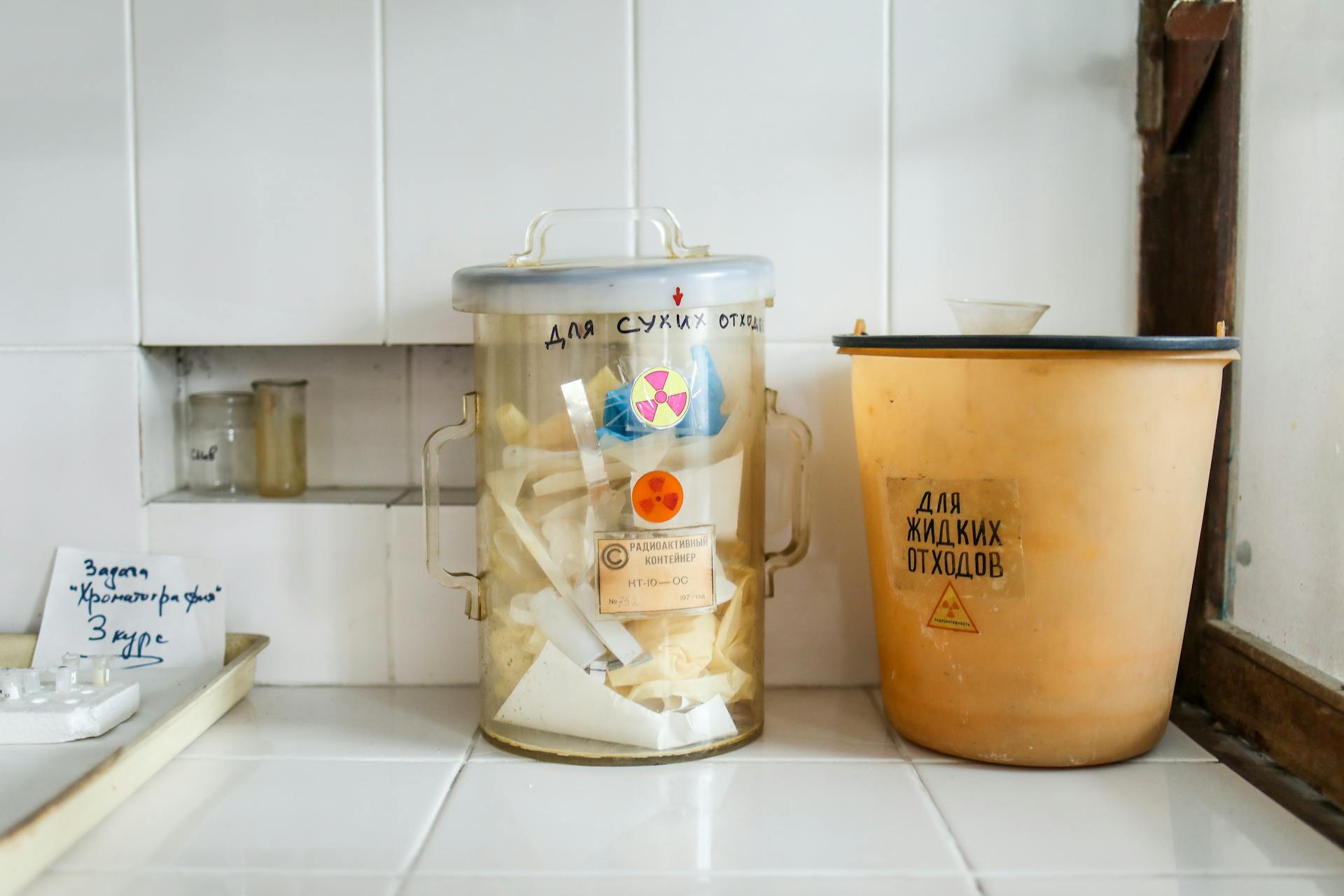
Dogs can ingest poison capsules by accident, which can be extremely hazardous to their health.
Capsules can be hidden in plain sight, making it difficult for pet owners to detect them.
Some common places where poison capsules can be found include on the floor, in cabinets, or even in the trash.
If you suspect your dog has ingested a poison capsule, act quickly and call your veterinarian or a pet poison hotline immediately.
The sooner you seek help, the better your dog's chances of recovery are.
Human Medications and Pets
Human medications can be extremely hazardous to your furry friends. Keep all prescription, over-the-counter, and illicit drugs out of reach of your pets, preferably in closed cabinets.
Pain killers, cold medicines, anti-cancer drugs, antidepressants, vitamins, and diet pills are common examples of human medication that could be potentially lethal even in small dosages.
It's crucial to remember that dogs are more likely to encounter human medications when they're outside of a medicine cabinet. Not only should medications be kept out of reach of your dog when not being used, but also put away any boxes of tablets immediately after use.
Readers also liked: Poison Ivy Dog to Human
Tylenol, in particular, should never be given to your dog unless prescribed by your veterinarian, as it can cause liver damage and even lead to liver failure.
The ASPCA's Animal Poison Control Center (APCC) reports that over 45,700 cases in 2019 involved over-the-counter medications, making this a broad category of potential pet toxins.
Here are some common types of human medications that can harm your dog:
- Pain killers
- Cold medicines
- Anti-cancer drugs
- Antidepressants
- Vitamins
- Diet pills
What Is Poisoning?
Drug poisoning is a common problem for dogs that can occur in various ways. Any dose of a medication designed for humans, whether prescribed or over the counter, can have adverse effects in a dog due to lower body weight and differences in metabolism.
Mild cases of drug poisoning are reversible, but severe overdose can cause long-term damage or death. This is especially true for medications that were intended for humans.
Many pills are sweet-tasting and your dog may see them as a treat, which can lead to accidental ingestion. This is often the result of a misguided owner or an open bottle left within reach.
Depending on the drug and the amount ingested, drug poisoning can cause serious illness and even death.
Causes and Symptoms of Poisoning
Dogs can be poisoned by a variety of medications, including NSAIDs like Aspirin, Tylenol, and Ibuprofen, as well as calcium channel blockers, BETA blockers, and ACE inhibitors.
These common household medications can be easily accessed by curious dogs, leading to accidental overdose. If you suspect your dog has ingested one of these medications, it's crucial to take them to a veterinarian immediately.
Symptoms of poisoning can vary depending on the medication and your dog's size, age, and health. Common signs include vomiting, drooling, weakness, and lethargy, which can progress to seizures, coma, and even death in severe cases.
Here are some of the most common signs of drug poisoning in dogs:
- Vomiting
- Drooling or excessive salivation
- Weakness
- Lack of coordination
- Tremors
- Disorientation
- Frequent urination
- Excessive thirst
- Agitation
- Irregular heartbeat (very rapid or too slow)
- Low blood pressure
- Pale mucous membranes
- Lethargy
- Depressed breathing
- Seizures
- Stupor and coma
Animal Poisoning Symptoms
Animal poisoning symptoms can be quite varied and depend on the medication ingested. If you suspect your dog has ingested a toxic substance, it's essential to act quickly.
Some common signs of drug poisoning in dogs include vomiting, drooling or excessive salivation, and weakness. These symptoms can be present due to accidental or intentional overdose.
For another approach, see: Dog Ate Rat Poison Symptoms
A lack of coordination and tremors are also possible symptoms of poisoning. If you notice any of these signs in your dog, it's crucial to seek veterinary attention immediately.
Drooling or excessive salivation, frequent urination, and excessive thirst are all potential symptoms of poisoning. These symptoms can be a sign of a more severe overdose.
In severe cases, poisoning can lead to seizures, stupor, and even coma. It's essential to take immediate action if you suspect your dog has ingested a toxic substance.
Here are some common symptoms of poisoning in dogs:
- Vomiting
- Drooling or excessive salivation
- Weakness
- Lack of coordination
- Tremors
- Disorientation
- Frequent urination
- Excessive thirst
- Agitation
- Irregular heartbeat (very rapid or too slow)
- Low blood pressure
- Pale mucous membranes
- Lethargy
- Depressed breathing
- Seizures
- Stupor and coma
Keep in mind that the severity of the situation will also be affected by the size, age, and overall health of your pet.
Causes of Animal Poisoning
Poisoning in pets can happen suddenly and without warning, so it's essential to know what common substances can be toxic.
Aspirin, Tylenol, ibuprofen, and naproxen are all NSAIDs that can be poisonous to dogs.
Some medications like calcium channel blockers can also be hazardous.
BETA blockers and ACE inhibitors are other types of medications that can be toxic to pets.
Here are some common substances that can cause poisoning in pets:
- Aspirin
- Tylenol
- Ibuprofen/Advil
- Naproxen/Aleve/Motrin
- Calcium channel blockers
- BETA blockers
- ACE inhibitors
Diagnosis and Treatment
Diagnosis of dog poison capsule involves bringing the medication bottle to the vet, knowing the exact time of poisoning, and noting the nature and severity of symptoms. If you didn't see your dog ingest the drug, note when signs became apparent.
The veterinarian will examine your dog's vital signs, especially blood pressure, heart rate, and body temperature, and may do bloodwork to determine the degree of toxicity. Urine tests can also help determine the extent of the poisoning.
If you don't have immediate access to a vet, calling a poison control hotline for dogs can be a helpful first treatment, where you describe the details to the operator, including what drug you think your dog ingested and when the poisoning took place.
A fresh viewpoint: What Can You Feed Dogs Other than Dog Food
Diagnosis of Poisoning
Knowing what drug your pet has been exposed to is crucial for a quick diagnosis. Bring the medication bottle to the vet so they can check the ingredients and dosage.
The vet will examine your pet for vital signs, checking blood pressure, heart rate, and body temperature.
Bloodwork will be done to determine the degree of toxicity. This will help the vet understand how severe the poisoning is.
Urine tests can also help determine the extent of the poisoning.
Recommended read: Will Expired Dog Dewormer Still Work
Treatment of Poisoning
If you suspect your dog has ingested a toxic substance, it's essential to act quickly. Calling a poison control hotline for dogs can be a helpful first step, so don't hesitate to pick up the phone.
The operator will guide you on the best course of action, which may include inducing vomiting by giving your dog hydrogen peroxide with milk or through an eye-dropper. This should only be done as instructed, and your dog should be taken to an emergency treatment facility as soon as possible.
Fluids are a crucial part of treatment, helping to maintain blood pressure and dilute the toxin in your dog's system. Activated charcoal may also be given to bind to the toxin and prevent further absorption.
Depending on the type of toxin ingested, medications may be necessary to support your dog's heart or respiratory function. In severe cases, central nervous system symptoms like seizures or excessive agitation may require treatment.
You might like: Dog Rat Poison Treatment
Your dog will likely need to stay in a veterinary hospital overnight, and possibly for several days, to ensure a full recovery. Regular monitoring of vital signs will help the veterinarian adjust treatment as needed.
Preventing poisoning in the first place is always the best option. Keep medications in a safe and secure location, such as a locked cabinet or on a high shelf, out of your dog's reach.
A different take: Will Cockroach Poison Kill My Dog
Recovery and Prevention
Recovery from dog poisoning is possible if treatment is sought right away, but it largely depends on the type and amount of the drug ingested.
The prognosis for your dog will depend on the diagnoses of a veterinarian, so it's essential to get your dog to the vet as soon as possible.
Prevention is always the best course of action, and it starts with being sensible with your dog's medications.
Only give your dog the prescribed dose, and never give them anything that was designed for humans, as it can be toxic.
Keep medications in a locked cabinet or on a high shelf that your dog can't reach to avoid accidental ingestion.
Don't leave bottles or tubes lying around, even if they're sealed, as many dogs can easily chew through plastic and might see it as a toy.
On a similar theme: What Kind of Aspirin Can I Give My Dog
Poisonous Human
Human medications can be deadly for dogs, even in small dosages. Keep all prescription, over-the-counter, and illicit drugs out of reach of your pets, preferably in closed cabinets.
Pain killers, cold medicines, and anti-cancer drugs are just a few examples of human medications that can be poisonous to dogs.
Dogs are more likely to encounter human medications when these are outside of a medicine cabinet. Not only should medications be kept out of reach of your dog when not being used, but remember to put away any boxes of tablets immediately after use.
Don't leave tablets lying on tables while you get a drink to help wash them down. Dogs are not humans and so should never be given any human medication unless specified by a veterinary professional.
Frequently Asked Questions
What is the best thing to give a poisoned dog?
For poisoned dogs, activated charcoal or Endosorb can be given to help adsorb the toxin, and IV fluids may also be necessary. Consult with a veterinarian for proper treatment and dosage instructions.
Featured Images: pexels.com