Licking flea medicine can be a serious issue for dogs, and it's essential to understand why this happens. Flea medicine is toxic to dogs if ingested, and even small amounts can cause severe symptoms.
Dogs may lick flea medicine because of its taste or smell, which can be appealing to them. This is often due to the presence of ingredients like propylene glycol or pyrethrin, which have a strong scent.
The symptoms of flea medicine toxicity can range from mild to severe, including vomiting, diarrhea, and lethargy. In severe cases, it can lead to seizures, tremors, and even death.
Preventing your dog from licking flea medicine is crucial, and one way to do this is by applying it to the back of the neck, where your dog is less likely to reach.
You might like: Dog Flea Treatment Overdose Symptoms
What to Do
If your dog licks off the flea medicine as soon as it's applied, it's not uncommon.
You can try to prevent this by applying the medicine to a small area, but this might not be effective.
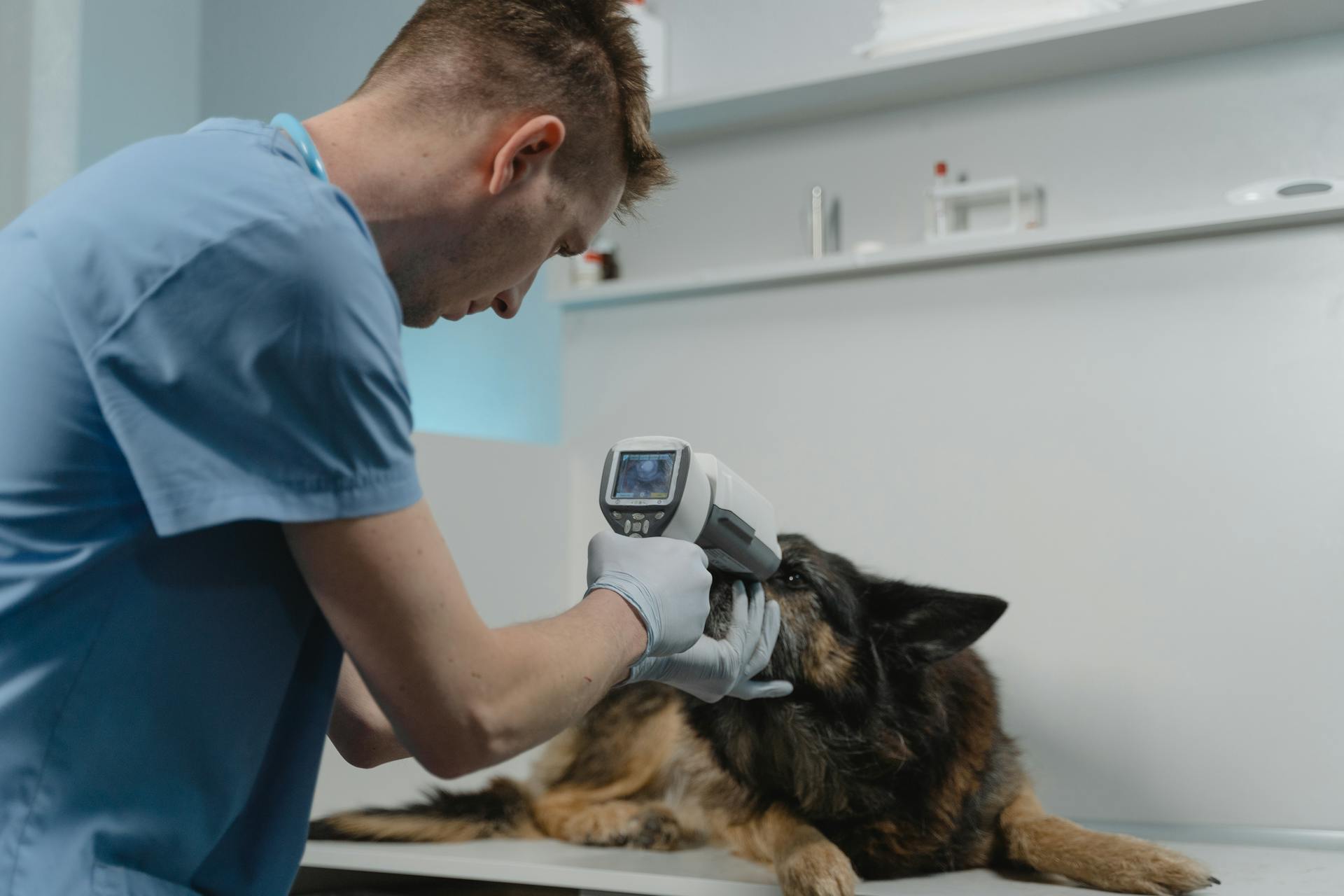
Contact your veterinarian to get your dog fitted for an Elizabethan collar (cone) if you still have trouble keeping your pet from licking the medication.
These collars can be used to prevent your dog from licking at the affected area.
If this caught your attention, see: Dog Flea Medicine Not Working
Understanding the Issue
Flea and tick medication poisoning in dogs is more common than you might think. Pyrethroid and organophosphate toxicoses are among the most common poisonings in dogs.
These poisonings can occur due to mishandling or misuse of flea and tick control products. This can happen when the product is not used exactly as directed, or when the wrong product is used at the wrong dose on the wrong schedule.
The type of flea or tick product used and the amount and method of administration play a crucial role in determining the risk of toxicity. For example, ingestion of a topical product or using the wrong product at the wrong dose on the wrong schedule can lead to toxicity.
The length of time since the product was administered or applied is also a factor to consider. The sooner you seek veterinary attention, the better.
Here are some key factors that can affect the severity of poisoning:
- The type of flea or tick product used
- The amount and method of administration
- The length of time since the product was administered or applied
- The health and age of the dog before the poisoning
Prevention and Safety
Using a vet-recommended flea and tick control product exactly as directed by the prescribing practitioner is key to preventing poisoning.
All medications should be stored out of reach when not in use to prevent accidental exposure between doses.
Notify a vet of the presence of all animals and children in the home when choosing external parasite control to ensure the safest options are selected.
Any dog using a pyrethroid or organophosphate based external parasite control is at risk of poisoning, so it's essential to consult a veterinarian when selecting external parasite control.
Immediate veterinary care is needed if pyrethroid toxicity is expected, or if your dog has ingested pyrethrins/pyrethroids or organophosphates, which are intended for topical use only.
Here's an interesting read: Flea Control Pregnant Dog
Risk Factors
Dogs using pyrethroid or organophosphate based external parasite control are at risk of poisoning.
The severity of symptoms increases with the quantity, concentration, and type of pesticides involved.
Poisoning from flea and tick products is common in dogs.
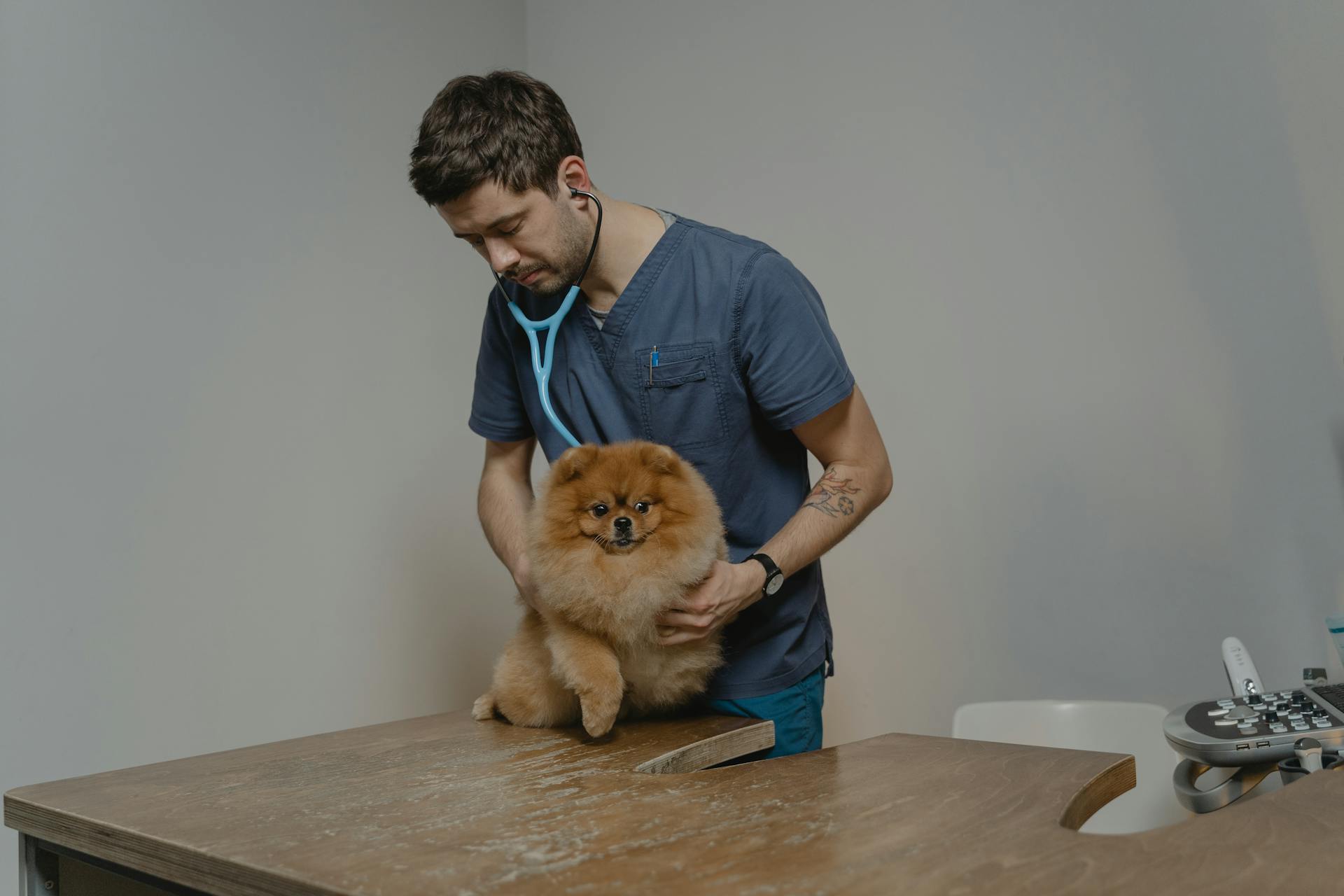
Immediate veterinary care is needed for dogs who have ingested pyrethrins/pyrethroids or organophosphates, as these are intended for topical use only.
Consult a veterinarian when selecting external parasite control, and use the product exactly as directed by the prescribing veterinarian.
Emergency care is indicated for pyrethroid toxicoses, which can cause severe symptoms and lead to death.
You might like: Can a Dog Wear a Cat Flea Collar
Prevention
To prevent poisoning from flea and tick control products, use a vet-recommended product exactly as directed by the prescribing practitioner.
It's crucial to notify your vet about all animals and children in the home when choosing external parasite control, as this affects the type of product recommended.
Storing medications out of reach when not in use is vital to prevent accidental exposure between doses.
This simple step can give you peace of mind and ensure the safety of your loved ones.
Expand your knowledge: When Should You Give Your Dog Flea and Tick Medicine
Vectra 3D Safety for Cats
Your cat is at risk if it ingests or comes into contact with Vectra 3D, which can happen if it grooms a treated dog.
To prevent this, keep treated dogs away from cats after treatment until the application site is dry.
Cats should not be allowed to groom dogs at the application site until the product has dried.
If your cat does come into contact with Vectra 3D, seek veterinary advice immediately.
See what others are reading: Can You Use Dog Flea Medicine on Cats
Vectra 3D Information
Vectra 3D is a popular flea and tick preventative medication for dogs. It's a topical treatment that's applied directly to the dog's skin.
Vectra 3D contains a combination of three active ingredients: dinotefuran, pyriproxyfen, and permethrin. These ingredients work together to kill adult fleas, prevent flea eggs from hatching, and repel ticks.
Vectra 3D is available in various sizes to suit dogs of different weights. It's usually applied once a month, either on the dog's back between the shoulder blades or on the dog's skin at the base of the neck.
Curious to learn more? Check out: Why Does My Male Dog Lick My Female Dogs Pee
Frequently Asked Questions
What happens if a dog licks the frontline?
If a dog licks Frontline, it's highly unlikely to cause harm due to the low toxicity of fipronil, even in large quantities. However, it's still essential to use Frontline as directed to ensure your dog's safety and effectiveness of the treatment.
What happens if my dog licks K9 Advantix?
If your dog licks K9 Advantix, it may experience mild to moderate side effects like drooling, nausea, and lethargy. Ingesting the product can cause uncomfortable symptoms, so it's essential to keep it out of reach of your pet.
Featured Images: pexels.com