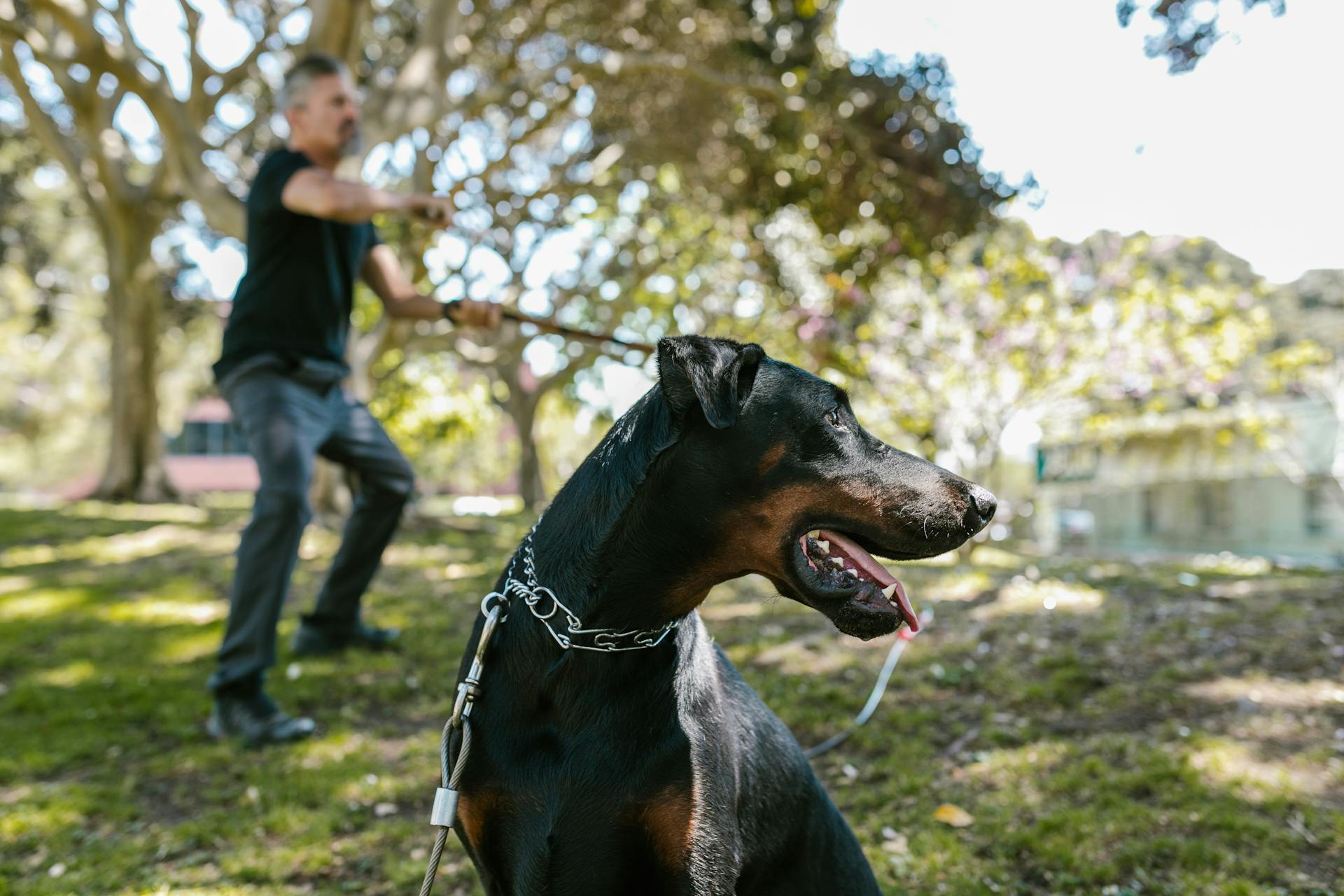
The Doberman Pinscher is a breed known for its intelligence and loyalty, but like any dog, it requires proper training and care to thrive.
Doberman Pinschers are naturally athletic and require regular exercise to maintain their physical and mental health.
They have a short, smooth coat that requires minimal grooming, but their ears need regular cleaning to prevent infections.
Doberman Pinschers are often stereotyped as aggressive, but with proper socialization and training, they can be gentle and affectionate companions.
Recommended read: Obedience Training for Doberman Pinscher
Breed Characteristics
Doberman Pinschers are naturally intelligent and trainable, making them a popular choice as guard dogs and police dogs.
They have a strong work ethic and thrive on mental and physical stimulation.
Doberman Pinschers are often described as loyal and loving companions, but they can be wary of strangers and may require time to warm up to new people.
Their athleticism and agility make them well-suited for dog sports like agility and obedience training.
Doberman Pinschers are generally quiet, but they do have a distinctive bark that can be loud and piercing.
Their short coats require minimal grooming, but they do need regular exercise to stay happy and healthy.
With proper training and socialization, Doberman Pinschers can make excellent family pets.
Training and Behavior
Training a Doberman Pinscher requires consistency and strong leadership in a firm but gentle manner. They are extremely sensitive and will shut down if treated harshly.
Doberman Pinschers are highly intelligent and quick to learn, but they can be mischievous and destructive if they don't receive proper training and exercise.
Early socialization is critical to proper development, and it's essential to teach your Doberman that guests and other animals are welcomed.
To prevent destructive behaviors, Dobermans need daily physical activity and mental stimulation. They thrive in active families and enjoy participating in activities like walks, hikes, runs, or bike rides.
Here are some key characteristics to keep in mind when training a Doberman:
- Consistency and strong leadership are crucial in training a Doberman.
- Doberman Pinschers are sensitive and may shut down if treated harshly.
- Early socialization is critical to proper development.
- Doberman Pinschers require daily physical activity and mental stimulation.
- They thrive in active families and enjoy participating in various activities.
Training
Training a Doberman Pinscher requires consistency and strong leadership in a firm, but gentle manner. They are extremely sensitive and will shut down if treated harshly.
Highly intelligent, Doberman Pinschers are quick to learn and enjoy mental stimulation. They excel in canine sports from obedience to agility.
Doberman owners must accept from the beginning that Dobermans can be mischievous and require a lot of exercise and training to control their assertive nature. If you're house-proud and can't bear the thought of a dog making a mess, then this breed is not for you.
Consistency is key when training a Doberman Pinscher. They should be consistently trained from a young age, and their owners should establish sturdy leadership and dominance.
Doberman Pinschers are naturally protective of their home and pack, so it's essential to teach them that guests and other animals are welcomed. Early socialization is critical to proper development, and the first year is absolutely critical to the establishment of the order that must be present in the family.
Here are some tips for training a Doberman Pinscher:
- Start training as soon as possible
- Be consistent and firm, but gentle
- Use positive reinforcement techniques
- Provide plenty of exercise and mental stimulation
- Socialize your Doberman to new people, animals, and environments
By following these tips and being patient and consistent, you can raise a well-behaved and loyal Doberman Pinscher.
Training and Behavior
Dobermans are highly intelligent and quick to learn, but they can be mischievous and cause damage if not properly trained and exercised.
They thrive on mental stimulation and need to be engaged in activities that challenge their minds, such as agility competitions or obedience training.
Dobermans require daily physical activity to stay happy and healthy, and they love to join their owners on walks, hikes, runs, or bike rides.
If you're not available for a daily walk or run, a Doberman may not be the right pet for you.
Early and extensive training is a must for Dobermans, as they can display undesirable behaviors if not properly trained.
A well-trained Doberman is a joy to watch, and they excel in canine sports and make excellent police and military dogs.
Dobermans are reserved with strangers and very protective of their family, so they need consistent leadership and early socialization.
They can be prone to separation anxiety if left alone for too long, so it's essential to provide them with plenty of exercise and mental stimulation.
Dobermans are not suitable for families that are not active, as they need to be engaged in physical activities to stay happy and healthy.
A unique perspective: Doberman Pinscher Not Cropped
The Personality
The Doberman Pinscher is a loyal companion and an excellent family member, known for their big heart and love for human companionship. They have a natural instinct to protect their loved ones from intruders.
Dobermans are fearless animals and make great watchdogs, but they're not attack dogs. Their method of protection is to keep intruders at bay, pinning them to a wall or corner until backup arrives.
With proper training and socialization, Dobermans can be wonderful companions, but they do require constant human interaction and socialization. They can become mean or aggressive if improperly bred or raised.
Dobermans are intelligent and fast-learners, making them well-suited for police, military, and guard work. They can be trained from an early age, even as young as 8 weeks old.
Despite their reputation for viciousness, most Dobermans are big softies at heart that love the companionship of people. They are capable of displaying gentleness and devotion to children and other animals in the home.
Their innate guarding instinct makes them a good watchdog, but it's essential to teach them to respect children and other pets from an early age. A well-socialized Doberman is a joy to be around, but a poorly socialized one can be a challenge.
Recommended read: Doberman Pinscher Large
Care and Management
Dobies are intelligent dogs that require regular exercise to stay happy and healthy.
Exercise should be a daily routine, with at least 30 minutes of physical activity, such as walking or running, to keep them in shape.
As they are prone to obesity, it's essential to monitor their food intake and prevent overeating.
Their short coats require minimal grooming, but regular nail trimming and ear cleaning are necessary to maintain their overall health.
With proper care and attention, Dobies can live up to 12 years or more, making them a long-term companion.
Frequently Asked Questions
What are Dobermans weaknesses?
Dobermans are prone to certain health issues, including a life-threatening heart condition called dilated cardiomyopathy (DCM). Regular veterinary check-ups and genetic testing can help identify potential weaknesses in Doberman breeding.
Are Dobermans clingy dogs?
Dobermans can be quite clingy and develop strong bonds with their owners, which may lead to separation anxiety if left alone for extended periods. This attachment can make them protective of their family, especially children.
Featured Images: pexels.com