Dendrelaphis punctulatus, also known as the common tree snake, is a species of snake that thrives in a variety of environments.
They are found in Australia and New Guinea, and can be identified by their slender build and pointed snout.
A well-ventilated enclosure with a temperature range of 75-85°F (24-29°C) is essential for their health and well-being.
The enclosure should also have a humidity level of 50-60% to mimic their natural habitat.
A diet of small lizards, frogs, and birds is suitable for dendrelaphis punctulatus, and they should be fed live prey to encourage natural hunting behavior.
It's also important to provide a shallow water dish for drinking and soaking.
Physical Characteristics
Dendrelaphis punctulatus can grow quite large, with females reaching an average snout-vent length of 101 centimeters (40 in).
The maximum total length in females can be as long as 200 centimeters (79 in), while males are slightly shorter at 93 centimeters (37 in).
This snake has 24-26 maxillary teeth, which is a notable feature.
The dorsal scales are arranged in 13 rows at midbody, and the ventrals number 191-220.
The anal plate is divided, and the subcaudals, which are also divided, number 120-144.
The dorsal body color of Dendrelaphis punctulatus varies from golden yellow to bright green, to olive green, to black, and sometimes even blue.
The eyes are large, with typically golden-colored irises and large round pupils.
Related reading: Western Green Mamba
Habitat and Distribution
Dendrelaphis punctulatus, the common tree snake, is found in a wide range of habitats across northern and eastern Australia.
It's common in the northern tropics and eastern Australia, extending its range from the Kimberley region in Western Australia to Cape York and Torres Strait in Queensland.
This snake can be found in various types of environments, including bushland, well-vegetated banks of rivers and streams, and rainforest edges.
Eucalypt forests and heathland are also home to the common tree snake, which thrives in areas with trees, long grass, and lush vegetation – especially near water.
Here's an interesting read: Snakes of Australia
You might spot one near a house garden with a fountain or pond surrounded by long grass or shrubs, as they often look for these areas to hunt.
They're active during the day, resting at night in hollow trees, logs, foliage, or rock crevices, often in trees, which is how they got their name.
Behaviour
The green tree snake, Dendrelaphis punctulatus, is a skilled hunter that blends in with its surroundings. It often looks for long grass near water to hide and watch for its prey.
During the day, it's active, but at night, it rests in various spots, such as hollow trees, logs, foliage, or rock crevices. This is why it's often found resting in trees, earning it the name "tree snake".
It's a clever snake that will enter house gardens with fountains or ponds surrounded by long grass or shrubs.
For another approach, see: Emerald Tree Monitor
Handling and Reproduction
Handling and reproduction of dendrelaphis punctatus requires some care and knowledge. Females lay 5 to 12 elongated eggs per clutch.
To ensure the health and safety of the eggs, it's essential to provide a suitable environment.
Common tree snakes are oviparous, meaning they lay eggs rather than giving birth to live young.
Handling
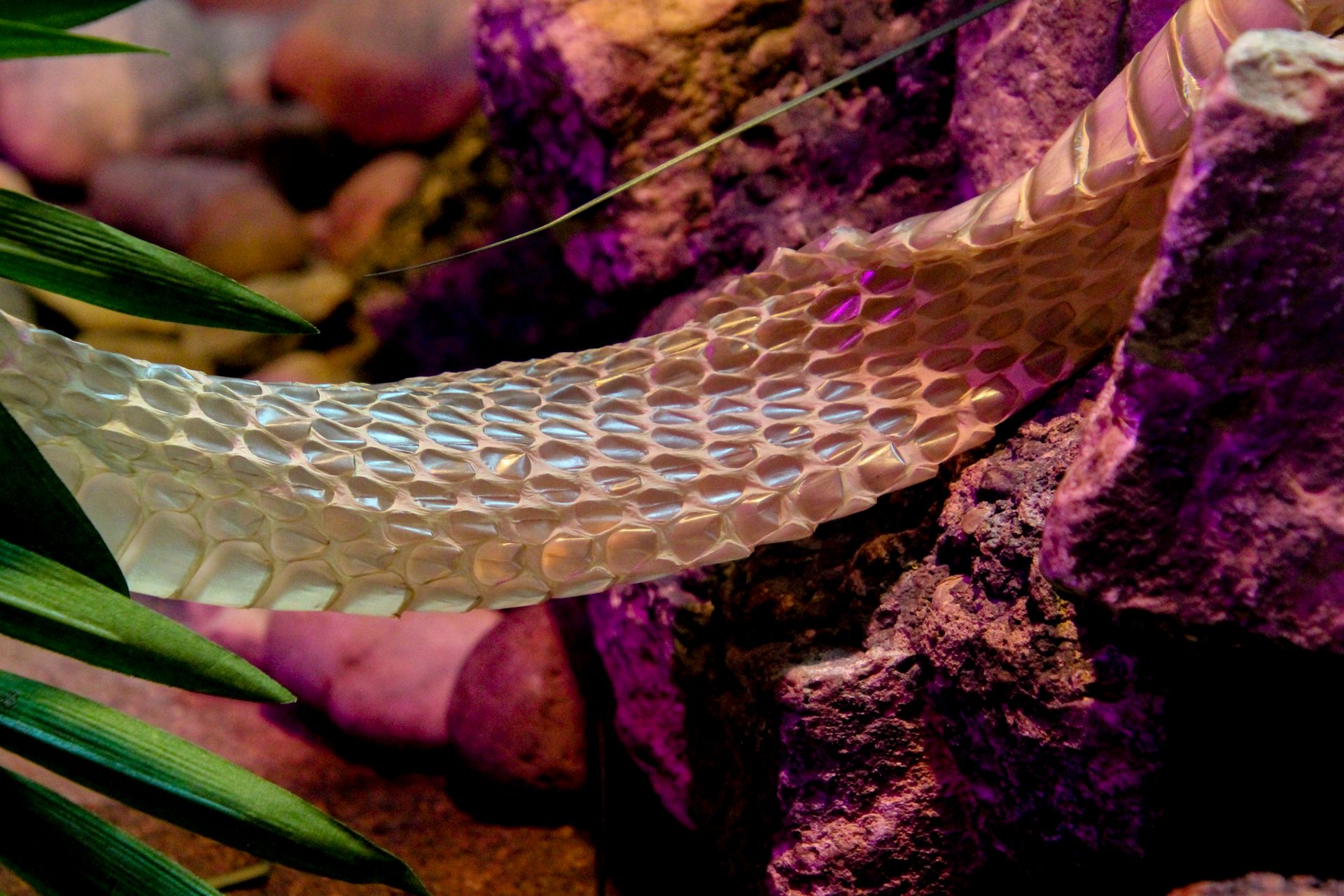
Handling tree snakes requires caution and respect for their natural behavior. They will defend themselves by producing a horrible odour.
Tree snakes may bite when feeling threatened, so it's essential to exercise care when interacting with them. They use this defense mechanism as a last resort.
In the wild, tree snakes will often make a quick escape when they realize someone is watching them, rather than confronting the observer. This behavior is a testament to their natural instinct to avoid danger.
If you're approached by a tree snake, it may inflate its body and neck to make itself seem larger, a tactic used to scare potential threats. However, this is usually a temporary response before the snake decides to flee.
Reproduction
Handling tree snakes requires a delicate touch, but understanding their reproductive habits can help you better care for them.
Common tree snakes are oviparous, which means they lay eggs rather than giving birth to live young.
Females typically lay 5 to 12 elongated eggs per clutch, and it's essential to provide a safe and suitable environment for them to incubate.
Contents
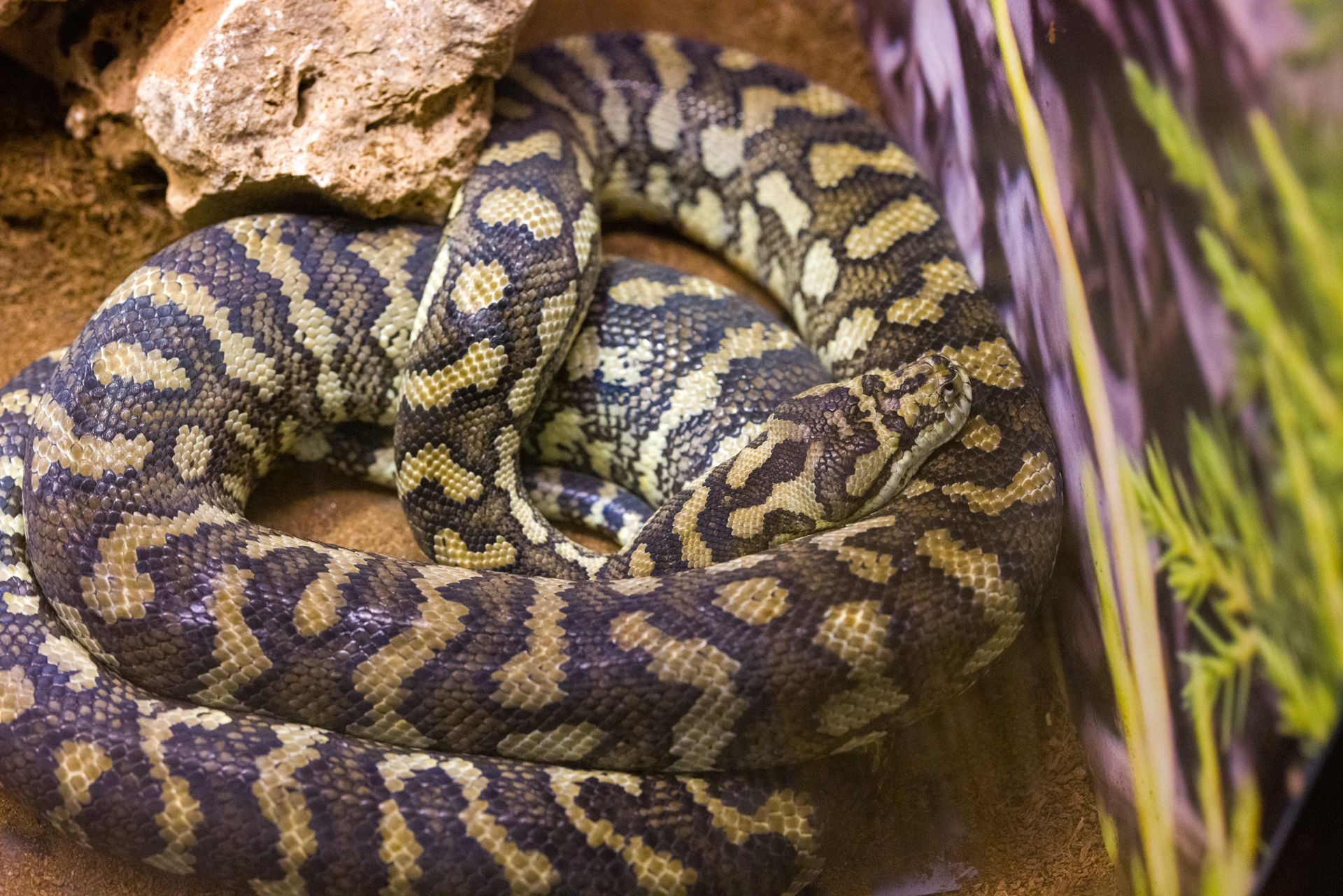
This snake is known for its slender body and tail, making it quite agile. The body colour can vary from green to olive-green to black, and sometimes even blue.
Its eyes are larger than in most snakes, which is quite distinctive. This species can be found in a variety of habitats, ranging from rainforest to woodland to urban areas.
It has a primitive venom apparatus and a mildly toxic venom that is not regarded as dangerous to human beings.
Intriguing read: Western Diamondback Rattlesnake Venom
Contents
The dendrelaphis punctulatus is a common snake that's easily recognizable due to its slender body and agile nature.
This snake's body colour can vary greatly, ranging from green to olive-green to black, and sometimes even includes blue or pale yellow hues.
Its eyes are notably larger than those of most other snakes.
This snake is found in a variety of habitats, including rainforests, woodlands, and even urban areas.
It preys on fish, frogs, and other small animals in its environment.
The dendrelaphis punctulatus has a primitive venom apparatus and mildly toxic venom that's not considered a threat to human beings.
Its tiny grooved venom-conducting fangs are positioned at the back of the upper jaw, requiring it to partially swallow its prey to deliver the venom.
Featured Images: pexels.com