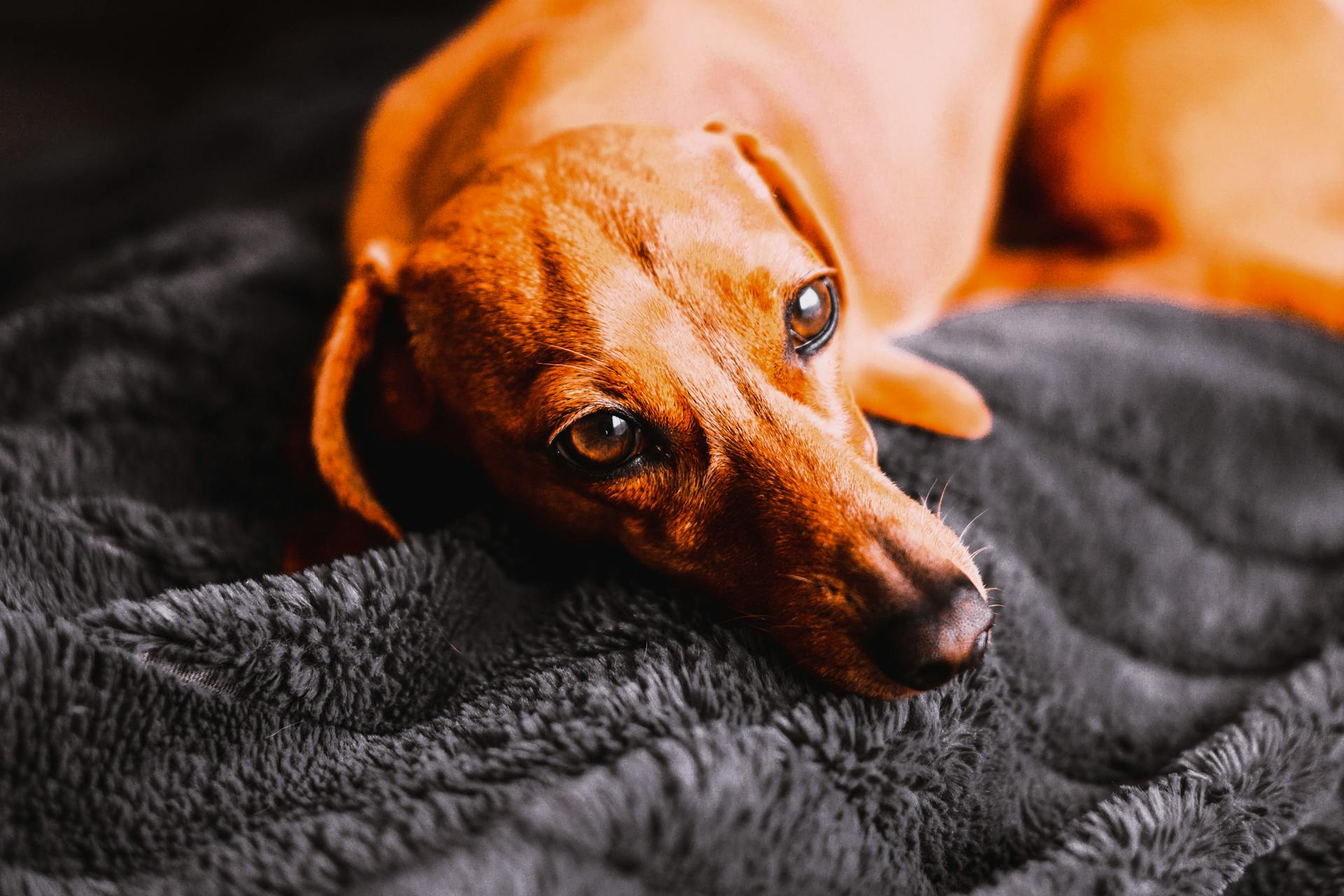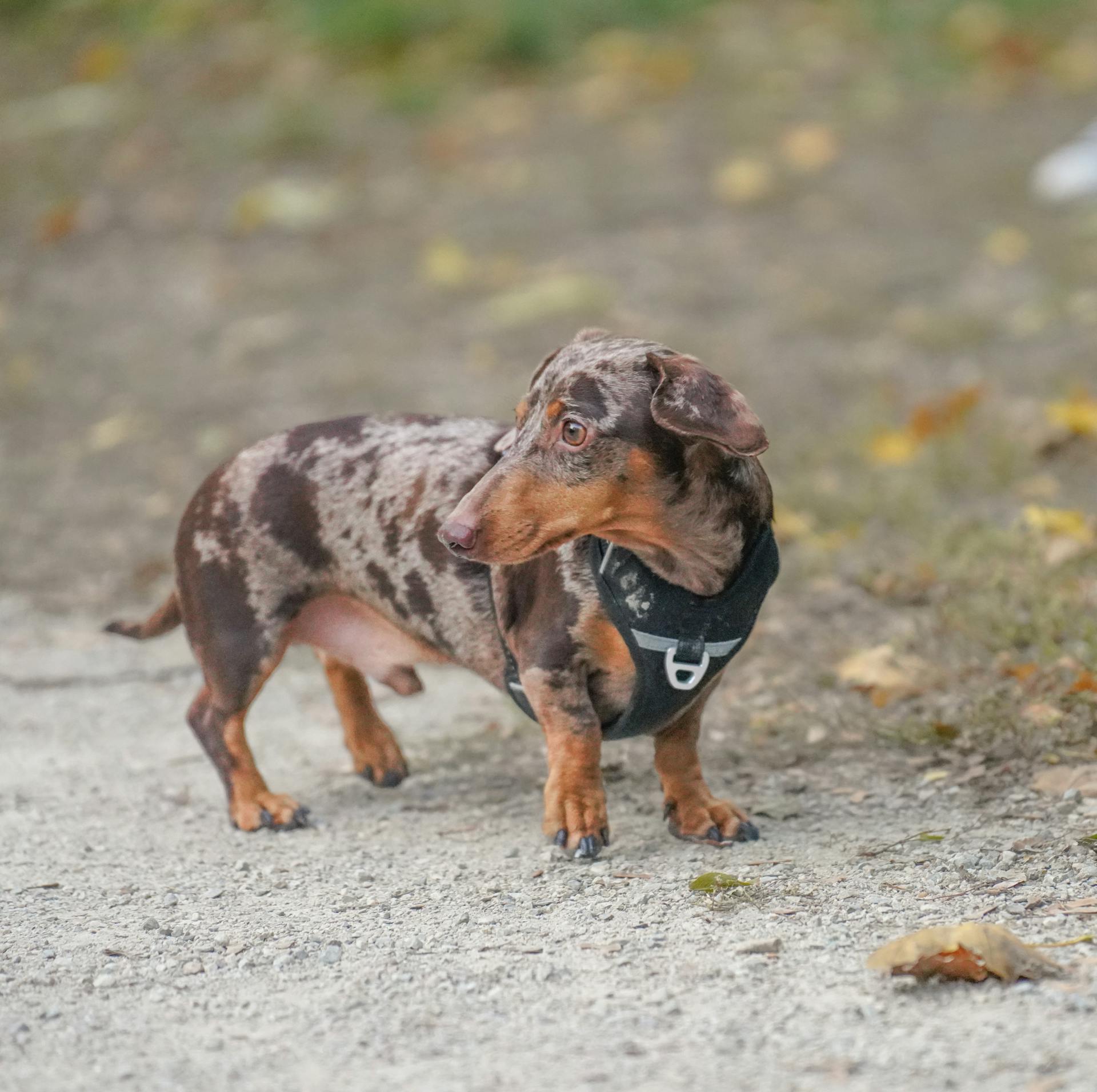
The Dachshund Shetland Sheepdog mix, also known as a Dachshund Sheltie, is a unique and loyal companion. This crossbreed combines the playful and energetic nature of a Dachshund with the intelligence and trainability of a Shetland Sheepdog.
They typically weigh between 20-40 pounds and stand between 10-15 inches tall at the shoulder. Their coats can vary from a smooth, short Dachshund coat to a long, flowing Shetland Sheepdog coat.
Breed Overview
The Doxie Sheltie is a unique breed that inherits traits from its parental breeds.
Its muzzle resembles the Sheltie's, and it has an ever-alert facial expression.
Ears can be either long and floppy or perky with tips falling forward.
The legs appear to be shorter with large paws, and the body is usually slightly elongated like the Dachshund's, but more agile and sturdy.
A double coat is characteristic of the Doxie Sheltie, with the topcoat being straight and the undercoat fluffy.
Fur color can be brown, sable, or tan, sometimes with white patches.
For another approach, see: Beagle Doxie Puppies
Temperament and Personality
The Dachshund Shetland Sheepdog mix is known to be a social, loyal, and loving breed. They are highly social and thrive on interaction, so be prepared to spend quality time with your furry friend.
They are also highly intelligent, inheriting this trait from both their Dachshund and Shetland Sheepdog parents. This intelligence means they can be trained with positive reinforcement, but they can also be a bit stubborn at times.
As a mix of a hunting and herding breed, the Sheltie Dachshund may have a strong instinct to "herd" small animals and even kids, so it's essential to provide early socialization from a young age. This will help them become more adaptable and friendly.
These dogs are highly sensitive and energetic by nature, requiring regular exercise and mental stimulation to prevent boredom and destructive behavior. They are best suited to a temperate climate, but with proper precautions, they can adapt to other environments.
With patience, love, and proper training, the Sheltie Dachshund mix can become a perfect family pet, especially with children who are old enough to understand how to interact with them gently. However, it's crucial to supervise interactions between kids and the dog to prevent any injuries.
Suggestion: Shetland Sheepdog Standard
Care and Grooming
This Dachshund Shetland Sheepdog mix is a heavy shedder, so be prepared for regular grooming sessions. You'll need to brush their coat two times a week, but daily during high-shedding season.
Their double-coated fur needs regular attention to prevent matting and tangling. Use all-natural dog shampoos when bathing them, and clip their nails whenever they grow too long.
A good vacuum cleaner is a must-have to keep your floors clean. Regular nail trimming, ear cleaning, and dental care are also essential for this breed.
Brushing frequency varies depending on the season: twice a week in low-shedding season and daily in high-shedding season.
This mix has a high energy level, so regular exercise is crucial to keep them from becoming destructive. Plan on taking them for long walks and hikes to burn off excess energy.
Health and Potential Issues
The Shetland Sheepdog Dachshund mix, also known as the Shethund, is a unique and lovable breed that can make a wonderful companion. However, like all breeds, it's not immune to potential health issues.
Dermatomyositis is one of the most common health issues found in Shelties, and it can affect the skin, muscles, and blood vessels of your Shethund. Symptoms can vary from subtle to severe and may require hospitalization in severe cases.
Kneecap dislocation, or patellar luxation, is a common joint abnormality in small dogs, including the Dachshund and Sheltie. If you notice your Shethund's knee popping out of place, it's essential to take them to the vet.
Intervertebral disk disease (IVDD) is a common health issue affecting Dachshunds, and your Shethund may be prone to it due to their Dachshund genes. IVDD can lead to paralysis and shorten your dog's lifespan if left untreated.
Some other potential health concerns that may affect your Shethund include seizures and skin problems, which are more common in Dachshunds.
To keep your Shethund's health at its best, make sure to:
- Provide regular exercise and a balanced diet
- Keep an eye out for signs of joint problems, such as kneecap dislocation
- Monitor your dog's back health and watch for signs of IVDD, such as reluctance to jump or weakness in hind legs
- Schedule regular check-ups with your vet for hip, eye, and thyroid examinations
- Consider running blood tests on your dog at least once a year
Training and Behavior
Training a Dachshund Shetland Sheepdog mix requires patience and consistency, as they can be strong-willed and independent. They are highly intelligent and respond well to positive reinforcement training.
Housebreaking may take time due to their independent nature, but with a consistent routine and plenty of praise, they can learn quickly.
Dachshund Shetland Sheepdog mixes are naturally active and need regular exercise to stay happy and healthy, but they can adapt to apartment living with daily walks and playtime.
Their Deep Herding Instincts
Shethunds have a strong herding instinct that's still present today, even if they're not used for herding as much as they used to.
Without proper exercise and training, they'll chase after anything that moves, which can be stressful for smaller pets in the household.
Dealing with their herding instinct is easier when they're puppies, but with older dogs, it can be more challenging and require more time and patience.
They may not hurt smaller animals, but they can frighten them and cause them to stress out, so it's essential to manage their herding instinct carefully.
Explore further: Shetland Sheepdog Herding
Quick Learners
Shethunds are quick learners, and their intelligence prevails over their potential stubbornness. They're a great combination of a Shetland Sheepdog and a Dachshund, and their eagerness to please makes training a breeze.
Consistency is key when training a shethund, and a persistent trainer with high-value rewards can make a big difference. Most shethunds love a tasty treat, but some may prefer a quick game of tug.
Basic obedience training won't be difficult once you know what your shethund likes, and focusing on recall and leash manners early on will ensure enjoyable walks. Shethunds have a high prey drive, so it's essential to address these issues early on.
With proper training and socialization, shethunds can thrive in various family settings, whether small or large. They require an active owner who can provide daily walks and opportunities to put their intelligence to good use.
Are Shethunds Aggressive?
Shethunds can inherit a calm temperament from their sheltie parent, making them friendly dogs that greet everyone with a wagging tail.
However, some shethunds may have a predisposition to be territorial and aggressive due to their dachshund parent.
Socialization can prevent behavioral issues that may cause them to act aggressively, making early training and socialization crucial for shethunds.
Shethunds that inherit the dachshund's traits may still grow into well-behaved dogs with proper training and care.
Explore further: Are Dachshunds Good Dogs
Three Reasons to Get a Pet
Getting a pet can be a wonderful experience, but it's essential to consider the pros and cons. One reason to get a pet is that they can be social and inquisitive, making them great companions.
Having a pet can bring a lot of joy and companionship to your life. A Shethund, for example, is known to be social and inquisitive, which means they'll likely be interested in everything you're doing.
If you're looking for a pet that's easy to train, a Shethund might be a great choice. They're quick learners, which means they'll pick up commands and habits in no time.
Having a pet can also be a great way to teach children about responsibility. A Shethund makes a great family dog, and with proper training, they'll be a valued member of your family.
Here are three reasons to get a pet:
- They are social and inquisitive
- They are quick learners
- They make great family dogs
Size and Weight
The Sheltie Dachshund mix, also known as the Shethund, is a relatively small dog. They typically stand between 13 to 16 inches at the shoulder. Their weight can vary, but it's usually around 14 to 27 pounds. This mix has a moderate lifespan of 12 to 13 years.
History and Background
The Shetland sheepdog, also known as a Sheltie, is a small herding dog breed originating from the Shetland Islands of Scotland.
These dogs descended from spitz-type dogs brought to the islands and crossed with working collies of the time. They are one of the smallest herding breeds.
Their utilization for herding purposes decreased significantly over the years.
The dachshund, on the other hand, is a hunting dog breed that was used for hunting burrow-dwelling animals like badgers and rabbits in Germany.
The elongated frame of the dachshund made the breed excellent for these tasks as they could dig and pull the game out of their holes easily.
Shethunds, a mix of these distinct breeds, are not as common as other hybrid breeds like poodle mixes.
Due to the rarity of this designer breed, you may have difficulties finding a trustworthy shethund breeder.
A fresh viewpoint: Mini Dachshund Hunting
Frequently Asked Questions
Is a Dachshund mix a good family dog?
Yes, a Dachshund mix is a great family dog, suitable for active families who enjoy walking and spending time outdoors. They are generally good with children and make loyal, loving companions.
Featured Images: pexels.com