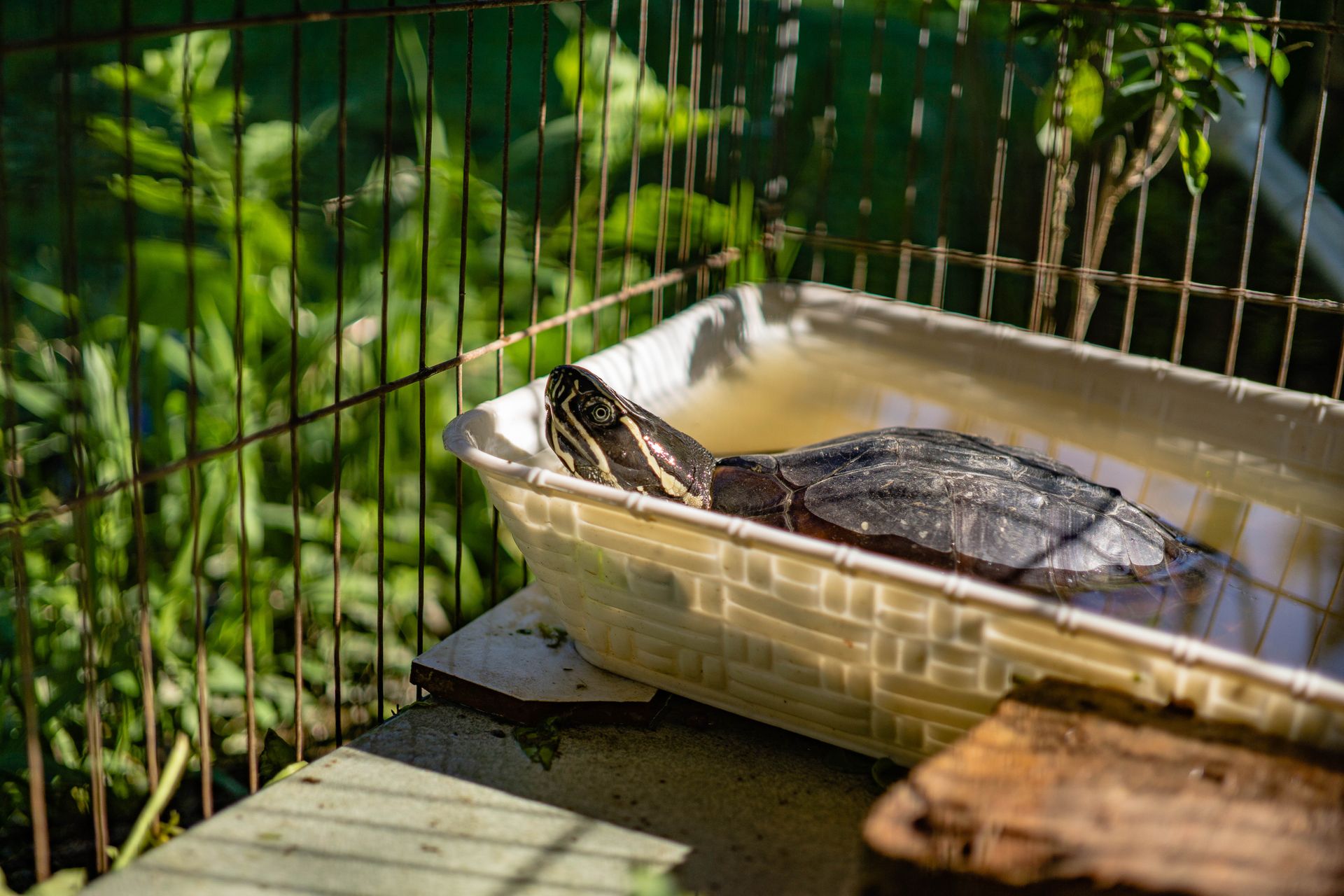
Cyclemys are a type of turtle that can be found in Southeast Asia. They are semi-aquatic, meaning they spend most of their time in or near water.
Cyclemys have a distinctive shell that is typically brown or gray in color, with yellow or orange markings. They can grow up to 10 inches in length.
In the wild, Cyclemys are omnivores, feeding on a variety of plants and animals. They are also known to be good climbers.
Cyclemys are listed as vulnerable on the IUCN Red List, due to habitat loss and degradation.
Taxonomy and Biology
Cyclemys turtles belong to the family Geoemydidae under the subfamily Geoemydinae.
The genus Cyclemys was first described in 1834 by English zoologist Thomas Bell in his work A Monograph of the Testudinata.
Cyclemys and closely related genera (Cuora, Pyxidea, and Notochelys) are believed to have diverged from a common Heosemys-like ancestor.
Historical difficulties in ascertaining Cyclemys taxonomy and phylogeny were due to morphological similarity between species and changes in color patterns during growth.
Until recently, the genus was thought to comprise only one or two morphologically variable species, C. dentata and C. oldhamii.
Subsequent investigation has now put the number of species under the genus to seven, though this remains controversial.
The two distinct morphological differences between Cyclemys species are based on the main color of their plastrons - species with yellow bellies and species with dark bellies.
The generic name Cyclemys comes from the Greek κύκλος (kyklos, meaning 'round' or 'circle', referring to the shape of the carapace) and εμύς (emys; 'freshwater turtle').
Distribution and Habitat
Cyclemys can be found in a vast range of countries, including those in South Asia and Indochina, as well as Southeast Asian countries like Malaysia, Indonesia, Brunei, and the Philippines.
Their distribution ranges are unclear, but one thing is certain: they thrive in hilly forests near ponds, streams, and other shallow, slow-moving bodies of water.
Adult Cyclemys spend most of their time on land, but they're not averse to exploring higher elevations, with some found as high as 1,000 meters above sea level.
These omnivorous creatures have a varied diet, with adults eating a mix of plants and animals, while their younger counterparts tend to be more carnivorous, preying on aquatic animals.
As a result, you're more likely to spot younger Cyclemys in the water, where they can hunt for their favorite snacks, whereas adults prefer to stay on dry land.
Conservation and Care
Cyclemys species are often caught and sold for the pet trade, food, or traditional medicine. In 1998, Forest Protection authorities of Vietnam confiscated a shipment of about 700 turtles with an estimated 30 individuals of C. oldhamii.
The most commonly encountered species of Cyclemys in the pet trade, C. dentata, is now being captive bred. Captive breeding minimizes the impact on wild populations.
Captive bred Cyclemys are usually preferred due to being healthier and more acclimated to handling.
Methods
To effectively conserve and care for the environment, it's essential to understand the methods used to study the impact of human activities on wildlife populations. We conducted a mark-recapture study of C. oldhamii at three sites in northeastern Thailand.
A protected stream was one of the sites studied, providing a natural habitat for C. oldhamii to thrive. The stream's protected status allowed researchers to monitor the population without significant human disturbance.
A degraded stream was another site evaluated, showcasing the effects of human activities on the environment. This site served as a control to compare with the protected stream.
Human-constructed ponds were also studied, highlighting the impact of human development on wildlife habitats. These ponds provided a unique opportunity to observe how C. oldhamii adapts to artificial environments.
Conservation
Conservation efforts are crucial for the Cyclemys species, which are often caught and sold for the pet trade, food, or traditional medicine.
In 1998, Forest Protection authorities of Vietnam confiscated a shipment of about 700 turtles, including an estimated 30 individuals of C. oldhamii. This incident highlights the scale of the problem.
The most commonly encountered species of Cyclemys in the pet trade, C. dentata, is now being captive bred, which is a positive step towards reducing the impact on wild populations.
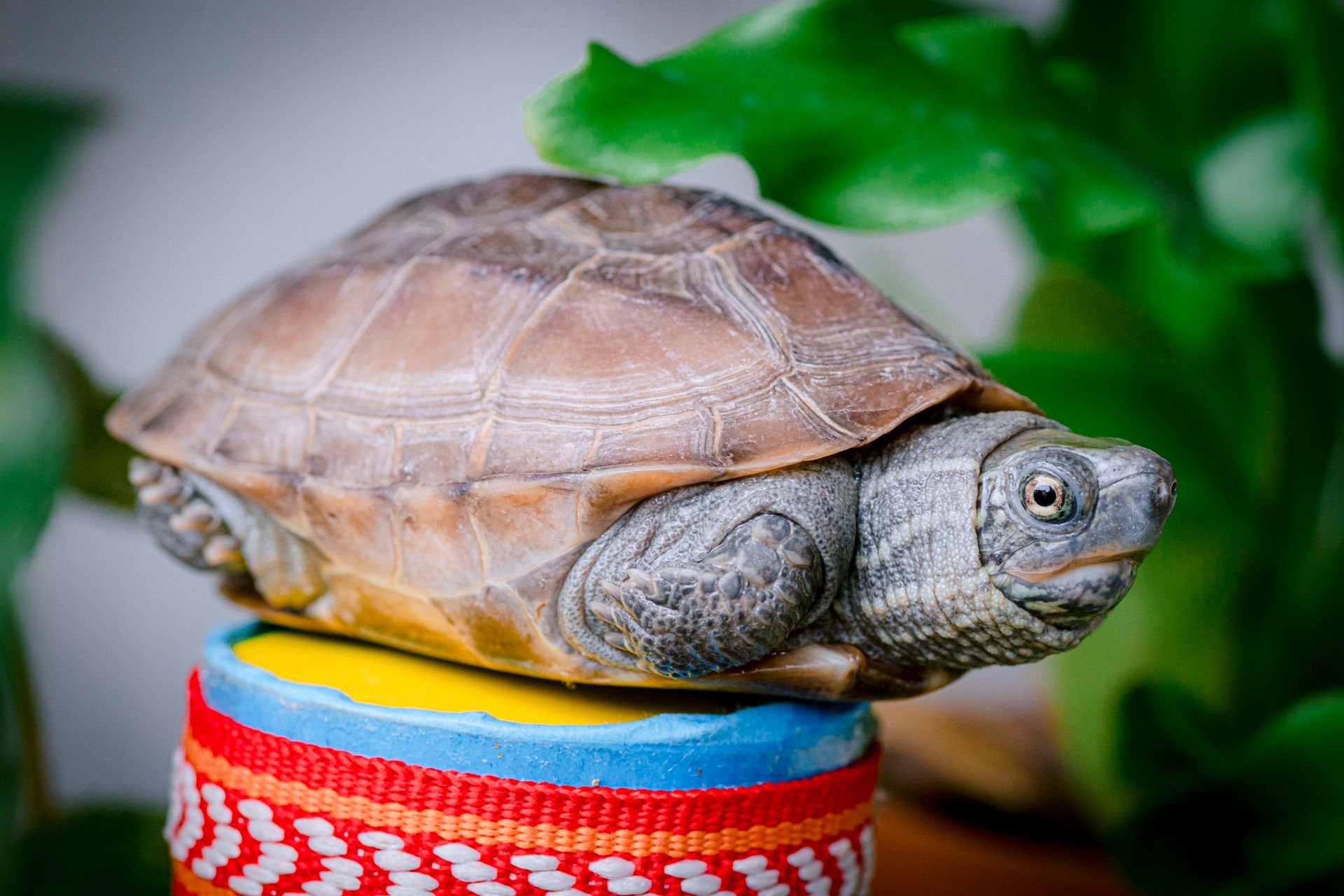
Captive breeding minimizes the impact on wild populations, as these turtles are healthier and more acclimated to handling.
In 1991, Cyclemys was given the Action Plan Rating of 3 - in need of some conservation action, due to the confusion over their exact taxonomy and distribution.
The last assessment in 2000 by the Asian Turtle Trade Working Group of IUCN incorrectly classified all Cyclemys species as lower risk/near threatened, due to treating the different species as all belonging to the species C. dentata.
The true conservation status of Cyclemys species, including the effects of wildlife trade, deforestation, and habitat loss, has yet to be studied.
This lack of understanding makes it challenging to develop effective conservation strategies for these species.
Best Substrate for Asian Leaf Turtles
Providing a thick layer of naturalistic substrate, also known as "bedding", is crucial for maintaining correct humidity levels and giving your Asian leaf turtle a comfortable place to burrow.
A good substrate will help keep your turtle's environment humid and provide a sense of security and enrichment. You can choose from a variety of substrates, but some are better suited for Asian leaf turtles than others.
Here are some recommended substrates for Asian leaf turtles:
- Zoo Med Eco Earth
- Zoo Med ReptiSoil
- Exo Terra Plantation Soil
- Zilla Jungle Mix
In addition to a good substrate, providing a thick layer of leaf litter and sphagnum moss will further enhance humidity and enrichment value.
Optimal Temperature for Asian Leaf Turtles
Asian leaf turtles are cold-blooded, meaning they rely on external temperatures to manage their own body temperature and metabolism.
A reptile's enclosure should offer a range of temperatures to allow them to thermoregulate effectively. The ideal temperature range for Asian leaf turtles is between 76-80°F on one side of the enclosure.
A basking temperature of around 90°F is recommended, with temperatures measured using at least two digital probe thermometers. Heating should be turned off at night, but temperatures allowed to drop no lower than 70°F.
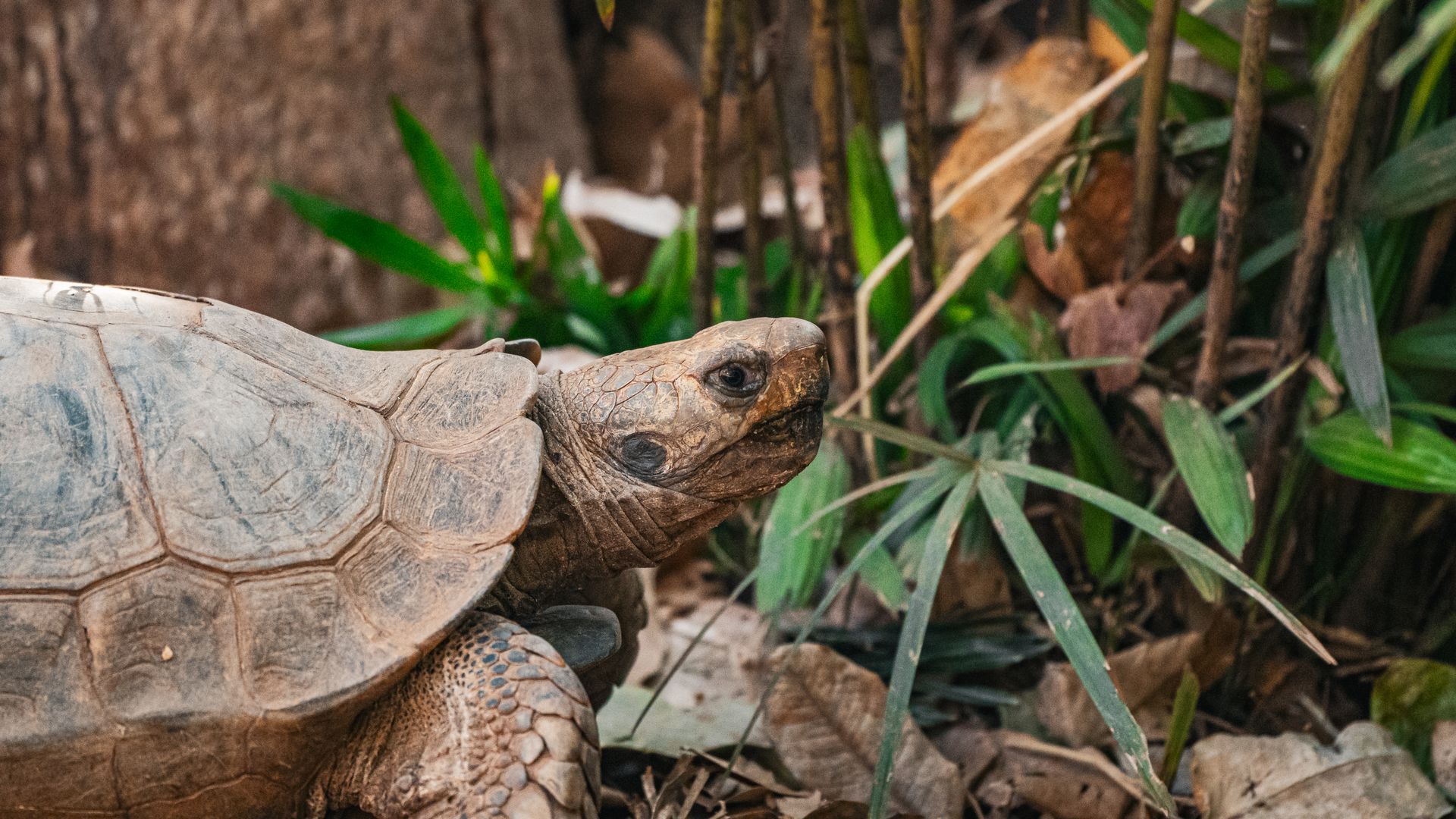
It's essential to maintain a temperature range of 75-80°F at night, and a water temperature within the same range as the ambient temperature. If necessary, a water heater can be used to maintain the optimal temperature.
Asian leaf turtles housed outdoors in an appropriate climate should not need additional heating.
Population Dynamics
Population dynamics is a crucial aspect of understanding the behavior and ecology of Cyclemys. Survival rates at the protected stream at SE were 12% higher than at the constructed ponds at SS, with overall survival estimates of 81.5% at SE and 69.4% at SS.
The sex ratio at SS was slightly female-skewed, but numbers of males and females did not differ statistically. At this site, 61% of all individuals were recaptured, including 66% of marked males, 60% of marked females, and 60% of marked subadults.
The population structure at SE and SS showed that subadults in the size class 61-90 mm were the most frequent size class captured, constituting 30% of all captures at SS. Individuals with carapace length >240 mm were absent from the population at SS.
Population densities were estimated to be 57.4 turtles per ha in the protected stream and 37.7 turtles per ha in the constructed ponds.
Population Dynamics
The population dynamics of Oldham's leaf turtle are fascinating. The study found that the protected stream at Sakaerat Environmental Research Station (SE) had a significantly higher survival rate than the human-constructed ponds at Sakaerat Silvicultural Research Station (SS), with estimates 12% higher overall.
The study used Cormack–Jolly–Seber models to estimate annual survival and recapture probabilities, and found that the timing of the wet and dry seasons varied widely among years, making it difficult to evaluate the importance of season to survival or recapture probability.
At SE, the population structure was characterized by a higher proportion of females, with a sex ratio of 1:1.7. In contrast, the population at SS was dominated by subadults, with 52% of captures falling into this age class.
Here's a breakdown of the population structure at each site:
The study also found that the population at SS had a higher proportion of individuals recaptured, with 61% of all individuals recaptured, compared to 44% at SE.
Survival rates varied by age and sex class, with subadults at SE having a lower survival rate than other age classes. At SS, male turtles had a higher survival rate than females.
Here are the estimated survival rates for each age and sex class:
The study estimated population densities of 57.4 turtles per ha in the protected stream and 37.7 turtles per ha in the constructed ponds.
Population Structure
At SE, a protected stream, 77 individuals were captured and marked, consisting of 19% males, 35% females, and 45% subadults.
The sex ratio at SE was slightly female-skewed, but numbers of males and females were not significantly different.
Adults made up 22% of all captures at SE, with carapace lengths ranging from 180–210 mm.
Of the 77 individuals captured at SE, 73% of marked males, 41% of marked females, and 66% of marked subadults were recaptured.
At SS, a study site with frequent human-caused disturbance, 67 individuals were captured and marked, including 18% males, 30% females, and 52% subadults.
Subadults in the size class 61–90 mm were the most frequent size class captured at SS, constituting 30% of all captures.
In total, 144 individuals were captured and marked across both study sites.
The sex ratio and proportion of subadults did not differ statistically between SE and SS.
Recapture rates were high at both sites, with 58% of all turtles marked at SE and 61% at SS.
Species Information
There are several species of Cyclemys, a genus of turtles. Cyclemys atripons, Cyclemys dentata, and Cyclemys pulchristiata are three of the most well-known species.
These species can be divided into two morphologically distinct groups, but they all share some common characteristics. They are listed alphabetically along with their common names and geographical distribution.
Here are some key species to know:
- Cyclemys atripons (western black-bridged leaf turtle or striped leaf turtle)
- Cyclemys dentata (Asian leaf turtle or brown stream terrapin)
- Cyclemys pulchristiata (eastern black-bridged leaf turtle)
Study Species and Sites
To study species and sites effectively, it's essential to know what to look for. Start by researching the local flora and fauna, as this will give you a good understanding of the types of species you're likely to encounter.
The Great Barrier Reef, for example, is home to over 1,500 species of fish, including the majestic parrotfish and the colorful butterflyfish. These species can be found in the coral reefs, which are formed by billions of tiny coral polyps.
The Amazon rainforest, on the other hand, is home to over 10% of all known plant and animal species on Earth. This includes the iconic jaguar, which roams the forest in search of prey.
To study species and sites, it's also crucial to understand their habitats and ecosystems. For instance, the coral reefs in the Great Barrier Reef are supported by a complex system of coral polyps, algae, and small fish that work together to maintain the balance of the ecosystem.
The Amazon rainforest's unique ecosystem is supported by the presence of giant kapok trees, which provide a canopy for the forest floor and help to regulate the climate. These trees can grow up to 200 feet tall and live for hundreds of years.
Description
Cyclemys turtles have more or less round carapaces, typically dark green, brownish, tan, or olive in color.
Their shells may have a prominent vertebral keel running from head to tail.
Serrated marginal scutes are common in juveniles, but only the posterior marginal scutes are serrated in adults.
Adult Cyclemys turtles develop a joint in the middle of their plastrons, known as a plastral hinge, which enables them to articulate the front and rear halves to some extent.
This plastral hinge is different from that of the closely related Cuora, which can completely close its shell.
The plastral hinge in Cyclemys turtles only closes the shell partially.
It also plays a significant role in facilitating egg-laying in adult females.
Cyclemys turtles are cryptodires, meaning they can pull their heads straight back and vertically into their shells.
Their heads vary between species, ranging from dull to striped with bright red or orange bands of color.
Consider reading: Western Pond Turtle Shell
Their plastrons can have a dark or light background, which can be uniform or patterned with fine lines radiating from the center of each plastral scute.
Their feet are partially webbed and well developed for either aquatic or terrestrial mobility.
Cyclemys turtles can grow to about 25 cm (9.8 in) in length.
Species
There are several species of leaf turtles, and they can be grouped based on their physical characteristics and geographical distribution.
The western black-bridged leaf turtle, Cyclemys atripons, is one of the species found in the Cyclemys genus. It's also known as the striped leaf turtle.
Cyclemys dentata, the Asian leaf turtle or brown stream terrapin, is another species in this genus. It's been identified since 1831.
The Cyclemys genus also includes the eastern black-bridged leaf turtle, Cyclemys pulchristiata. It was described in 1997.
Here's a list of some of the species in the Cyclemys genus:
- Cyclemys atripons (western black-bridged leaf turtle or striped leaf turtle)
- Cyclemys dentata (Asian leaf turtle or brown stream terrapin)
- Cyclemys pulchristiata (eastern black-bridged leaf turtle)
Asian Leaf Turtle Habitat
Asian Leaf Turtles are found in South Asia and Indochina, as well as Southeast Asian countries like Malaysia, Indonesia, and the Philippines.
They spend most of their time on land, but can be found near ponds, streams, and other shallow bodies of water in hilly forests.
Adults tend to stay on land, but younger turtles are often found in water due to their aquatic prey.
These turtles can thrive in a variety of elevations, from lower elevations to over 1,000 meters above sea level.
In the wild, they can be found in hilly forests, often near shallow, slow-moving bodies of water.
To replicate their natural habitat, it's essential to include foliage and other forms of cover in their enclosure, as they are forest-dwelling and prefer the shade.
Their omnivorous diet means they eat both plants and animals, with younger turtles tending to be more carnivorous than adults.
Featured Images: pexels.com