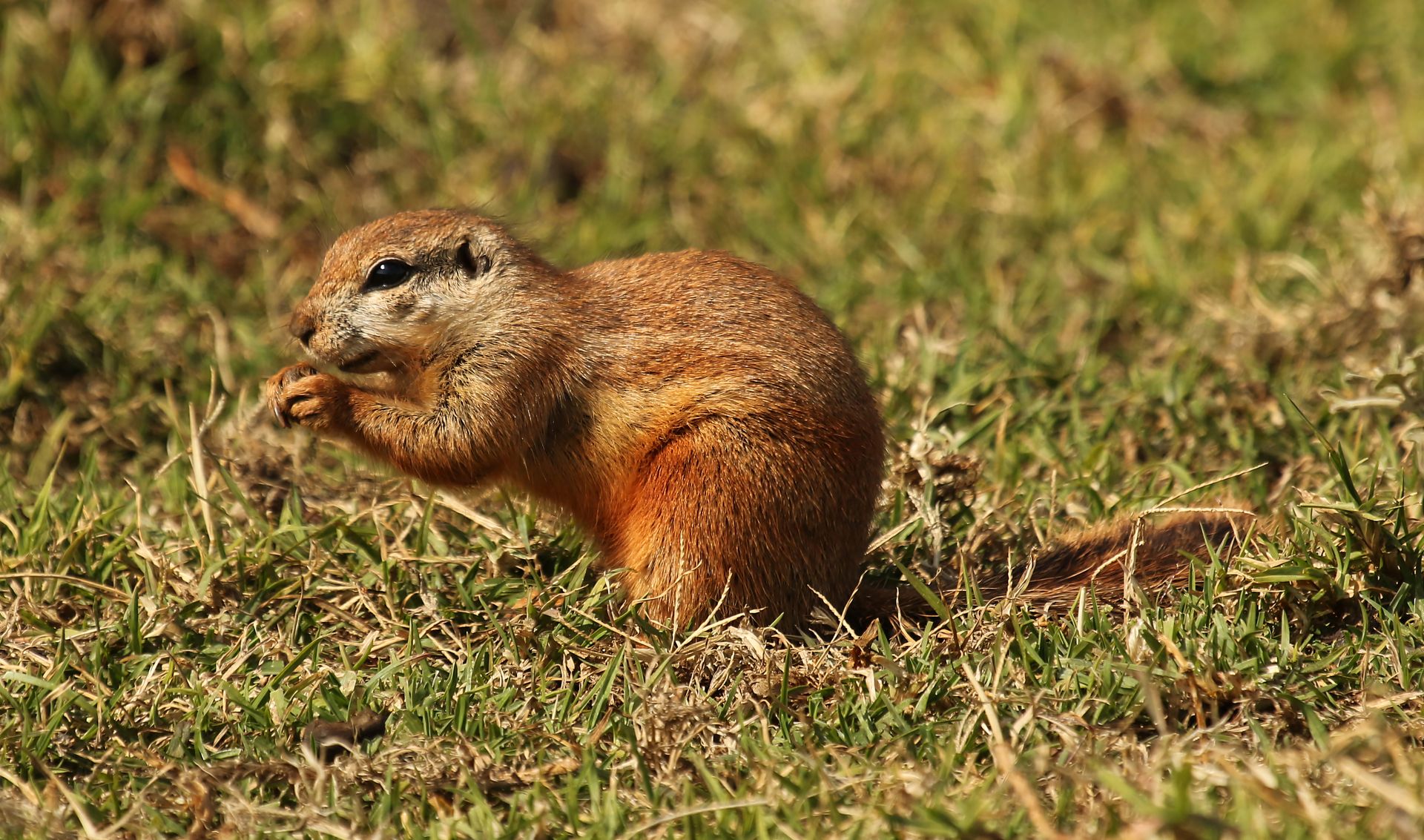
Cryptomys are fascinating creatures that have adapted to life underground. They are also known as African mole-rats.
One of the most interesting features of Cryptomys is their unique social structure, where they live in large colonies with a complex hierarchy. This is unlike most other rodents.
Cryptomys are herbivores, feeding on roots, tubers, and other underground plant material. They use their powerful front teeth to dig complex networks of tunnels and burrows.
In some species of Cryptomys, individuals have even been known to adopt orphaned young and care for them as if they were their own. This level of social complexity is rare in the animal kingdom.
Classification
The classification of Cryptomys is a fascinating topic. The first description of the common mole-rat was made by René Primevère Lesson in 1826.
Lesson called it Bathyergus hottentotus, but subsequent descriptions led to a reevaluation of its classification. In 1906, Oldfield Thomas and Harold Schwann made the current combination, but with an unnecessary addition.
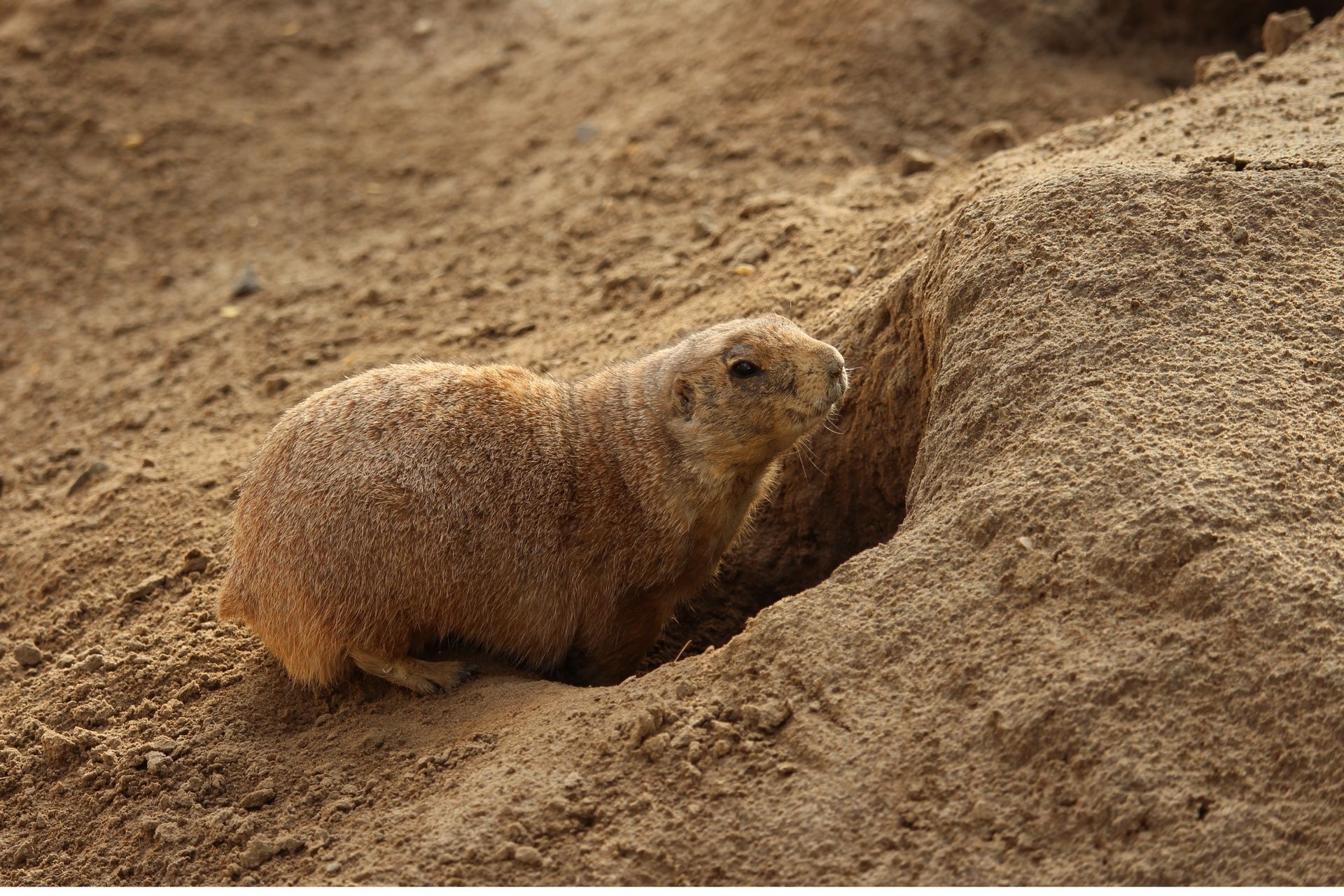
The classification of Cryptomys has undergone significant changes over the years. Various forms were described in the genus Georychus, but Gerrit de Graaff in 1964 considered all these forms as belonging to the same species.
Here is a simplified classification of Cryptomys:
The classification of Cryptomys is a complex and nuanced topic, but understanding its history and current classification can provide valuable insights into its biology and behavior.
Physical Characteristics
Cryptomys, also known as African mole rats, have a stocky build that allows them to dig complex burrow systems with ease.
Their short, powerful legs and robust body are perfectly adapted for digging and navigating underground tunnels.
Cryptomys typically range in length from 15 to 30 centimeters and weigh between 150 to 300 grams.
Their short, hairless tails are relatively small compared to their overall body size.
Cryptomys have small, beady eyes that are not well-suited for seeing in bright light, but are useful in the dimly lit environments of their underground burrows.
Their ears are also relatively small and are often closed when they are in their burrows to prevent dirt from entering.
Cryptomys have a pair of prominent incisors that are used for digging and gnawing on plant material.
Their front teeth are constantly growing, which helps to keep them sharp and effective for digging and eating.
Behavior and Habitat
Cryptomys, commonly known as mole-rats, live in family units that can consist of up to 14 individuals.
These social creatures are eusocial, meaning colony members have specialized roles such as reproduction and cooperative care of the young.
Younger mole-rats typically take on worker roles, while older mole-rats can also work but may not be as active as their younger counterparts.
The oldest mole-rats in the colony are usually breeders, responsible for reproducing and ensuring the colony's continuation.
Behavior
Common mole-rats live in family units of up to 14 individuals, with a highly organized social structure.
These units are eusocial, meaning colony members are specialized for specific functions, such as reproduction and cooperative care of the young.
In a common mole-rat colony, younger individuals are likely to be workers, while older individuals can be casual workers, taking on less responsibility.
Casual workers typically don't work as much as younger workers, who are more involved in burrowing and foraging.
The oldest mole-rats in the colony are breeders, taking on the important role of reproduction.
The colony's social structure is a remarkable example of cooperation and specialization.
Animal Capture
Animal Capture is a crucial aspect of understanding behavior and habitat. In the wild, animals use various methods to capture their prey, such as speed and agility.
Some animals, like cheetahs, can reach speeds of up to 70 miles per hour to catch their prey off guard. This high-speed chase is a key adaptation that helps them survive in their habitat.
Cheetahs are also skilled hunters that use stealth and strategy to get close to their prey. They have excellent night vision, which allows them to hunt at night and catch their prey by surprise.
In contrast, some animals like octopuses use camouflage and disguise to capture their prey. They can change the color and texture of their skin to blend in with their surroundings, making it difficult for their prey to detect them.
Octopuses are also skilled at using tools to capture their prey, such as collecting and using shells to build shelters and traps.
Conservation Status
The conservation status of Cryptomys species is a positive one, thanks to their dense and widespread population, as well as their adaptability to pasturelands and rural gardens.
According to the IUCN Red List, the species is listed as Least Concern, indicating a relatively stable population and no major threats to their survival.
In fact, the IUCN Red List has a specific entry for Cryptomys langi and Cryptomys natalensis, both listed as Least Concern.
Here is a list of the IUCN Red List status for some Cryptomys species:
- Cryptomys langi: Least Concern
- Cryptomys natalensis: Least Concern
This is good news for the conservation of these fascinating creatures, and highlights the importance of protecting their habitats and ecosystems.
Species Information
Cryptomys rufulus is a species that was first described by A. Roberts in 1917.
Some species of Cryptomys have undergone name changes over the years, such as Cryptomys natalensis, which was previously known as Cryptomys junodi in 1926.
Cryptomys natalensis has several subspecies, including Cryptomys natalensis natalensis and Cryptomys natalensis streeteri, both of which were described by A. Roberts in 1946.
Nomenclatural Status
The nomenclatural status of a species is a crucial aspect of its classification.
Cryptomys natalensis is a subspecies that was first described by A. Roberts in 1946.
Annals of the Transvaal Museum is the publication where A. Roberts' description of Cryptomys natalensis natalensis was found.
This subspecies is a part of the larger species Cryptomys natalensis.
Natalensis Natalensis
Natalensis natalensis is a subspecies of the larger Cryptomys natalensis species. It was first described by A. Roberts in 1946.
This subspecies is found in the Annals of the Transvaal Museum, specifically in the work by A. Roberts in 1946.
In other taxonomic classifications, this subspecies is also referred to as Cryptomys hottentotus natalensis, as seen in the work by C. A. Woods & Kilpatrick in 2005.
Interestingly, the name "natalensis" refers to the Natal region in South Africa, where this subspecies is found.
Frequently Asked Questions
How do Damaraland mole rats reproduce?
Damaraland mole-rats reproduce through a unique cooperative breeding system, where a single dominant female (queen) breeds year-round and non-reproductive females are unable to reproduce in her presence. This reproductive skew is a key characteristic of their social structure.
Featured Images: pexels.com

