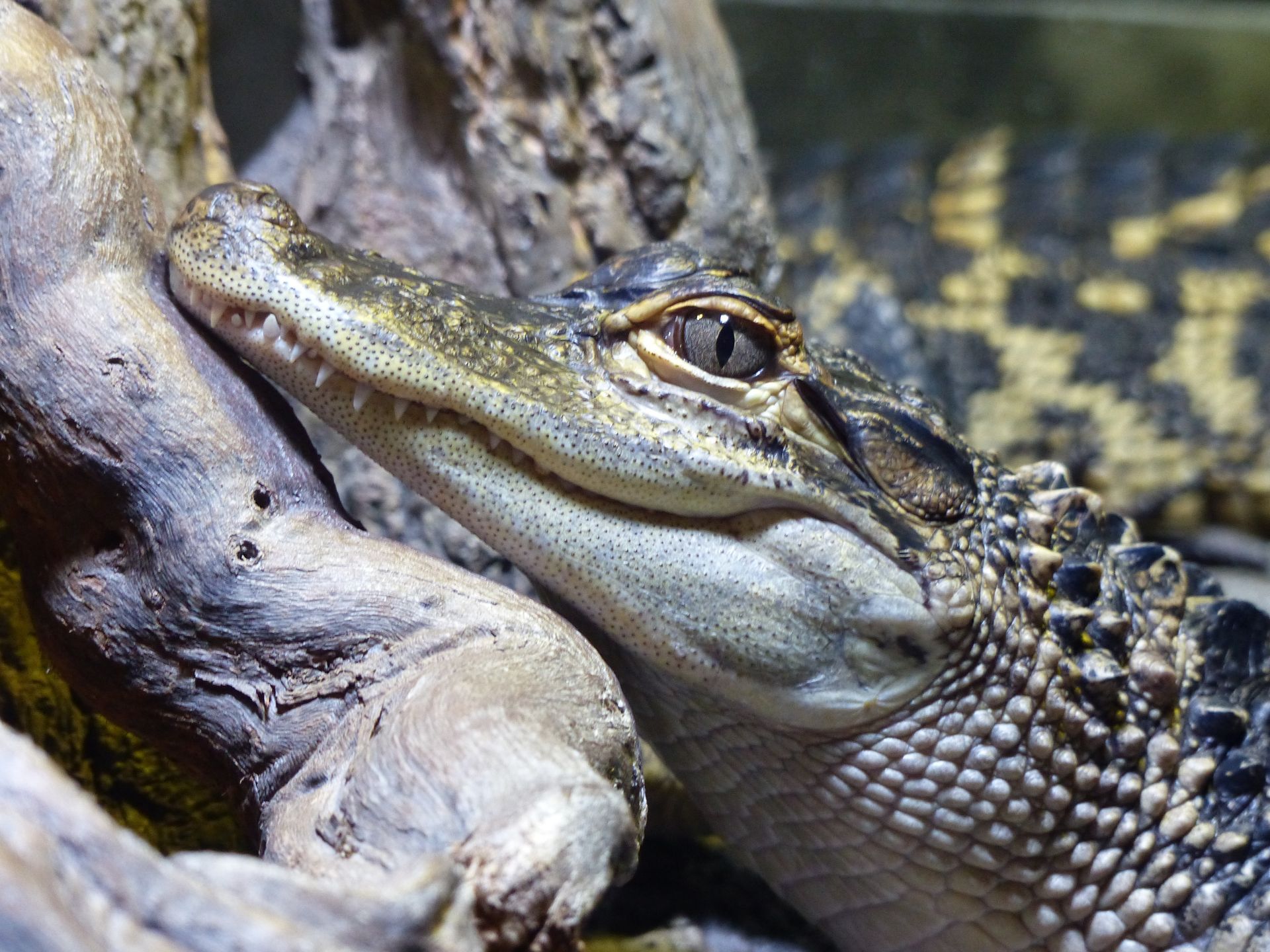
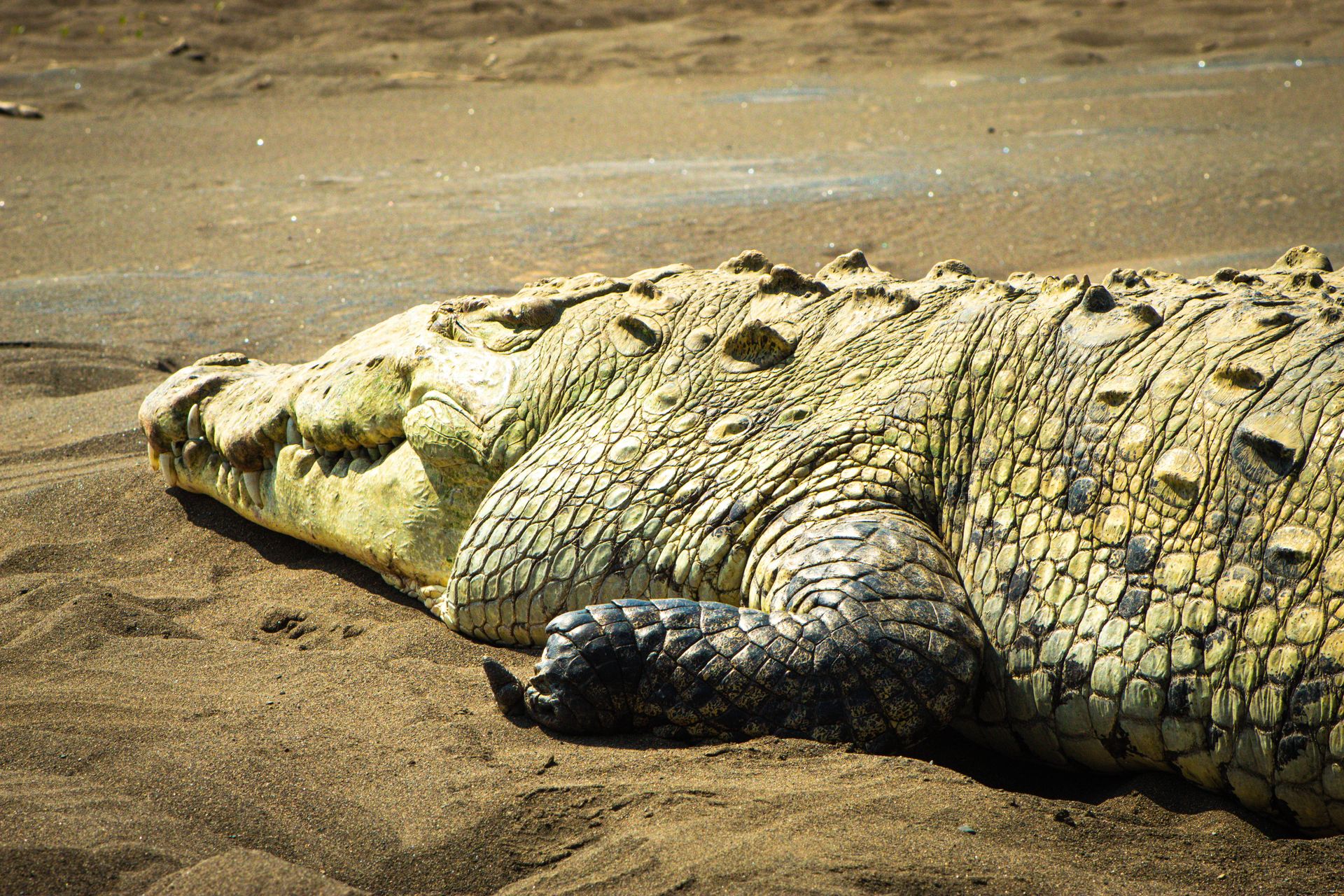
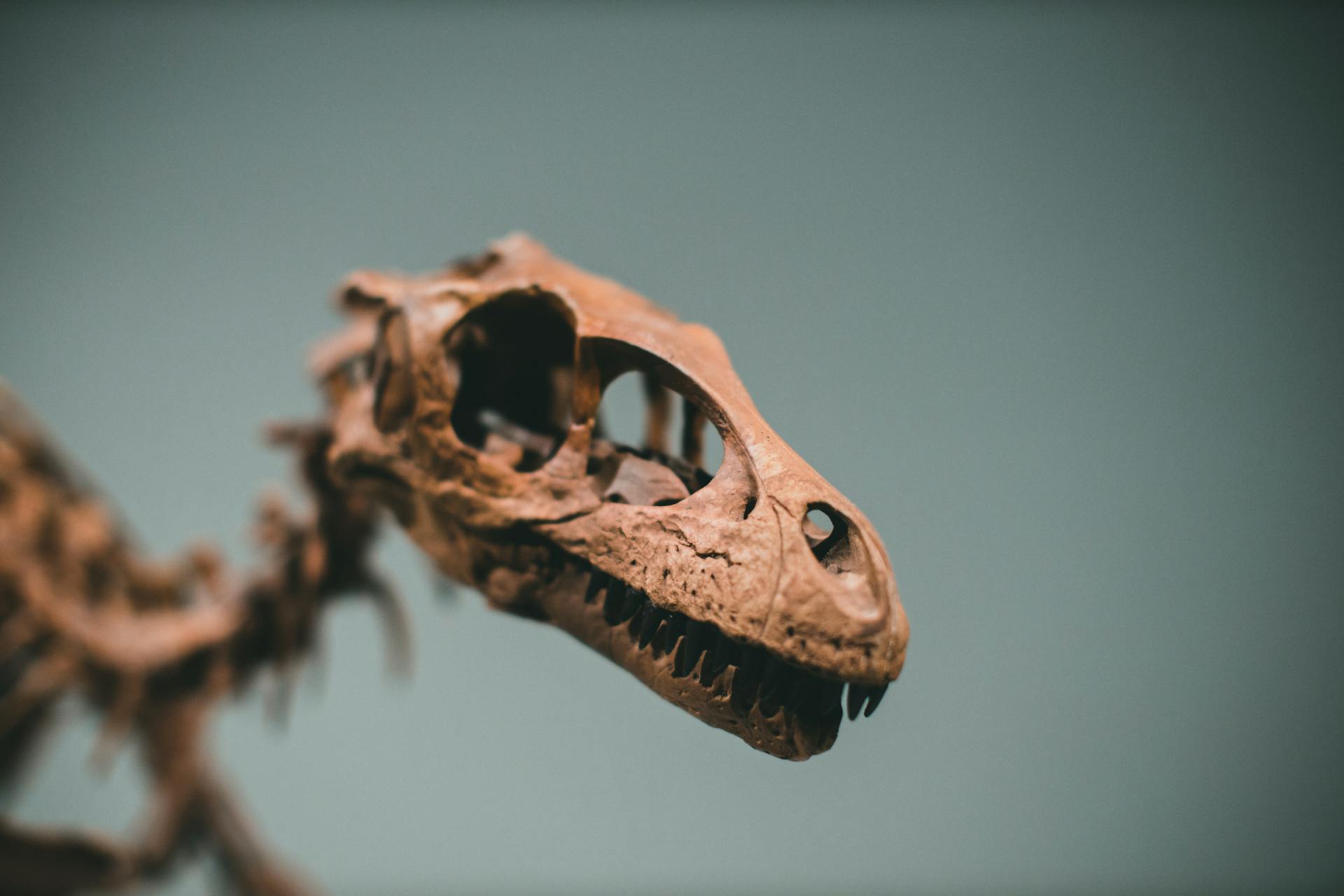
Crocodylus rhombifer is a fascinating species that has garnered significant attention from scientists and researchers. This ancient creature has been around for millions of years, with fossil records dating back to the Oligocene epoch.
Found in the coastal regions of western Cuba, these crocodiles inhabit a variety of habitats, including mangrove swamps, estuaries, and marine coasts. Their ability to thrive in these diverse environments is a testament to their adaptability.
One of the most distinctive features of Crocodylus rhombifer is its unique skull shape, characterized by a broad, flat snout and a narrow, elongated jaw. This distinctive morphology is a result of their specialized diet, consisting mainly of fish and other aquatic animals.
On a similar theme: Fish Shocker
Conservation and Management
The Cuban Crocodile, a critically endangered species, has a long history of threats from humans and habitat encroachment. With only 3000-6000 individuals remaining in the wild, conservation efforts are crucial to avoid extinction.
Cuban Crocodiles are threatened by competition for food and land with Caiman in the Lanier Swamps. This competition puts additional pressure on an already vulnerable population.
Conservation efforts are underway, with the species well-represented in captivity in the U.S. and continually being studied and bred. This breeding program aims to maintain genetic integrity and minimize inbreeding.
The IUCN Red List classifies the Cuban Crocodile as Critically Endangered, emphasizing the need for urgent conservation action. The species is also listed under CITES Appendix I, which regulates international trade.
Here are some key conservation facts:
- Critical conservation status: Critically Endangered
- Estimated wild population: 3000-6000 individuals
- Conservation classification: IUCN Red List, CITES Appendix I
Research and Analysis
To analyze the DNA of Crocodylus rhombifer, researchers use a combination of DNA extraction, sequencing, and genotyping techniques. They isolate total DNA from ethanol-preserved tail scale tissue using the NucleoSpin kit.
The DNA is then amplified using primers that target a specific region of the mitochondrial genome. This region is approximately 458 base pairs long and includes the tRNA-tRNA-D-loop region. The primers used are drL15459 and CR2HA.
To genotype the samples, researchers use nine polymorphic microsatellite loci. These loci are identified as Cj16, Cj18, Cj20, Cj35, Cj109, Cj119, Cj127, Cj131, and CU5-123. The primers used for these loci are modified to include an M13 sequence, which facilitates automated genotyping.
Objectives
The objectives of research and analysis are clear. We want to identify patterns and trends in data to inform decision-making.
Our goal is to extract insights from data that can be used to predict future outcomes. This requires a systematic approach to data collection and analysis.
We aim to develop a deep understanding of the data, including its strengths and limitations. This involves examining the data's quality, relevance, and reliability.
Effective research and analysis can help us identify opportunities for improvement. By analyzing data, we can pinpoint areas where processes can be optimized.
Ultimately, our objective is to provide actionable insights that can be used to drive positive change.
Limitations
The Cuban crocodile genome assembly is somewhat fragmented due to the use of short-read shotgun sequencing via 10X genomics for a scale sample.
This limitation is a result of the available technology at the time of collection, which was the most accessible sequencing technology in Cuba.
The Cuban crocodile is naturally restricted to a developing country with limited research resources and access to sequencing technology.
The genome size estimate is not fully represented in the assembly, which is smaller than expected.
The sample was previously used by Milián-García et al. [2] and was originally collected and transported under CITES permits C0001166 and C0001455.
The completeness and accuracy of the genome will be built upon using long-read sequencing technologies if and when more funds become available.
Genotypic Variation and Hybridization Degree
Genotypic variation and hybridization degree are crucial aspects of understanding the genetic makeup of species. A total of 90 wild individuals were analyzed for DNA extraction, sequencing, and genotyping.
The study used a combination of mitochondrial genome sequencing and microsatellite genotyping to assess genetic variation. A ~458-base-pair segment of the mitochondrial genome was amplified for all wild individuals using specific primers.
Microsatellite data revealed a substantial underestimation of the frequency of interspecific hybridization between Cuban Crocodylus reported in previous studies. This was likely due to the use of non-Cuban C. acutus specimens as a reference.

The study found that 49.1% of wild C. rhombifer populations and 16.1% of captive populations showed evidence of hybridization. Most genetic hybrids (57.7%) were misclassified based on morphology alone.
The genetic differentiation between C. acutus populations in Zapata Swamp and Birama Swamp was found to be similar to that between C. acutus and C. rhombifer. This highlights the importance of considering genetic variation when assessing hybridization degree.
Clustering analyses, such as STRUCTURE, may not accurately infer multiple clusters with admixture when using a single reference population. This can lead to an underestimation of hybridization frequency.
Population and Taxonomy
The Cuban crocodile, or Crocodylus rhombifer, is a species of crocodile that belongs to the family Crocodylidae.
There are only 2 specimens of Crocodylus rhombifer that have been recorded in the wild, highlighting the critically endangered status of this species.
Crocodylus rhombifer is a member of the class Reptilia, which also includes turtles, snakes, lizards, and their relatives.
Here's a breakdown of the taxonomic classification of Crocodylus rhombifer:
- Kingdom: Animalia
- Phylum: Chordata
- Subphylum: Vertebrata
- Class: Reptilia
- Order: Crocodylia
- Family: Crocodylidae
- Genus: Crocodylus
- Species: Crocodylus rhombifer
Population History and Taxonomy
The Cuban Crocodile has a unique classification that sets it apart from other crocodiles. It belongs to the Kingdom Animalia, specifically to the class Reptilia.
The Cuban Crocodile's taxonomic hierarchy is as follows:
- Kingdom: Animalia
- Phylum: Chordata
- Subphylum: Vertebrata
- Class: Reptilia
- Order: Crocodylia
- Family: Crocodylidae
- Genus: Crocodylus
- Species: Crocodylus rhombifer
This classification puts the Cuban Crocodile in a distinct group among other reptiles.
Physical Description
Adult Cuban Crocodiles typically don't exceed 3.5 meters in length, with males being larger than females. 5 meter individuals have been found, but they're rare.
Their head is short and broad, with a bony ridge located behind the eyes. Large scales from the dorsal shield extend onto the back of the neck.
The scales on their legs are larger than usual and heavily keeled on the two rear legs. This helps them move with increased agility and power on land.
Cuban Crocodiles have a distinctive coloration pattern, with darker markings on their top portion of the body featuring black and yellow speckles. Their belly is pale with no distinctive markings.
A strong tail aids them in both jumping and swimming. They have a total of 66-68 large teeth, especially adapted for crushing turtle shells.
Other notable physical features include being ectothermic and having bilateral symmetry.
Conservation Strategies
The Cuban Crocodile is listed as Critically Endangered on the IUCN Red List, which is a major concern for conservation efforts. The species is threatened by human activities, such as hunting and habitat encroachment, as well as competition for food and land with Caiman in the Lanier Swamps.
In captivity, Cuban Crocodiles are well-represented in the U.S. and are being studied and bred to help avoid extinction. Conservation efforts are underway to protect the remaining wild population.
Conservation programs are being designed to establish an appropriate source population for prospective reintroduction and recovery plans in the wild, which will help maintain the genetic integrity of the Cuban crocodile. This will also enable the detection of hybrids and identification of genetically important individuals for breeding strategies.
Actions
Breed reptiles in captivity to help conserve the Cuban crocodile. This involves creating a controlled environment to mimic the crocodile's natural habitat, allowing for a stable and healthy breeding program.
To increase hatching success, breeding programs can use alternative incubation methods, such as suspended incubation containers. This method has been shown to be effective in increasing the chances of successful hatching.
A study at the Smithsonian's National Zoological Park found that Cuban crocodiles bred in captivity, but hatching success was low. Only three eggs hatched successfully out of a total of 50 eggs produced.
Here are some key statistics from the study:
These statistics highlight the challenges of breeding Cuban crocodiles in captivity and the need for further research and development of effective breeding programs.
Ex Situ Genetic Representation of Wild Population
The captive breeding program for the Cuban crocodile has been a crucial step in conservation efforts, but it's essential to ensure that the genetic integrity of the captive population is maintained.
In fact, the captive population has slightly higher levels of observed heterozygosity and average number of alleles per locus compared to the wild population.
This difference could be due to the retention of gene variants in the captive population that are now extirpated in the wild, or it may be influenced by long-term introgression with the American crocodile in captivity.
Since the establishment of the Zapata Swamp captive population in 1959, the population size has increased to 4086 individuals from a few hundred wild-caught founders of unknown identity.
This rapid growth has likely led to generations of backcrossing, which may have yielded morphologically and genetically diagnosed Cuban crocodiles, yet still retains some increased genetic variation from past hybridization with the American crocodile.
Additional studies involving genome-wide scans would be necessary to tease apart these non-mutually exclusive interpretations.
The captive population has been effectively a closed population, with few exceptions, and was initially founded with hundreds of individuals with uncertain ancestry.
This increases the probability of founders being close relatives, which can lead to inbreeding and decreased reproductive fitness.
A mean inbreeding coefficient greater than 0 (0.086) and a high level of mean relatedness (0.18) have been detected in the captive population.
This is expected, given the polygynous mating system of the Cuban crocodile, which typically involves one male with three or four females, immediately lowering the effective population size.
Keywords
The Cuban crocodile is a critically endangered species, and conservation efforts are crucial to its survival. It's essential to understand the importance of conservation in protecting this species.
The Cuban crocodile is a unique species, with only a few hundred individuals remaining in the wild. Its critically endangered status is a result of habitat loss and hunting.
Conservation strategies for the Cuban crocodile involve protecting its habitat and reintroducing captive-bred individuals into the wild. This requires careful planning and coordination among conservationists.
Here are some key terms related to the conservation of the Cuban crocodile:
- Cuban crocodile
- Crocodylus rhombifer
- Critically Endangered
- Conservation
- Genome assembly
- Genome annotation
- Genomics
Captive Populations
The captive population of crocodylus rhombifer in the Zapata Swamp has been a closed population for many generations, with few exceptions, and has been founded with hundreds of individuals with uncertain ancestry.
This has led to a high level of mean relatedness, on the order of half-siblings, which is expected given the polygynous mating system of this species.
The breeding pens typically contain one male with three or four females, immediately lowering the effective population size.
Inbreeding has demonstrated negative effects on both reproduction and survival, leading to decreased reproductive fitness and increased extinction risk.
The captive breeding program of C. rhombifer in Zapata Swamp has proceeded in the absence of genetic data, relying solely on morphological, ethological, demographic, and logistic information for implementing short-term management plans.
The results presented here now provide an important genetic baseline for informing management decisions.
A total of 37 out of the 113 non-hybrid individuals were highlighted as genetically important for management purposes, exhibiting values of MK lower than the overall MK in the captive population.
This collection of genetically important individuals included 11 males and 26 females, a reasonable sex ratio given the polygynous mating system of C. rhombifer.
The population size has increased to 4086 individuals from a few hundred wild-caught founders of unknown identity since the establishment of the Zapata Swamp captive population in 1959.
Keywords and Actions
If you're interested in learning more about the Cuban crocodile, here are some key terms to get you started.
The Cuban crocodile is also known as Crocodylus rhombifer, which is a critically endangered species.
Here are some related keywords:
- Cuban crocodile
- Crocodylus rhombifer
- Critically Endangered
- Conservation
- Genome assembly
- Genome annotation
- Genomics
If you're looking for ways to help protect the Cuban crocodile, here are some actions you can take.
One action you can take is to breed reptiles in captivity, specifically crocodilians. This is an important step in conservation efforts.
Here are some details on breeding reptiles in captivity:
- Breed reptiles in captivity: Crocodilians
A study in 2012-2015 found that Cuban crocodiles bred in captivity, but hatching success of eggs was low.
Frequently Asked Questions
Are Cuban crocodiles smart?
Yes, Cuban crocodiles have demonstrated a high level of intelligence through cooperative hunting behaviors in captivity, a rare trait among crocodilian species. Their surprising intelligence makes them a fascinating subject for further study and observation.
Featured Images: pexels.com