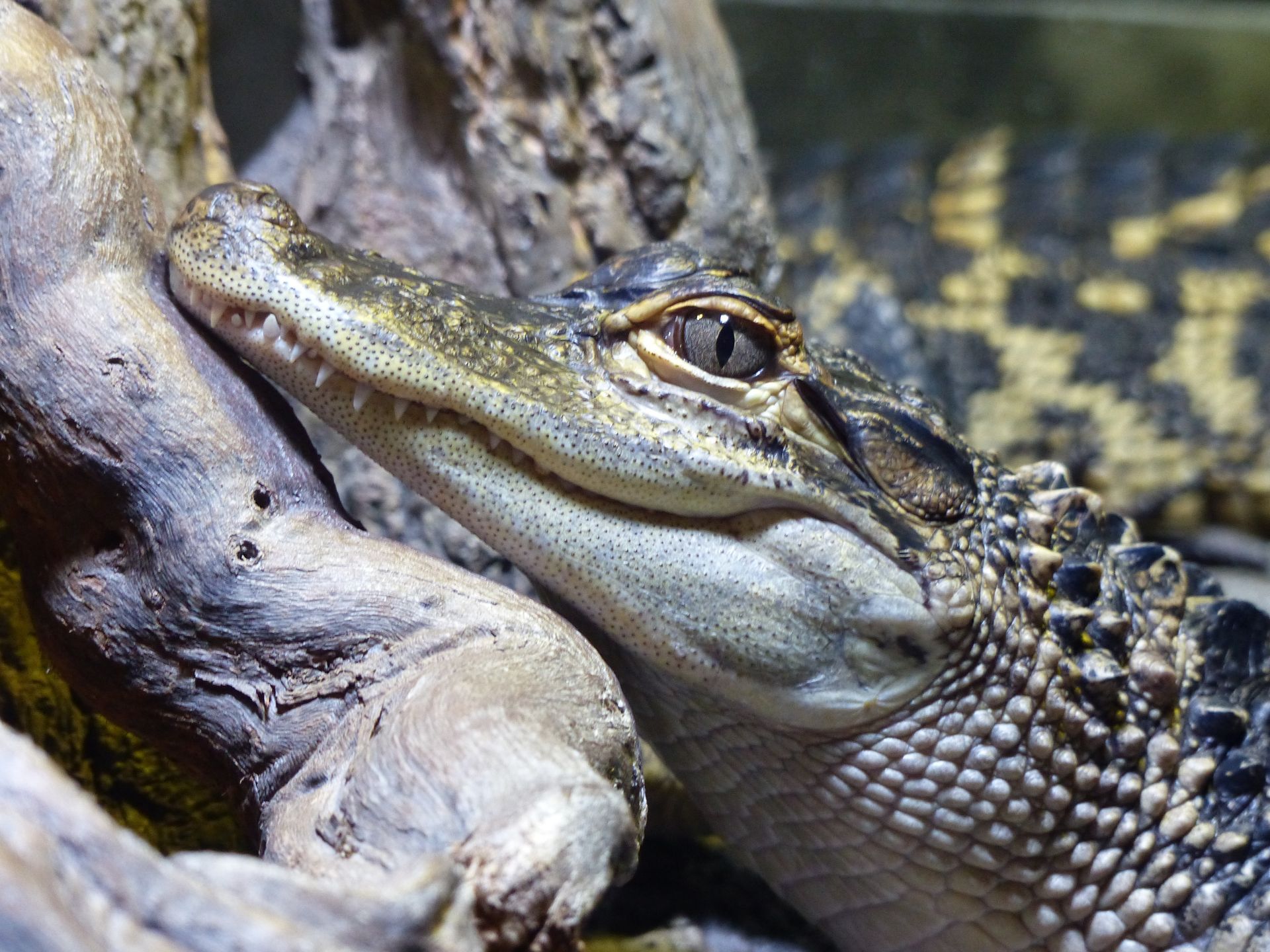
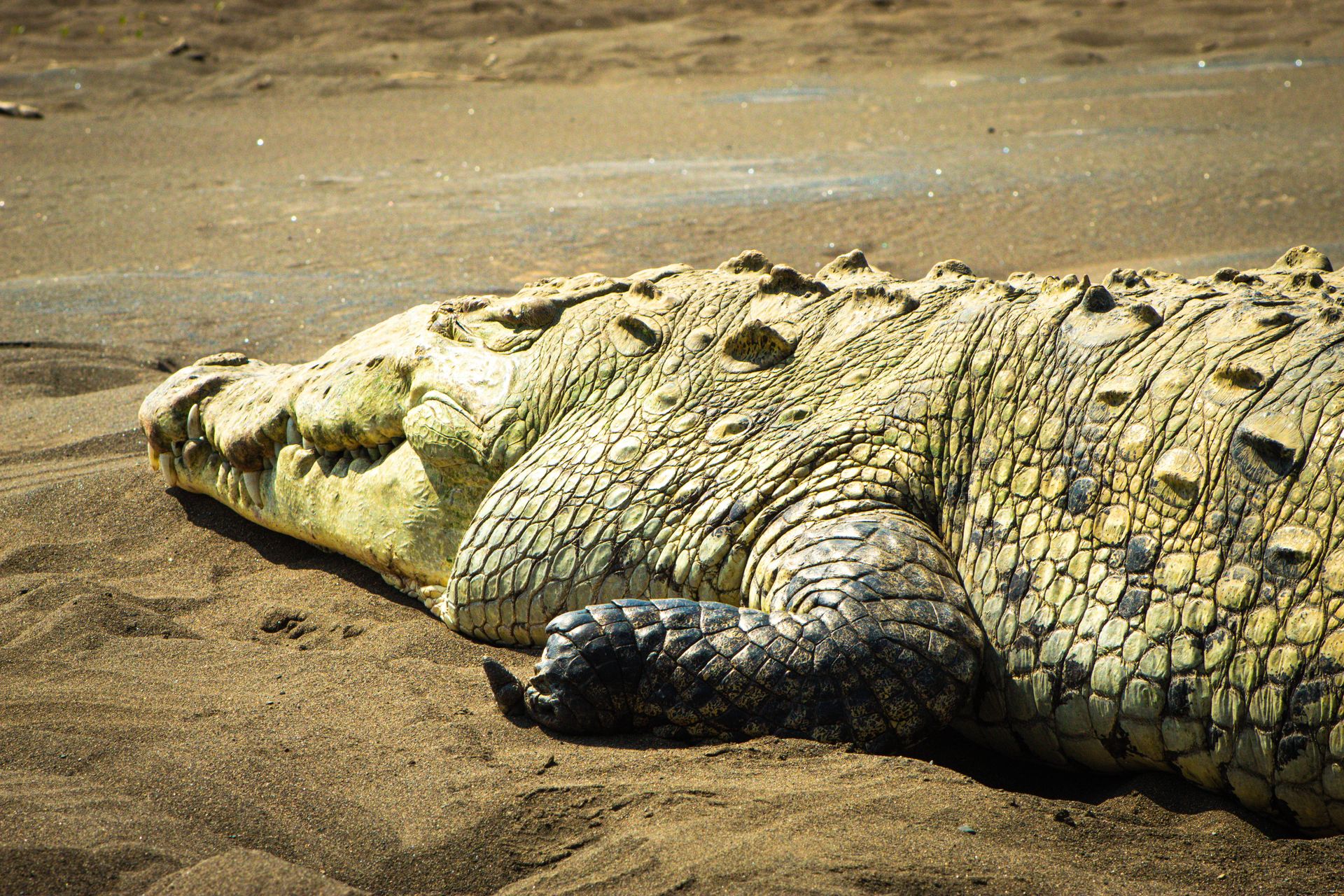
The Marsh Crocodile plays a vital role in maintaining the balance of ecosystems in its native habitats.
It's a top predator, which means it helps regulate the populations of other animals in the ecosystem, preventing any one species from dominating.
The Marsh Crocodile's presence also helps to maintain the structure of its environment, by creating pathways and holes through dense vegetation.
This, in turn, allows other animals to move through the area more easily, and helps to maintain the health of the plants and trees.
Habitat and Distribution
The mugger crocodile, also known as Crocodylus palustris, is a fascinating creature that thrives in various freshwater environments. It's commonly found in rivers, lakes, hill streams, and village ponds.
This species is incredibly adaptable and can live in both fresh and coastal saltwater lagoons. In fact, it can even survive in human-made reservoirs.
Mugger crocodiles don't migrate seasonally, which means they stay put in the same location regardless of the wet or dry seasons. They're quite content in their home sweet home.
These crocodiles are skilled burrowers and make their homes on land in a wide range of habitats. They're not picky about where they live, as long as it's got a bit of water nearby.
Here's a breakdown of the different types of habitats where you can find mugger crocodiles:
- Habitat Regions: terrestrial, saltwater or marine, freshwater
- Other Habitat Features: riparian
One interesting fact about mugger crocodiles is that they typically live in waters with an average depth of 5 meters (16.40 feet).
Behavior and Characteristics
The marsh crocodile, or mugger, is an opportunistic feeder with very low metabolism, eating when it can but going without food for up to seven or eight months when prey is hard to come by.
Its unique anatomy plays a critical role in its hunting strategies, with scales that are sensitive and act as a bonus sensory organ, detecting the slightest movement in the water.
The mugger has evolved over 90 million years and has almost perfected form and function for an amphibious, carnivorous life.
Communication and Perception
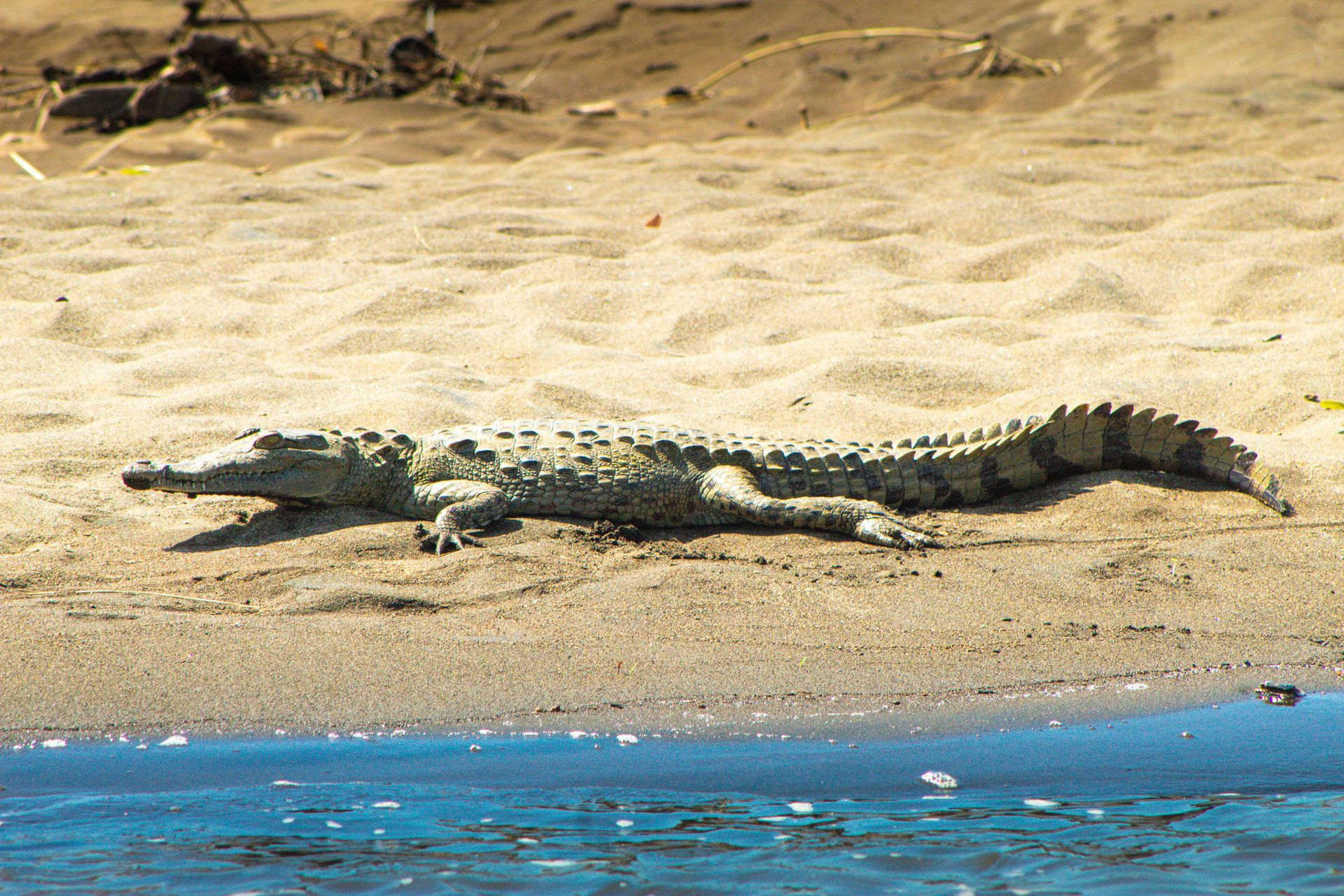
Mugger crocodiles have a unique way of communicating and perceiving their surroundings. They normally float on the surface of the water with just their nose or eyes protruding, relying on their eyes, nose, and ears when they're above water.
Their skin is a sensory organ that allows them to detect vibrations in the water, similar to the lateral line network in fish. This sensitivity even lets them detect the pH of the water.
Mugger crocodiles use visual communication channels, such as their eyes, to convey information. They also use tactile communication channels, like rubbing heads during mating rituals.
Their perception channels include visual, tactile, acoustic, and vibrations. This multi-sensory approach helps them navigate and interact with their environment.
Marsh Crocodile's Stealth, Strategy, and Surprise
The marsh crocodile, also known as the mugger, is a master predator that relies on stealth, strategy, and surprise to catch its prey.
Its unique anatomy plays a critical role in its hunting strategies, with sensitive scales that act as a bonus sensory organ detecting the slightest movement in the water.
The mugger has evolved over 90 million years and has almost perfected form and function for an amphibious, carnivorous life.
This means that most of its body remains hidden underwater during a hunt, making it nearly invisible to unsuspecting prey.
Its broad snout and medium-sized body allow it to thrive in freshwater ecosystems such as rivers, lakes, and marshes from Iran to the Indian subcontinent.
The mugger grows up to 3-4 metres in length and is an opportunistic feeder with very low metabolism, eating when it can but may also go without food for up to seven or eight months when prey is hard to come by.
During the summer, muggers are seen "herding" fish and locking them off in narrow parts of the waterbody, making it easier to catch them.
They rely on the "minimum exposure" posture in water, where only their eyes, ears, and nostrils stick out of the water's surface, while the body remains hidden.
Classification
The Mugger crocodile's classification is a key part of understanding its characteristics and behavior. It's classified under the Kingdom Animalia, which includes all animals.
Within the Kingdom Animalia, the Mugger crocodile falls under the Phylum Chordata, a group that includes chordates, which have a notochord, a dorsal nerve cord, and pharyngeal slits.
The Phylum Chordata is further divided into the Subphylum Vertebrata, which includes vertebrates, animals with a backbone. The Mugger crocodile is indeed a vertebrate.
Here's a breakdown of the Mugger crocodile's classification:
Importance to Humans
Crocodylus palustris has a significant economic importance for humans. Its skin is used to make leather products, although this practice has decreased since the 1930s due to laws protecting endangered species.
The species' body parts are a valuable source of material, with its bones and scales believed to have medicinal properties that are still used by some communities. Poachers also steal its eggs to sell on the black market.
Here are some of the positive impacts of Crocodylus palustris on humans:
- Body parts are a source of valuable material
- Source of medicine or drug
Economic Benefits to Humans

Crocodylus palustris, also known as the marsh crocodile, has economic benefits to humans, despite being an endangered species. Its skin is highly valued for making leather products.
The hunting of marsh crocodiles for their skin has decreased since the 1930s due to laws protecting endangered species. However, people still hunt them for other reasons.
Their bones and scales are believed to have medicinal properties, and some people use them for that purpose.
Lesson, 1831
Lesson, 1831, marked the first recorded observation of the Mugger crocodile, also known as Crocodylus palustris. This species was first described by French zoologist René Primevère Lesson.
Lesson's description of the species is still referenced today, with his name attached to the species as a nod to his contribution to our understanding of this fascinating creature. The Latin word "palustris" means "marshy" or "swampy", which is fitting given the species' habitat.
The Mugger crocodile is found in a range of countries, including Bangladesh, India, Nepal, and Sri Lanka. Its distribution is quite extensive, covering areas of Indochina as well. This species is known to inhabit freshwater environments, such as rivers, lakes, and wetlands.

Here's a list of some of the countries where you can find the Mugger crocodile:
- Bangladesh
- India (Gujarat, Rajasthan, Kerala, Madhya Pradesh, Odisha)
- Nepal
- Pakistan
- Sri Lanka
- Iran
The Mugger crocodile is an oviparous species, meaning it lays eggs. Interestingly, its sex is determined by temperature, a phenomenon known as temperature-dependent sex determination (TSD). This unique characteristic is still not fully understood and is the subject of ongoing research.
The Mugger crocodile has been the subject of much study and observation over the years, with many scientists contributing to our understanding of this species. Despite this, there is still much to learn about this fascinating creature.
Conservation and Status
The mugger crocodile, a species that's been making headlines in recent years. It's listed as "Vulnerable" on the IUCN Red List.
Conservation efforts have been underway to protect this species, with many laws being placed in countries such as India, Pakistan, Iran, and Sri Lanka to outlaw the hunting and harming of mugger crocodiles.
These laws have been put in place to address the primary threats to the species, which historically have included habitat destruction, fragmentation, drowning in fishing nets, egg predation by people, and the use of crocodile parts for medicinal purposes.
In Pakistan, the mugger crocodile has received the highest legal protection, being listed in Schedule I of the Pakistan Wildlife (Protection) Act 1972.
Some interesting facts about the conservation status of the mugger crocodile:
- IUCN Red List: Vulnerable
- US Federal List: No special status
- CITES: Appendix I (threatened with extinction)
- State of Michigan List: No special status
Frequently Asked Questions
What is the most peaceful crocodile?
The mugger crocodile is considered one of the most peaceful large crocodile species, rarely engaging in aggressive behavior towards others of its kind. This peaceful nature makes it a unique and fascinating species to learn more about.
How big do mugger crocodiles get?
Mugger crocodiles typically grow to 2-3.5 meters (6-11 feet) in length, with males generally being larger than females. The largest recorded individuals reached lengths of up to 5.63 meters (18.5 feet).
Featured Images: pexels.com