Cow hocked dogs can be prone to joint issues, especially in their hind legs. This is due to the abnormal angulation of their legs, which can put uneven pressure on their joints.
A common sign of cow hock in dogs is a noticeable limp or difficulty walking. This is often accompanied by pain and stiffness in the affected joints.
To prevent cow hock, it's essential to monitor your dog's growth and development, especially during the first year of life. Regular check-ups with your veterinarian can help identify any potential issues early on.
Proper nutrition and exercise are also crucial in preventing cow hock. Feeding a balanced diet and providing regular, gentle exercise can help maintain your dog's joint health and prevent the development of cow hock.
Related reading: What Is the Hock on a Dog?
What Is Cow Hock?
A cow hock in dogs is essentially a misalignment of the hock joint, which is the equivalent of the ankle joint. This misalignment causes the bones to turn inward, resulting in the paws splaying outward.
Imagine standing with your feet turned outward, it's not exactly the most graceful stance. A cow hocked German Shepherd dog is a common sight.
The hock joint is made up of several bones, and when these bones are straight, it allows for smooth and stable movement.
Related reading: Swollen Hock
Treating Cow Hocks in Dogs
Treating cow hocks in dogs is a bit of a challenge, but early intervention can make a big difference. One highly recommended supplement for this is Canina Canhydrox GAG.
Cow hocks can't be completely corrected, but treatments can help strengthen the hindquarters of the dog to mask the appearance of the cow hocks. This is achieved by focusing on hind leg strength.
Uphill walks, low hurdles, swimming, and exercising on a treadmill in water are popular ways to increase the muscle power of a dog's rear-end. These exercises can help reduce the outward appearance of the cow hocks over time.
The cow-hocked trait can cause some gait abnormalities, making it harder to identify the true extent of a hock problem. Walking a dog towards and away from you is the best way to identify the issue.
A well-structured dog's hocks move up and down naturally in a letter V, while a cow-hocked dog's hocks move outside or inside the branch of the V-shape. This can make the dog appear to move in both ways or even swing their legs around in an arc during forward movements.
If this caught your attention, see: Cow Hocked Dog
Causes and Effects
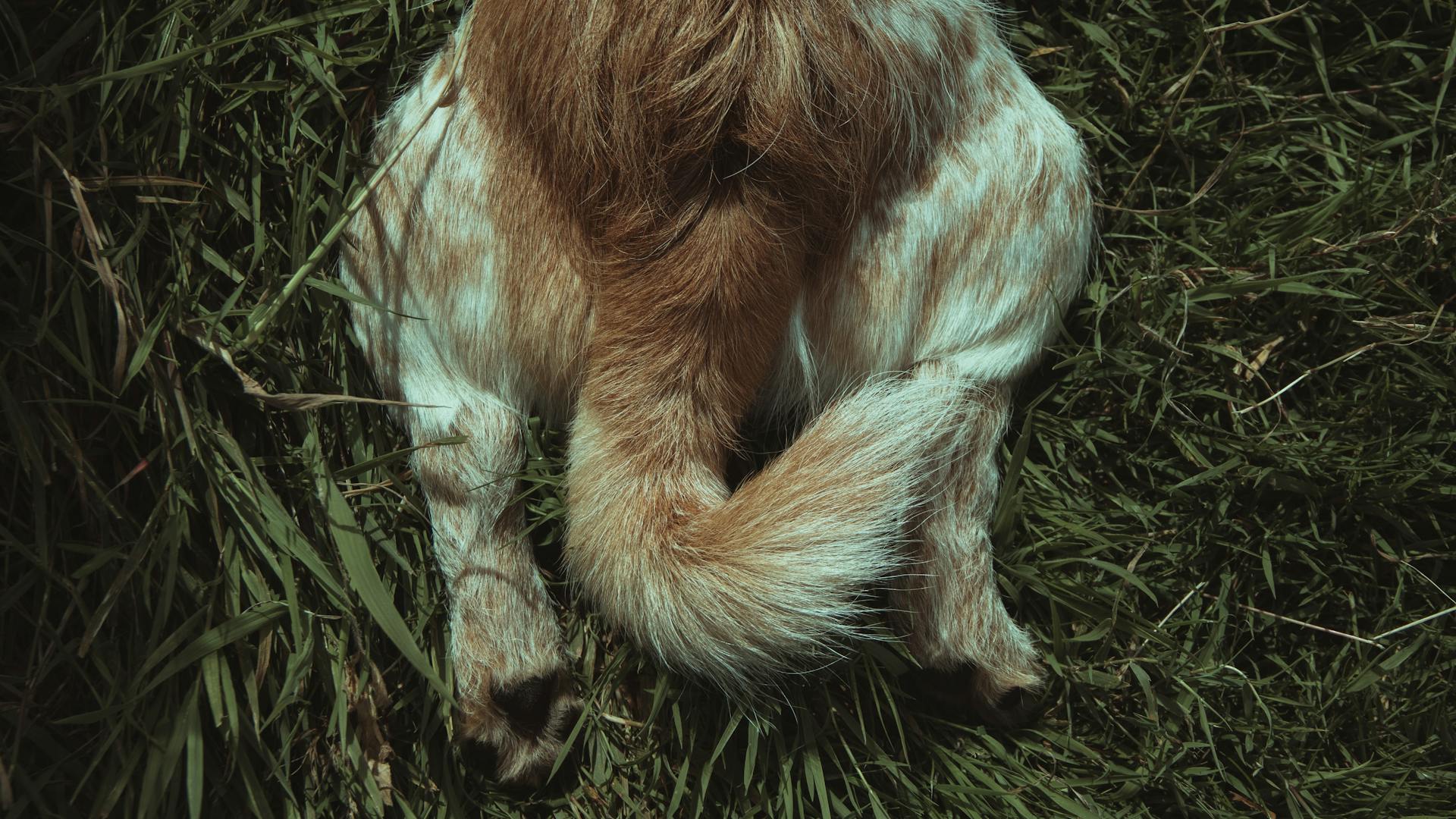
Cow hocks in dogs are a relatively common issue, and understanding their causes and effects is key to providing the best possible treatment.
The root of cow hocks lies in the growth rate differences between the tibia and fibula, the two bones in the lower rear leg, causing the lower leg and feet to twist outward.
Most commonly, cow hocks are seen in German Shepherd dogs, and while some degree of this twist can be normal, excessive turning leads to inefficient and awkward movement.
Severe cow hocks can be a symptom of hip dysplasia (HD) in dogs, but not all cases of cow-hocked dogs end in HD, and there is no link between genetically acquired cow hocks and HD.
In severe cases, cow hocks can cause dogs to tire more easily when they gait and may not move with as much efficiency, and activities involving balance and climbing can be more difficult for them.
Understanding the Causes
The root of cow hocks lies in the growth rate differences between the tibia and fibula, the two bones in the lower rear leg. This imbalance causes the lower leg, including the feet, to twist outward.
Excessive twisting can lead to inefficient and awkward movement, making it difficult for dogs to walk or run normally.
The most common breed to be affected by cow hocks is the German Shepherd dog.
Recognizing the Signs
Your dog's paws facing outward instead of aligning with their legs is a clear indication of cow hocks.
If your dog hops awkwardly rather than walking smoothly, it could be a sign of instability caused by cow hocks.
Pain caused by cow hocks can lead your dog to limp or avoid putting weight on the affected legs.
Effects of Hookworms in Dogs
Dogs with severe cow hocks may experience weakness in the hind legs and an abnormal gait, making activities like balance and climbing more difficult.
Severe cow hocks can cause dogs to tire more easily when they gait and move with less efficiency.
The condition can also be a symptom of hip dysplasia in dogs, but it's essential to note that not all cases of cow-hocked dogs end in hip dysplasia.
The Orthopedic Foundation for Animals (OFA) offers radiologist screening for hip dysplasia.
Potential Health Concerns
Dogs with cow-hocks can struggle with weakness in the rear, which can lead to gait abnormalities and reduced balance. This weakness can make everyday activities like climbing stairs or jumping more difficult.
Luxating patella, a condition where the kneecap slips out of its normal position, is a common issue in dogs with cow-hocks. Patella luxation can cause inflammation, pain, cartilage damage, and ligament tears.
About half of dogs with patella luxation have it in both knees. This condition is often linked to alignment problems that affect the patella ligament, including cow-hocks and barrel hocks.
Moderate and severe patella luxation can be painful and debilitating for dogs. However, some owners have found that joint supplements like Cosequin can help alleviate symptoms and protect joints from degenerative damage.
Cosequin contains glucosamine hydrochloride, sodium chondroitin sulfate, and MSM, which are commonly recommended as joint supplements. In some studies, a combination of glucosamine and chondroitin sulfate has been shown to protect joints and reduce the effects of luxating patella.
Prone Breeds
Some breeds are more prone to developing cow hocks due to their genetic makeup. Certain genetic predispositions can increase the likelihood of this condition in dogs.
Giant breeds like Great Danes, Mastiffs, and Saint Bernards are more susceptible to cow hocks because they grow rapidly, which can sometimes result in bone misalignment. This rapid growth can put excessive stress on their developing joints.
Working dogs like German Shepherds, Rottweilers, and Dobermans are also more prone to cow hocks due to their active lifestyles. Their joints can become stressed from constant exercise and activity.
Suggestion: Dog Breeds Watch Dogs
Smaller breeds like Bulldogs, Pugs, and Pekingese are also at risk. Their short legs and specific bone structures make them more prone to this condition.
Here's a breakdown of the breeds most prone to cow hocks:
Prevention and Correction
Cow hocks can't be completely corrected, but you can strengthen your dog's hindquarters to mask the appearance and compensate for the weakness associated with them.
Exercises like uphill walks, low hurdles, swimming, and treadmill walks in water are popular ways to increase hind leg strength in cow-hocked dogs.
Over time, the increased muscle coverage of the hind limbs reduces the outward appearance of the cow hocks.
Addressing cow hocks in your dog early on is crucial for joint stability, load distribution, muscle function, and reducing the risk of injuries.
Think of your dog's hock as their ankle joint, and imagine those hocks turning inward, causing the paws to splay outward - that's what cow hocks look like.
A common sign of cow hocks is standing with your feet turned outward, which isn't exactly the most graceful stance.
Early intervention and the right treatment can help your dog lead a happier, more active life.
One highly recommended supplement for treating cow hocks is Canina Canhydrox GAG.
Frequently Asked Questions
How to strengthen hocks in dogs?
To strengthen your dog's hocks, gently flex and extend the leg while stabilizing the knee and foot, and consider flexing their toes if resistance is met. Regular exercise and gentle stretching can help maintain healthy hock joints.
What is a dog cow-hocked stance?
A cow-hocked stance in dogs occurs when the hooves or paws point outward due to misaligned joints in the legs. This can lead to further joint issues in the back if left uncorrected.
Featured Images: pexels.com