Choosing the right plants for your freshwater aquarium can be a bit overwhelming, but don't worry, it's easier than you think. There are many cool and low-maintenance options to choose from.
One of the most popular and hardy options is the Amazon sword plant, which can grow up to 2 feet tall and thrive in temperatures between 72-82°F.
For a more delicate look, consider the Java fern, which can grow in a variety of lighting conditions and is a great choice for beginners.
Java ferns can be attached to rocks or driftwood, adding a unique touch to your aquarium's landscape.
Floating Plants
Floating plants are a great way to add visual interest to your aquarium, and they're relatively easy to care for. They float atop the water's surface, creating a natural and dynamic appearance.
Some popular floating plants include Frogbit, which has round leaves and grows quickly, and Duckweed, which covers the surface with small green leaves. I've found that Duckweed is particularly good at controlling algae growth.
Here are some common floating plants you might consider for your aquarium:
- Azolla filiculoides (Mosquito Fern)
- Lemna minor (Duckweed)
- Salvinia minima (Water Spangles)
- Salvinia natans (Floating Fern)
- Nymphoides aquatica (Banana Lily)
- Riccia fluitans (Crystalwort)
These plants are all relatively low-maintenance and can thrive in a variety of lighting conditions, making them a great choice for beginners.
Floating
Floating plants are a great way to add visual interest to your aquarium. They create a natural and serene environment that's perfect for aquatic life.
Frogbit is a fast-growing floating plant with round leaves. It's a great choice for beginners because it's easy to care for and can thrive in a variety of conditions.
Dwarf Water Lettuce has rosette-shaped leaves and trailing roots, making it a beautiful addition to any aquarium. It's also a good choice for small tanks because it's compact and won't take up too much space.
Duckweed quickly covers the surface with small green leaves, creating a lush and vibrant environment. However, it can be a bit invasive, so be sure to keep an eye on it.
Here are some popular floating plants you might consider:
- Azolla filiculoides (Mosquito Fern)
- Lemna minor (Duckweed)
- Salvinia minima (Water Spangles)
- Salvinia natans (Floating Fern)
- Nymphoides aquatica (Banana Lily)
- Riccia fluitans (Crystalwort)
These plants are all great options for creating a natural and beautiful environment in your aquarium.
Hygrophila Angustifolia
Hygrophila Angustifolia is a popular choice for aquariums, and for good reason. It's a fast-growing stem plant that thrives in tropical waters.
Native to Southeast Asia, Hygrophila Angustifolia is grown worldwide in tropical aquariums. It can grow up to 2 feet tall and needs a tank at least 10 gallons in size.
To keep Hygrophila Angustifolia happy, it needs moderate to bright light. Regular pruning is also necessary to keep it under control.
The good news is that Hygrophila Angustifolia is easy to care for and can tolerate a wide range of water conditions. It can thrive in temperatures between 64-86 degrees and a pH range of 5.0-8.0.
Here are some key facts to keep in mind when growing Hygrophila Angustifolia:
- Light: Moderate to bright.
- Medium: Any common substrate. Takes nutrients from water column.
- Water Conditions: 64-86 degrees; pH 5.0-8.0.
One thing to note is that goldfish will eat this plant in its entirety, so it's not an ideal choice if those fish will be in your aquarium.
Eriocaulon
Eriocaulon is a unique aquatic plant that can thrive in hard water and is adaptable to soft water. It's also quite flexible when it comes to water flow, making it ideal for fast-moving enclosures.
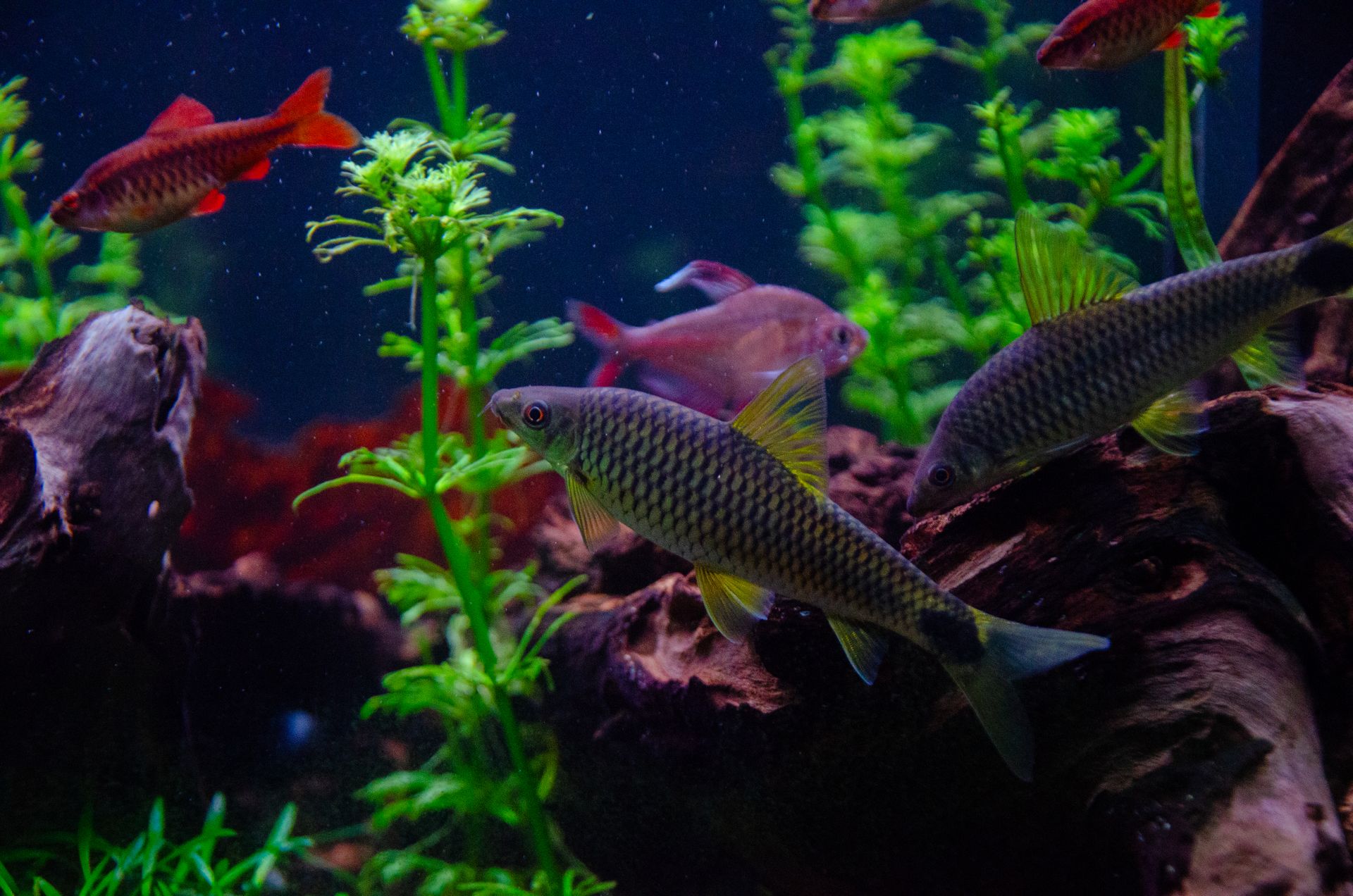
This plant is known for its vibrant green colors, ranging from dark to bright green. It's a real showstopper, but be warned: it's considered difficult to care for and not recommended for beginners.
If you're up for the challenge, Eriocaulon requires high lighting and CO2 in most setups. It's a bit finicky, but the payoff is worth it.
Here are some popular species of Eriocaulon to consider:
- Eriocaulon setaceum (Erio)
- Eriocaulon sp. (Dong Ha)
Aquatic Mosses
Aquatic mosses are a great addition to any freshwater aquarium. They're naturally floating, but can be tied to rocks or driftwood to keep them in place.
One of the best things about aquatic mosses is their versatility. They can be used interchangeably in any area of the tank, making them a great choice for aquarists who like to experiment with different styles.
Java Moss is a classic beginner plant that's also great for fish. It's a popular choice for aquariums because it's easy to care for and can be tied to rocks or driftwood to create a natural-looking environment.
Marimo Moss Balls are another unique and interesting option. They're loved by shrimp, and can add a fun and quirky touch to the tank.
Flame Moss has an upright shape which adds texture to the tank. It's a great choice for aquarists who want to add some visual interest to their aquarium.
Here are some easy-to-grow aquatic mosses suitable for aquariums:
Foreground Plants
Foreground plants are the unsung heroes of a well-designed aquarium. They're the first thing you see when you look at your tank, and they can make or break the entire aesthetic.
Java Fern is a great option for beginners, as it's easy to care for and has beautiful long green leaves. Anubias Nana is another popular choice, with its dark green leaves that can thrive under most light conditions.
Foreground plants can either be grown in mass to create a carpet-like appearance, or used sparingly to add an accent that bridges the connection to midground plants. Some popular species for this purpose are crypts, which are known for their hardy and undemanding nature.
Cryptocoryne, or crypts, are a great choice for beginners due to their ease of care. They come in a variety of shapes, sizes, and colors, making them a unique addition to any aquarium.
Here are some popular foreground plant species:
- Cryptocoryne albida (Brown)
- Cryptocoryne becketii
- Cryptocoryne beckettii (Petchii)
- Cryptocoryne mioya
- Cryptocoryne tonkinensis
- Lagenandra keralensis
- Lagenandra tenkasi
- Lagenandra meeboldii red
- Lagenandra thwaitesii
- Bolbitis heudelotii difformis (Mini Bolbitis)
- Staurogyne bihar
- Staurogyne repens (Creeping Staurogyne)
- Hydrocotyle tripartita (Japanese Hydrocotyle)
- Eleocharis parvula (Dwarf Hairgrass)
- Lilaeopsis novaezelandiae (Micro Sword)
- Eriocaulon sp. (Quinquangulare Red)
- Eriocaulon sp. (Vietnamese)
These plants can add a lot of visual interest to your tank, and with proper care, can thrive in the foreground area.
Background Plants
Background plants are a must-have in any freshwater aquarium, adding height and visual interest to the space. They're typically placed near the back of the tank to create depth and dimension.
Water Wisteria is a low-maintenance plant that grows quickly, making it a great choice for beginners. It's also a popular choice among aquarists due to its ease of care.
Hornwort is another resilient plant with a soft, fluffy appearance. Its unique texture adds a nice contrast to the more rigid plants in the tank.
Ludwigia Repens is a popular and colorful plant that's often used as a background plant. Its vibrant colors and wavy leaves create a beautiful display.
Intriguing read: Angelfish Freshwater Tank
Background aquarium plants are used to cover open spaces in the rear of the enclosure, creating a sense of depth and dimension. They're often the tallest plants in the aquarium.
Here are some common background plants:
- Egeria densa (Anacharis)
- Diandra didiplis (Peplis Diandra)
- Roseospatha schismatoglottis
- Scrophulariaceae sp.
- Armoracia aquatica (Rorippa Aquatica)
- Clinopodium brownei (Creeping Charlie)
Floating aquarium plants are a nice addition to the aquascape, adding an additional dimension to the space. They're not necessary, but they can create a beautiful display when used correctly.
Plant Care
When choosing the right substrate for your aquarium plants, keep in mind that some plants are heavy root feeders and prefer a nutrient-rich bottom layer.
A rocky substrate is suitable for medium-growing plants that can also attach to wood.
To ensure your plants thrive, make sure their rhizomes are exposed and above the substrate, allowing them to send out roots and shoots from their nodes.
Some aquarium plants can tolerate a wide range of conditions, but others require specific temperature and pH levels, such as 72-82 F and pH 6.5-7.5, respectively.
Here are some general guidelines for the light and water conditions of common aquarium plants:
Specific Plant Care
Some aquarium plants are heavy root feeders, absorbing nutrients primarily from the tank's substrate. A nutrient-rich bottom layer is essential for these plants.
Live aquatic plants that grow using rhizomes need their rhizomes to be exposed, above the substrate. This allows them to send out roots and shoots from their nodes.
To care for your live aquatic plants, you'll want to provide a moderate amount of light, as they can tolerate a range of light conditions. This makes them perfect for aquariums with varying lighting setups.
If you're looking for plants that can thrive in rocky substrates, consider those that can attach to wood. This will give you more flexibility when setting up your aquarium.
A temperature range of 72-82 F and a pH of 6.5-7.5 are ideal for many common aquarium plants. This will help them grow and thrive in your freshwater aquarium.
Explore further: How to Set up a Freshwater Aquarium with Live Plants
Common Midground Plants
If you're looking to add some visual interest to your freshwater aquarium, midground plants are a great place to start. They're medium in height, usually bridging the gap between foreground cover plants and lengthy background plants.
These plants are often vibrant and colorful, making a big impact on the overall look of your aquarium. They can also be used as foreground or background foliage, depending on the plant and your personal preference.
Some of the easiest midground plants to care for are those that adapt to a wide range of conditions, doing a bit of both absorbing nutrients from the tank's substrate and water. This makes them a great choice for beginners.
Here are some common midground plants you might consider:
- Ammania gracilis (Large Ammania)
- Ammannia senegalensis (Copper Leaf Ammania)
- Barclaya longifolia
- Bucephalandra giant board leaf
- Bucephalandra giant motleyana
- Micranthemum umbrosum (Giant Baby Tears)
- Fenestratarum mulyadii
- Heteranthera zosterifolia (Stargrass)
- Lindernia rotundifolia (Baby Tears)
Make sure to research the specific needs of any plant you're interested in, including lighting, water conditions, and nutrient requirements.
Common Background Plants
Background plants are a must-have for any freshwater aquarium, and there are many great options to choose from. Water Wisteria is a low-maintenance plant that grows quickly, making it a great choice for beginners.
Hornwort is another popular option, known for its soft, fluffy appearance. It's also very resilient, which means it can thrive in a variety of conditions.
Ludwigia Repens is a colorful plant that's often used in aquariums, but it's not the only option. There are many other plants that can add height and interest to your tank.
Here are some common background plants to consider:
- Egeria densa (Anacharis)
- Diandra didiplis (Peplis Diandra)
- Roseospatha schismatoglottis
- Scrophulariaceae sp.
- Armoracia aquatica (Rorippa Aquatica)
- Clinopodium brownei (Creeping Charlie)
- Gratiola viscidula
- Hedyotis salzmannii
- Najas guadalupensis (Guppy Grass)
- Penthorum sedoides (Ditch Stonecrop)
- Tonina fluviatilis
- Tonina belem
These plants are all great options for adding height and interest to your tank, and they're relatively easy to care for. With a little bit of research, you can choose the perfect background plants for your freshwater aquarium.
Algae and Other
Most algae in hobby aquaria are unwanted, nuisance plants. Few algae, such as marimo (Aegagropila linnaei), are sought after and intentionally cultivated in freshwater aquaria.
Algae
Algae can be a nuisance in hobby aquaria, with most types being unwanted plants.
Marimo algae, specifically, is a sought-after species that's intentionally cultivated in freshwater aquaria, and it's known as Aegagropila linnaei.
Most hobbyists would rather get rid of unwanted algae, but it's worth noting that some types are intentionally cultivated for their unique properties or aesthetic appeal.
Marimo algae is a great example of this, and it's prized for its ability to form large, spherical clumps that can be quite beautiful.
Curious to learn more? Check out: Different Types of Freshwater Angelfish
Lucky Bamboo
Lucky Bamboo is a great addition to any aquarium, but it does require some special care.
This plant prefers indirect light, so it's best to place it near a window that filters the sun's rays.
Lucky Bamboo can thrive in a variety of water conditions, but it does best in temperatures between 65-95 F.
A pH of 6.0-6.5 is ideal for this plant.
If you plan to fully submerge your Lucky Bamboo, be aware that it will need additional CO2 and aeration to stay healthy.
Hornwort (Ceratophyllum Demersum)
Hornwort (Ceratophyllum demersum) is a popular aquatic plant that can grow up to 10 feet tall.
It's a free-floating plant that prefers still or very slow-moving water, where its fluffy fronds provide cover for small fish.
Featured Images: pexels.com