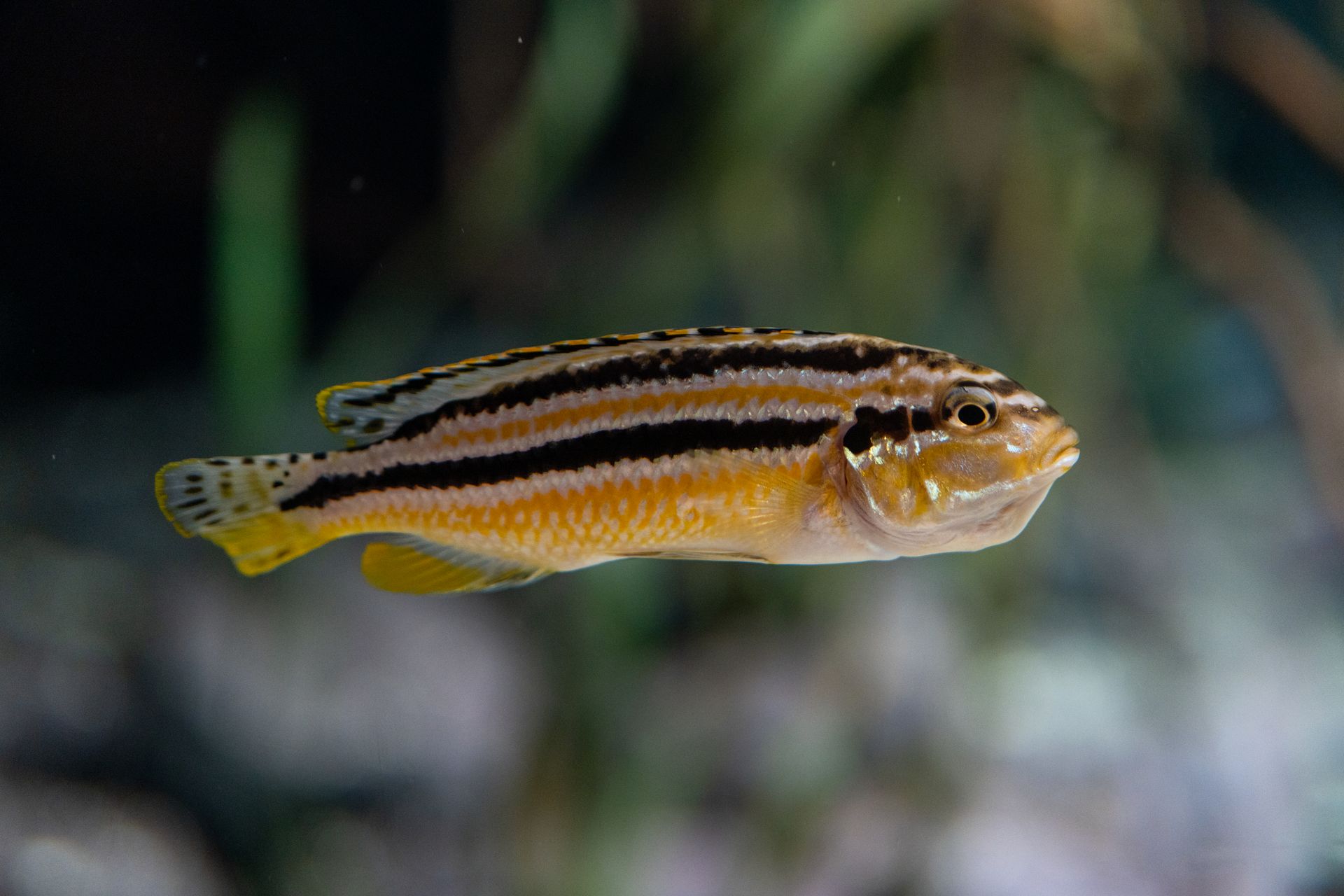
Cichlasoma Urophthalmus is a popular freshwater aquarium fish species native to Central America. They can grow up to 6 inches in length.
These fish are relatively hardy and can thrive in a well-maintained aquarium with proper care. They are a peaceful species and can be kept in small schools.
They prefer a temperature range of 72-82°F and a pH range of 6.5-8.0.
General Information
The Mayan cichlid is native to Central America, specifically the Atlantic-slope drainages from Mexico to Nicaragua.
Its natural habitats include freshwater marshes, lagoons, mangroves, and even marine-influenced creeks.
It's a euryhaline species, meaning adults can tolerate brackish to near-marine salinity.
In the wild, Mayan cichlids are bold, territorial predators that play a crucial role in their ecosystems.
This species is best suited for spacious tanks, as it requires a lot of space to thrive.
Experienced keepers are recommended for Mayan cichlids, as they can be quite challenging to care for.
Mayan cichlids are biparental substrate spawners, meaning both parents take turns laying eggs and caring for their young.
Tank Needs
To set up a tank for your cichlasoma urophthalmus, you'll want to ensure it's large enough. A minimum tank size of 120×50 cm (4×1.6 ft) is recommended for a single adult or bonded pair.
The tank should have a sand or fine gravel substrate, along with sturdy rocks or wood to create territories and open lanes for swimming. Strong biological filtration and high oxygenation are also essential.
Water parameters should be maintained between pH 6.7 and 8.0, with a hardness of 8-18 °dH, and a temperature range of 20-27 °C. While these fish can tolerate a range of conditions, including low-end brackish water, it's best to keep them in freshwater for long-term aquarium care.
Regular water changes of 30-50% weekly are crucial due to the high protein diet and adult biomass of these fish.
Here are some key water parameters to aim for:
Reproduction and Sex
Male cichlasoma urophthalmus is larger and more colourful than the female.
The species exhibits a moderate level of fecundity, with a female able to lay up to 1000 eggs on a flat rock or bridge.
Nesting and parental care are likely involved in the breeding process of this species, although specific details are scarce.
Reproduction

Mayan cichlids spawn in the spring and early summer.
Nest construction and parental care is likely for this species, although little is known of its breeding habits or fecundity.
The females of this species are able to lay up to 1000 eggs on a flat rock or bridge.
The breeding tank should be decorated with a large, stable decoration to accommodate the potential 40cm wide nest.
The care for the offspring is similar to that of other Central American cichlids.
Sexual Dimorphism
Sexual Dimorphism is a fascinating aspect of Cichlasoma urophthalmus behavior. Male fish are larger than females.
In the wild, males have a more vibrant coloration and extended dorsal and anal fins. This is a clear visual cue that helps distinguish males from females.
Males are also more likely to display bright, contrasting stripes on their bodies. Females, on the other hand, tend to have more subdued coloration.
To determine the sex of a Cichlasoma urophthalmus, you can examine their genital papillae. Males have less prominent and more pointed papillae, while females have more robust and rounded papillae.
For your interest: Cichlasoma Octofasciatum
Appearance and Color
The Mayan cichlid's appearance is quite striking. Its body is ovate, similar to other cichlids, and bears a resemblance to North American sunfishes.
Its coloration is truly vibrant, with a background color that gradates from olive-brown on the back to light brown or beige on the belly. The throat region is often a deep pink, especially in breeding males.
Pink is also suffused throughout the fish, but it's most noticeable in the throat area. The first of five to seven green-black bars are located behind the head, and the last one is situated at the caudal peduncle.
Coloration
The Mayan cichlid's coloration is truly striking. The background color is olive-brown dorsally, grading to a light brown or beige towards the abdomen.
One of the most notable features of their coloration is the presence of pink throughout the body, which is most conspicuous in the throat region, especially in breeding males.
The Mayan cichlid's body is adorned with five to seven wide, green-black bars, located behind the head and extending to the caudal peduncle.
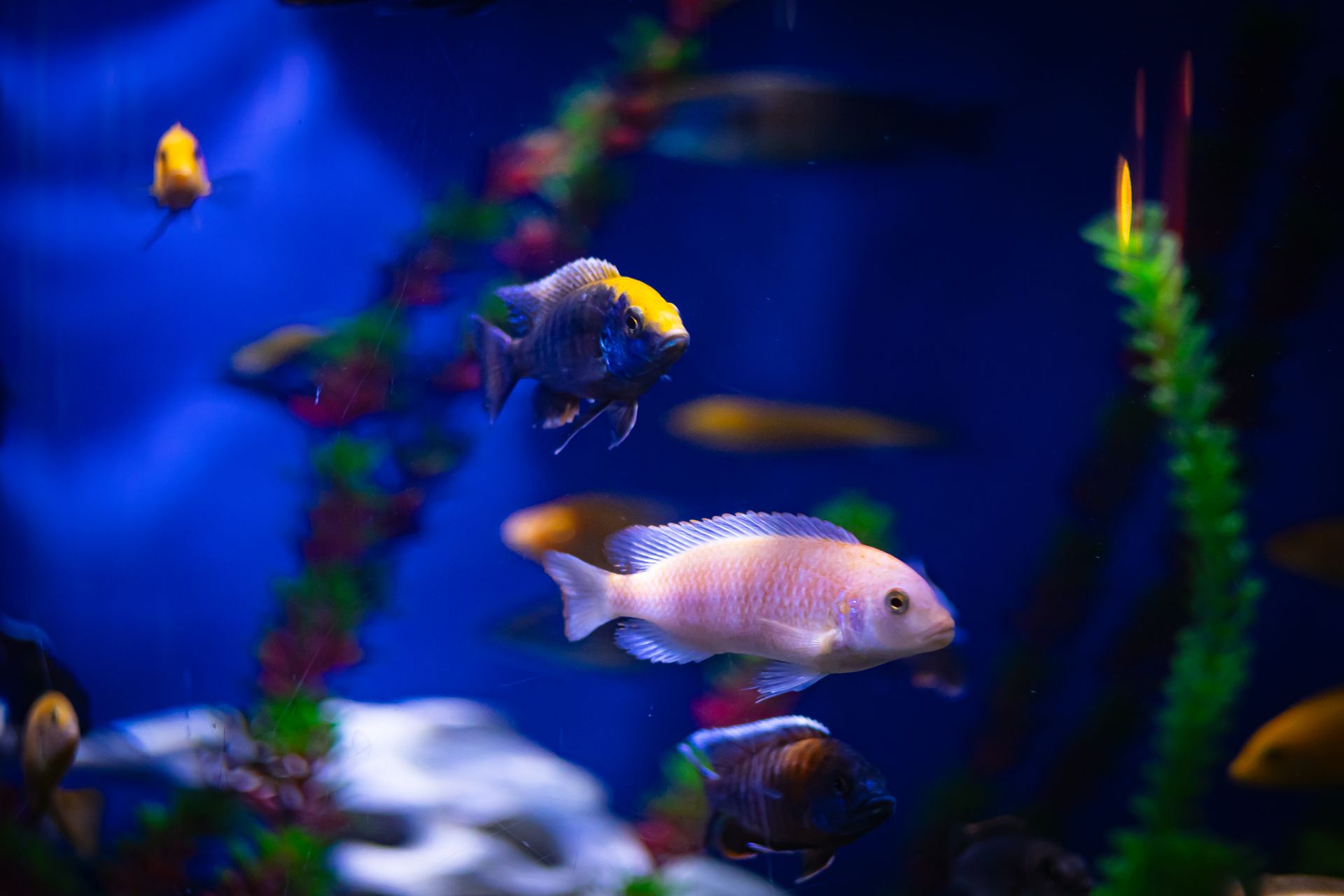
A distinctive silver-blue ring or "halo" is present on the upper half of the caudal peduncle, with a black center that gives the appearance of an "eye-spot" on the tail.
This unique "eye-spot" is so distinctive that it earned the Mayan cichlid the species name urophthalmus, which comes from the Greek words for "tail" and "eye".
Convict Cichlid
The Convict Cichlid is a stunning fish with a striking appearance.
Its body is a beautiful silver color with seven horizontal black stripes, making it a popular choice for aquarium enthusiasts.
This fish can grow up to 6 inches in length, which is relatively small compared to other cichlid species.
The Convict Cichlid is a resilient and robust fish that can co-exist well with the Mayan Cichlid.
Both species share similar water conditions and dietary preferences, making them compatible roommates.
Firemouth Cichlid
The Firemouth Cichlid is a vibrant fish with a striking appearance. Its body is primarily yellow with darker vertical stripes, giving it a unique and eye-catching look.
In terms of size, the Firemouth Cichlid can grow up to 6 inches in length, making it a decent addition to a well-established aquarium.
Geographical Distribution
The Mayan cichlid, also known as cichlasoma urophthalmus, is native to the Central American Atlantic slope waters of southeastern Mexico, including the Yucatán Peninsula, Belize, Guatemala, Honduras, and Nicaragua.
Its native habitat includes Lake Petén, Guatemala, where Dr. Günther's type specimen was found.
The Mayan cichlid has been introduced to non-indigenous populations in portions of Florida Bay and the Everglades in southern Florida, USA, since 1983.
Importance and Compatibility
Cichlasoma urophthalmus are territorial and predatory fish, so it's essential to keep them singly or as a proven pair.
To avoid any potential risks, it's crucial to not mix them with small fish, as they can see them as prey.
If you do decide to combine them with other fish, choose large, robust Central American cichlids or comparably sized fish and provide multiple territories to reduce aggression.
Importance to Humans:
The Mayan cichlid is targeted by artisanal fishers due to its size and palatable flesh. This species is the focus of many aquaculture facilities in its native range.
Its non-native South Florida populations are popular with anglers because of the Mayan's aggressive approach to bait. This feistiness when hooked makes it a sought-after catch.
Some recreational and sport fishers consider the Mayan cichlid an annoyance, as it often interferes with their attempts to hook larger and more desirable species. In particular, those targeting snook in mangrove haunts may find it difficult to catch anything but Mayan cichlids.
The species is occasionally available in the aquarium trade, but only suitable for experienced aquarists with the proper facilities.
Compatibility & Tank Mates
When choosing tank mates for your fish, it's essential to consider their compatibility. Territorial and predatory fish, like those mentioned earlier, require careful selection to avoid conflicts.
Keep territorial and predatory fish singly or as a proven pair, as mixing them with small fish can be a recipe for disaster, posing a risk to the small fish as prey.
If you do decide to combine them, choose other large, robust Central American cichlids or comparably sized fish, and provide multiple territories to reduce aggression.
Varieties and Names
The cichlasoma urophthalmus, a fascinating fish species. It's commonly known by several names, including Mayan cichlid in English.
One of the most widely recognized names for this fish is the Mayan cichlid.
Frequently Asked Questions
Is a Mayan cichlid good to eat?
Yes, the Mayan cichlid has edible white, flaky meat with a mild flavor. It's considered a good food fish with no bag or size limits.
Featured Images: pexels.com