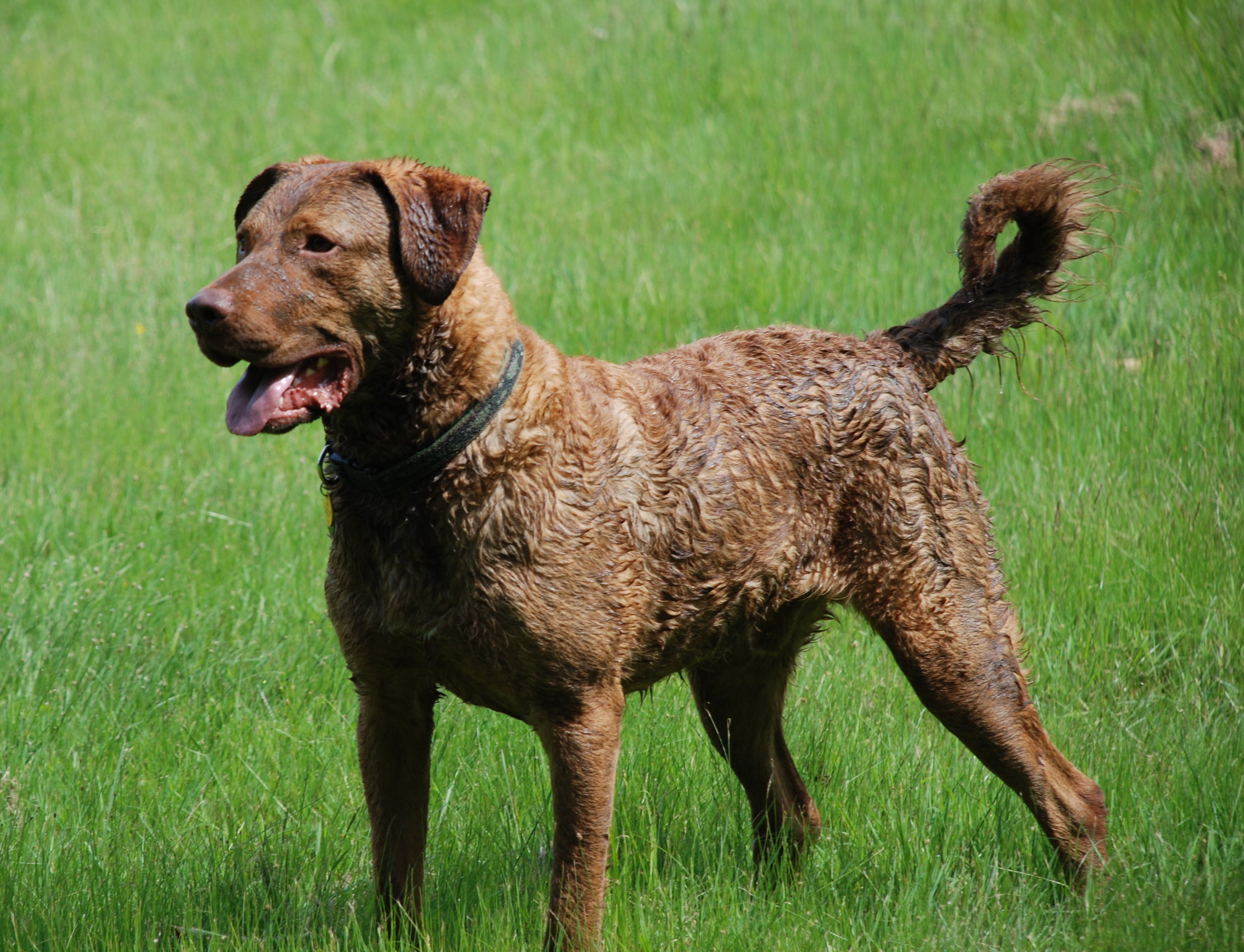
The Chesapeake Bay dog breed is a unique and fascinating companion. They originated in the United States, specifically in the Chesapeake Bay region, where they were bred to hunt waterfowl.
Their distinctive appearance is a result of their original purpose - to thrive in the harsh, wet environment of the bay. They have a thick, oily coat that helps them shake off water and a broad head with a distinctive stop.
Their intelligence and strong will make them a great companion for experienced dog owners. They require regular exercise and mental stimulation to prevent boredom and destructive behavior.
Characteristics (Physical)
The Chesapeake Bay dog breed is a unique and fascinating breed. They're originally developed to hunt waterfowl in harsh weather, so it's no surprise they're built for the outdoors.
Their bodies are strong, muscular, and well-balanced, with a harsh outer coat that's perfect for withstanding the elements. Despite their sturdy build, they're also incredibly agile.
One of the distinctive features of the Chesapeake Bay dog is their tail, which is medium-length and straight, with a bit of heft at the base. Their legs are strong and help them run and swim with ease, thanks to their sloped shoulders and webbed feet.
Their face is broad and round, with small ears on top and a balanced muzzle. Their eyes are wide and medium-sized, a beautiful amber color that adds to their innocent and playful look.
Here are some key physical characteristics of the Chesapeake Bay dog breed:
Overall, the Chesapeake Bay dog breed is a stunning and capable companion, perfect for those who love the outdoors.
Grooming
Chesapeake Bay Retrievers have a double coat that sheds quite a bit, so plan to brush them at least once a week to remove dead hair and keep the shedding to a minimum.
Their harsh outer coat and soft undercoat need a thorough weekly brushing to keep their short hair healthy and ready for their close-up. You can use a fine wire slicker brush for unruly curls.
It's essential to check their fur for dirt, debris buildup, and other cuts or scrapes they might have gotten, especially after outdoor activities like swimming.
Bathe your Chessie every couple of months or so, depending on how dirty they get, as their oily coat can repel water and dry quickly.
You'll want to bump up brushing to daily during the spring and fall when Chessies blow their coats, or shed their old coats to let their winter or spring coats come in.
Daily brushing will also help prevent mats and keep their coat looking healthy.
Recommended read: American Bully Coats
Temperament and Training
The Chesapeake Bay Retriever is a breed that thrives on activity and loves to stay busy. They're perfect for families with an active lifestyle.
Chessies can be reserved around strangers, so early socialization is key. They'll warm up to new people in their own time, but it's essential to teach them to interact politely with others. Their strong bark and powerful physique can be intimidating, so it's crucial to train them well.
If this caught your attention, see: Why Are There so Many Breeds of Dogs
These dogs are intelligent and strong-willed, making training a challenge for new pet parents. However, with positive reinforcement and patience, they can learn quickly. Food is a strong motivator for Chessies, so use that to your advantage during training sessions.
To ensure a harmonious co-existence with kids and other dogs, it's essential to correct resource guarding behavior immediately. Raising a Chessie with kids and other dogs from puppyhood offers the best chance for everyone to get along.
Here are some key temperament and training facts to keep in mind:
- Chessies are intelligent, strong-willed, and love to stay busy.
- Early socialization is crucial to help them interact politely with strangers.
- Positive reinforcement training is recommended, and food can be a strong motivator.
- Resource guarding behavior should be corrected immediately.
Temperament
The Chesapeake Bay Retriever is a breed that's full of life and energy, and they thrive when they're accompanying you on outdoor adventures. They're natural-born hunters with a strong drive to retrieve, but they can be good with kids as long as everyone respects each other's boundaries.
One thing to keep in mind is that Chessies can be reserved around strangers, so it's not uncommon for them to be a bit standoffish at first. They have a strong bark and powerful physique, which can be intimidating to those who don't know them.
Chesapeake Bay Retrievers are highly intelligent and independent, which can make them a bit challenging to train at times. However, with patience and consistency, they can learn to respond well to commands and even excel in training for fieldwork.
In fact, they're generally considered one of the most trainable retriever breeds, but they do require a lot of mental and physical stimulation to prevent boredom and destructive behavior.
Here are some key temperament traits to keep in mind:
- Good with kids, but requires respectful interaction
- Reserved around strangers, may take time to warm up
- Highly intelligent and independent
- Requires a lot of mental and physical stimulation
- Prone to resource guarding, especially with toys
Overall, Chesapeake Bay Retrievers are loyal and affectionate companions who thrive on activity and interaction with their family. With the right training and care, they can make wonderful pets for active families who are willing to put in the time and effort.
Training
Training your Chesapeake Bay Retriever puppy requires patience and consistency. They are intelligent, loving, and strong-willed, making them a challenge to train, especially for first-time pet parents.
Professional training using positive reinforcement is highly recommended for this breed. Food is a strong motivator for Chessies, so use it to your advantage during training sessions.
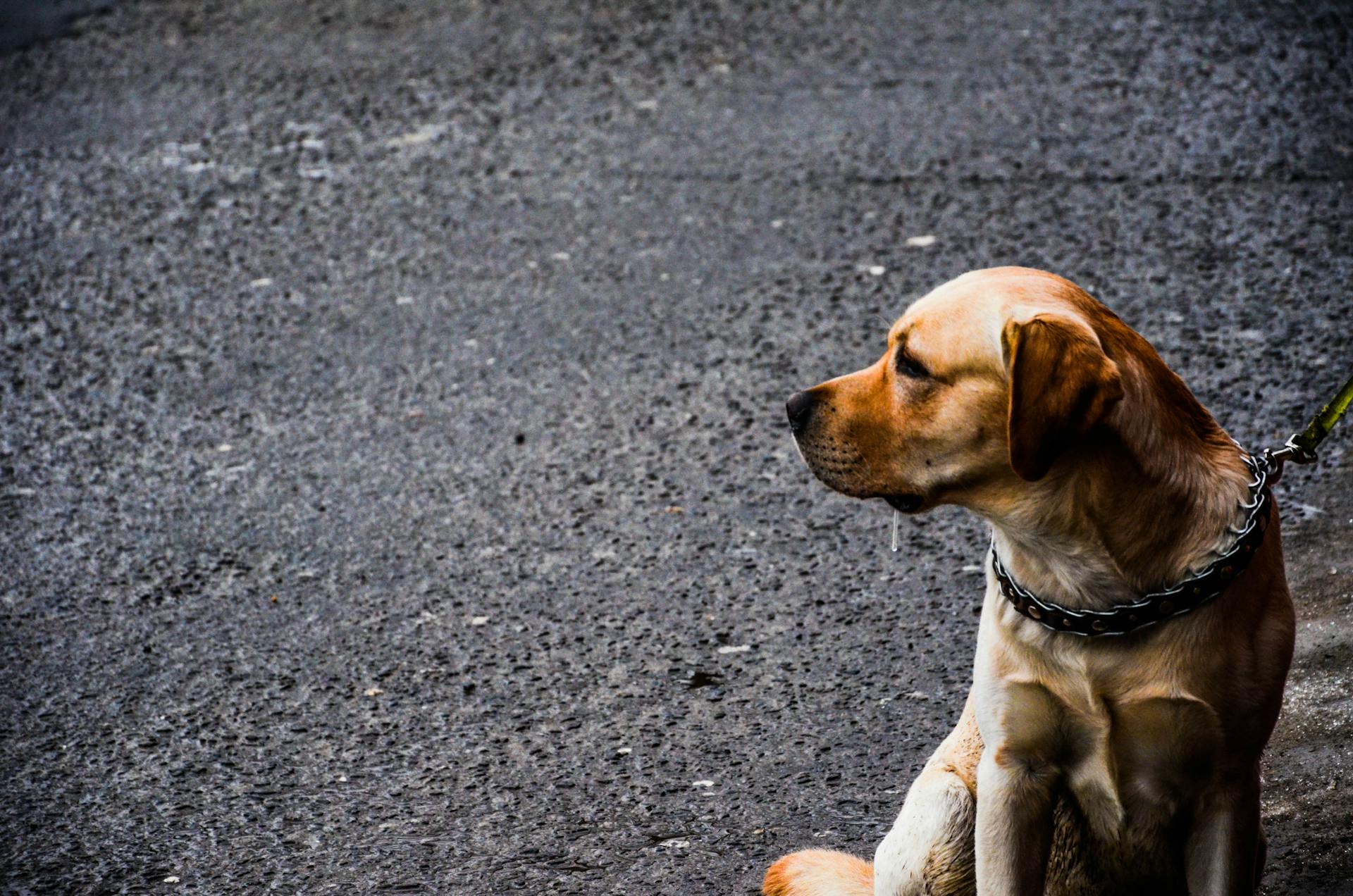
Chessies excel at various dog sports and are naturally inclined to learn. However, some may be prone to resource-guarding, so training is necessary to nip this behavior in the bud.
To ensure a well-mannered and stress-free pet, early socialization is a must. Take your puppy on walks and let them meet other dogs and people. Consider enrolling them in puppy school for a fun and interactive learning experience.
Here are some key training tips to keep in mind:
By following these training tips and being committed to your puppy's development, you can help them become a well-behaved and loyal companion.
Health and Wellness
Chesapeake Bay Retrievers are generally a healthy breed, but like all breeds, they can be prone to certain health issues. Their average life span is 10 to 13 years.
One of the most common health issues in Chessies is hip dysplasia, a skeletal condition that can cause lameness, pain, and decreased activity. You can help prevent this by keeping your pup at a healthy weight.
Exercise-induced collapse (EIC) is another issue that can affect Chessies, causing them to become uncoordinated and wobbly after strenuous activity. If you're planning to breed your Chessie, genetic testing can help you avoid passing on this condition.
Here are some common health issues to be aware of:
- Hip Dysplasia
- Ocular Conditions (PRA and cataracts)
- Exercise-Induced Collapse (EIC)
- Degenerative Myelopathy (DM)
- Follicular Dysplasia Alopecia
- Von Willebrand’s Disease (vWD)
Nutrition and Feeding for Chesapeake
For Chesapeake Bay Retrievers, a daily intake of 2 - 2.5 cups of high-quality dog food is recommended. Most owners find it helpful to split this into two or three meals to prevent bloat.
Feeding your dog around the same time every day is crucial for maintaining a routine. This can be achieved by using an automatic feeder.
Splitting the daily portion in half usually means having breakfast and dinner as the main meals.
Health
If you're considering bringing a Chesapeake Bay Retriever into your family, it's essential to know about their potential health issues. Chessies have a life expectancy of 10 to 13 years, but they're prone to some health problems.
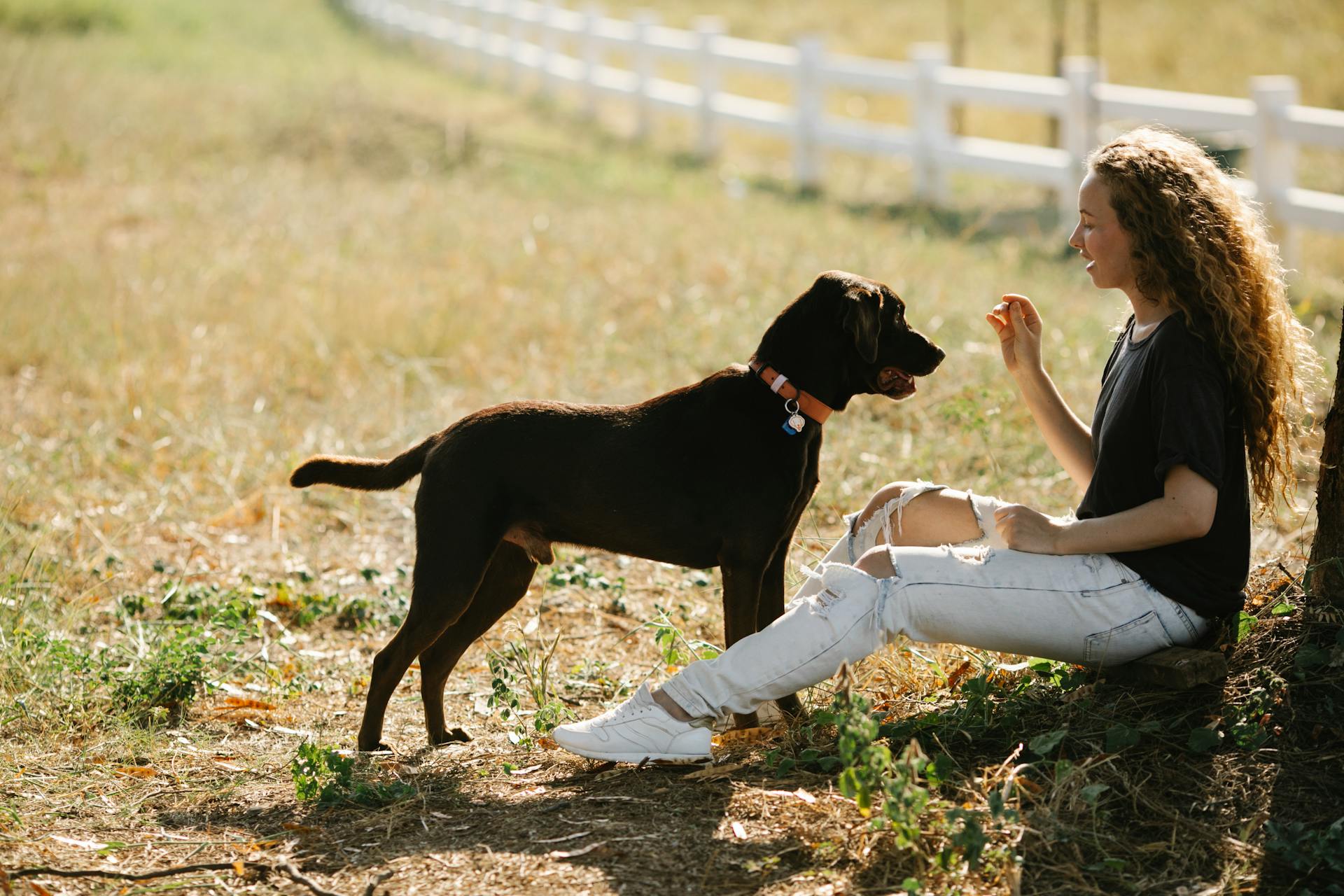
Hip dysplasia is a common issue in large breed dogs, and it can cause lameness, pain, and decreased activity. Responsible breeders should provide genetic screening tests for ocular conditions like progressive retinal atrophy and cataracts.
Exercise-induced collapse (EIC) is an inherited intolerance to exercise that can cause affected Chessies to become uncoordinated and wobbly after strenuous activity. This condition can be avoided with responsible genetic testing.
Degenerative myelopathy (DM) is a neurological condition that causes older dogs to lose function in their hind limbs. Genetic testing can help identify the disease, but it's not a guarantee that an affected dog won't develop it.
Follicular dysplasia alopecia is a genetic hair loss condition that gives Chessies' coats a shabby appearance. There's no effective treatment for this condition, but responsible breeding can avoid it.
Von Willebrand's disease (vWD) is an inherited blood disorder that can cause excessive bleeding after surgery or injury. Some dogs may not show signs of the disease, but it's essential to consult with a vet for options.
Here are some common health issues in Chesapeake Bay Retrievers:
Regular vet visits and responsible breeding can help ensure your Chesapeake Bay Retriever lives a long and healthy life.
Exercise and Endurance
Exercise and Endurance are essential for the Chesapeake Bay retriever breed. This breed has lots of physical and mental energy to burn, requiring at least two hours of exercise per day.
You can keep your dog busy with activities like brisk walks, running, hiking, swimming, and fetch. Puzzle feeders and dog sports, such as dock diving, can also provide mental stimulation and help prevent destructive behaviors.
Chessies are built for endurance, functioning with ease, efficiency, and endurance in the field. They can handle wind, tide, and long, cold swims with no issues.
Here are some exercise ideas for your Chesapeake Bay retriever:
- Brisk walks
- Running
- Hiking
- Swimming
- Fetch
Remember to supervise your dog when they're playing with your children, and make sure your kids are gentle with your pet.
History and Origins
The Chesapeake Bay Retriever breed has a rich history that dates back to the early 1800s in the Chesapeake Bay area of Maryland and Virginia. This is where waterfowl hunters needed a dog that could retrieve game swimming in frigid waters.
The breed was developed from various breeds, including the Newfoundland, Irish water spaniel, and hounds. These dogs were bred to withstand freezing water conditions and retrieve hundreds of fowl per day.
In 1807, two Newfoundland puppies, Sailor and Canton, were rescued from a wrecked ship and went on to become superior retrievers. They were later bred to other local dogs, giving rise to the thick-coated, bright, and happy Chesapeake Bay Retriever.
The breed was first recognized in 1877 at the Poultry and Fanciers Association Show in Baltimore as the Chesapeake Bay Ducking Dog. The American Kennel Club officially recognized the CBR in 1878.
Several prominent people, including President Teddy Roosevelt and Tom Felton, have owned Chessies over the years. They're also the official dog breed of Maryland.
The breed's unique characteristics, such as their thick, oily coat and powerful legs, made them well-suited for hunting waterfowl under punishing weather conditions.
Where to Adopt/Buy
If you're considering bringing a Chesapeake Bay Retriever into your family, you'll want to know where to find one. You can expect to pay around $900 to $5,000 for a puppy from a reputable breeder.
Chesapeake Bay Retrievers aren't as common as some other breeds, but that doesn't mean you won't be able to find one. You can check local animal shelters to see if they have a dog in need of a home.
If you're looking for a specific breed, it's worth searching for breed-specific rescue organizations in your area. These organizations can connect you with a Chesapeake Bay Retriever in need of a new home.
If you're interested in adopting or buying a Chesapeake Bay Retriever, here are some resources to consider:
- American Chesapeake Club
- Chesapeake Bay Retriever Relief & Rescue
- Chesapeake Safe Harbor
In the Ring and Field
The Chesapeake Bay Retriever's history is as rich as their coat. The breed's ancestors, Sailor and Canton, were the foundation of the breed, and their descendants were the ones who helped establish the Chesapeake Bay Retriever's reputation as a skilled hunter.
In the late 19th century, a group of enthusiasts convened at the Poultry and Fancier Association Show in Baltimore, where they agreed to consider Sailor and Canton's strains as one breed. They divided the breed into three classes based on color and coat type: otter dogs, curly-haired dogs, and straight-haired dogs.
The American Kennel Club recognized the breed in 1888, making it the first retriever to receive formal acknowledgment. By 1918, the AKC had accepted a more unified vision of the breed, with a short, hard, double coat that tends to wave on the shoulder, neck, back, and loins.
Today, the Chesapeake Bay Retriever is still closely tied to its heritage, with its name retaining mention of the Chesapeake Bay. In fact, the breed is so beloved in Maryland that it was named the official state dog in 1964.
Final Thoughts
The Chesapeake Bay dog breed is an iconic American breed, thanks to its rich history and likable personality.
They make great house pets, and their intelligence and determination make them a great fit for various sports and services.
Their versatility is the main reason they're becoming more popular around the world.
As a breed that thrives in a variety of settings, the Chesapeake Bay dog is a great choice for many families.
Frequently Asked Questions
What breeds are in a Chesapeake Bay Retriever?
Chesapeake Bay Retrievers are a mix of breeds including Newfoundlands, hounds, setters, and water spaniels. They were developed to be skilled ducking dogs and retrievers for market hunters.
Are Chesapeake Bay retrievers good house dogs?
Chesapeake Bay Retrievers are suitable for families with kids, but they still require supervision and attention. They may not be the best fit for a typical 'low-maintenance' house dog
Are Chesapeake Bay retrievers rare?
Yes, Chesapeake Bay Retrievers are an uncommon breed, making them a unique addition to any family. If you're interested in bringing one home, working with a responsible breeder is a great place to start.
What is the difference between a Chesapeake Bay Retriever and a Labrador Retriever?
The Chesapeake Bay Retriever is slightly taller and has a denser coat than the Labrador Retriever, with a coat color range from dark brown to light tan. This sets them apart from the Labrador Retriever, making them a unique breed.
Featured Images: pexels.com