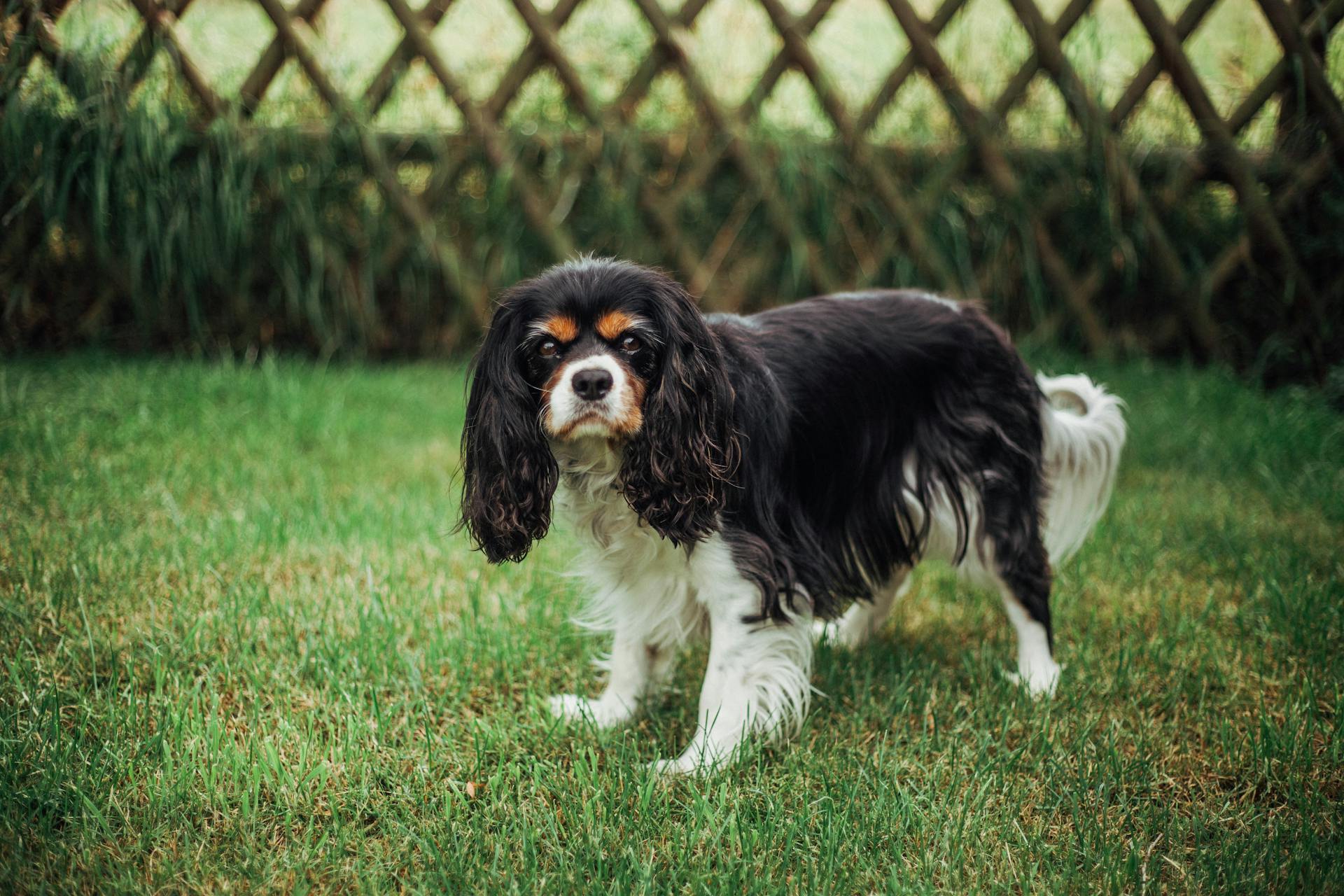
The Cavalier King Charles Spaniel has a rich history that dates back to the 16th century. They originated in the United Kingdom and were bred as companions for royalty.
Their ancestors were small spaniels that were popular among the nobility, and over time they were selectively bred to create the Cavalier King Charles Spaniel we know today. They were a favorite of King Charles II, who was known for his love of dogs.
The breed's name is a nod to their royal heritage, with "Cavalier" referring to the King's Cavalier Guard and "King Charles" referencing the monarch himself.
Early History
The Cavalier King Charles Spaniel's early history is a fascinating tale of royal favor, artistic influence, and dedicated breeding.
The breed's royal roots date back to the 1600s during the rule of Stuart Kings Charles I and Charles II, who favored the dogs as court companions.
These dogs were prominently featured in the paintings of renowned artists such as Rembrandt, Van Dyck, and Gainsborough, showcasing their gentle and affectionate nature.
See what others are reading: Cavalier King Charles Spaniel Dogs 101
An American named Roswell Eldridge played a significant role in the breed's revival in the 1920s by offering a prize for the dog most resembling the old masters' paintings.
Eldridge's prize was a tidy sum of 25 pounds, which was a substantial amount at the time.
The prize was awarded to a Blenheim dog named Anns Son in 1928, marking a turning point in the breed's history.
In 1929, a club was formed, and a standard was written, solidifying the breed's foundation.
The first Cavaliers arrived in the United States in 1952, and it would take over 20 years for the breed to gain recognition from the American Kennel Club.
Here's an interesting read: Cavalier King Charles Spaniel Breed Characteristics
The Breed's Development
The Cavalier King Charles Spaniel's development is a fascinating story that spans centuries. The breed's royal origins date back to the 1600s during the rule of the Stuart Kings Charles I and his son Charles II.
The breed was a favorite among the aristocracy, often accompanying the monarchs on castle visits, which sometimes caused frustration among other subjects. They were also prominently featured in paintings by famous artists like Rembrandt, Van Dyck, and Gainsborough.
In the 19th and early 20th centuries, the breed underwent significant changes, shifting towards dogs with shorter noses and dome-shaped heads. This led to the development of the King Charles Spaniel, which is distinct from the original type.
By the early 20th century, the old-type spaniels were nearly extinct, replaced by the flatter-faced variety. However, a wealthy American named Roswell Eldridge offered a prize in the 1920s for the best "old-type" Spaniels, aiming to revive the breed's original appearance.
This initiative led to the reemergence of the breed with the longer nose and the name "Cavalier" added to distinguish it from the more modified King Charles Spaniel. The establishment of the Cavalier King Charles Spaniel Club in 1928 marked a turning point in the breed's history.
The American Kennel Club officially recognized the Cavalier King Charles Spaniel as a distinct breed in 1995, reflecting its growing popularity and the success of revitalization efforts.
Expand your knowledge: English Bulldog Original Look
King Charles II

King Charles II was a monarch who ruled England from 1660 to 1685. He was a great admirer of dogs and was particularly fond of a specific breed that would later bear his name.
This breed, the Cavalier King Charles Spaniel, was one of Charles II's favorite companions, often seen by his side in paintings and portraits. He was known to have owned many of them.
The Cavalier King Charles Spaniel's gentle nature and affectionate personality made them a perfect fit for the king's lifestyle. They were often seen accompanying him on walks and even in his bedchamber.
Charles II's love for this breed helped to popularize them among the English aristocracy, and they soon became a staple of royal life.
The Cavalier's Distinction
The Cavalier King Charles Spaniel was a favorite of King Charles II, who was particularly fond of the breed's gentle and affectionate nature.
They were bred as companions and were often kept in the palace, where they were pampered and loved by the royal family.
Their small size made them perfect for palace life, where space was limited.
The Cavalier's gentle nature also made them a popular choice as therapy dogs, providing comfort and companionship to those in need.
Their beautiful coats came in four main colors: Blenheim, Tricolor, Black and Tan, and Ruby.
Their distinctive features included a moderate stop, a black nose, and a sweet expression.
Check this out: King Charles Cavalier Spaniel Black
The Breed's Decline and Resurgence
The Cavalier King Charles Spaniel's decline was largely due to shifting breeding preferences towards the modified King Charles Spaniel.
This shift led to a significant drop in popularity for the Cavalier King Charles Spaniel, which had previously been favored by the aristocracy.
The breed saw a resurgence in the mid-20th century thanks to dedicated breeders in the United Kingdom who sought to preserve and restore the Cavalier to its historical type.
The establishment of the Cavalier King Charles Spaniel Club in 1928 marked a turning point, leading to increased interest and efforts to standardize the breed.
The American Kennel Club officially recognized the Cavalier King Charles Spaniel as a distinct breed in 1995, reflecting its growing popularity and the success of revitalization efforts.
Frequently Asked Questions
What two breeds make a Cavalier King Charles Spaniel?
The Cavalier King Charles Spaniel is a cross between Papillons and Cocker and Welsh Springer Spaniels. This unique mix of breeds contributes to the Cavalier's distinctive appearance and temperament.
What is difference between King Charles and Cavalier King Charles?
The main difference between King Charles and Cavalier King Charles Spaniels is their size and head shape, with the Cavalier being slightly larger and having a flat head, while the King Charles is smaller with a domed head. This physical difference is a result of their original purpose and breeding history.
What is an interesting fact about the Cavalier King Charles Spaniel?
The Cavalier King Charles Spaniel has a rich royal history, named after two English monarchs, Charles I and Charles II, who were devoted to the breed. This royal connection dates back to the 17th century, when Charles II even issued a decree allowing the dogs in public spaces.
What was the Cavalier King Charles Spaniel originally bred for?
The Cavalier King Charles Spaniel was originally bred as a companion animal, often serving as a warm and affectionate companion to royalty. They were valued for their gentle nature and ability to provide comfort, rather than for specific working or hunting purposes.
Featured Images: pexels.com