
Cats can develop mouth tumors, which are growths on the gums, tongue, or other parts of the mouth. These tumors can be benign or malignant, and their growth rate can vary.
The life expectancy of a cat with a mouth tumor depends on the type and stage of the tumor, as well as the cat's overall health. In some cases, surgery or other treatments can help manage symptoms and improve quality of life, but unfortunately, not all cats can be cured.
Most mouth tumors in cats are squamous cell carcinomas, which are a type of skin cancer that can spread to other parts of the body. If left untreated, these tumors can cause significant discomfort and pain for the cat.
Surgery is a common treatment option for mouth tumors in cats, and it can be effective in removing the tumor and improving the cat's quality of life. However, the success of surgery depends on the size and location of the tumor, as well as the cat's overall health.
Related reading: Canine Mouth Cancer Life Expectancy
What Is Cat Mouth Tumor
Cat mouth tumors, also known as oral squamous cell carcinomas, are a type of cancer that affects the mouth and lips of cats.
These tumors are typically slow-growing and can be benign or malignant, with the latter being more aggressive and life-threatening.
The most common type of cat mouth tumor is squamous cell carcinoma, which accounts for about 80% of all oral cancers in cats.
Symptoms of cat mouth tumors can include difficulty eating, drooling, and swelling of the face or neck, often accompanied by a foul odor.
In some cases, cat mouth tumors can be a result of a viral infection, such as feline leukemia virus or feline immunodeficiency virus.
Cat mouth tumors are usually diagnosed through a combination of physical examination, imaging studies, and biopsy.
Treatment options for cat mouth tumors depend on the size, location, and type of tumor, as well as the overall health of the cat.
For more insights, see: Feline Lymphoma Life Expectancy
Symptoms and Diagnosis
If you notice any of these symptoms in your cat, such as excessive drooling, difficulty eating, unexplained loss of teeth, or red or swollen gums and mouth, it's essential to get it checked out.
A full physical examination by a veterinarian is the first step in diagnosing oral cancer in cats.
Your veterinarian will likely sedate your cat for a complete oral examination and radiographs (X-rays) of the mouth to get an accurate diagnosis.
They will also recommend bloodwork to assess the overall health of your cat and rule out other medical conditions.
In some cases, they may recommend an MRI or CT scan, and in most cases, they will either submit a portion of any suspicious lesions or remove the tumor for biopsy to determine the type.
Here are the common symptoms to look out for:
- Excessive or increased drooling
- Difficulty eating or weight loss
- Unexplained loss of teeth
- Red or swollen gums and mouth
Cats: Symptoms
If you notice your cat is having trouble eating, it could be a sign of mouth cancer. Difficulty eating or weight loss are common symptoms of oral cancer in cats.
Excessive drooling is another red flag. You might notice your cat drooling more than usual, which can be a sign of mouth cancer.
A unique perspective: Canine Bone Cancer Life Expectancy
Unexplained loss of teeth is a concerning symptom. If your cat suddenly loses teeth without any apparent reason, it's worth getting checked out.
Red or swollen gums and mouth are also warning signs. Keep an eye out for any unusual changes in your cat's mouth.
Here are some common symptoms of oral cancer in cats to watch out for:
- Excessive or increased drooling
- Difficulty eating or weight loss
- Unexplained loss of teeth
- Red or swollen gums and mouth
Diagnosing Cat Disease
Diagnosing cat disease is a crucial step in getting your kitty the best care possible. A full physical examination by a veterinarian is the first step in diagnosing many cat diseases.
Your veterinarian will likely need to sedate your cat for a thorough examination, which may include radiographs (X-rays) of the affected area. Bloodwork is also often recommended to assess your cat's overall health and rule out other medical conditions.
In some cases, a veterinarian may recommend an MRI or CT scan to get a clearer picture of what's going on inside your cat's body. They may also submit a portion of any suspicious lesions or remove the tumor for a biopsy to determine the type of disease.
Related reading: Life Expectancy of Cat with Kidney Disease
Stages and Treatment
The life expectancy of cats with mouth cancer is often low, from a couple months to 1 year depending on the location and severity of the cancer. Unfortunately, by the time the cancer is diagnosed, it has likely already affected the surrounding areas and is more advanced than it may look.
Treatment of mouth cancer in cats depends on the type of tumor, but it typically involves surgery and radiation. Sometimes chemotherapy and molecularly targeted therapies are utilized. In addition, cats with mouth cancer are also treated for pain and may need nutritional therapy, such as a feeding tube, to support them through their recovery.
The prognosis for cats with mouth cancer depends on tumor type, location, and if the cancer has spread to other parts of the body. Benign tumors are typically successfully treated with surgical removal and sometimes radiation, and in general, have a good prognosis.
Stages
Mouth cancer in cats can be a devastating diagnosis, and understanding the stages of the disease can help you better navigate treatment options. Unfortunately, the life expectancy of cats diagnosed with mouth cancer is often low, from a couple months to 1 year depending on the location and severity of the cancer.

The prognosis for cats with mouth cancer depends on the tumor type, location, and if the cancer has spread to other parts of the body. Benign tumors are typically successfully treated with surgical removal and sometimes radiation, and in general, have a good prognosis.
A key factor in determining the stage of mouth cancer is the size and location of the tumor. If a tumor can be seen within the mouth, the cancer has likely already affected the surrounding areas and is more advanced than it may look.
Malignant tumors, such as SCC, are often diagnosed when the tumors are too large and the cancer has spread to the local lymph nodes. In these circumstances, prognosis is poor, and only palliative treatment is available.
Here are the general stages of mouth cancer in cats, based on the location and severity of the cancer:
It's essential to work closely with your veterinarian to determine the stage of your cat's mouth cancer and develop a treatment plan tailored to their specific needs.
Treating Cat Disease
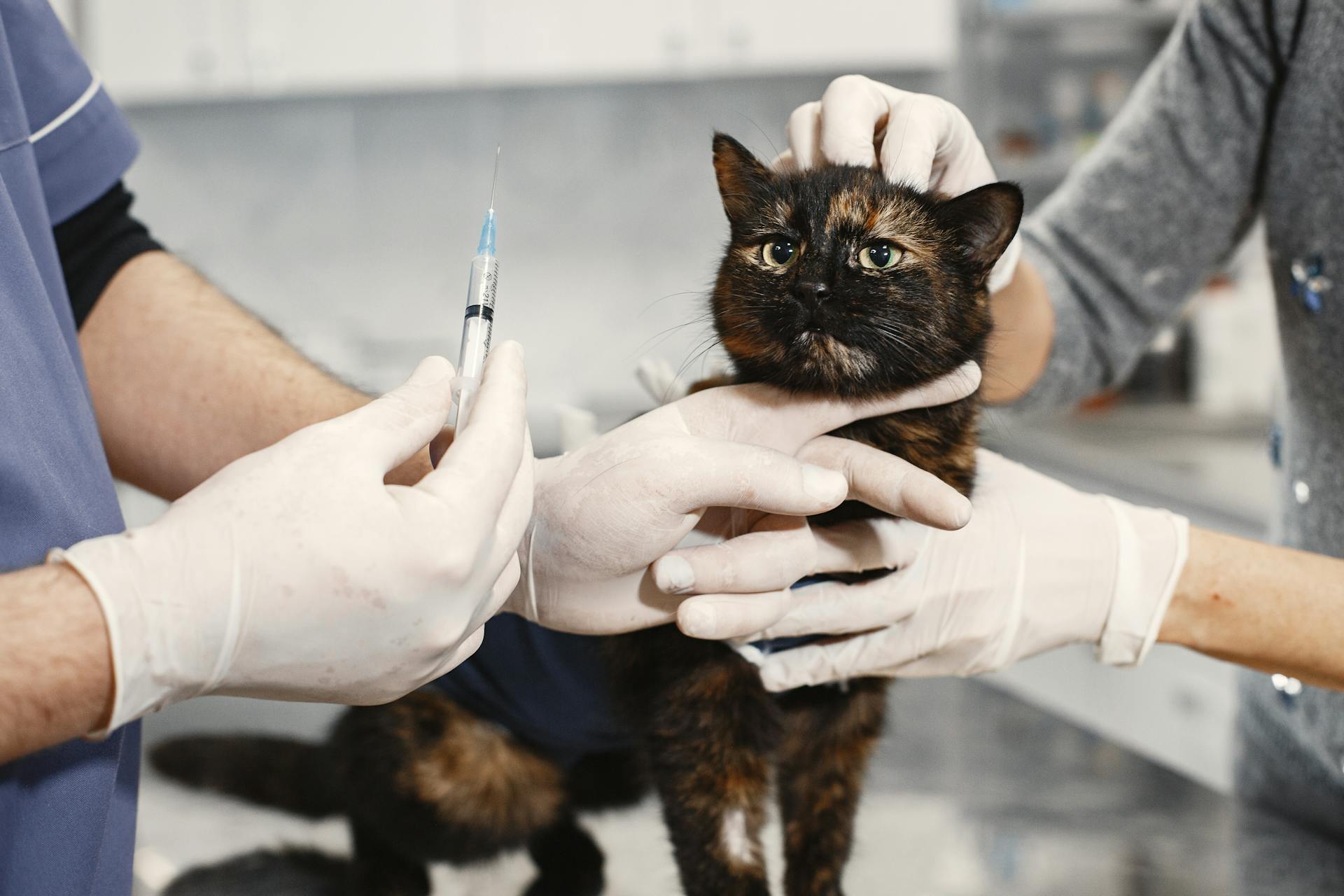
Treating cat mouth cancer typically involves surgery and radiation, and sometimes chemotherapy and molecularly targeted therapies are used.
Cats with mouth cancer may need nutritional therapy, such as a feeding tube, to support them through their recovery.
Pain management is also an important part of treating mouth cancer in cats.
Treatment plans are often tailored to the individual cat and the specific type of tumor they have.
Prognosis and Management
The prognosis for a cat with mouth cancer depends on the type of tumor, its location, and whether it has spread to other parts of the body. If the cancer has spread, the prognosis is poor.
Benign tumors are typically successfully treated with surgical removal and sometimes radiation, and have a good prognosis. Malignant tumors, on the other hand, are treated surgically but have varying levels of success depending on the type of tumor, its location, and whether it has spread.
Squamous cell carcinoma, a common type of oral tumor, is often diagnosed when the tumors are too large and the cancer has spread to the local lymph nodes, making the prognosis poor.
Treatment for oral tumors in cats typically involves addressing pain and underlying infection. Surgery is the preferred treatment for squamous cell carcinoma, depending on the tumor size and location. Radiation therapy and anti-inflammatory medications can also be effective in inhibiting tumor growth.
Cats with oral tumors need regular vet visits to monitor their status and prognosis. A personalized management plan with a vet and a veterinary oncologist is essential for the best outcome.
The median survival time for cats with complete tumor removal is five to seven months. The combination of surgery and radiation may extend survival to 14 months.
However, the prognosis is poor if the cancer has spread to regional lymph nodes, and there is a high recurrence rate. Unfortunately, fewer than 10% of cats with an oral tumor survive for one year.
Here's a summary of treatment options and prognosis:
It's essential to discuss a personalized management plan with your vet and a veterinary oncologist to determine the best course of action for your cat.
When to Euthanize a Cat
Deciding when to euthanize a cat with mouth cancer is a difficult and emotional decision, but it's essential to consider the cat's quality of life. The decision requires careful consideration of quality of life markers, such as the cat's ability to eat, drink, and breathe comfortably.
Making the tough decision to end a cat's suffering from oral cancer requires compassion and empathy. As companions, cats rely on us to advocate for them when therapy improves life or postpones the inevitable.
A cat's prognosis depends on the tumor type, location, and if the cancer has spread to other parts of the body. Unfortunately, by the time Squamous Cell Carcinoma (SCC) is usually diagnosed, the tumors are too large and the cancer has often spread to the local lymph nodes.
If the cancer has spread to other parts of the body, prognosis is poor, and only palliative treatment is available. This can be a challenging decision, but it's essential to prioritize the cat's comfort and well-being.
Here are some key indicators to consider when deciding whether to euthanize a cat with mouth cancer:
- Tumor size and location
- Spread of cancer to other parts of the body
- Quality of life markers, such as ability to eat, drink, and breathe comfortably
Ultimately, the decision to euthanize a cat with mouth cancer should be made with compassion and empathy, prioritizing the cat's comfort and well-being.
Feline Squamous Cell Carcinoma
Feline Squamous Cell Carcinoma is a nasty disease in cats that's often not identified until the lesion has progressed significantly, causing oral pain and halitosis due to bacterial infection. The average age for diagnosis is 11-12 years, but it can occur in cats as young as 2 years old.
The symptoms of Feline Squamous Cell Carcinoma can be subtle, including oral pain and dribbling, but they often include facial deformity, loose teeth, weight loss, and halitosis. It's essential to monitor your cat's oral health closely, as these symptoms can be mistaken for other conditions.
Other conditions that can affect the oral cavity and resemble squamous cell carcinoma include eosinophilic granuloma complex. This is why it's crucial to work with a veterinarian to determine the correct diagnosis and treatment plan.
Additional reading: Shih Tzu Life Expectancy Human Years
The prognosis for cats with Feline Squamous Cell Carcinoma is usually poor, regardless of treatment. Multiple treatments have been explored, including surgery, chemotherapy, radiation therapy, and combinations of these treatments. Unfortunately, studies indicate an average life expectancy of only 1½ to 3 months.
A small proportion of cases do respond well to radiotherapy, with about 10% of these cases living for a year or more. However, the greatest problems often arise in the patients who demonstrate an excellent response to therapy, as this can leave a hole in the mouth that may harbor infections or allow food and water to access the nasal cavity.
Here's a summary of the types of cat mouth cancer:
Featured Images: pexels.com