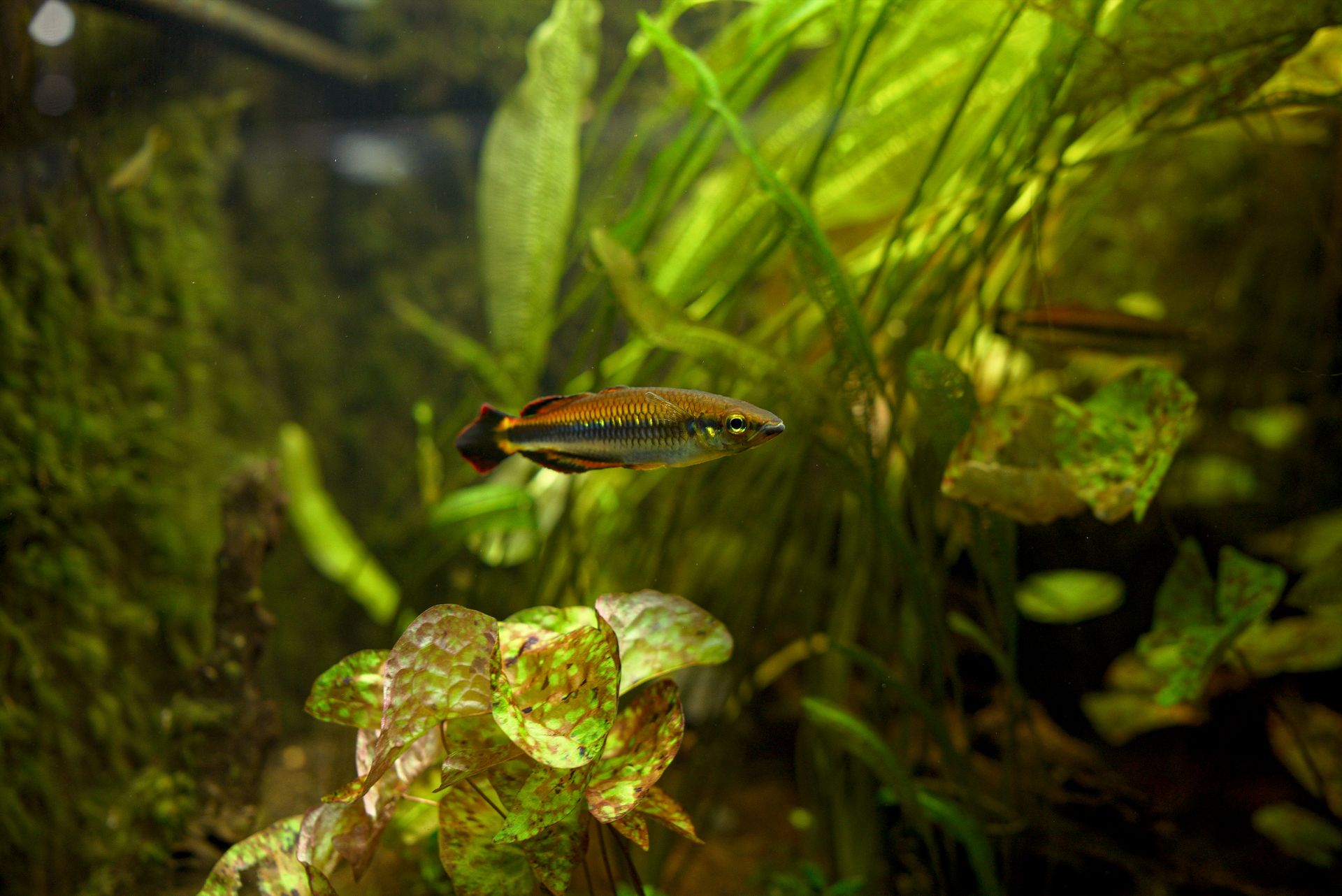
Carinotetraodon travancoricus is a fascinating species that's sure to captivate any aquarium enthusiast.
Native to the Western Ghats region of India, Carinotetraodon travancoricus thrives in freshwater environments with a pH range of 6.5-7.5.
This species is relatively small, reaching a maximum length of about 5 centimeters.
In the wild, Carinotetraodon travancoricus feeds on small invertebrates, such as crustaceans and insects, making them a great choice for aquariums with a diverse range of invertebrates.
Taxonomy and Care
Carinotetraodon travancoricus was originally described in 1941 as Tetraodon travancoricus by Hora & Nair.
This species was later moved to the genus Carinotetraodon to better reflect its distinct characteristics. The genus Carinotetraodon is a more natural grouping than the broader Tetraodon group.
Carinotetraodon travancoricus is sometimes confused with Carinotetraodon imitator, a very similar species that was described much later in 1999.
Both C. travancoricus and C. imitator require the same care, but correct identification is important for conservation and breeding efforts.
These two species have subtle differences in colour pattern and distribution, with C. imitator being rarer in the trade.
Housing and Environment
Housing a group of carinotetraodon travancoricus requires careful consideration of the tank size and environment. To keep them thriving, it's essential to provide a spacious and well-planted aquarium.
A general rule of thumb is to provide five gallons of water for the first puffer and three gallons of water for each additional puffer. This means that a 10-gallon tank can comfortably accommodate three puffers, while a 20-gallon tank can hold six to seven puffers.
A 60-litre tank is the minimum recommended size for a group of six pea puffers, with one puffer per 10 litres of water providing the perfect balance for their well-being. This guideline is based on both behavioural observations and water quality results over the long term.
Tank Size
A 10-gallon tank can hold up to three pea puffers if you provide a lush, densely planted aquarium to reduce aggression.
The general rule of thumb is to provide five gallons of water for the first puffer and three gallons for each additional puffer.
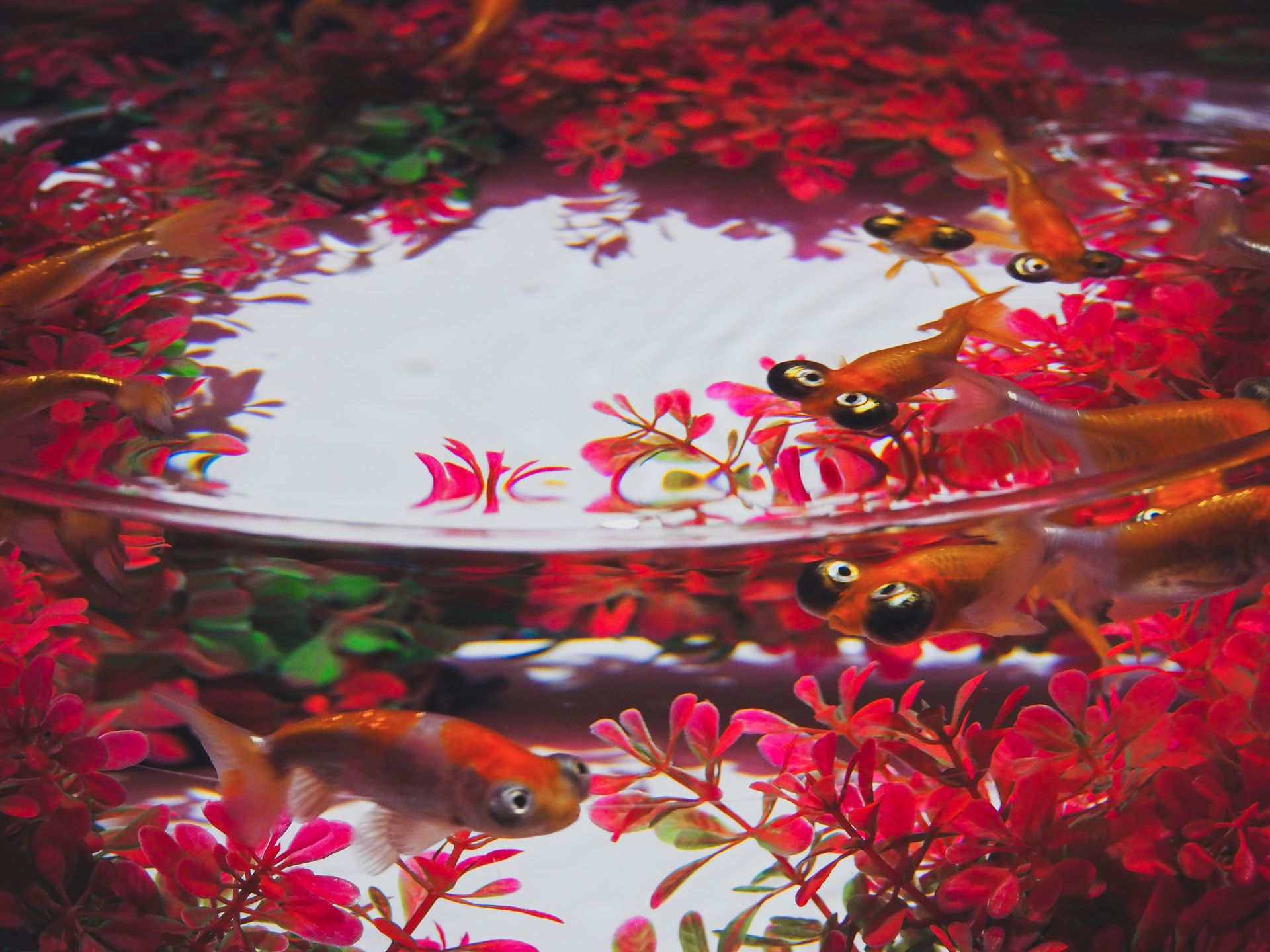
More water volume in a larger tank provides more dilution of waste and more space for the puffers to avoid each other.
A group of six pea puffers should be housed in nothing smaller than a 60-litre aquarium, which is equivalent to about 15.8 US gallons.
In the United States, a 20-gallon long tank, which is approximately 76 litres, makes an excellent starting point for housing six pea puffers.
One pea puffer per 10 litres of water is a practical stocking guideline based on both behavioural observations and water quality results.
This balance provides enough space for each fish while supporting the group dynamics that make them thrive.
Do Pea Puffers Need a Heater?
Pea puffers do well in stable, tropical temperatures from 74 to 82°F. This means if your room temperature is below this range or fluctuates a lot, you'll need an aquarium heater.
For optimal temperature, aim for a range between 74 to 82°F. If your room temperature is consistently lower, consider investing in a heater to ensure a stable environment.
Pea puffers are sensitive to temperature fluctuations, so it's essential to maintain a stable environment. This can be achieved by using an aquarium heater and monitoring the temperature regularly.
A temperature range of 74 to 82°F is ideal for pea puffers, but it's also crucial to keep the temperature stable rather than fluctuating. This will help prevent stress on the fish.
If you're unsure about the size of the heater you need, read our full article for more information.
Water Conditions
When keeping C. travancoricus, it's essential to mimic their natural water conditions. Temperature-wise, they thrive in a range of 72 – 82°F (22 – 28°C).
The ideal pH for C. travancoricus is neutral to medium-hard water, specifically within the range of 6.8 – 8.0.
Water hardness should be moderate, between 5 – 25°H, to create a comfortable environment for your C. travancoricus.
Diet and Feeding
Pea puffers are carnivores and require a diet rich in protein to thrive. In the wild, they feed on tiny aquatic invertebrates, so it's essential to replicate this diet in captivity.
To ensure a well-rounded diet, offer a variety of live and frozen foods. Some recommended foods include pinhead crickets, aphids, glassworm, and small snails. Bloodworms are also a favorite, but it's best to limit them to 10% of the diet due to nutritional imbalance and contamination risk.
Feeding your pea puffer a diverse range of foods will not only provide essential nutrients but also stimulate natural hunting behaviors. This can be achieved by alternating between different foods daily and feeding several small meals rather than one large one.
Here's a list of some recommended foods for pea puffers:
- Pinhead crickets
- Aphids
- Glassworm (phantom midge larvae)
- Grindal worm
- Daphnia/water flea (live or frozen)
- Small snails
- Small earthworm (wisps)
- Blackworm
- Whiteworm
- Copepod
It's also essential to note that pea puffers have specific feeding requirements. They should not be fed krill, cockle, mussel, clams, oysters, or other similar molluscs, as they are not adapted to consume these foods.
Feeding
Feeding your pea puffer a varied diet is crucial for its health and happiness. Pea puffers are carnivores and thrive on a diet of live and frozen foods.
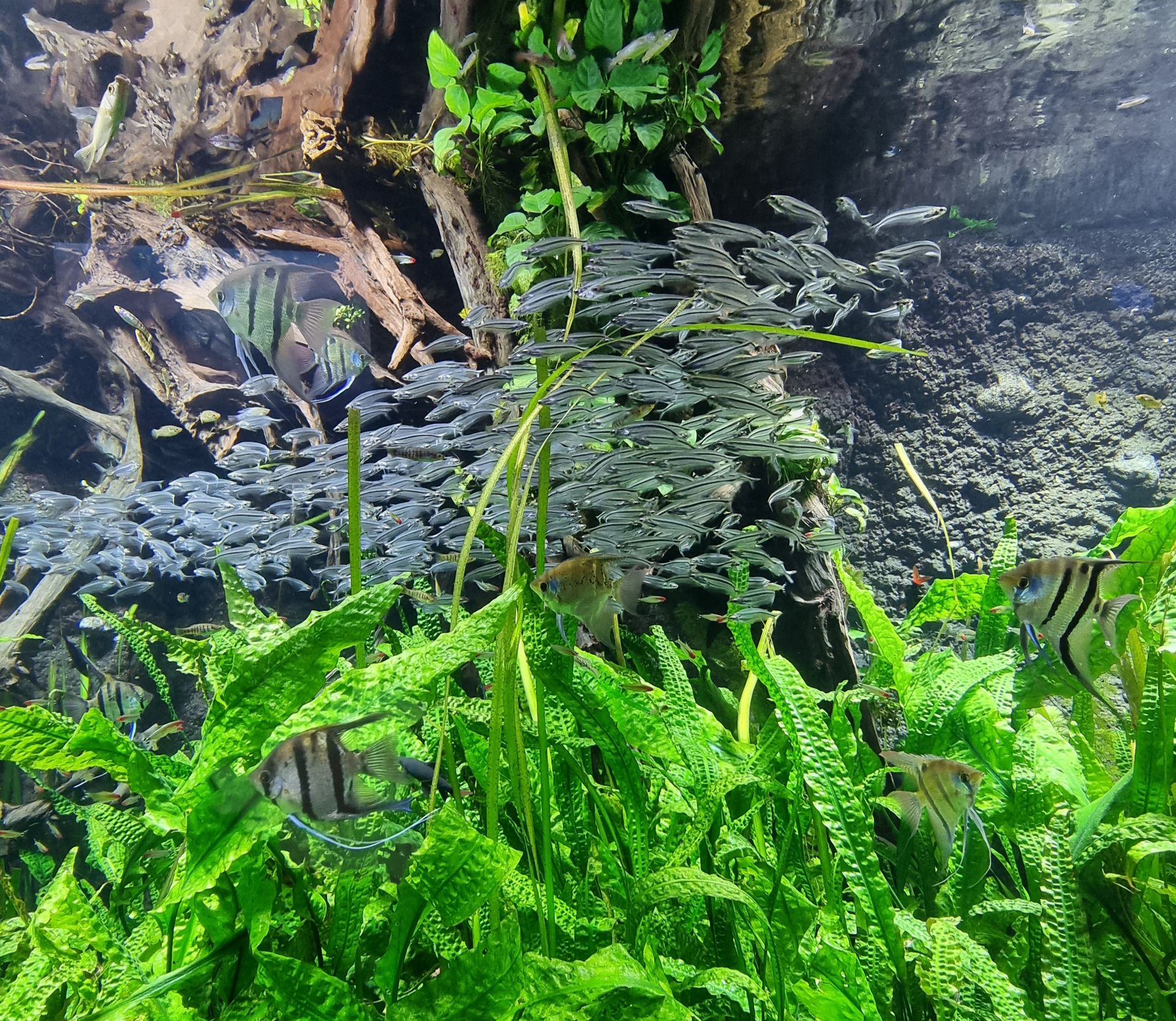
In the wild, pea puffers feed on tiny aquatic invertebrates, so it's essential to replicate this diet in captivity. A varied diet not only provides essential nutrients but also stimulates natural hunting behaviors, keeping your puffers engaged and active.
Pea puffers rarely accept flake or pellet food, and they generally ignore freeze-dried options. This means a diet based on live and frozen foods is essential.
Some of our preferred foods for pea puffers include pinhead crickets, aphids, glassworm, grindal worm, and small snails. These foods are rich in nutrients and provide a natural source of food for your puffers.
Here's a list of some of the foods that are safe and nutritious for pea puffers:
- Pinhead crickets
- Aphids
- Glassworm (phantom midge larvae)
- Grindal worm
- Daphnia/water flea (live or frozen)
- Small snails
- Small earthworm (wisps)
- Blackworm
- Whiteworm
- Copepod
It's essential to note that bloodworms should be limited to no more than 10% of the diet, as they can cause nutritional imbalance and digestion issues.
Buying Pea Puffers
When buying pea puffers, it's essential to look for individuals that are bright-eyed, alert, and active, with plump, rounded bodies and no signs of hollow bellies or illness.
Healthy pea puffers should show curiosity about their surroundings and respond quickly to movement. Avoid any individuals who look thin, lethargic, or uninterested in food.
Ask your retailer about the source of the fish, as pea puffers are classified as Vulnerable on the IUCN Red List due to habitat loss, pollution, and collection pressure.
Choose captive-bred specimens to support responsible practices and the future of this remarkable species.
Aquarium and Tankmates
Pea puffers thrive in heavily planted aquaria that provide plenty of hiding places and visual barriers. This is because they are prey animals and dislike feeling exposed.
A densely planted, structured scape is essential for pea puffers to feel secure and encourages them to be more active in all areas of the tank. This can be achieved with a variety of aquascaping styles, including using driftwood, smooth boulders, and epiphyte plants like Java fern.
In the wild, pea puffers often find shelter in shallow, slow-moving waters shaded by floating plants like duckweed. Replicating this in the aquarium with plants like Amazon frogbit or water lettuce can help provide dappled light and security from above.
Pea puffers are best kept in a species-only aquarium due to their tendency to nip fins. However, they can be kept in large shoals (20+ individuals) within spacious aquaria, where they are less likely to harass other fish.
In The Aquarium
Pea puffers are the most commonly kept species of pufferfish, and their popularity has grown due to their small adult size of just 2.5 cm (0.98 inches).
They thrive in heavily planted aquaria that provide plenty of hiding places and visual barriers. This is because they are prey animals in nature and dislike feeling exposed.
A densely planted, structured scape allows them to feel secure and encourages them to be more active in all areas of the tank. I've seen this firsthand in my own aquarium, where the puffers love to dart in and out of the plants.
Mosses are especially valued by pea puffers, and Java moss, weeping moss, and Christmas moss all create dense, soft mats where puffers rest and feel secure. These mats are a must-have for any puffer tank.
Water movement should be gentle to moderate, as pea puffers are not strong swimmers. Changing at least 50% of the water every week is also crucial to maintain stability and prevent waste buildup.
Tankmates
Keeping pea puffers with other fish can be a challenge due to their notorious fin-nipping behavior.
In fact, they're almost as well known for this trait as they are for their tiny size.
For this reason, it's generally best to keep them in a species-only aquarium.
However, if you're determined to try a layered community, choose your tankmates carefully and be prepared for the possibility of harassment or fin-nipping.
Even in large shoals of 20+ individuals, close monitoring is essential to prevent any issues.
If things do go wrong, be prepared to separate the fish immediately to prevent further problems.
Behavior and Conservation
The pea puffer's behavior is one of its most charming qualities. They're highly intelligent and quick to learn, which makes them a joy to interact with.
In the wild, pea puffers have to be careful to avoid predators, which is why they're so skilled at jumping out of the water when startled. To keep them safe in an aquarium, it's essential to have a tight-fitting lid to prevent accidents.
Pea puffers are also known to be quite the beggars, recognizing their keeper and eagerly waiting for food at the glass. This interaction is one of their most endearing qualities, and it's not uncommon for them to associate their keeper with feeding time.
The pea puffer's behavior can sometimes be a bit misinterpreted, however. Circling with curved tails is usually a defensive display or a brief territorial spat, and it's perfectly normal as long as it remains short-lived.
Notable Behaviour
Pea puffers have big personalities packed into tiny bodies, and their behaviour is one of the reasons they are so beloved. Their intelligence and quick learning ability make them highly interactive fish.
They may leap clear out of the water when startled or chased by another puffer, so it's essential to house them in an aquarium with a tight-fitting lid to prevent accidents.
One of the most endearing qualities of pea puffers is their ability to recognise their keeper and eagerly beg at the glass when they associate you with feeding time.
Puffers may occasionally circle one another with their tails curved, usually as a defensive display or part of a brief territorial spat. This behaviour is perfectly normal as long as it remains short-lived.
Here are some notable behaviours to look out for:
- Jumping: a sign of stress or alarm
- Begging for food: a sign of recognition and interaction with their keeper
- Circling with curved tails: a defensive display or territorial spat
Conservation Status & Pressures
The pea puffer's conservation status is a pressing concern. They're listed as Vulnerable on the IUCN Red List due to habitat changes and the aquarium trade.
Dams and water diversion projects in the Western Ghats have altered the natural flow of streams, causing siltation and loss of shady margins. This has led to worrying population drops in parts of Kerala, with declines of 30-40% over just a decade.
Pollution from agriculture and industry is also seeping into lowland wetlands, making it harder for pea puffers to thrive. The aquarium trade has been a major contributor to their decline, with many pea puffers being wild-caught and exported worldwide.
Breeding programs in Europe and Asia are now producing more tank-bred puffers, giving aquarists a choice between supporting wild-caught or captive-bred populations. This is a step in the right direction, but more needs to be done to protect these tiny fish.
Appearance and Reproduction
Carinotetraodon travancoricus is a small freshwater fish that's relatively unknown to the general public.
It has a rounded body shape and a distinctive snout that's pointed and narrow.
This species is part of the pufferfish family, which is known for its unique ability to inflate its body.
Carinotetraodon travancoricus can grow up to 3.5 centimeters in length.
Males are known to engage in a complex courtship ritual, which involves a series of color changes and postures to attract females.
Frequently Asked Questions
Is dwarf puffer fish poisonous?
Yes, dwarf pufferfish are highly poisonous due to the production of tetrodotoxin, a deadly neurotoxin with no antidote. Handling or consuming them can be extremely hazardous to human health.
Featured Images: pexels.com