Canine Ehrlichiosis is a serious tick-borne disease that affects dogs worldwide. It's caused by a parasite called Ehrlichia canis.
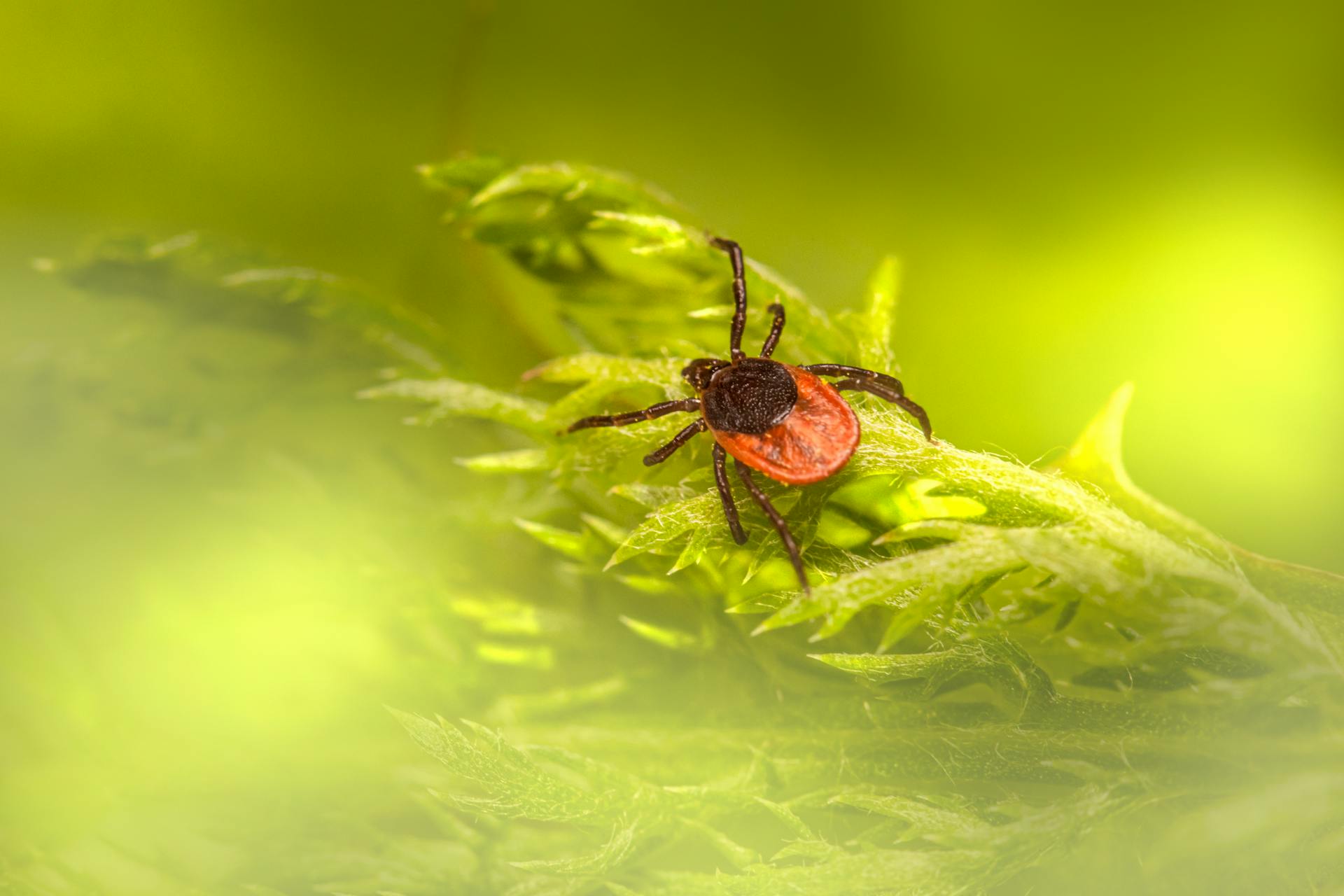
The disease is transmitted through the bite of an infected tick, typically the brown dog tick. This tick is found in many parts of the world, including the United States.
Symptoms of Canine Ehrlichiosis can vary from dog to dog but often include fever, loss of appetite, and lethargy. In severe cases, the disease can cause organ failure and even death.
Early detection is key to treating Canine Ehrlichiosis effectively.
Worth a look: Fever of Unknown Origin Dog
What Is Canine Ehrlichiosis?
Canine Ehrlichiosis is a tick-borne disease caused by the Ehrlichia bacteria, which infects the white blood cells of dogs.
The bacteria are typically transmitted through the bite of an infected tick, specifically the brown dog tick and the lone star tick.
This disease is most commonly found in the southeastern and south-central regions of the United States.
Symptoms can range from mild to severe and may include fever, loss of appetite, and weight loss.
In severe cases, canine ehrlichiosis can lead to anemia, kidney failure, and even death.
Check this out: Canine Ehrlichiosis Symptoms
Symptoms and Signs
Symptoms of canine ehrlichiosis can be divided into three phases: acute, subclinical, and chronic. The acute phase occurs one to three weeks after the tick bite, and during this time, dogs may experience fever, lethargy, anorexia, enlarged lymph nodes, lameness, vomiting, diarrhea, cough, abnormal bruising and bleeding, and neurologic signs.
Fever is a common symptom in both the acute and chronic phases of the disease. In fact, up to 60 percent of dogs in the chronic phase will have abnormal bleeding due to decreased platelet numbers.
Dogs in the subclinical phase will still be infected but show no signs of disease, although they may have some changes on bloodwork, such as a slightly low platelet count and possibly elevated blood protein called the globulin.
The chronic phase is the most serious stage of infection, and its clinical signs can include abnormal bleeding, inflammation in the eyes, bleeding in the eye, neurologic signs, increased urinating and drinking, and lameness/swollen limbs.
Check this out: How Dogs Catch Parvo
Here are some common symptoms of canine ehrlichiosis:
- Fever
- Lymph node swelling
- Limping and stiffness
- Reluctance to walk
- Reduced appetite
- Tiredness
- Cough and breathing difficulty
These symptoms can occur in the acute phase, which can last for up to a month, and some dogs may also experience low peripheral blood cell counts due to bone marrow suppression.
Dogs in the chronic phase may have very low blood cell counts, bleeding, bacterial infection, lameness, neurological and ophthalmic disorders, and kidney disease, which can result in a fatal outcome.
For another approach, see: Canine Blood Cancer
Diagnosis and Detection
Dogs may test negative for ehrlichiosis during the early stages of infection due to the body's inability to produce antibodies yet.
A thorough physical examination by your veterinarian can help assess for fever, joint swelling/pain, and enlarged lymph nodes.
Obtaining a detailed history of travel and recent tick exposure is useful when evaluating for ehrlichiosis.
Your veterinarian may order various blood tests, including a urinalysis, and serum blood chemistry, to ensure they have a baseline for diagnosis.
The Snap 4Dx test can detect antibodies for E. canis or E. ewingii, but a positive result in a healthy pet with no clinical signs can be confusing and require additional testing.
Readers also liked: Canine Distemper Test
In some cases, the test can be a false positive, meaning it is actually negative, but in all likelihood, your pet was exposed to the bacteria from an infected tick bite.
A PCR (polymerase chain reaction) test can be performed during the acute phase of infection to detect genetic material of the bacteria.
Blood tests may show abnormalities in the numbers of red blood cells, white blood cells, and most commonly platelets, if the disease is present.
A complete blood count (CBC) is a common test used to diagnose ehrlichiosis, showing low hemoglobin levels (anemia) and low platelet counts (thrombocytopenia).
Ehrlichia antibodies can be detected by serology tests, which remain positive for years even after the infection has been cured.
A blood culture is the definitive diagnostic test, growing the bacteria in the laboratory, but results take up to 8 weeks to receive.
Treatment and Management
Treatment for canine ehrlichiosis typically involves a 28- to 30-day course of antibiotics, most often prescribing doxycycline.
Your veterinarian will customize a treatment plan to your dog's specific needs, especially if they are also infected with other tick-borne diseases.
Dogs in the acute or subclinical phases of ehrlichiosis usually don't require hospitalization and can be managed as outpatients at home with minimal supportive care.
Pain medications and appetite stimulants may be prescribed to help manage symptoms.
Dogs with chronic ehrlichiosis may require hospitalization for aggressive supportive care that includes blood transfusions, steroids, IV fluids, and nutritional support.
Recovery from acute or subclinical ehrlichiosis can be quite quick, with most dogs improving within one to two days of starting therapy.
Dogs with chronic E. canis infection, however, have a guarded prognosis, and this stage can be fatal in some cases.
Even if your dog recovers from ehrlichiosis, they can still become re-infected later in life as immunity is not lifelong.
Antibiotics such as tetracycline or doxycycline are commonly used to treat ehrlichiosis, with a typical treatment period of three to four weeks.
Steroids may be indicated in severe cases where the level of platelets is critically low.
Dogs experiencing severe anemia or bleeding problems may require a blood transfusion to help stabilize their condition.
However, a blood transfusion does not treat the underlying disease.
A unique perspective: Types of Dog Hepatitis
Prevention and Protection
To protect your dog from ehrlichiosis, it's essential to rid their environment of ticks and apply flea and tick preventives. Topical options like Advantix, Frontline Plus, Vectra 3D, and Bravecto can be effective, while oral chewable options like Nexgard, Simparica, Credelio, and Bravecto are also available.
If you live near wooded areas where ticks are prevalent, it's best to keep your dog away from these areas, as there is no vaccine for ehrlichiosis. Your veterinarian can help you find the best tick prevention option for your pet.
Monthly flea and tick preventative care can prevent most tick bites. This can include topical, tablet, and chewable medications. Your veterinarian will be able to guide you in choosing the best option for your dog.
To inspect your dog for ticks, it's a good idea to check them carefully for several days after returning from a tick-infested area. If you live in a tick-infested area, daily inspections are recommended.
Here are some tick control measures to consider:
- Tick-repellent collars and devices to prevent ticks from attaching to your dog
- Regularly giving your dog tablets and chews meant for tick control
- Inspecting your dog carefully for ticks every day if you live in a tick-infested area
These precautions will not only protect your dog from ehrlichiosis but also prevent other tick-borne diseases like Lyme disease, Rocky Mountain spotted fever, and tularemia.
Disease Overview and Facts
Dogs can get ehrlichiosis from the brown dog tick, which passes an ehrlichia organism into the bloodstream when it bites.
The brown dog tick is the main carrier of the Ehrlichia organism in nature, and it's found all throughout the United States and Canada.
There are three stages of ehrlichiosis, each varying in severity. The acute stage can lead to fever and lowered peripheral blood cell counts due to bone marrow suppression.
The subclinical phase of ehrlichiosis has no outward signs and can last for the remainder of the dog's life, during which the dog remains infected with the organism.
In some cases, dogs are able to successfully eliminate the disease during the subclinical phase.
Worth a look: Is Hemorrhagic Gastroenteritis in Dogs Contagious
Treatment and Prognosis
Ehrlichiosis in dogs is typically treated with a 28- to 30-day course of antibiotics, most often prescribing Doxycycline.
Dogs in the acute or subclinical phases usually don't require hospitalization and can be managed at home with minimal supportive care, such as pain medications and appetite stimulants.
Dogs with chronic ehrlichiosis may need hospitalization for aggressive supportive care, including blood transfusions, steroids, IV fluids, and nutritional support.
The prognosis is good for dogs with acute ehrlichiosis, but guarded for those that have reached the chronic stage of the disease.
Dogs with bone marrow suppression and low levels of blood cells may not respond to treatment, making their prognosis less favorable.
For your interest: Canine Cancer Prognosis
What's in It for Dogs?
Ehrlichiosis can be a serious disease for dogs, especially certain breeds like German Shepherds, Doberman Pinschers, Belgium Malinois, and Siberian Huskies, which may get a more severe form of the disease.
The disease can cause a range of symptoms, but some dogs may only be mildly ill or show no signs of illness at all.
E. ewingii, the most common form of ehrlichiosis in North America, tends to be less serious than E. canis infections, which affect German Shepherds and other breeds.
Dogs with E. canis infections may experience severe symptoms, while those with E. ewingii may only be mildly affected or show no symptoms at all.
Ehrlichiosis is most frequently reported in the southeastern and south-central United States, with the highest prevalence in states like Arkansas, Louisiana, Oklahoma, Tennessee, and Texas.
If you live in one of these areas, it's essential to take preventative measures to protect your dog from tick bites, which can transmit Ehrlichia bacteria.
You might enjoy: Canine Brucellosis Symptoms
Prognosis
The prognosis for dogs with acute ehrlichiosis is good, which means they have a favorable outlook for recovery.
However, for dogs that have reached the chronic stage of the disease, the prognosis is guarded, indicating a more uncertain and potentially serious outcome.
Dogs with bone marrow suppression and low levels of blood cells may not respond to treatment, making it crucial to monitor their condition closely.
Frequently Asked Questions
What is the survival rate for ehrlichiosis in dogs?
For dogs with ehrlichiosis, a 95% cure rate has been reported when treated promptly with antimicrobial therapy, with marked improvement often seen within 24-48 hours. However, if improvement is not seen, other conditions or infectious agents may need to be considered.
What does it mean if my dog tests positive for Ehrlichia?
A positive Ehrlichia test indicates your dog has been exposed to the Ehrlichia organism and produced antibodies, but it doesn't confirm current infection or treatment needs. Further testing and consultation with a veterinarian are necessary to determine the best course of action.
Is Ehrlichia canis contagious to other dogs?
No, Ehrlichia canis is not directly contagious to other dogs. However, ticks can transmit the bacteria to other dogs, making tick prevention crucial in areas where the disease is present.
Featured Images: pexels.com