The Cane Corso is a breed of dog that originated in Italy, specifically in the regions of Tuscany and Umbria, over 2,000 years ago. They were initially bred as guard dogs and hunting companions.
Their name, Cane Corso, translates to "bodyguard" in Italian, which is fitting given their original purpose. The breed was highly valued for its strength, intelligence, and loyalty.
The Cane Corso is a medium to large-sized dog, with males weighing between 90 and 120 pounds. They have a short, smooth coat that comes in a variety of colors, including black, red, and fawn.
History
The Cane Corso has a rich and fascinating history that spans thousands of years. The breed originated from a group of working breeds called mollosers, after an ancient Greek tribe known as the Molossi.
In ancient times, the Cane Corso was bred to be a guardian, and the Romans later used them as "pireferi", or military service dogs, in their wars. They carried flaming buckets of oil on their backs as they were sicced on enemy soldiers.
Readers also liked: What Are the 14 Ancient Dog Breeds
The breed was used for various jobs across Italy until the mid-20th century, when it became virtually extinct due to two world wars, economic downturns, and corporate farming practices. Fortunately, some surviving Cane Corsi were discovered in the 1970s.
The breed was revived by a group of Italian dog fanciers, who formed the Society Amorati Cane Corso in 1983. By the 1990s, Cane Corsi were making waves at dog shows across Europe.
In the 1990s, the breed made its way to the US, where it was officially recognized by the American Kennel Club in 2010. Today, the breed standard is primarily governed by the Cane Corso Association of America.
The modern breed derives from selective breeding from about 1980 of a few surviving animals, and the breed was recognized by the Ente Nazionale della Cinofilia Italiana in 1994.
Characteristics
The Cane Corso is a large dog breed that stands out for its muscular build and athletic appearance. They are closely related to the Neapolitan Mastiff.
On average, Cane Corsos stand between 62-70 cm tall at the withers, with males weighing between 45-50 kg. Females are slightly smaller, standing about 4 cm shorter and weighing 5 kg less.
Their head is large and well-defined, with a flat top and slightly convergent muzzle. The eyes are oval in shape and set well apart.
The Cane Corso's coat is short, dense, and lustrous, coming in a variety of colors including black, grey, fawn, and brindle. Minor white markings on the chest, feet, or nose are also tolerated.
Here are the recognized coat colors for the Cane Corso breed:
- Grey brindle
- Brown brindle
- Black brindle
- Fawn
Appearance
The Cane Corso is a majestic breed, with a sturdy, muscular build that commands attention. They grow from adorable floppy-eared puppies into royally stern-looking dogs, with a majestic appearance that makes them a big hit on Instagram.
Their ears can be either cropped or uncropped, with the AKC breed standard allowing for both options. Ear cropping is a surgical procedure that involves cutting away the outer part of a dog's ear.
Discover more: Cane Corso Dog Ear Cropping
Their eyes are medium in size, almond-shaped, and dark brown in color, with lighter shades possible in gray-muzzled dogs. I've seen many Cane Corsos with these beautiful eyes, and they always seem to be looking right through you.
Their nose is large and flush with the muzzle, and it can be either black or gray in color. This is a distinctive feature of the breed, and it adds to their overall regal appearance.
Their coat is short and stiff, with a variety of colors to choose from, including black, gray, fawn, red, and brindle. Some Cane Corsos have a gray mask over their eyes and muzzle, which adds to their unique appearance.
Here are the different coat colors and their descriptions:
- Black: a solid black coat
- Gray: a light gray coat
- Fawn: a reddish-brown coat
- Red: a deep red coat
- Black brindle: a black coat with a striped pattern
- Gray brindle: a gray coat with a striped pattern
- Chestnut brindle: a reddish-brown coat with a striped pattern
Their tail is typically docked, although some countries and states have banned this practice for medical and behavioral reasons.
Personality
Cane Corsos are naturally alert to new people coming to the house and may react toward strangers if not properly trained and socialized.
They're also intensely loyal and can be affectionate companions to members of their household, but their instinct to take charge can be an issue for pet parents who haven't invested in training.
Proper training and socialization can help prevent inappropriate aggression and make them calm and confident around new people and animals.
Cane Corsos are intelligent and eager to please, generally responding well to positive reinforcement training and learning quickly.
Their intelligence makes it easy to teach them the difference between threats and harmless situations.
They're not bubbly or outgoing, but calm and serious, and may regard strangers with suspicion or even react with aggression toward potential threats.
Proper training and socialization throughout their life is crucial to make them safe for others to be around.
With proper socialization and training, Cane Corsos can form tight bonds with children and other pets and make loving and loyal family dogs.
Related reading: Cane Corso Dog Aggression
Dog Care
Cane Corsos are low maintenance in the grooming department, but they do require regular exercise and training.
Their large size needs plenty of room to spread out, and their energy and intensity need plenty of fenced-in space for exercise.
You'll want to introduce your Cane Corso puppy to bathing and brushing early on, as well as to tooth brushing and nail trimming.
Cane Corso ears should be checked regularly for redness, odor, and other signs of infection.
The Cane Corso lifespan is approximately 9-12 years, which is a little longer than average for a giant-breed dog.
They can adapt to extreme temperatures but typically do better in warmer climates.
Cane Corsos are intelligent, eager to please, and intensely loyal to their humans, but they can also be willful.
You'll need to provide early socialization with people and other animals to help them develop good behavior.
Their coat is smooth and short, requiring minimal grooming, but they do shed throughout the year, especially during the spring.
Monthly baths and occasional brushing are enough to keep them looking good, but they do require more frequent attention during seasonal shedding.
Nails should be trimmed once or twice a month, and ears should be wiped out and examined weekly for signs of possible infection.
Daily tooth brushing between dental cleanings will help prevent periodontal disease and other dental health issues.
It's best to acclimate your Cane Corso to baths and grooming as young puppies to make the process easier and less stressful for both you and your dog.
Training and Behavior
Cane Corso dogs are intelligent and thrive on activity, making them a great fit for owners who can provide regular exercise and mental stimulation. They require daily obedience training and socialization starting at an early age, and continuing throughout their life.
These sensitive souls generally respond well to positive reinforcement and lots of praise. Using corrections or punishment can have big negative impacts on this breed.
The key to successful training is consistency, patience, and firmness from the first day your Cane Corso puppy comes home at 8 weeks old. This will help prevent unwanted behaviors from developing.
Cane Corsi need plenty of socialization to help them behave well around kids, people, and pets. Introduce them to as many new experiences as possible in a safe and positive manner.
One of the most important things to teach your Cane Corso is not to jump on people or pull on its leash. This will help prevent accidents and keep everyone safe.
Recommended read: Shiba Inu Coin 1 Cent
Here are some essential training tips to keep in mind:
- A strong, sturdy fence can keep your Cane Corso from roaming and getting into trouble.
- Teach your Cane Corso to lie down and settle on command.
- When on a leash, the dog should be led by someone who has the size, strength, and confidence to handle it.
- Giving your Cane Corso plenty of activity and exercise will help them stay relaxed and calm.
- Socialize your Cane Corso to children, cats, and small dogs from a very young age.
By following these tips and providing regular training and socialization, you can help your Cane Corso become a happy, well-behaved member of your family.
Nutritional Tips for Dogs
Cane Corsos require a high-quality diet to maintain their overall health. A well-balanced, AAFCO-approved diet is essential for their nutritional needs.
Dogs that are on a well-balanced diet do not need additional vitamin and mineral supplements. However, some supplements may be helpful for joint health, digestive health, and overall health.
Glucosamine, chondroitin, and MSM supplements are great for promoting joint health. These supplements, such as Dasuquin with MSM, have natural anti-inflammatory properties.
Omega-3 fatty acids, found in high-quality fish oil, have anti-inflammatory properties as well. Research shows that reducing inflammation helps control pain associated with osteoarthritis, a common problem in dogs with joint issues.
Probiotics are great for promoting gut health in Cane Corsos. Some probiotics come with additional benefits, such as Calming Care, which helps ease anxiety, and Zesty Paws, which contains pumpkin and adds fiber to the diet.
Here are some nutritional tips for Cane Corsos:
- Feed a high-quality, AAFCO-approved diet to meet their nutritional needs.
- Consider adding joint supplements, such as glucosamine and chondroitin, to promote joint health.
- Use probiotics to promote gut health and potentially ease anxiety or add fiber to the diet.
Pet Care Considerations
Cane Corsos are a relatively low-maintenance breed when it comes to grooming.
However, their exercise needs are a different story. They require a good amount of exercise to keep up with their muscular shape, which means they need plenty of fenced-in space for exercise.
Their large size means they need room to spread out, so a big space with a large yard is ideal.
A tall, sturdy fence in the backyard is recommended, as invisible fences won't be enough to contain them.
Cane Corsos are intelligent dogs that thrive on training and socialization, so you'll need to put in the time and effort to teach them good behavior.
Their lifespan is approximately 9-12 years, which is a little longer than average for a giant-breed dog.
They can adapt to extreme temperatures, but they typically do better in warmer climates.
Their coat is smooth and short, requiring minimal grooming, which is a plus for busy pet owners.
Check this out: Big Mountain Dogs
Exercise and Safety
Providing a cane corso with activity and mental stimulation is crucial to tire them out and relax them mentally as well as physically. This can be achieved through daily walks or hikes, letting them sniff, and training them with tricks.
Dog sports like obedience, agility, tracking, or protection sports can also provide the stimulation cane corsos need. These activities will keep them engaged and satisfied, preventing boredom and destructive behavior.
A strong, sturdy fence can keep your cane corso from roaming or charging at perceived threats or fighting with other dogs. Regular, consistent training and socialization are also essential to help your corso stay safe and avoid being a danger to others.
Giving your cane corso plenty of activity and exercise will help them stay relaxed and calm, keeping them out of trouble.
Activity and Exercise
Providing your Cane Corso with the right amount of activity and exercise is crucial for their physical and mental well-being. They need to be stimulated and challenged to prevent boredom and destructive behavior.
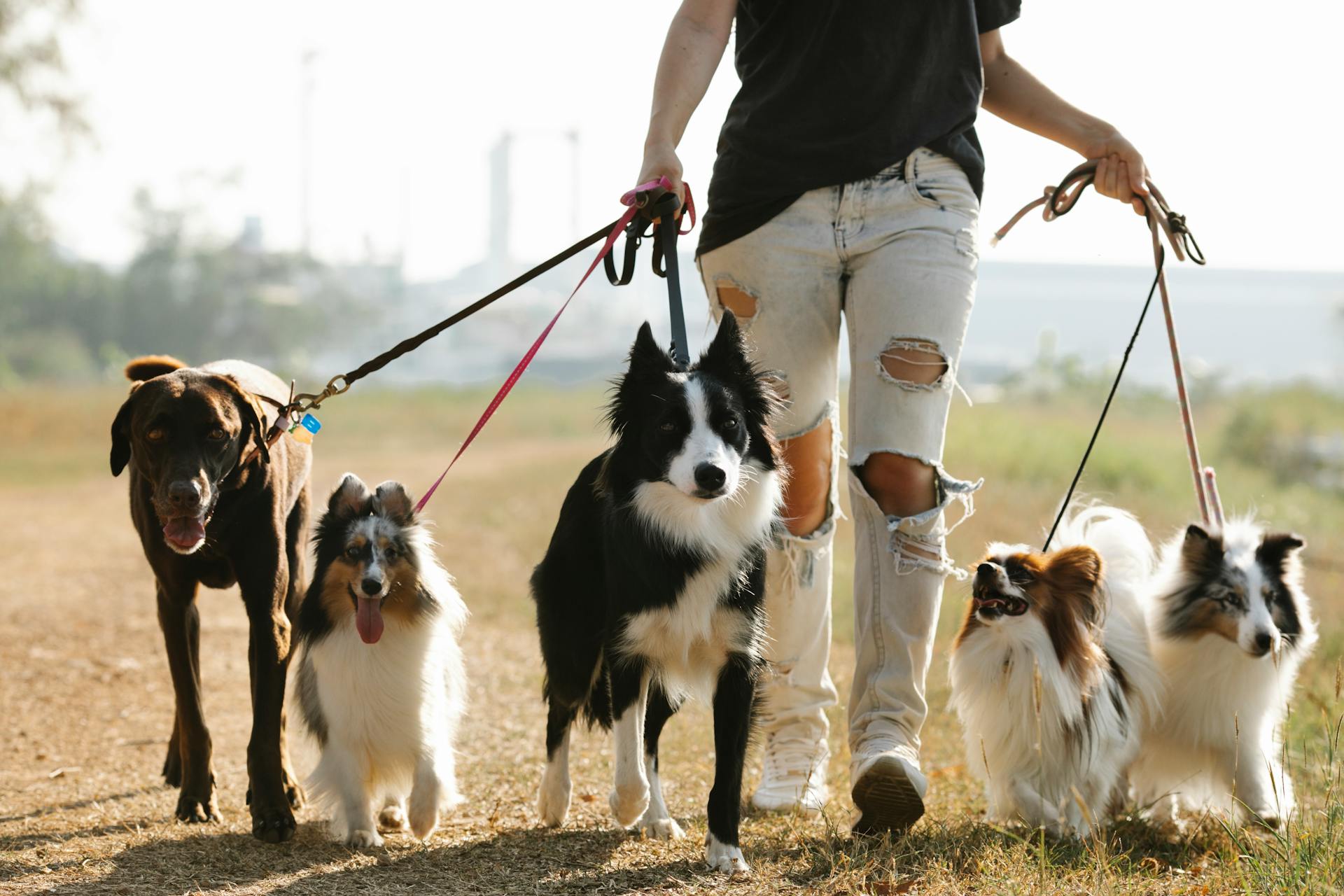
Cani corsi are high-energy dogs that require regular exercise to stay happy and healthy. A daily walk or hike is a great place to start, but it's not enough on its own.
Training and teaching new tricks can help tire them out and relax them mentally as well as physically. This can include obedience training, agility courses, or even protection sports.
A quick game of fetch or tug won't be enough to satisfy your Cane Corso's energetic needs. They require more engaging activities like nose work, scent walks, or obstacle courses to keep them stimulated.
Here are some fun activities you can try with your Cane Corso:
- Nose work
- Scent walks
- Obstacle or agility courses
- Sled-pulling
- Dock diving
These activities will not only provide physical exercise but also mental stimulation, helping to prevent boredom and destructive behavior.
Safety Tips
A strong, sturdy fence can keep your corso from roaming, charging at perceived threats, or fighting with other dogs.
Regular exercise is crucial for your corso's physical and mental well-being. Giving your cane corso plenty of activity and exercise will help them stay relaxed and calm.

To avoid accidents on a leash, it's essential to have someone with the size, strength, and confidence to handle your corso. Avoid letting young children hold the leash.
Socialization is key when it comes to your corso's interactions with other animals. Socialize your cane corso to children, cats, and small dogs from a very young age, and teach it to play gently.
Supervise your corso around tiny dogs and small pets at all times. It’s best to supervise this breed around tiny dogs and small pets.
Family and Suitability
The cane corso can make a loving and loyal family dog with proper socialization and training. They can form tight bonds with children and other pets.
They're not for everyone, though - they require special care and attention. If you're considering a cane corso, be aware that they need to be well socialized to thrive.
With the right care, cane corsi can be wonderful family pets and even excellent farm dogs. They just need to be treated with love, respect, and proper training.
Life Stages
Cane corsos tend to be calm, driven, and affectionate throughout their lives, but these traits can manifest in different ways in different life stages.
Training and socialization can help shape their temperament, making them more well-rounded and easier to live with.
As they get older, certain health conditions may alter their overall mood and personality.
Hip dysplasia can lead to discomfort and pain, changing a corso's comfortable temperament to a grouchy one.
Elbow dysplasia can have similar effects, causing stiffness, limping, and pain that can make a pet less active and more irritable.
A good diet, regular exercise, and routine veterinary check-ups can help maintain a corso's mental and physical health, reducing the risk of these painful conditions.
Readers also liked: Bernese Mountain Dog Hip Dysplasia
Common Concerns
Cane Corsos are a wonderful breed, but like any dog, they can be prone to certain health issues. Their average lifespan is 9-12 years, which is relatively short compared to some other breeds.
Hip and elbow dysplasia are common concerns for Cane Corsos, just like many other large breeds. This can lead to arthritis and mobility issues later in life.
Gastric dilatation and volvulus, also known as bloat, is a serious condition that can be life-threatening if not treated promptly. It's essential to monitor your Cane Corso's eating habits and watch for signs of bloat.
Eyelid issues, such as entropion, ectropion, and cherry eye, can cause discomfort and vision problems. Regular eye checks with a veterinarian can help catch these issues early.
Dilated cardiomyopathy (DCM) affects the heart, causing it to become enlarged and less efficient. This can lead to heart failure and even death if left untreated.
Demodectic mange is a skin condition caused by parasites, leading to hair loss, itching, and skin irritation. Regular grooming and veterinary check-ups can help prevent and treat this condition.
Environmental and food allergies can cause skin issues, digestive problems, and ear infections. Identifying and avoiding allergens can help alleviate these symptoms.
Epilepsy is a neurological disorder that causes seizures, which can be unpredictable and frightening for both the dog and its owner. Working closely with a veterinarian to manage epilepsy is crucial for the dog's quality of life.
Worth a look: Average Life of Boston Terrier
Frequently Asked Questions
Is a Cane Corso a pitbull?
No, the Cane Corso is a distinct breed, not related to the pitbull breed. It originated in ancient Italy, not Greece, and has a unique history as a guardian and hunter.
Featured Images: pexels.com