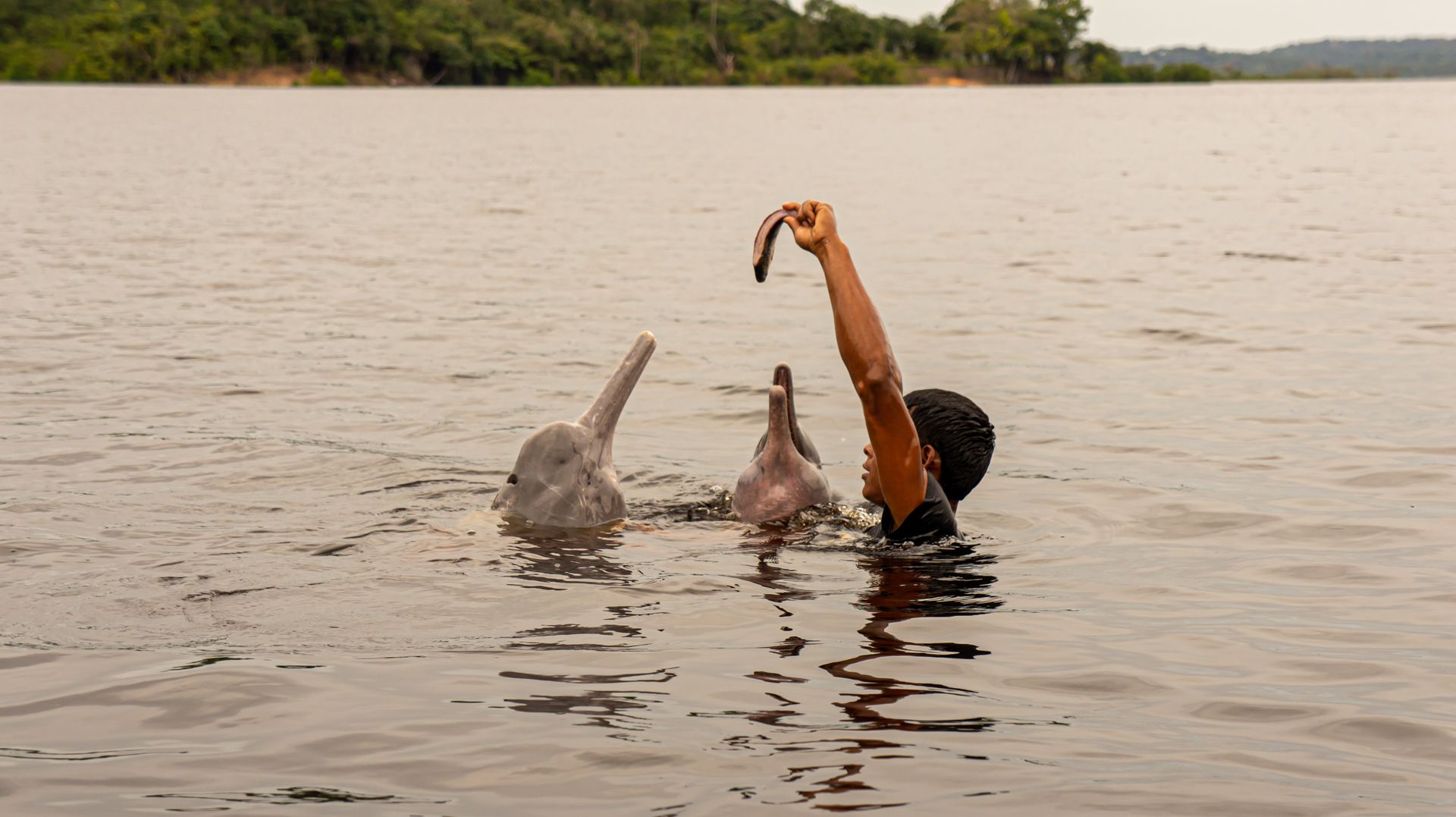
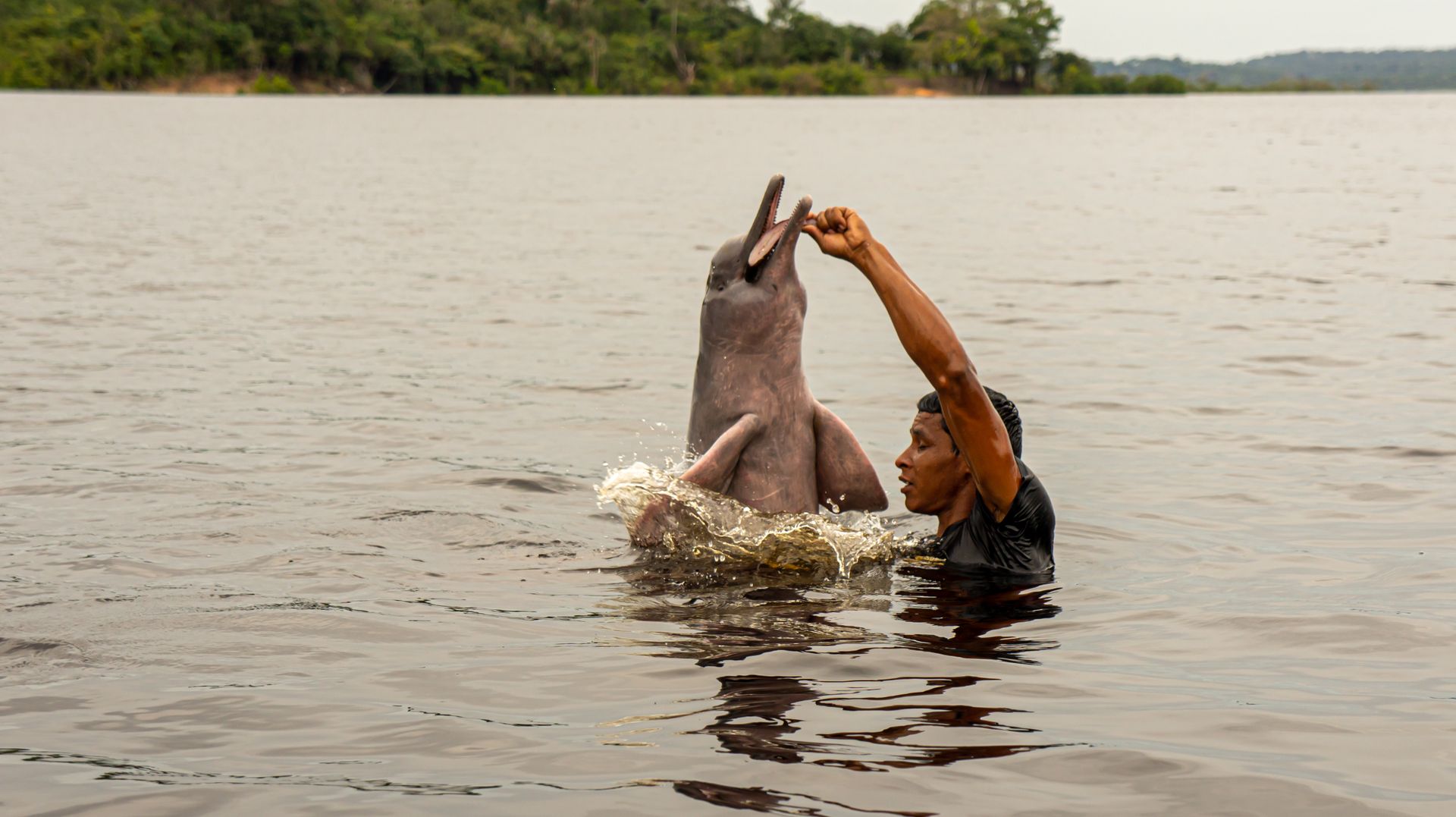
The Bolivian River Dolphin is a unique and fascinating creature that calls the waters of the Beni River in Bolivia its home. It is a freshwater dolphin that inhabits the river's main channel and tributaries.
The Beni River, where the Bolivian River Dolphin is found, is a vast and complex network of waterways that stretches over 1,000 kilometers. This river is a vital source of water for the surrounding ecosystem and supports a diverse array of aquatic life.
Bolivian River Dolphins are social animals that live in small groups, typically consisting of 2-5 individuals. They are also known to be quite vocal, using a variety of clicks and whistles to communicate with each other.
Physical Characteristics
The Bolivian river dolphin has a robust and stocky body structure. Its skin is often pinkish-grey.
The dorsal fin is triangular in shape, a recognizable feature of this dolphin. It's a great way to identify them in the wild.
The Bolivian river dolphin has a long snout, which is a distinctive characteristic. This snout helps them navigate through the water with ease.
Their reduced eyes are another notable feature. This adaptation helps them conserve energy while swimming in the murky waters of the Bolivian Amazon.
Males can grow up to 2.55 meters long, while females reach a maximum length of 2.16 meters.
Behavior and Habitat
The Bolivian river dolphin is an elusive creature, and it's not uncommon for them to swim below the surface of the water, making them difficult to observe.
In fact, a research team observed two juvenile male dolphins playing with a Beni anaconda in August 2021, giving us a rare glimpse into their behavior. These dolphins are also known to play with large, presumably dead snakes.
Their diet consists of a variety of fish and crabs, with one necropsy revealing multiple species from at least 4 different families in the stomach of a single juvenile dolphin. This suggests that they are opportunistic feeders, taking advantage of whatever is available in their environment.
Here are some key facts about the Bolivian river dolphin's habitat and behavior:
- Found in the upper reaches of the Amazon River system, specifically within Bolivia.
- Thrives in a variety of freshwater habitats, including large rivers, lakes, and flooded forests.
Behavior
Bolivian river dolphins are elusive creatures, often swimming below the surface of the water, making them difficult to observe.
They have been known to play with a Beni anaconda, a species of snake, as observed by a research team in August 2021 near the Tijamuchi River. This playful behavior is quite fascinating!
Their diet consists of a variety of fish species, as well as crabs, which they consume in large quantities. In fact, necropsies have shown that a juvenile dolphin's stomach contained multiple species of fish from at least 4 different families.
The murky river water makes it challenging to spot these dolphins, but in April 2022, three ecologists managed to capture photographs of them playing with a large, presumably dead, Beni Anaconda snake.
These dolphins are apex predators, which means they have no natural predators in the wild.
Consider reading: Australian Water Rat
Habitat and Distribution
The Bolivian river dolphin is predominantly found in the upper reaches of the Amazon River system, specifically within Bolivia.
It thrives in a variety of freshwater habitats ranging from large rivers to lakes and flooded forests.
The Amazon River system is its primary home, where it can be found navigating through the waterways with ease.
Its habitat preferences include freshwater environments, which are perfect for its streamlined body to move through with agility.
This dolphin is well adapted to its surroundings, allowing it to thrive in its native environment.
Conservation and Threats
The Bolivian river dolphin is a species that's seriously threatened and endangered, with deforestation, pollution, and accidental net entanglement being among the primary concerns.
Conservation efforts are in place to ensure their survival, but it's clear that more needs to be done. In 2008, a continent-wide conservation plan was implemented in South America, which included a meeting with 50 experts from 11 countries to determine the conservation status of river dolphins.
The plan took nearly 2 years to complete and highlighted the need to generate economic alternatives for local communities to implement conservation strategies. This involves promoting touristic activities around dolphins, such as observing them in their natural habitat, which already exists in Colombia.
Expand your knowledge: Dolphins Toxic
The continent-wide strategy proposes an action plan for each country, which responds to the context of each nation. In Bolivia, for example, there's already a plan in place with extensive governmental support.
River dolphins are facing a similar fate to their Asian counterparts, and it's essential to take necessary measures to prevent this from happening in South America.
Unique Attributes and Evolution
The Bolivian river dolphin's transition from saltwater to freshwater habitats is a remarkable example of nature's ability to evolve and thrive.
Their adaptation to freshwater environments is a testament to their resilience and ability to adjust to new circumstances.
This transition has led to the development of unique attributes that set them apart from other dolphin species.
Studying the Bolivian river dolphin offers insights into the evolutionary process, providing a compelling narrative about nature's ability to evolve and thrive.
Dolphin in Bolivia
The Bolivian river dolphin is a unique creature that inhabits the waterways of Bolivia. It's scientifically recognized as Inia geoffrensis boliviensis.
Researchers have traveled over 7,000 kilometers of rivers in the Amazon and Orinoco to study this species. This has helped identify the most significant threats to the Bolivian river dolphin.
The Bolivian river dolphin is an endemic species, meaning it's found only in Bolivia. Its existence was confirmed through research trips.
This fascinating creature has captivated the attention of biologists and nature enthusiasts alike. Its distinct characteristics and evolutionary adaptations make it a truly intriguing species.
Research and Methods
Our research on the Bolivian river dolphin involved studying its habitat, which is the Beni and Madre de Dios river basins in Bolivia.
These rivers are home to a diverse array of aquatic life, and the Bolivian river dolphin has adapted to this unique environment.
We observed that the dolphin's habitat is characterized by shallow waters and a mix of sand and mud substrates, which is suitable for its feeding habits.
Materials and Methods
We collected data from 500 participants, aged 18-65, who were randomly selected from online forums and social media platforms.
Our survey instrument was a 20-item questionnaire that assessed participants' attitudes towards climate change and their willingness to adopt sustainable behaviors.
We used a 5-point Likert scale to measure participants' level of agreement with statements related to climate change mitigation and adaptation.
The survey was administered online using Google Forms, which allowed us to easily track and analyze the responses.
We also conducted in-depth interviews with 20 participants to gather more qualitative data and gain a deeper understanding of their perspectives on climate change.
These interviews were audio-recorded and transcribed verbatim for further analysis.
Our data analysis involved both quantitative and qualitative methods, including descriptive statistics and thematic analysis.
We used the NVivo software to manage and analyze the data, which allowed us to efficiently code and categorize the responses.
Our sample was diverse in terms of age, sex, education level, and geographical location, which helped to ensure that our findings were representative of the broader population.
Study Area
The study area for our research is located in the Bolivian Amazon, specifically in the Mamore River basin in the department of Beni, Bolivia.
This region is home to the Ibare and Tijamuchi rivers, which are clearwater tributaries of the Mamore River. They have a meandering system with noticeable fluctuations in water levels.
During the high-water season, the average width of these tributary rivers is approximately 150 meters, while during the low-water season, it decreases to less than half that size, ranging from 50 to 70 meters.
The Mamore River, one of the main white-water rivers in Bolivia, maintains a width greater than 400 meters during the high-water season.
This area experiences substantial anthropogenic use and pressures, including intense boat traffic, overfishing, strong deforestation, and frequent uncontrolled human-induced forest fires.
Intriguing read: European Water Vole
Model Results for Counts
The model results for the Bolivian River Dolphin (BRD) counts are quite interesting. The year parameter has a negative estimate of -0.011511, but the p-value is 0.44390, indicating that this parameter is not statistically significant.
The River-Ibare parameter, on the other hand, has a negative estimate of -1.54819 and a very low p-value of 6.49e-06, suggesting a strong effect on the counts. The River-Mamore parameter also has a negative estimate of -0.88696 and a p-value of 0.00273, indicating a significant effect.
The model explains a significant portion of the deviance, with an explained deviance of 86.65%. The null deviance is 44.406 with 11 degrees of freedom, and the residual deviance is 12.041 with 8 degrees of freedom.
The theta value is 6.59, but no further information is provided about its interpretation or significance.
Dolphin World
The Bolivian river dolphin is a unique creature that inhabits the waterways of Bolivia. It's scientifically recognized as Inia geoffrensis boliviensis.
This dolphin has captivated the attention of biologists and nature enthusiasts alike due to its distinct characteristics and evolutionary adaptations.
Frequently Asked Questions
What is the diet of the Bolivian river dolphin?
The Bolivian river dolphin's diet consists of crabs and various fish species, including those from the Characidae family. Its stomach contents also reveal a diverse and opportunistic feeding behavior.
Featured Images: pexels.com