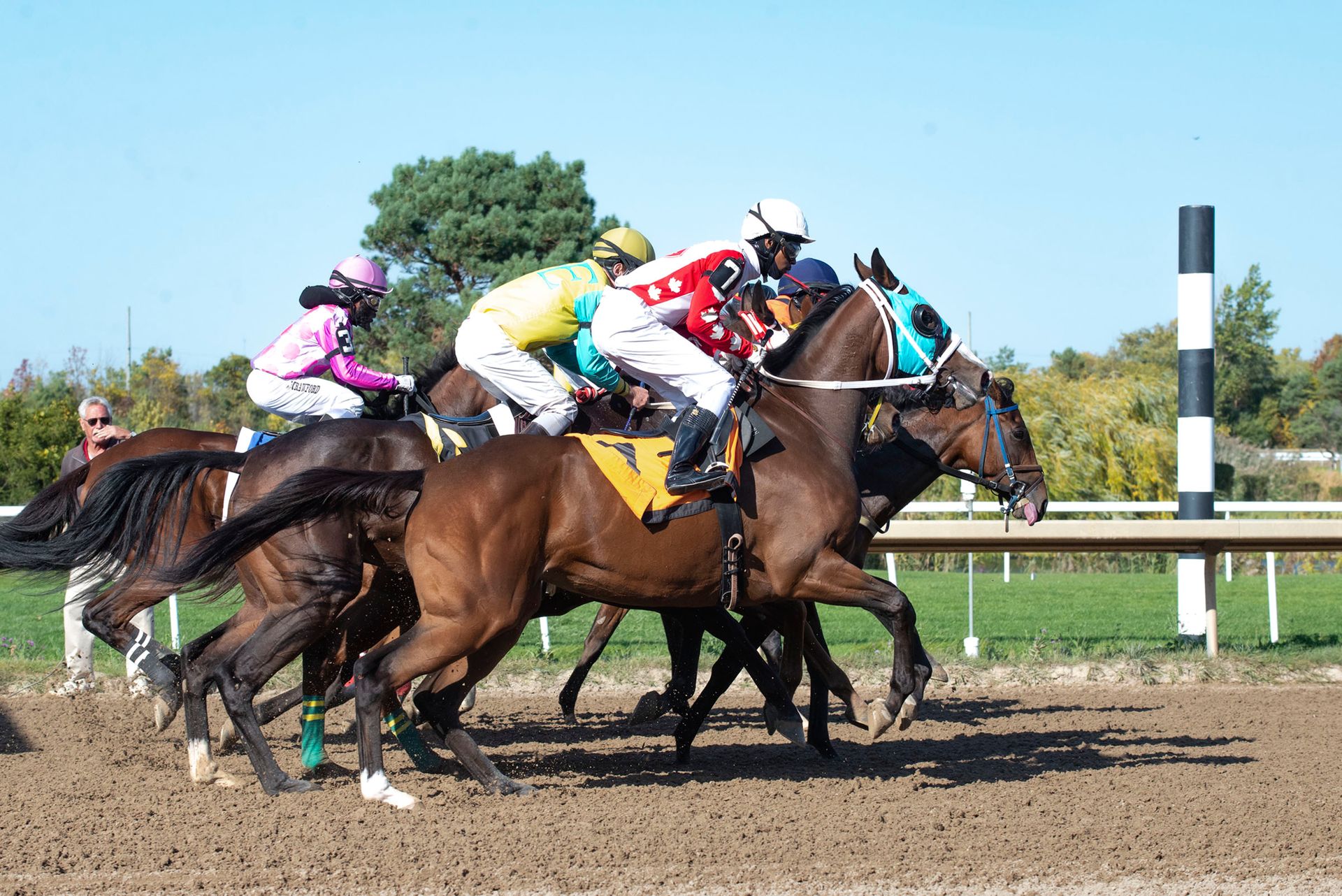
A good bloodline can make all the difference in a Thoroughbred horse's racing career. Thoroughbred horses with a strong pedigree can inherit desirable traits such as speed, endurance, and agility.
A horse's bloodline is determined by its parents and grandparents, with each generation contributing to its overall genetics. The more successful and accomplished its ancestors are, the more likely a horse is to inherit their good qualities.
Thoroughbred horses with a long history of racing success in their bloodline are often in high demand. They are sought after by breeders and trainers who want to capitalize on their potential for success on the track.
What is a Thoroughbred?
The Thoroughbred is a distinct horse breed that originated in 17th- and 18th-century England.
Developed by crossbreeding native mares with imported stallions of Arabian, Barb, and Turkoman breeding, all modern Thoroughbreds can trace their pedigrees to three stallions imported into England in the 17th and 18th centuries.
The typical Thoroughbred stands between 15.2 to 17.0 hands high, averaging 16 hands.
They are most often bay, dark bay or brown, chestnut, black, or grey, with white markings on the face and lower legs, but not on the body.
Their well-chiselled head, long neck, high withers, deep chest, short back, good depth of hindquarters, lean body, and long legs all contribute to their elegance, grace, and athleticism.
The Three Founding Lines
The Thoroughbred breed can be traced back to just three stallions: The Byerley Turk, The Darley Arabian, and The Godolphin Arabian.
These three stallions were imported to England between 1689 and 1729, and their male lines were preserved by their descendants.
The Byerley Turk's male line was preserved by his great-great-grandson, Herod.
The Darley Arabian's male line was preserved by his great-great-grandson, Eclipse, and one genetic study suggests that 95% of male Thoroughbreds trace their male line to him.
The Godolphin Arabian's male line was preserved by his grandson, Matchem, and in modern Thoroughbred pedigrees, most horses have more crosses to him than to the Darley Arabian.
In fact, 13.8% of modern Thoroughbreds have crosses to the Godolphin Arabian, compared to 6.5% to the Darley Arabian.
See what others are reading: Egyptian Arabian Horse
Heritage and Pedigree
A good Thoroughbred's pedigree can greatly impact its value, with prices varying greatly depending on its lineage.
The average sale price for broodmares is $70,150, indicating the importance of a strong maternal line.
A horse's conformation and pedigree are often closely tied, with a well-bred horse more likely to have a desirable conformation.
The most successful Thoroughbreds can sell for much, much more than the average, with Fusaichi Pegasus selling for a record-breaking $70 million in 2000.
A horse's age and pedigree also play a significant role in its value, with the average weanling selling for $44,407 and the average yearling selling for $55,300.
Important Concepts
Bloodlines of Thoroughbred horses are a crucial aspect of their breeding and racing history. The concept of a bloodline refers to the ancestry of a horse, tracing back to its earliest known sire and dam.
A horse's bloodline can greatly impact its performance and temperament. A horse with a strong racing bloodline is more likely to excel on the track.
Thoroughbred breeders often seek to create new bloodlines by crossing different horses with desirable traits. This can result in the creation of new racing champions.
Additional reading: Pitbull Dog Bloodlines
Important Terminology
Mares are the female horses that produce foals, while stallions are the male horses that sire them.
The terms "by" and "out of" are commonly used to describe a horse's lineage. A horse will be by the stallion that sired it and out of the mare that produced it.
Understanding these terms is essential for deciphering horse pedigrees.
In horse terminology, the sire refers to the stallion that fathered the horse, while the dam refers to the mare that mothered it.
The Speed Factor
The Speed Factor is a crucial aspect of many processes, and understanding it can help you optimize your workflow.
Speed can be measured in various units, such as miles per hour or kilometers per hour, depending on the context.
In the context of transportation, speed is often determined by factors like road conditions, traffic, and vehicle type.
Did you know that the average speed of a car on a highway is around 60 miles per hour?
The speed of a process can also be influenced by the tools and equipment used, as seen in the article's example of a more efficient machine.
A machine that can produce 100 units per hour is significantly faster than one that can only produce 20 units per hour.
In some cases, speed can be sacrificed for accuracy, as seen in the example of a precision instrument that requires a slower speed to maintain its accuracy.
The speed of a process can also have an impact on its overall cost, with faster processes often being more cost-effective.
You might like: How Much Do Thoroughbred Horses Cost
Sires and Generations
Sires are a crucial part of thoroughbred horse breeding, and it's essential to choose a desirable sire. You can evaluate a sire's performance by checking their pedigree and looking at the performance of their offspring.
To develop a thorough understanding of a horse's background, researchers often look at generations going back ten years. This extensive research helps to create accurate statistics and knowledge about the horse's bloodlines.
Inbreeding is a common topic in thoroughbred development, and it's often considered negative. However, there's more to inbreeding than meets the eye, and it's worth exploring further to understand its role in thoroughbred breeding.
Here's an interesting read: Breeding Thoroughbred Horses
Sires
A stallion's reputation can make or break a horse's racing career, and that's why it's crucial to choose a desirable sire.
The sire is the stallion, and its bloodlines are traced several generations back. This helps evaluate the horse's potential for racing success.
You can check a horse's pedigree to see how its bloodlines were evaluated. Secretariat, a renowned racing champion, is a great example of this.
A desirable sire can significantly impact a horse's performance, so it's essential to research and choose wisely.
Generations
Understanding a horse's pedigree is crucial in evaluating its potential as a sire. Researching generations going back ten years is a common practice in the industry.
Bloodhorse.com is a valuable resource for learning about this process. They look at generations going back ten years to develop their statistics and knowledge of a horse's background.
Inbreeding is often viewed negatively, but it plays a significant role in thoroughbred development.
Genetic Research and Racing
Genetic research has been instrumental in understanding the genetic makeup of Thoroughbred horses, allowing breeders to make informed decisions about breeding programs.
The discovery of the EquCab2 genome has provided a comprehensive understanding of the Thoroughbred horse's genetic blueprint.
Genetic testing can identify the presence of genetic disorders such as Dwarfism and Cyclic Ovarian Disease, which can be detrimental to a horse's racing career.
Breeders can use genetic testing to identify horses with desirable traits such as speed and endurance.
The use of genetic research in Thoroughbred breeding has led to the development of more targeted breeding programs, resulting in improved racing performance.
Genetic research has also helped to identify the genetic basis of certain traits, such as the ability to run at high speeds.
By understanding the genetic makeup of Thoroughbred horses, breeders can make informed decisions about breeding programs and improve the overall quality of racing horses.
Why Consider
Considering the rich history and impressive achievements of bloodlines thoroughbred horses, it's no wonder they're a popular choice among horse enthusiasts.
Their exceptional speed and agility can be attributed to their athletic build, with some bloodlines boasting a top speed of over 45 miles per hour.
Bloodlines thoroughbred horses have been bred for centuries, with the first recorded Thoroughbred breeding dating back to 1718.
Their impressive racing records are a testament to their endurance and stamina, with some horses completing multiple races in a single day.
The bloodlines of these horses are meticulously tracked and recorded, with the Jockey Club maintaining a centralized database to ensure accuracy and consistency.
Their competitive edge is further enhanced by their intelligence and strong work ethic, making them a joy to train and work with.
Frequently Asked Questions
What horse are 90% of all Thoroughbreds descended from?
Darley Arabian is the ancestor of 90% of all Thoroughbred horses, a testament to his significant impact on the breed's lineage
What two breeds make a Thoroughbred?
A Thoroughbred's ancestry is rooted in three foundation sires, not two specific breeds. The Darley Arabian, Godolphin Arabian, and Byerly Turk are the foundation sires that make up the Thoroughbred breed.
Featured Images: pexels.com