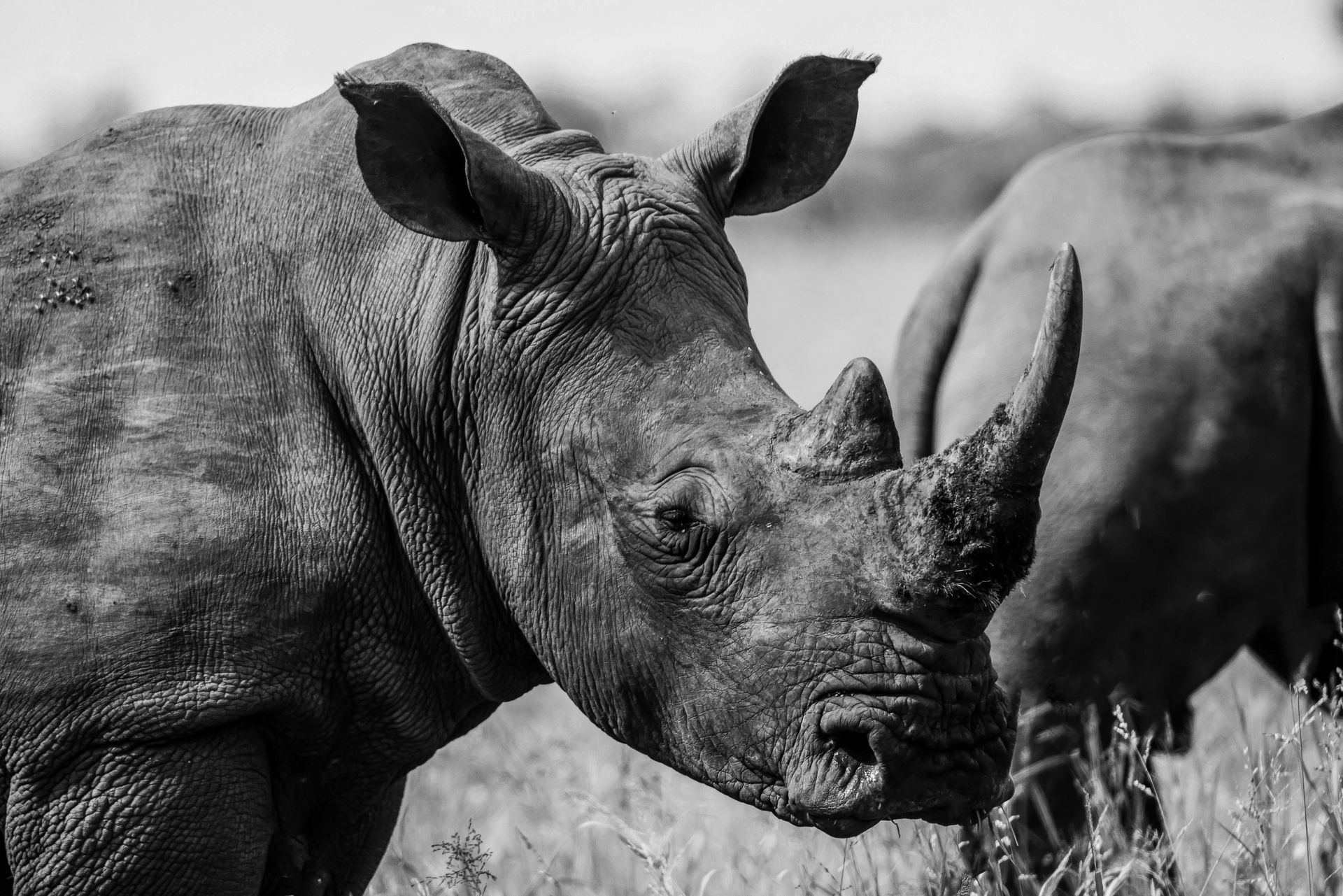
The black rhino is one of the most endangered species in the world, with a devastating extinction date looming over it.
The International Union for Conservation of Nature (IUCN) lists the black rhino as Critically Endangered, and conservation efforts are underway to prevent its extinction.
The black rhino's population has been declining drastically due to poaching and habitat loss.
The current estimated population of black rhinos is around 5,000 individuals in the wild.
Conservation efforts are being made to protect the black rhino's habitat and prevent poaching, but more needs to be done to save this majestic creature.
Black Rhino Extinction
The Western black rhino was declared extinct in 2011, two years after journalists started reporting the news.
The last reported sightings of the Western black rhino were in 2003, by which time its range had shrunk to small areas in Cameroon.
Poaching killed off the last few stragglers of the Western black rhino.
The black rhino species is Critically Endangered and looks to become more so, as rhinos are being slaughtered across Africa and Asia on the orders of consumers in Asia.
The overall black and white rhino numbers are predicted to go into decline in 2015-16, as natural deaths and poaching mortalities overtake the number of births per year.
There are only three subspecies of black rhino surviving: The Eastern black, the SouthCentral, and the SouthWestern.
The estimated population of black rhinos in the wild today is 6,788, down from an estimated 65,000 in 1970.
Rhino conservation efforts, like at the Ol Pejeta Conservancy, have helped increase black rhino numbers, but there is always more work to be done.
Population Trends
The western black rhinoceros was declared extinct in 2011, but its population had been declining rapidly since the 1970s.
By 1980, the population had dwindled to just a few hundred individuals, and by 2000, there were only an estimated ten western black rhinos left.
In 2006, a six-month survey of the rhino's common roaming ground in Cameroon found no signs of the species, leading the teams to conclude that it was likely extinct.
The population of black rhinos in general has also been severely impacted, with a 96% decline between 1970 and 1992.
This decline was largely due to widespread poaching, as well as farmers killing rhinos to protect their crops.
Here are the lowest recorded numbers for each of the four black rhino subspecies:
- South-western black rhinos: 418 (1984)
- South-central black rhinos: 1,202 (1994)
- Eastern black rhinos: 483 (1997)
- Western black rhinos: declared extinct (2006)
Today, conservation efforts have helped increase black rhino numbers, with 6,421 individuals across Africa by the end of 2023.
This growth is largely due to innovative biological management, including re-introducing rhinos into their previous ranges and maintaining annual growth rates exceeding 5%.
Rhino Conservation
Rhino conservation efforts have made a significant impact on the black rhino population. By the end of 2023, there were 6,421 black rhinos across Africa, thanks to dedicated conservation efforts.
Innovative biological management strategies have been key to this success, including re-introducing rhinos into their previous ranges and maintaining annual growth rates exceeding 5%. This has helped to ensure the long-term survival of the species.
The conservation of black rhinos is a complex issue, and habitat loss is a major concern. In 1880, Africa was estimated to hold around 113,000 black rhinos, but by 2122, predicted changes mean that the habitat available to black rhinos might only be able to hold 21,000 animals.
Here's a rough breakdown of the current black rhino population by subspecies:
- South-western black rhinos: 4,421
- South-central black rhinos: 1,665
- Eastern black rhinos: 1,335
The success of conservation efforts is not guaranteed, and if efforts were stopped, the population would likely decline significantly. By 2032, there would be only 2,217 South-western, 942 South-central, and 193 Eastern black rhinos.
IUCN and Conservation Tools
The IUCN Green List tool has been instrumental in assessing black rhino recovery.
This tool has four measures that help scientists evaluate conservation efforts.
Without conservation actions, fewer than 300 black rhinos would exist in Africa today.
The actual count of black rhinos in 2022 is 6,191, thanks to conservation efforts that saved over 5,800 animals.
If conservation efforts were to cease for the next 10 years, only around 3,300 black rhinos might be alive in Africa by 2032.
Maintaining current conservation efforts could lead to more than 8,900 black rhinos living in Africa in 2032.
The IUCN Green List tool provides valuable insights into the future of black rhino populations.
Featured Images: pexels.com