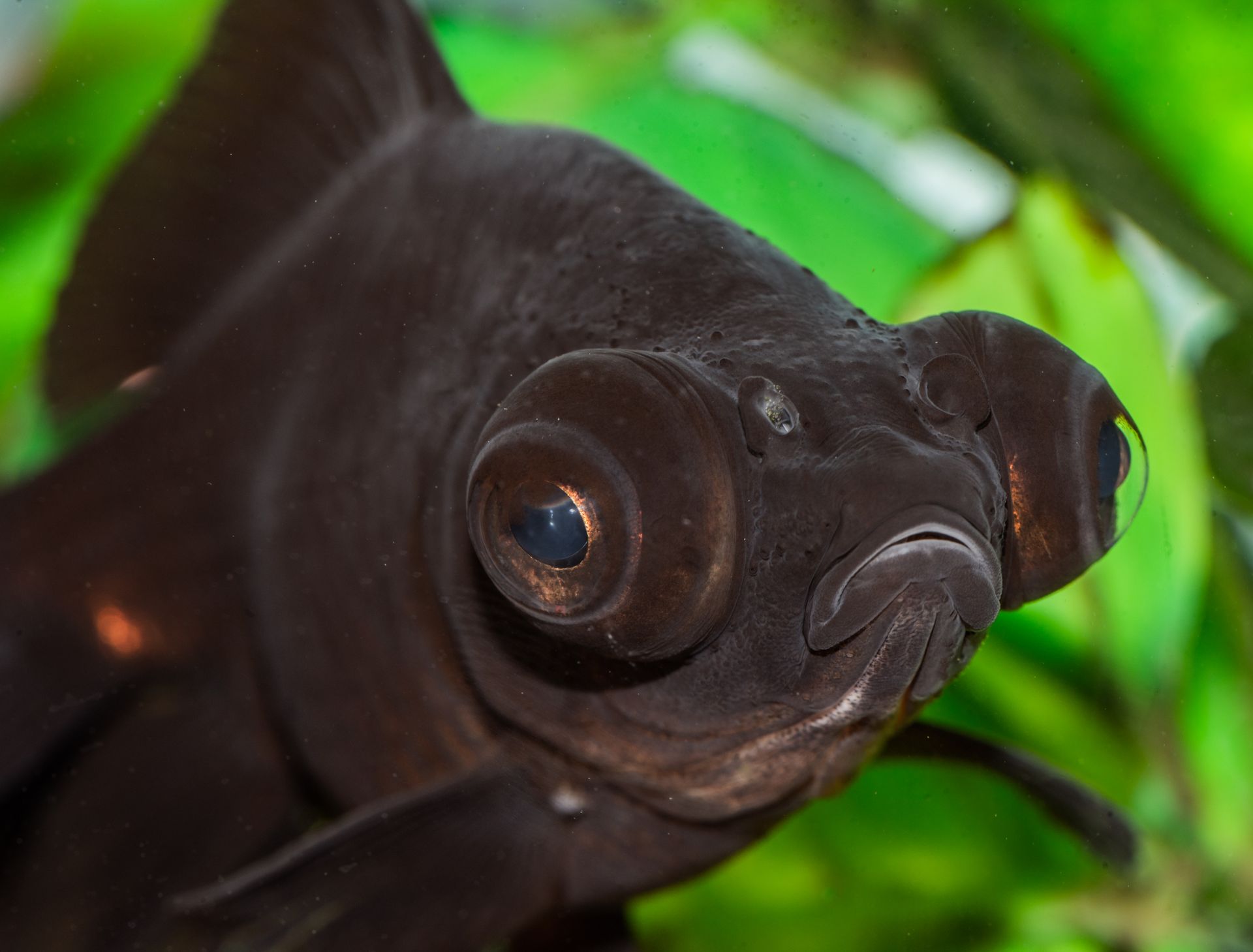
Black moor goldfish can live up to 15 years with proper care.
To ensure your black moor goldfish lives a long and healthy life, it's essential to understand their specific needs. They require a lot of space to swim, so a minimum tank size of 20 gallons is recommended.
Black moor goldfish are prone to fin nipping, so it's crucial to introduce them to tankmates slowly and under close supervision. A peaceful community tank with plenty of hiding places can help prevent fin nipping.
Regular water changes are also vital for maintaining the health of your black moor goldfish. Aim to change 25% of the tank water every week to keep the water quality high.
General Care Guidelines
To keep your Black Moor goldfish happy and healthy, it's essential to follow some basic care guidelines.
Don't keep Black Moors with normal-eyed varieties or other fish species unless you use a special feeding regime. This is crucial to prevent stress and competition for food.
Give your Black Moors a varied diet, especially as they get older, to avoid swim bladder problems. A balanced diet will keep them thriving.
Keep sharp objects out of their tank to prevent injuries. Trust me, you don't want to have to deal with a stressed or injured fish.
Here are some additional tips to keep your Black Moor's tank safe and healthy:
- Don't clutter their tank with plants or ornaments.
Nutrition and Feeding
Black moor goldfish are omnivorous animals that will eat a wide range of foods.
Feed your goldfish a well-balanced diet that includes high-quality fish flakes or Fancy goldfish pellets, as well as a good portion of meaty protein like frozen brine shrimp and bloodworms.
Goldfish also enjoy blanched zucchini and lettuce as a treat.
In the wild, black moor goldfish's breed-parent, the telescope goldfish, eats insects, vegetable matter, small crustaceans, and detritus.
Feed your black moor goldfish a similar, varied diet in captivity. The bulk of the fish's diet should be dried flakes or pellets.
Recommended read: Domesticated Hedgehog Diet
Feed live or frozen foods like brine shrimp, daphnia, and bloodworms several times a week. Green vegetables like blanched spinach, lettuce, and broccoli support the fish's digestive system and should be provided at least once a week.
Round-bodied goldfish are very susceptible to conditions such as constipation and bloating that can affect the fish's swim bladder.
Don't overfeed your black moor goldfish because they're prone to obesity and related health conditions like bloat and swim bladder disease. Feed them twice a day, providing enough food that can be eaten in two minutes.
If you're using sinking pellets, be careful not to add too much food at one time. If the pellets end up buried in between rocks and gravel, they'll rot and foul the water.
Overfeeding fancy goldfish causes nothing but problems! In addition to water quality issues, overfeeding can cause digestive problems for fancy goldfish.
Take a look at this: How Often to Feed African Dwarf Frogs
Water Quality and Filtration
Black moor goldfish require good water quality to thrive, but maintaining it can be a challenge due to their high waste production. Regular water changes are essential, but making them without checking the water parameters is just guessing.
You'll need a water test kit to check your water parameters regularly, and it's best to get a kit with test tubes and solutions, as test strips are notoriously inaccurate.
To keep your water quality in check, aim for the following parameters: pH between 6.5-7.4, nitrates below 30 ppm (with 5 ppm recommended for very young fish), ammonia and nitrites at zero, and a water temperature between 60-75F (16-24C).
A filter can significantly reduce maintenance workload, but it's not essential. If you choose to use a filter, make sure it circulates the water around the aquarium at least four times every hour, and choose a system that suits your tank size.
Black moors are clumsy swimmers, so a filter with an adjustable outflow valve feature or using plants or decorations to buffer the flow is recommended.
Here's a summary of the ideal water parameters for black moor goldfish:
Remember, regular water changes and monitoring of water parameters are crucial for keeping your black moor goldfish healthy and thriving.
Tank Setup and Equipment
For a black moor goldfish to thrive, you'll need to set up a tank that's specifically designed for its needs. A minimum tank size of 70 liters (18 US gallons) is recommended, with a filter installed.
Black moors are relatively calm fish, so a peaceful tank environment is a must. Avoid mixing them with territorial, aggressive, or fin-nipping fish, as this can lead to stress and harm.
Direct sunlight or strong indirect sunlight should be avoided, as it can promote algae growth and create ideal conditions for an algal bloom. If you can't place the tank in a shaded area, consider installing a UV clarifier to help keep the water clean.
Recommended read: Rosy Barbs Fish
Setup
To set up a tank for your Black Moor goldfish, you'll want to start with a large tank of around 20 gallons, or a 10-gallon aquarium if you prefer.
Black Moors are poor swimmers, so a rectangular tank is a must, offering plenty of open swimming space.
A tank with a lid or a cover slide is also recommended to prevent evaporation, stop dust from settling on the water, and keep the fish safely in the tank.
You'll want to choose aquarium-safe gravel or sand, and avoid using small grains that can be easily dug up by your goldfish.
Resin caves and other ornaments are fine, but avoid sharp or pointy objects that can cause injury to your fish.
A strong filtration system is essential, as goldfish produce a lot of waste.
Related reading: Water Dogs Fish
Best Aquarium Size
For a single Black Moor goldfish, the minimum tank size recommended is 50L, but a more suitable size is 70 liters to accommodate the fish's growth and water quality needs.
Black Moors can grow up to 7 inches in length, and their juveniles grow quickly, so a large tank is essential to prevent overcrowding and stress.
A 20-gallon tank is a good starting point, but if you're short on space, a 10-gallon tank can work, especially for beginners.
A unique perspective: Vetcheck Pet Urgent Care Center - Fishers in
To ensure your Black Moor has enough swimming space, choose a rectangular tank with plenty of open space, as they are poor swimmers and need room to move around.
A tank with a lid or cover is also recommended to prevent evaporation, dust, and the fish jumping out.
For each additional Goldfish, you'll need to add another 45 liters to the tank size to maintain a healthy environment.
Habitat Requirements
Black moor goldfish are quite adaptable, but they do thrive in specific conditions. Replicating their natural habitat is key to keeping them happy and healthy.
The ideal tank size for a black moor goldfish is at least 20 gallons. This allows for plenty of space to swim around, especially considering their long fins.
To create a suitable environment, you'll want to line the base of the tank with a layer of sand or gravel. Black moors don't spend much time at the bottom of the tank, so a substrate that's geared towards bottom-dwelling tank mates is a good choice.
A good filter is essential for maintaining clean water conditions. This will also provide a slow current, which is perfect for black moor goldfish.
Here are the ideal tank conditions for black moor goldfish:
For every extra black moor goldfish, you'll want to add an additional 10 gallons of tank space. This will ensure they have enough room to swim and thrive.
Size and Lifespan
Black moor goldfish are relatively small, growing to around 6–8 inches in length, with males being smaller and slimmer than females. They can live for a surprisingly long time, with an average lifespan of 10–15 years in captivity.
To give you a better idea of their size, here's a rough breakdown:
These fish can live for a decade or more, so it's essential to consider their long-term care when deciding to bring one home. A large tank of around 20 gallons is recommended, as they can quickly outgrow smaller spaces.
Behavior and Compatibility
Black moor goldfish are generally peaceful, but they can be outcompeted for food by faster-swimming varieties.
Their slow swimming speed and short sight can make them miss out at feeding time. This is especially true when mixed with more aggressive or competitive goldfish varieties.
To ensure your black moor goldfish get the nutrients they need, it's best to keep them with other varieties that have similar temperaments.
Some suggested companions include other telescope eye and bubble eye varieties, as they tend to get along peacefully.
Here are some tank mates to avoid:
- Fast-swimming goldfish varieties, as they'll outcompete your black moor for food
- Small fish or aquatic life that can fit into your black moor's mouth, as they'll be seen as prey
- Plecos and Bristle Nose catfish, as they may eat the slime off the sides of your tank
By choosing compatible tank mates and providing a suitable feeding system, you can create a harmonious and thriving environment for your black moor goldfish.
Typical Behavior
The black moor goldfish is a peaceful fish that gets along well with other fish and isn't territorial. They're active and known to chase and nip the fins of other black moors.
During the day, black moor goldfish are most active, eating and exploring their tank. They sleep in caves or behind plants at night.
A fresh viewpoint: Algae Eaters That Can Live with Betta

Black moor goldfish prefer to swim in the mid-levels of the tank and hide when startled by loud noises or aggressive tank mates. This is a natural behavior for them.
In the wild, black moor goldfish are found in China, where they inhabit calm waters with plenty of hiding spots. This has helped them develop their timid nature.
Here's a summary of the typical behavior of black moor goldfish:
Good Tank Mates
Black Moors are generally peaceful fish, but they do need some careful consideration when it comes to tank mates.
They should be housed with other peaceful fish that won't harass or bully them. Good tank mates for Black Moors include other fancy goldfish, small groups of shoaling fish, and large, slow-swimming fish.
In fact, other Black Moors are a great choice as tank mates, and it's best to buy them in groups of at least two for companionship.
Some other suitable tank mates for Black Moors are Oranda goldfish, Mollies, Zebra danios, Neon tetras, Barbs, Dwarf gouramis, Catfish, Kuhli loaches, and Bristlenose plecos.
Readers also liked: Fancy Goldfish Tank Mates
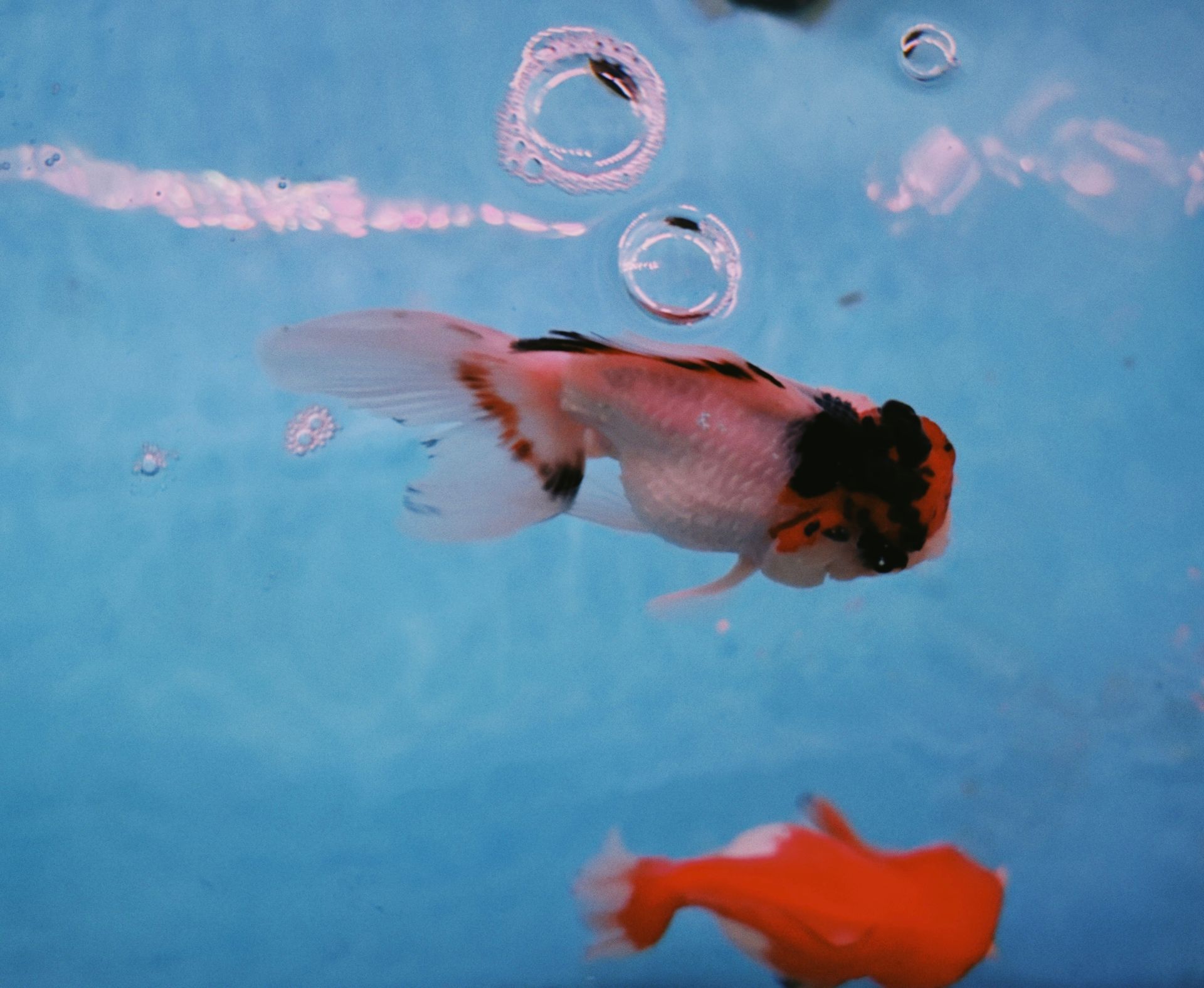
However, it's best to avoid housing Black Moors with fin-nipping tank mates like tiger barbs, betta fish, and angelfish, as they can be quite aggressive and may nip at the Black Moors' long fins.
Here are some specific tank mate suggestions for Black Moors:
By choosing the right tank mates, you can create a harmonious and thriving environment for your Black Moors.
Health and Diseases
Black Moors are no more susceptible to diseases than other fancy Goldfish, but poor water conditions can weaken their immune system, making them vulnerable to parasites, bacteria, or fungal spores.
They can live up to 10 years in an aquarium or pond if well cared for, but their lifespan is often cut short due to poor diet and swim bladder disorder.
Swim bladder disorder is the biggest killer of adult Black Moors, and it's usually caused by a poor diet in older fish.
Quarantining new fish is essential to prevent the spread of diseases, but it's not just about keeping them separate for a few weeks. You should assume your new Black Moor has parasites and treat them accordingly.
See what others are reading: How to Treat Swim Bladder Disease in Goldfish
A mild salt bath can take care of bacterial or fungal infections that aren't obvious at the time of quarantining.
Male and female Black Moors can be difficult to tell apart, especially outside the breeding season, but the female often has a slimmer body shape than the male.
Here's a rough guide to help you identify the sex of your Black Moor:
Keep in mind that these characteristics are not foolproof, and the only way to be sure is to observe your fish during the breeding season.
Breeding and Spawning
Black moor goldfish are relatively easy to breed, even for beginners. They reach sexual maturity at about one year old.
To breed a pair, set up a separate breeding tank with identical water conditions and decorations to the home tank. Add a healthy male and female fish to the breeding tank and increase the temperature by 3 degrees per day until it reaches 75°F.
See what others are reading: Syrian Hamster Breeding
The male will court the female by swimming around her in circles for several days, and an interested female will develop and release eggs on flat surfaces around the tank. Females can lay up to 10,000 eggs at once.
The male will fertilize the eggs with his milt, and once he's finished, remove both parents from the tank to prevent them from eating the eggs. Remove the unfertilized eggs to avoid polluting the water.
The eggs will hatch three to five days after fertilization, and the fry should be fed small iron- and protein-rich foods like baby brine shrimp until they're about two months old.
To bring the fish into breeding condition, feed them a protein-heavy diet before introducing them to the spawning tank. The ideal spawning tank should be at least 20 gallons with large, flat rocks or spawning mops for the female to lay her eggs.
Here's a rough guide to the spawning process:
Remember to keep the water clean by changing 20% of it every day and removing any fish waste and uneaten food daily.
Color and Development
As your Black Moor Goldfish matures, you'll notice a dramatic change in their coloration. Their eyes will telescope, and they'll turn a deep, velvet black.
Older Black Moors often fade to gray, and some fish can take on a metallic orange color if kept in very warm water.
Genetics and age can also play a role in loss of black color in older fish, with some Black Moors remaining black their entire life.
Expand your knowledge: Maltese Senior Dogs
Eye Variations
The eyes of Black Moor fish are truly unique. Some resemble smooth cones when viewed from above, while others protrude less and appear to be made up of a series of concentric circles.
Their eyes can vary in size and shape, making each fish a bit different from the next. This diversity is part of what makes Black Moors so interesting to observe.
Some Black Moors have a rounded protuberant type of eye, which looks like small balloons attached to the sides of their cheeks.
Colors
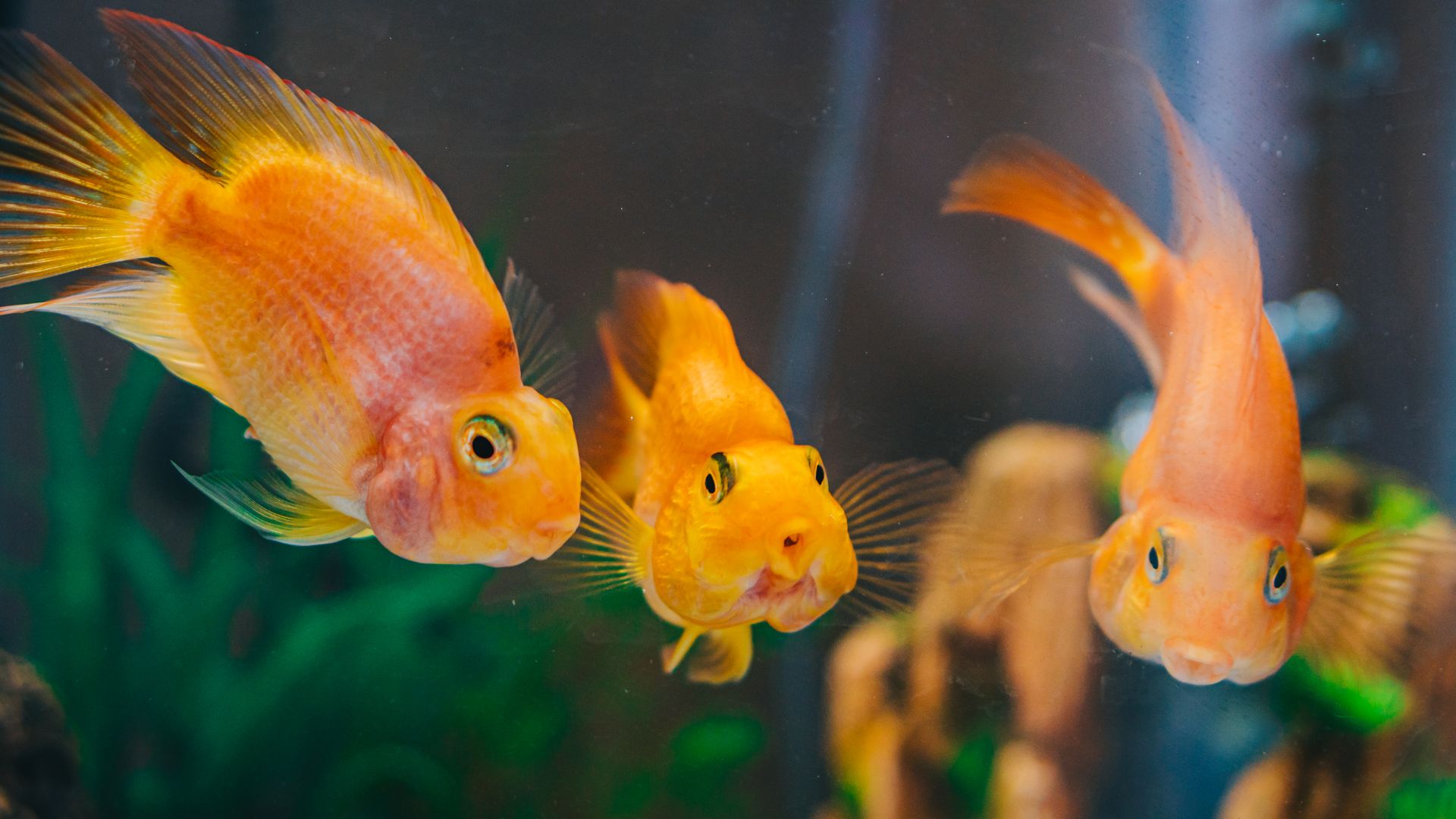
As Black Moors mature, their eyes telescope and their coloration turns a deep, velvet black.
Old Black Moors often gradually fade to gray, and some fish can take on a metallic orange color if kept in very warm water.
Young Black Moors have a brownish bronze appearance, lacking the telescoping eyes of mature fish.
Immature Black Moors are not too exciting to look at, but will develop their characteristic velvety black color and protruding eyes over the next six to eight weeks.
Warm water can minimize the formation of the black pigment, causing the fish to have a bronze coloration instead.
Genetics and age can also play a role in loss of black color in older fish, with some remaining black their entire life while others gradually lose some color in old age.
A diet rich in algae and plant matter can stimulate strong pigment formation in goldfish, similar to their natural diet in the wild.
For more insights, see: Doberman Ear Cropping Age
Beginner-Friendly and Safety
As a beginner in black moor goldfish care, it's essential to create a safe and comfortable environment for your new pet. Black Moors have poor eyesight, so it's crucial to leave plenty of open water swimming space in the mid-range area of the water column.
Avoid cluttering the tank with sharp-edged decorations, such as twisted roots, which can cause injury to your fish. Instead, opt for smooth driftwood, pebbles, or rocks that create a natural look.
The substrate is also a crucial area to consider, as Black Moors love to rummage through it for scraps of food. Choose large-gauge, smooth gravel for the tank bottom to prevent any harm to your fish.
Suitable for Beginners?
Goldfish are generally considered a suitable pet for beginners, but the Black Moor requires special attention.
The Black Moor is a dirty fish that produces a lot of waste due to its unique digestive system, which extracts nutrients from food as it passes through.
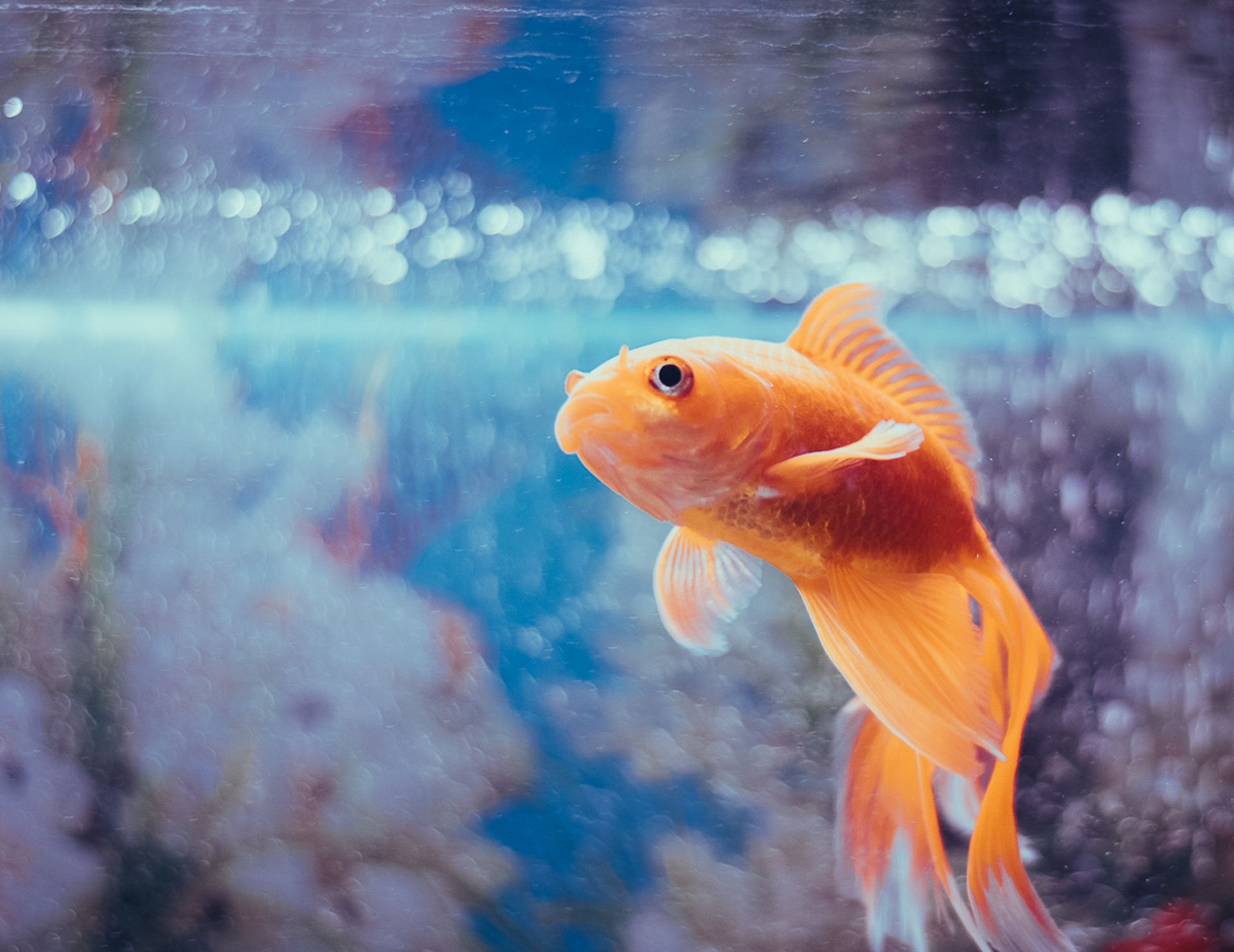
You'll need a powerful filtration system to keep the water clean and safe for your fish, with both mechanical and biological media.
Weekly water changes are essential to remove harmful nitrates from the water and keep your fish healthy.
Black Moors have protruding, telescope eyes that can be vulnerable to injury, so you'll need to be careful during feeding times.
Their poor eyesight can lead to stress and even starvation if they miss out on meals, so make sure to feed them regularly.
Their egg-shaped bodies can also lead to digestive problems, so you'll need to feed them a specialist diet.
Safety Considerations
To ensure the safety of your Black Moors, it's essential to create a tank environment that minimizes the risk of injury.
Leave plenty of open water swimming space in the mid-range area of the water column to prevent your fish from bumping into decorations.
Avoid placing solid decorations too close together to prevent your fish from getting pinched or injured.
Twisted roots are a no-go, as they have sharp edges that can harm your fish.
Smooth driftwood, pebbles, or rocks are great alternatives for a natural look without the risk of injury.
Large-gauge, smooth gravel is the best choice for the tank bottom, as it allows your fish to rummage through the substrate without getting hurt.
Final Thoughts and Overview
Black Moors are a favorite fancy goldfish variety with their friendly personality and playful behavior.
Their friendly nature makes them a great addition to any family, and with proper care, they can provide years of companionship and enjoyment.
To keep your Black Moors happy and healthy, remember that good water quality and a proper diet are the keys to success.
On a similar theme: Cat Friendly Veterinary Practice
Final Thoughts
Black Moor goldfish are a unique and beautiful addition to a community tank, but they require special care.
They need a tank of at least 10 gallons or larger, with a highly efficient filter system to keep the water clean.
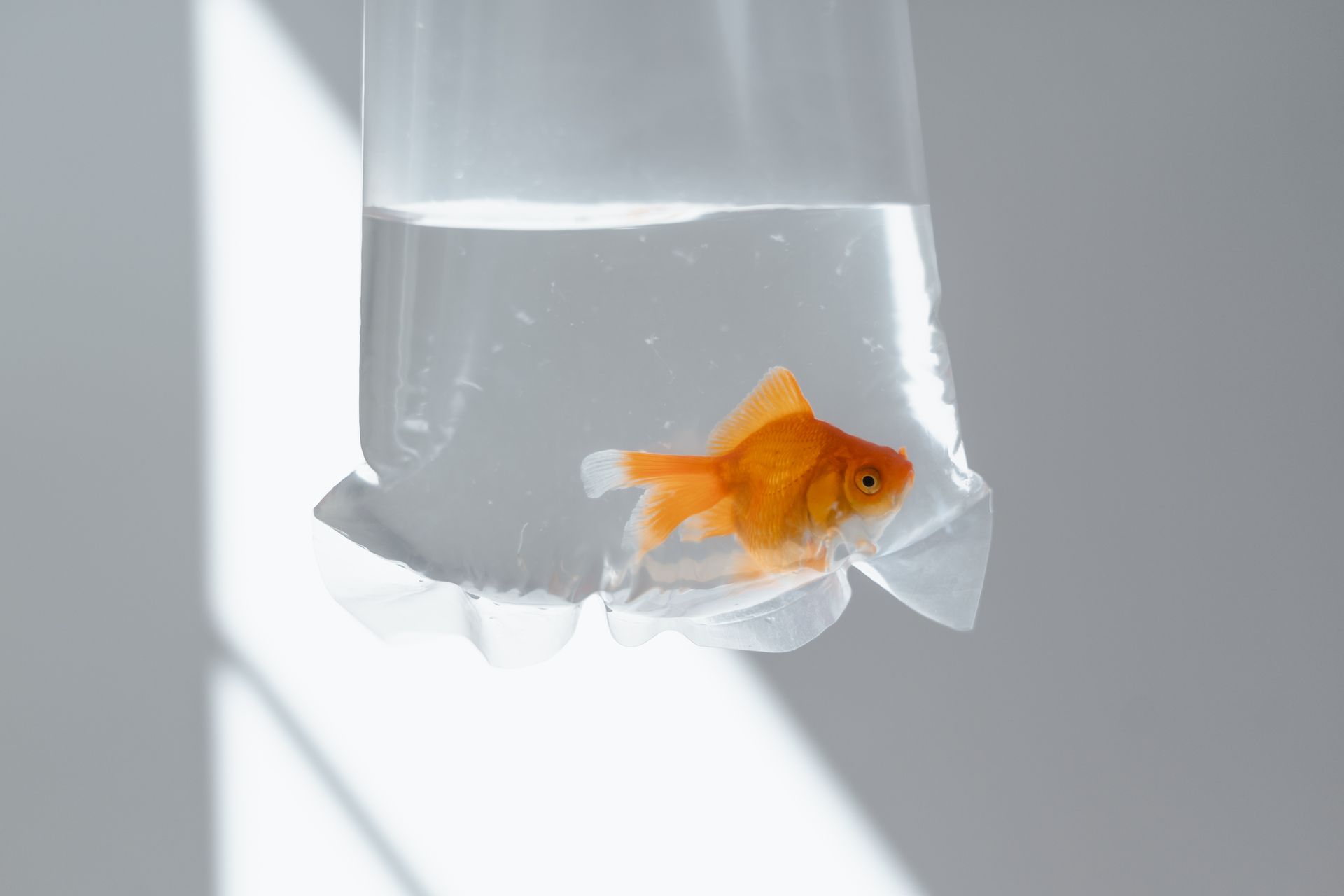
A spacious aquarium with plenty of room to swim is essential, as Black Moors can grow quite large.
Avoid cluttering the tank with sharp objects that could injure their protruding eyes.
Keeping them with other round-bodied goldfish types can help them thrive in a community setting.
Given the right conditions, Black Moors can even breed in captivity.
Final Thoughts on Care
Black Moors are a favorite fancy goldfish variety with their friendly personality and playful behavior.
The key to keeping Black Moors happy and healthy lies in giving them good water quality and a proper diet. This is especially important because Black Moors can live up to 15 years with proper care.
Black Moors are easy to care for, making them a great choice for aquarium hobbyists. They require a tank size of at least 20 gallons, which is crucial for maintaining good water quality.
To keep your Black Moor happy and healthy, make sure to follow these simple care steps:
By following these simple care steps, you can enjoy years of companionship and enjoyment with your Black Moor.
Frequently Asked Questions
What size tank for 2 Black Moor goldfish?
For 2 Black Moor goldfish, a 40-gallon tank is recommended, with an additional 10 gallons as a buffer for a total of 50 gallons. This provides a comfortable environment for your goldfish to thrive.
Featured Images: pexels.com