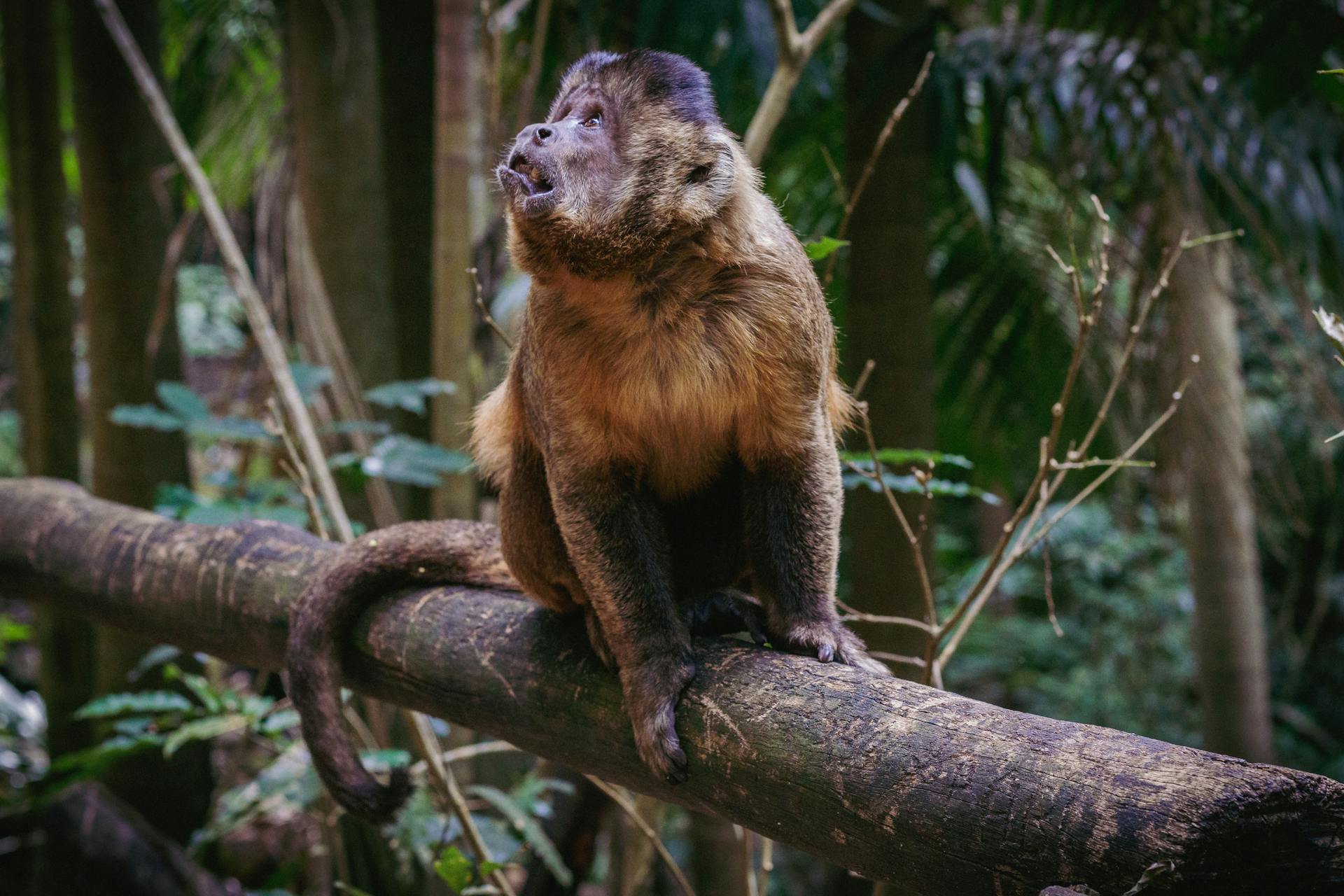
The black-capped capuchin is a fascinating primate species native to the tropical forests of Central and South America. They are considered one of the most intelligent primates in the world.
These agile creatures are known for their impressive jumping ability, with some individuals able to leap up to 10 feet in a single bound. They are also skilled climbers, spending most of their time in the trees.
Black-capped capuchins are social animals and live in large groups, often called troops. These troops can range in size from 10 to 100 individuals and are typically led by a dominant male.
Physical Characteristics
The black-capped capuchin is a medium-sized primate, typically weighing between 3.5 to 4.5 kilograms.
These primates have a distinctive black cap on their heads, which gives them their name.
Their fur is thick and soft, with a brownish-gray color on their backs and a lighter grayish-brown color on their bellies.
Adult black-capped capuchins have a long, slender tail that is prehensile, meaning they use it as an extra hand to grasp branches.
Appearance and Habitat
Black-capped capuchins are native to South America, where they can be found in a variety of forest types, including tropical, subtropical, dry, and savannah forests. They dwell in all these habitats, from tropical rainforests at high altitudes to tropical lowlands and open forests.
They prefer the dense tree canopy, particularly the lower and middle levels, which provides shelter, sleeping quarters, food sources, and ease of travel. This is where they feel most comfortable.
Black-capped capuchins can be found in countries such as Bolivia, Brazil, Colombia, Ecuador, French Guiana, Guyana, Peru, Suriname, and Venezuela, as well as on the Caribbean island of Trinidad. They share the island with two endemic monkey species.
They inhabit moist subtropical or tropical forests in the Amazon Basin, South America, and have also been sighted in dry forest, gallery forest, disturbed, and secondary forests. They prefer the understory and mid-canopy of the forest.
Black-capped capuchins are arboreal, primarily dwelling in the tree cover, but may also drop to the forest floor to forage for food.
Behavior and Lifestyle
Black-Capped Capuchin monkeys are diurnal, spending most of their day feeding, touring, and resting. They dedicate about 66% of their time to foraging for food.
Their social hierarchy is led by an alpha male, who dictates the daily actions of the group. In the group, the alpha female is submissive to the alpha male.
These intelligent monkeys are known to use tools like stones and branches to open hard nuts. They've even been observed smashing fruit against trees to access the inside.
Communication within the group is a mix of physical, facial, and vocal cues. The "scream embrace mechanism" is an example of this, where they use an ear-piercing call to regroup with fellow group members.
Foraging is a noisy and destructive process, but it's essential for their survival. They're also social creatures that prioritize group bonding, often through grooming.
In the dry season, the group spends more time foraging for insects due to the scarcity of fruit. This is a stark contrast to the moist season, when they tend to rest more and travel less.
Diet and Nutrition
The Black Capped Capuchin's diet is a fascinating topic. They are omnivorous, which means they eat a wide variety of foods including eggs, bugs, pith, small mammals, birds, squirrels, small reptiles, nuts, and nectar.
Their unique jaw structure allows them to eat tough vegetation in different forest environments. The depth of their decrease jaw, coupled with their massive jaw muscle tissue, makes them well-suited for this type of diet.
In some parts of Suriname, Black Capped Capuchins rely more heavily on bugs and fruits, while in other parts of the Amazon, they eat more crops and animal matter. This variation in diet is likely due to the availability of food sources in different regions.
They have also been known to hunt and eat the infants of titi monkeys, a behavior that is both surprising and intriguing. This predatory behavior is a key part of their omnivorous diet.
To communicate and attract mates, Black Capped Capuchins will often cover themselves in urine. This unusual behavior may also help to reduce stress levels in these intelligent primates.
Conservation and Science
Black-capped capuchin monkeys are native to the tropical forests of Central and South America, where they play a vital role in seed dispersal and forest regeneration.
Their diet consists of fruits, leaves, and insects, which they forage for in the forest canopy.
These agile primates are known for their intelligence and adaptability, often using tools to extract food and navigate their environment.
In the wild, black-capped capuchin monkeys live in large groups, led by a dominant male, and have been observed using complex communication systems to convey information and coordinate behavior.
Their social structure is characterized by a strict hierarchy, with dominant individuals holding priority access to food and mating opportunities.
Black-capped capuchin monkeys are also known for their unique ability to recognize and respond to individual faces, including those of humans.
In captivity, they have been observed exhibiting signs of stress and boredom, highlighting the importance of providing enriching environments that mimic their natural habitat.
Conservation efforts are underway to protect the black-capped capuchin and its habitat, including the creation of protected areas and sustainable forest management practices.
Interesting Facts and Quick Info
Black Capped Capuchins are diurnal, meaning they're most active during the day and are considered one of the most intelligent Neotropical primates. They have a wide range of facial expressions that represent many various things, including flirting by raising their eyebrows.
Their intelligence is also shown through their use of tools. They're omnivores and eat a variety of foods, including nuts, fruit, insects, and small mammals.
Black Capped Capuchins can live in groups of up to 8-30 individuals and are very protective of their group members, fending off intruders. They mark themselves by washing their hands in their own urine and rubbing their hands on their fur.
Here's a quick overview of their size and weight:
Their lifespan is approximately 25 years in the wild and 45 years in captivity.
General Information
The black-capped capuchin is a type of primate that's native to Central and South America. They're found in countries such as Costa Rica, Panama, and Colombia.
These primates are social creatures and live in groups called troops, which can range in size from 10 to 100 individuals. They're known for their agility and are excellent climbers.
Black-capped capuchins are primarily herbivores and their diet consists mainly of fruits, leaves, and flowers. They also occasionally eat insects and small reptiles.
In the wild, black-capped capuchins are known to be monogamous, with pairs forming during breeding season and staying together for several years.
Frequently Asked Questions
Are black cap capuchins good pets?
No, black capuchins do not make good pets due to their wild nature and potential for aggression. They require specialized care and attention that is best provided in a professional setting.
How aggressive are capuchin monkeys?
Capuchin monkeys are generally docile, but can become aggressive if frustrated or frightened. Their calm nature can quickly turn if they feel threatened or upset.
Featured Images: pexels.com