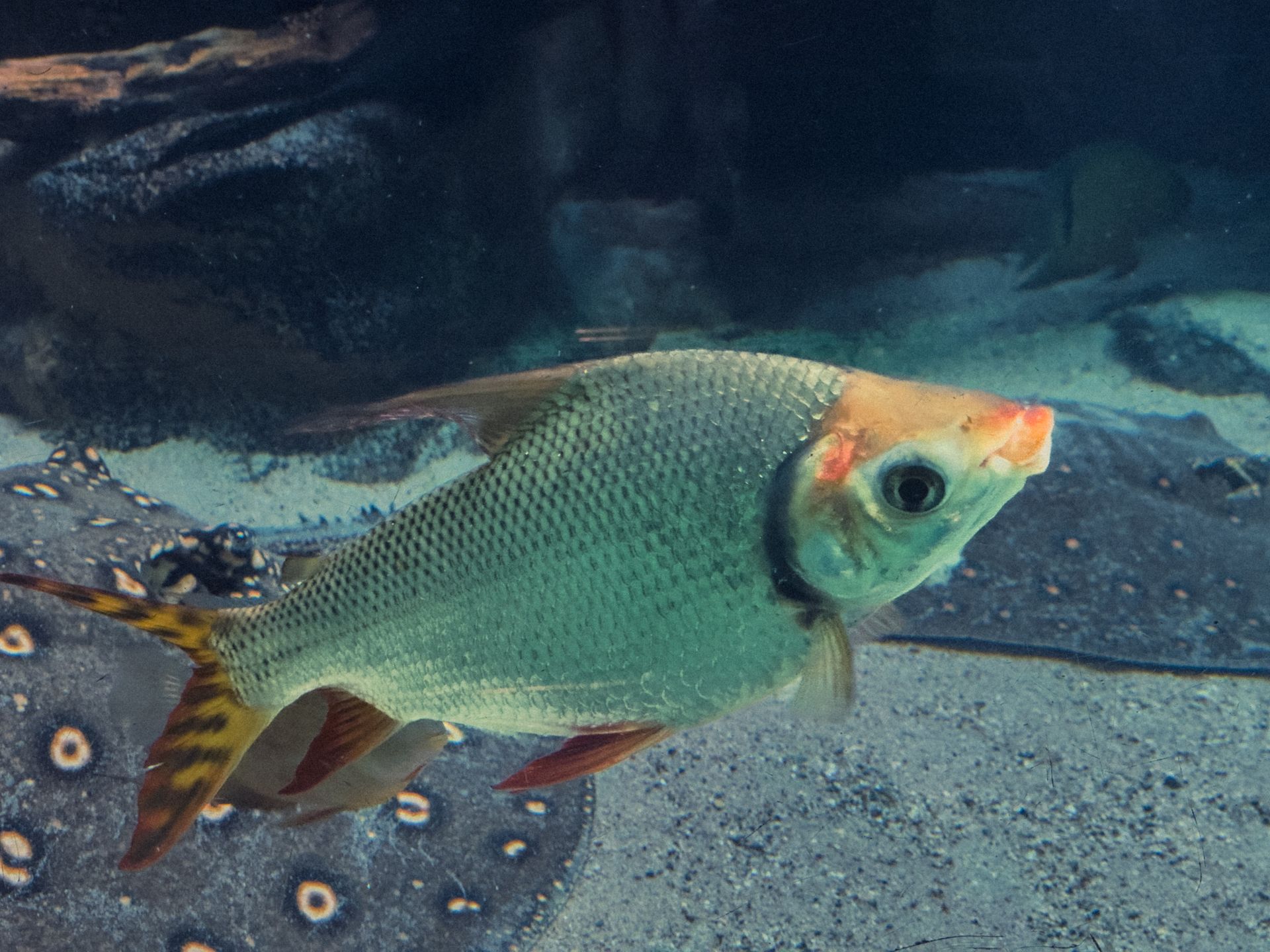
Biotodoma is a fascinating fish genus that belongs to the family Cichlidae. They are native to South America, specifically in the Amazon and Orinoco river basins.
Biotodoma species are generally small to medium-sized, with adults typically reaching a length of 10-15 centimeters. Some species can grow up to 18 centimeters in length.
In the wild, Biotodoma fish inhabit shallow, slow-moving waters with dense vegetation, such as aquatic plants and submerged logs. This habitat provides them with the necessary protection and food sources.
Their diet consists mainly of small invertebrates, such as crustaceans and insects, which they catch using their sharp teeth and powerful jaws.
Classification
Biotodoma is a genus of cichlid fish found in the Amazon and Orinoco river basins.
These fish are relatively small, typically growing to a maximum length of about 4 inches.
Some species of Biotodoma can be quite colorful, with vibrant shades of blue and red.
Biotodoma are generally found in shallow, slow-moving waters with plenty of vegetation.
In the wild, they feed on small invertebrates and plankton, as well as algae and other plant matter.
Biotodoma are generally peaceful fish and can be kept in community aquariums with other small, peaceful species.
They are relatively easy to care for and can thrive in a well-maintained aquarium with plenty of hiding places and visual interest.
Habitat and Environment
Biotodoma thrives in a variety of habitats, but generally prefers soft, slightly acidic water with a pH between 6.0 and 7.0.
The temperature range for Biotodoma is between 20-30°C, which is relatively warm.
Their natural habitats often feature seasonal variations in water depth, turbidity, and flow due to flooding, which can be challenging to replicate in a home aquarium.
To mimic their natural environment, a slightly warmer temperature, around 80°F (27°C), and a pH level between 6.0 and 7.0 are recommended.
Soft water is preferable, and subdued lighting can help encourage breeding.
A few key factors to consider when creating a suitable environment for Biotodoma include:
- Water Conditions: Maintain a slightly warmer temperature, around 80°F (27°C), and a pH level between 6.0 and 7.0.
- Tank Decor: Provide plenty of hiding places and potential spawning sites using flat rocks, broad leaves, or smooth driftwood.
- Lighting: Subdued lighting can help mimic their natural breeding environment and encourage spawning.
Behavior and Care
Biotodoma species are surprisingly peaceful and won't predate on fish larger than a few mm in length.
This makes them a great choice for community tanks, as they can coexist with many other peaceful species.
Most peaceful species enjoying similar environmental conditions can be tankmates, but it's best to avoid territorial or aggressive fish.
Biotodoma species are loosely gregarious and tend to live in groups, unless spawning, in which case juveniles display a strong social response when threatened.
A group of 5-8 individuals should be the minimum purchase, as they will form a noticeable dominance hierarchy that adds behavioural interest for the observer.
In smaller numbers, weaker specimens can become the target of excessive abuse by dominant individuals, or the group may fail to settle and behave nervously.
Physical Characteristics
Biotodoma species can be identified by their distinctive markings, which extend from beneath the anterior portion of the eye to the tip of the snout.

These markings are made up of laterally-orientated, iridescent blue stripes or blotches.
Males tend to have unbroken stripes, while females have variable blotches.
The reason for this difference is still unclear, but it may be related to the time it takes for Biotodoma species to mature.
Both males and females can possess stripes on the head, but males tend to grow larger and develop longer filamentous extensions on the dorsal and caudal fins.
Males are also deeper-bodied than females.
Reproduction and Breeding
Reproduction and Breeding of Biotodoma is a challenging task due to the scarcity of information. The species may never have been bred in aquaria.
To encourage breeding, it's essential to replicate their natural habitat in the tank. A slightly warmer temperature, around 80°F (27°C), and a pH level between 6.0 and 7.0, with soft water, will help mimic their natural environment.
Soft water is preferable for breeding Biotodoma, as it's a key factor in their natural habitat. Providing plenty of hiding places and potential spawning sites using flat rocks, broad leaves, or smooth driftwood will also encourage breeding.
Subdued lighting can help mimic their natural breeding environment and encourage spawning.
Etymology and Facts
The Biotodoma genus has an interesting origin story. The name "Biotodoma" comes from the Greek words "βίοτος" (bios) meaning "living" and "δῶμα" (doma) meaning "house", which refers to the unique behavior of some adult Biotodoma fish carrying their young in their gills.
However, this behavior is not applicable to the species currently in the genus, so it's more of a historical nod to their ancestors.
Here are some key facts about Biotodoma fish:
Overall, Biotodoma fish are relatively small and long-lived, making them a great addition to a well-maintained aquarium.
Etymology
The word Biotodoma comes from the Greek 'βίοτος', meaning 'living', and 'δῶμα', meaning 'house'. This is a fitting name, considering the unique behavior of some species in the genus.
The name Biotodoma is a direct reference to the adults carrying fry in their gills, a behavior that's not applicable to species in the genus today.
Cupid Cichlid Facts
The Cupid Cichlid is a fascinating fish with some unique characteristics. It's scientifically known as Biotodoma cupido.
This fish hails from the Amazon River Basin in South America, where it thrives in the wild. Its origin is a key factor in determining the best environment to keep it in captivity.
In terms of size, the Cupid Cichlid grows up to 4 inches (10 cm) in length, making it a relatively small but attractive addition to any aquarium. Its adult size is a great consideration when choosing a tank.
With proper care, the Cupid Cichlid can live for 5-8 years, which is a significant commitment from any aquarium owner. Its lifespan is a crucial factor in planning for the long-term care of this fish.
To provide a suitable environment, a minimum tank size of 30 gallons is recommended. This will give the Cupid Cichlid ample space to swim and thrive.
The ideal water conditions for the Cupid Cichlid are between 75°F – 82°F (24°C – 28°C) and a pH range of 6.0-7.5. These specific water conditions are essential for the health and well-being of the fish.
The Cupid Cichlid is an omnivorous fish that requires a varied diet of high-quality flakes or pellets, as well as live or frozen foods. A balanced diet is crucial for maintaining the health and vitality of this fish.
Additional reading: Electric Yellow Cichlid
In terms of temperament, the Cupid Cichlid is generally a peaceful fish that gets along well with other non-aggressive fish of similar size. This makes it a great addition to a community aquarium.
The Cupid Cichlid is a substrate spawner, meaning it lays its eggs on the substrate, and exhibits parental care. This unique breeding behavior is an interesting aspect of this fish's biology.
If you're considering keeping a Cupid Cichlid, it's essential to choose compatible tankmates that are non-aggressive and of similar size. This will help create a harmonious and thriving aquarium environment.
Synopsis
Biotodoma cupido, a substrate-brooding cichlid, has some remarkable parental behavior. They live in a creek in Guyana where the freshwaters are affected by semi-diurnal tides.
Their parents display intense aggression toward brood predators during late ebb and early flood tides. This is when their off-spring are still nest dependent.
At low tide, the parents enter a state of somnolence and brood predators vanish. This happens when the concentration of dissolved oxygen decreases to about 4 mg/l and that of free carbon dioxide increases to 28 mg/l.
Early flood tide brings a dramatic reversal of these conditions and an associated renewal of aggressive and predatory activity.
Frequently Asked Questions
How big do Biotodoma wavrini get?
Biotodoma wavrini typically reaches a maximum size of 8-12 cm, making it a small to medium-sized cichlid species. They usually grow to around 8 cm in total length, including their caudal fin.
Featured Images: pexels.com


