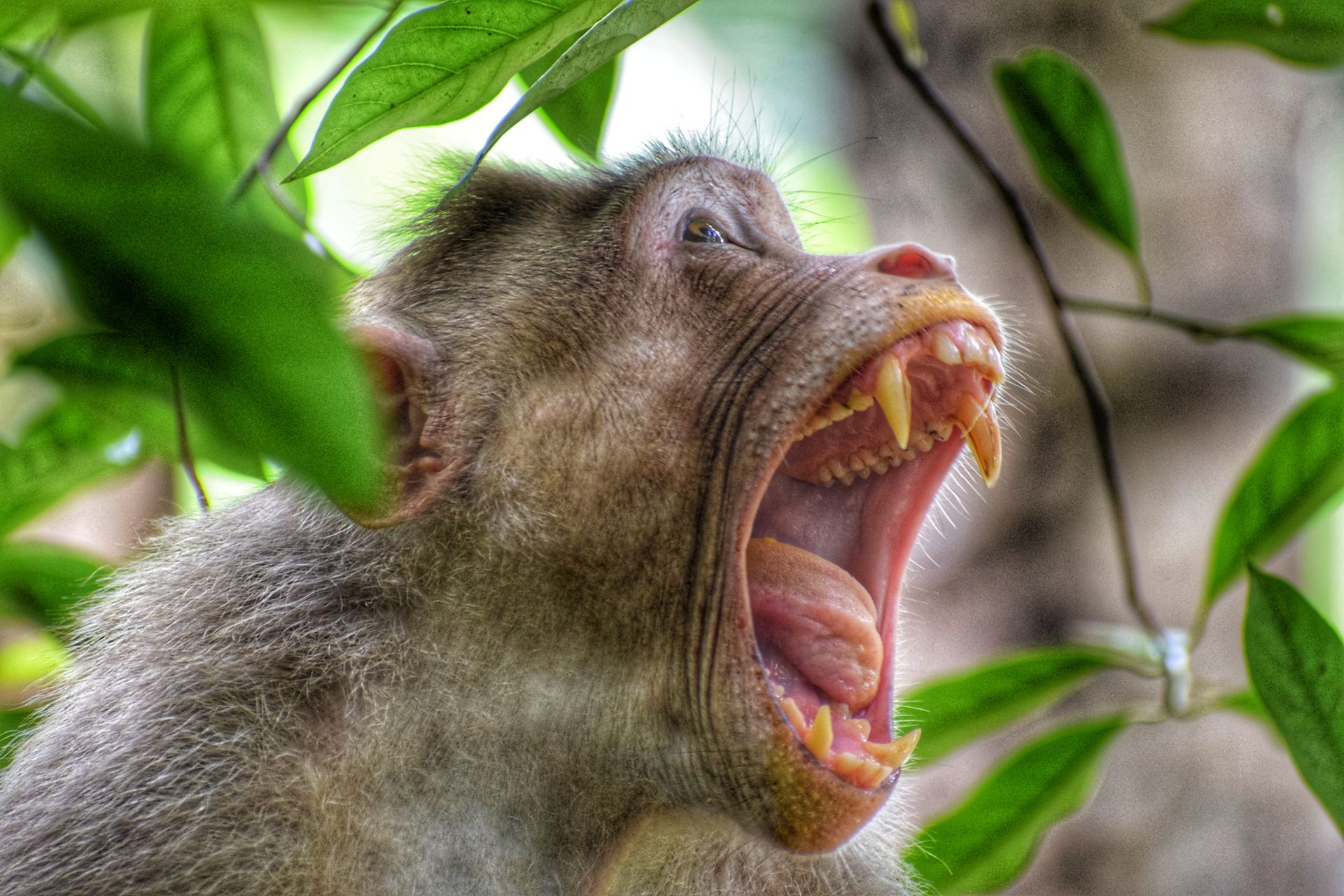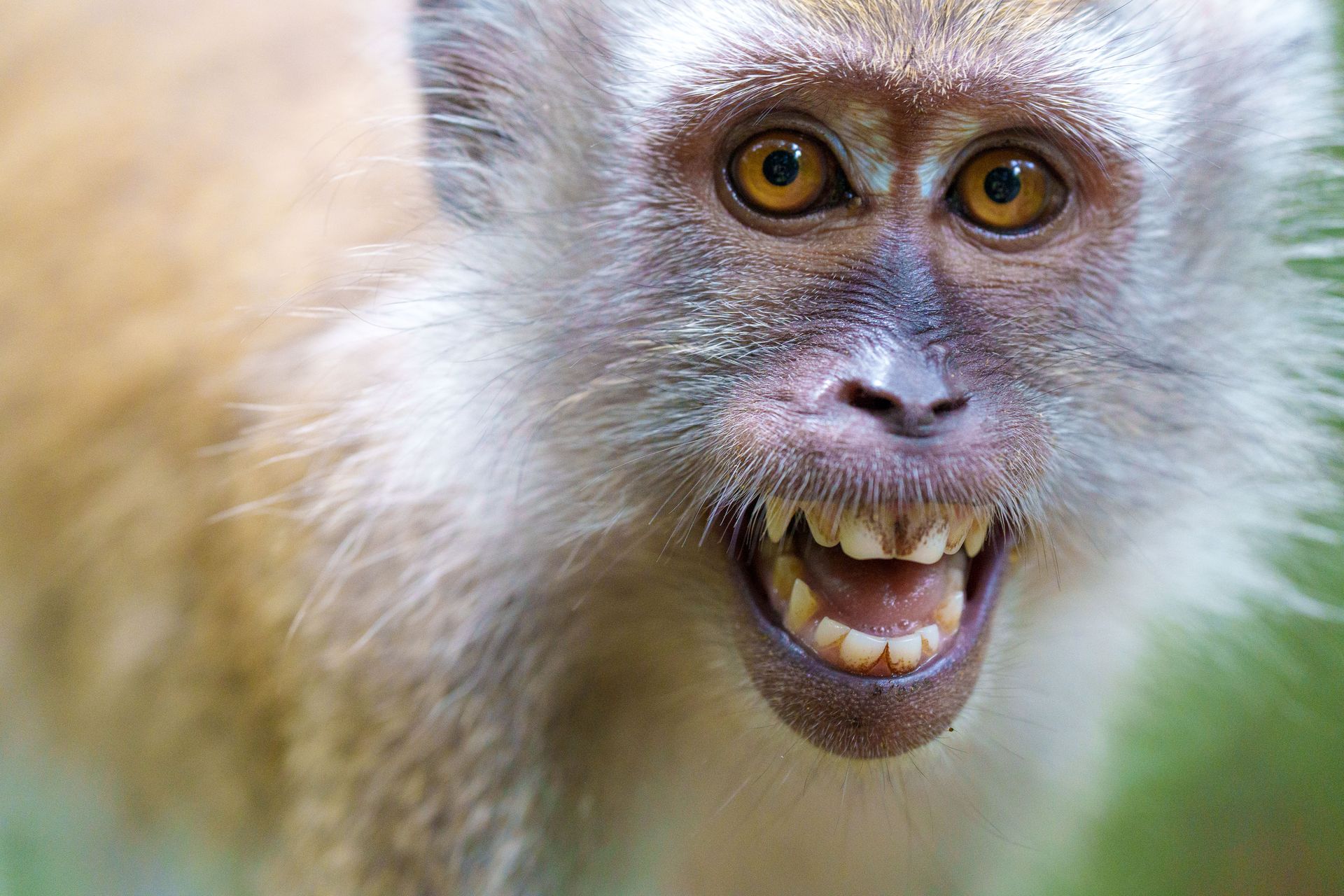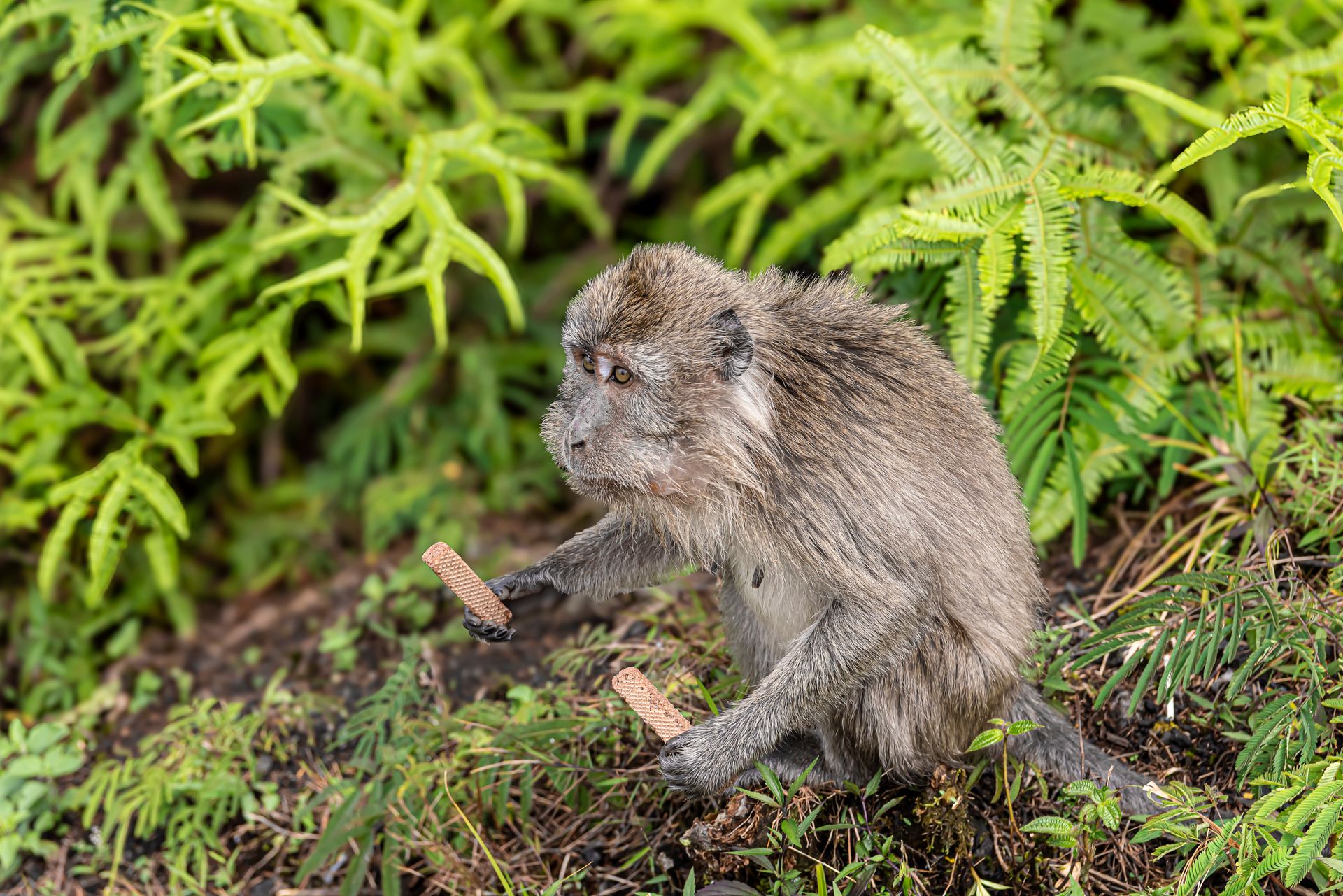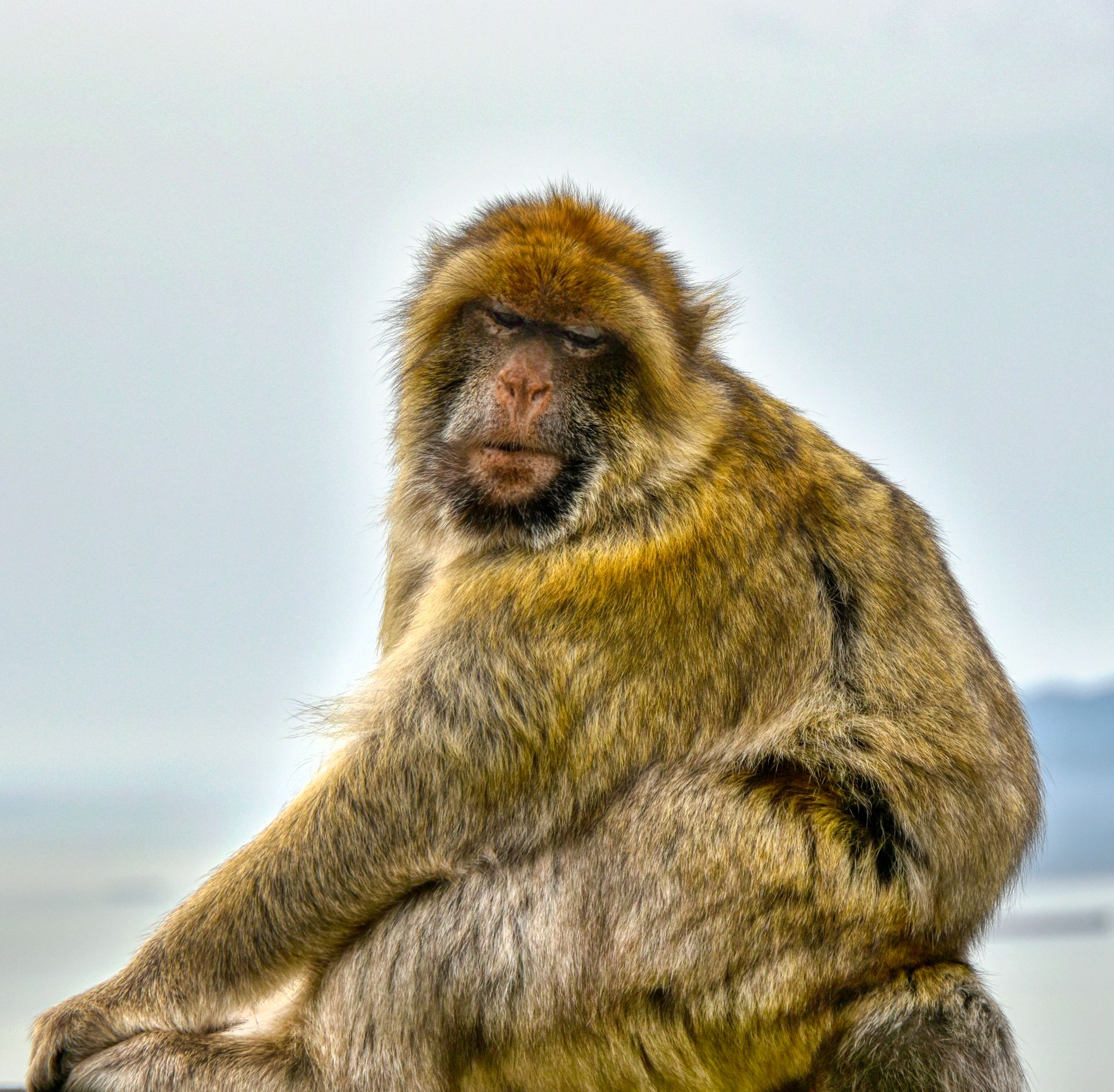
The Barbary macaques in Gibraltar are a unique and fascinating species. They are found only in the Upper Rock Nature Reserve, which is a small area of land on the Rock of Gibraltar.
These macaques are known to be highly intelligent and resourceful, often finding innovative ways to obtain food and water. They have been observed using tools to extract food from hard-to-reach places.
One of the most interesting aspects of the Barbary macaques in Gibraltar is their social behavior. They live in large groups, with a strict hierarchy and a complex communication system.
The macaques are also known to be quite bold and curious, often approaching humans in search of food or attention. This has led to some conflicts between humans and macaques, as the animals can become aggressive if they feel threatened or if they're not given food.
Origin and Habitat
The Barbary macaques of Gibraltar have a fascinating origin story. The name Barbary refers to the Berber People of North Africa, who have had ties with the animals surrounding their region since the beginning of history.
The macaque population on Gibraltar's Rock dates back long before the British captured the territory in 1704. In fact, records suggest they were present on the Rock even before the reconquest of Gibraltar from the Muslims.
These monkeys have been living on the Rock for centuries, and their presence has been documented by Spanish historians. Alonso Hernández del Portillo, the first chronicler of Gibraltar, wrote about the monkeys in the early 17th century, describing them as "the true owners" of the Rock.
Despite the many changes in ownership and human activity on the Rock, the macaques have managed to thrive. Ignacio López de Ayala, a Spanish historian, noted in 1782 that the monkeys had survived even the most intense bombardments and human presence.
The origin of the Gibraltar macaques is still a topic of debate, but it's clear that they have strong ties to North Africa. In fact, all extant Gibraltarian mtDNA haplotypes were also found in North Africa.
The Macaca sylvanus species, to which the Barbary macaques belong, is listed as endangered by the IUCN Red List. Unfortunately, their population is declining, with about 75% of the total population found in the Middle Atlas Mountains.
The species has a long history of inhabiting the Mediterranean region and Europe, with fossil evidence showing they once lived in a greater area around the Mediterranean coasts and Europe.
Behavior and Distribution
Barbary macaques are found in several regions, but their numbers are dwindling.
In Algeria, they've disappeared from many areas, leaving behind only 7 small subpopulations that are isolated by distances of 50-200 km.
The largest and most important population is found in Morocco's Middle Atlas region, but unfortunately, it's not protected as a National Park, putting it at risk.
Apes' Den
The Barbary macaques of Gibraltar are the only wild monkeys in Europe, and they're facing threats to their survival.
They're found on the Gibraltar Peninsula, a jagged piece of land controlled by the British since the 1700s.
These primates are clever and resourceful, learning quickly from humans and adapting to their environment.
One of the biggest challenges for the macaques is their dependence on human food, which is fueled by years of being illegally fed by visitors.
The monkeys know how to open car doors and refrigerators, and they're drawn to sweets in particular.
To curb this behavior, a management program brings food up to the peak and other feeding sites in and around the rock.
The program, led by Dr. Eric Shaw, includes tracking chips and tattoos for each monkey, as well as annual check-ups to monitor their health.
This effort has helped reduce conflict between humans and macaques, making it a win-win for both conservation and folklore.
The macaques are an important part of Gibraltar's identity and culture, and conservation efforts must get creative to protect them.
Distribution of Wild
In Algeria, Barbary macaques have disappeared from several regions in relatively recent times.
Only 7 small subpopulations remain, and they're scattered across the country, separated by distances of 50-200 km.
The Moroccan Middle Atlas population is the largest and most important in terms of conservation.
Unfortunately, it's not protected as a National Park, putting this last remaining stronghold of the species at risk.
The Barbary macaque is listed as vulnerable in the IUCN Red List.
The Barbary Macaque
The Barbary macaque population on Gibraltar totals around 230 individuals, living in 6 groups. They range in size from 25 to 70 animals.
These intelligent primates receive a daily supply of fresh water and a variety of food, including vegetables, fruit, seeds, and natural resources like leaves, olives, roots, and flowers.
The Gibraltar Ornithological and Natural History Society (GONHS) manages the monkeys, with the Gibraltar Veterinary Clinic (GVC) providing expert care.
Regular health checks are conducted by catching the monkeys, which also allows for measurements and identification through tattoos and microchips.
Each monkey has a unique tattoo number and microchip, but distinctive marks, scars, or spots can also be used to identify them.
Photographs and individual characteristics are catalogued by GONHS, in collaboration with other institutions like the University of Vienna and the German Primate Centre.
Frequently Asked Questions
What to do if you get bitten by a monkey in Gibraltar?
If you get bitten by a monkey in Gibraltar, clean the wound immediately and seek medical attention at A&E or call 111 for advice and treatment.
What is the myth about monkeys in Gibraltar?
A popular myth in Gibraltar suggests that the British will leave the territory when the Barbary apes, a group of wild monkeys, depart the Rock. This legend has been a topic of interest since the 20th century, with concerns raised when the ape population dwindled to just ten in 1913.
Are Gibraltar monkeys friendly?
Gibraltar monkeys are generally used to human interaction, but they can still bite if frightened or annoyed. Approach with caution and respect their wild nature.
Are Barbary macaques aggressive?
Barbary macaques exhibit both reactive and proactive forms of aggression, similar to those found in humans. Research suggests a shared evolutionary history of aggression types between these primates and humans.
Featured Images: pexels.com