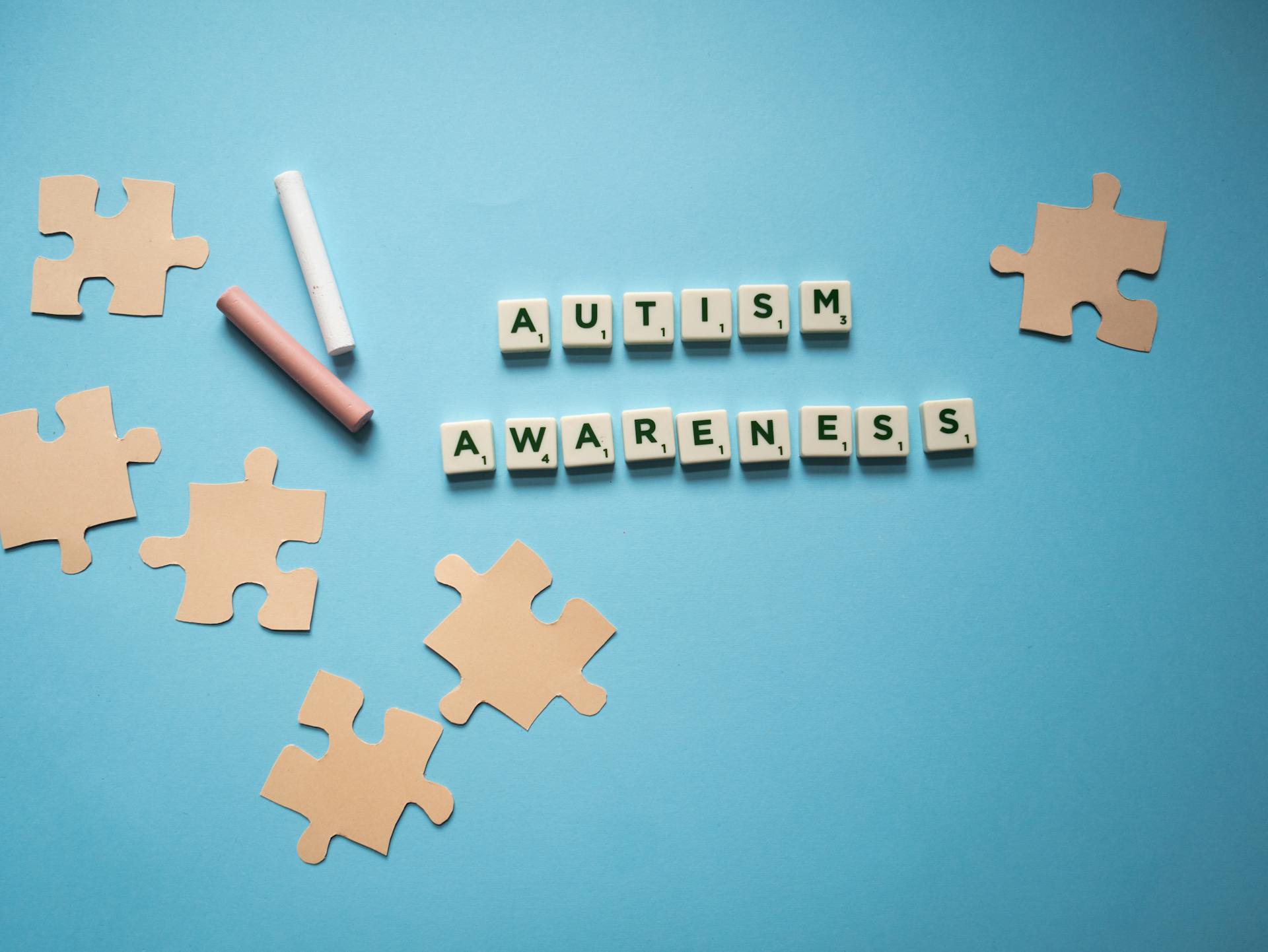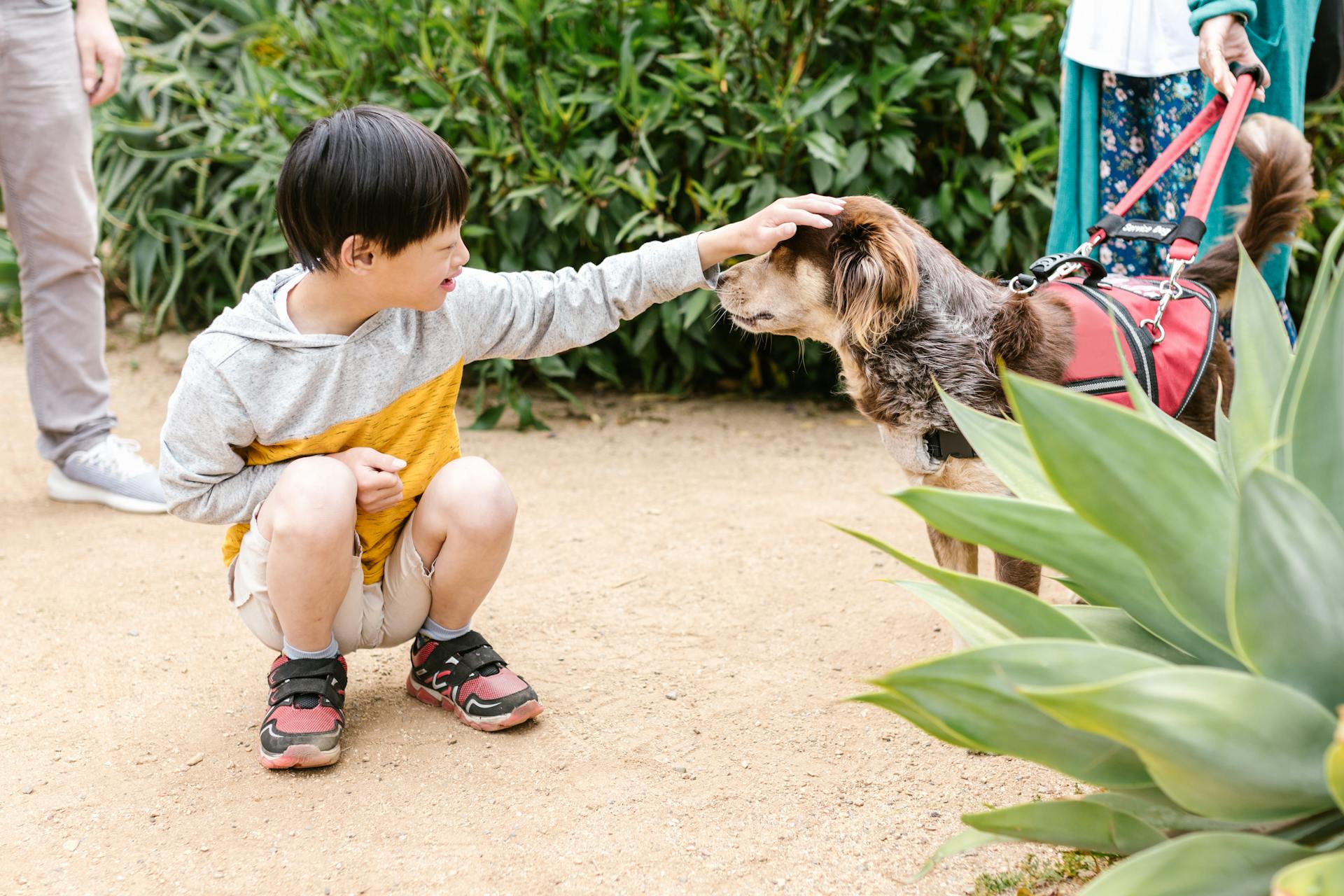
Autism service dogs are specially trained to assist individuals with autism spectrum disorder (ASD). They can be a game-changer for people with autism, providing a sense of security and independence.
These dogs are trained to recognize and respond to their handler's unique needs, such as alerting them to potential meltdowns or helping them navigate crowded spaces.
Their training involves socialization, obedience, and specific tasks tailored to the individual's needs. For example, some autism service dogs are trained to interrupt repetitive behaviors or provide physical support during overwhelming situations.
By having an autism service dog by their side, individuals with autism can feel more confident and in control of their daily lives.
Training and Tasks
Autism service dogs undergo specialized training to perform a range of tasks that help individuals with autism navigate daily life with greater ease and confidence.
These tasks are tailored to the specific needs of each individual, taking into account their unique requirements and the dog's personality. Understanding the dog's temperament and natural instincts is crucial to ensure they are the right fit for autism support training.
Autism service dogs are trained to perform tasks such as sensory overload management, interrupting repetitive behaviors, and alerting to dangerous situations. They are also trained to provide emotional support and assistance during transitions and challenging situations.
Here are some of the key tasks performed by autism service dogs:
Autism service dogs are trained to perform these tasks with precision and care, making a profound impact on the lives of individuals with autism.
Benefits Provided
Having an autism service dog can be a game-changer for individuals with autism and their families. These incredible animals provide a wide range of benefits that can significantly improve daily life.
Autism service dogs are trained to assist individuals with autism with activities of daily living, increasing safety and reducing stress levels. They can also provide emotional support, comfort, and companionship, reducing anxiety and stress.
Studies have shown that children with autism who have a family pet tend to have greater social skills, and playing with live pets temporarily improves their social behaviors more than playing with toys. Autism service dogs can offer a similar benefit, improving social skills and social interaction.
Some of the key benefits of autism service dogs include:
- Reducing anxiety and stress levels
- Providing emotional support and comfort
- Improving social skills and social interaction
- Increasing safety and independence
- Assisting with daily living activities
These highly trained dogs can also assist with tasks related to the disability, such as retrieving items, providing deep pressure therapy, and promoting freedom of movement. By providing emotional support and enhancing social skills, autism service dogs have a profound impact on the lives of individuals with autism.
Understanding
Autism service dogs are specially trained to support individuals with autism spectrum disorder (ASD). They provide a vital role in helping individuals navigate the challenges they may face.
These dogs are trained to assist individuals with autism in various ways, including providing sensory support, behavior disruption intervention, safety assistance, social interaction enhancement, and promoting independence.
Autism service dogs can help individuals manage sensory overload by providing comfort and assistance during overwhelming situations. They can also offer sensory anchoring and grounding techniques, helping individuals regain focus and reduce anxiety.
Their role goes beyond just being a furry companion, as they are highly skilled canines capable of performing a wide range of tasks that address specific needs of individuals with autism.
Individuals with autism can benefit from having an autism service dog, but to obtain one, they must go through a thorough application and evaluation process.
Curious to learn more? Check out: Are Emotional Support Dogs Service Dogs
Practical Considerations
Autism service dogs require regular training and socialization to help them develop the skills they need to assist individuals with autism.
Their training typically begins at a young age, around 6-12 months, and can last up to 2 years.
These dogs are taught to recognize and respond to specific cues, such as alerting their owner to an impending seizure or helping them navigate through crowded areas.
Their handlers also need to learn how to care for and manage their dogs, including regular grooming, exercise, and veterinary check-ups.
Take a look at this: Do Service Dogs Need to Be Registered
Facilitating Transitions
Autism service dogs are trained to assist with transitions, providing support and reassurance during times of change.
Individuals with autism often struggle with transitioning from one activity or environment to another, but these dogs can help ease anxiety and provide a sense of stability.
The presence of an autism service dog can also help individuals navigate social situations and unfamiliar environments more confidently.
These dogs can act as a bridge, facilitating communication and social engagement with others by providing a sense of security and companionship.
You might enjoy: Financial Help for Service Dogs
Autism service dogs can help individuals feel more at ease and empowered to participate in various social interactions.
By promoting daily living skills and facilitating transitions, autism service dogs play a crucial role in fostering independence for individuals with autism.
The use of an autism service dog should be part of a comprehensive treatment plan tailored to the individual's specific needs, not a substitute for other interventions and therapies.
Daily Living Skills
Autism service dogs can be trained to assist individuals with various activities of daily living, such as getting dressed, brushing teeth, and preparing simple meals.
These dogs provide physical support and guidance, empowering individuals with autism to become more self-sufficient in their day-to-day activities.
Individuals with autism often struggle with organization and completing tasks independently, but the presence of an autism service dog can have a calming effect, reducing anxiety and facilitating a more structured routine.
By assisting with daily tasks, autism service dogs help individuals with autism develop necessary life skills, promoting independence and enhancing their overall quality of life.
Autism service dogs can serve as a constant companion and motivator, helping individuals stay focused and on track, especially during transitions from one activity to another.
Their assistance and support can greatly benefit individuals with autism, making it easier for them to navigate social situations and unfamiliar environments more confidently.
Accessibility and Costs
Obtaining an autism service dog can be a significant investment, with costs ranging from $12,000 to $30,000 on average.
The cost can vary depending on factors such as the organization providing the dog, the extent of training required, and other associated expenses.
Routine necessities like food and grooming are extra expenses to consider.
Some organizations offer financial assistance through grants or fundraisers to help individuals with autism cover the costs of obtaining a service dog.
Local or state facilities may also provide support in the form of grants or financial aid.
It's essential to research and explore these options in your specific area to identify potential sources of financial assistance.
For more insights, see: Service Dogs for People with Autism

Insurance companies may provide coverage for the cost of an autism service dog, so it's worth checking with your provider to understand available options.
If obtaining an autism service dog proves to be financially challenging, an emotional support animal (ESA) may be a viable alternative.
ESAs require a doctor's letter declaring the need for one, which offers legal protection to bring the animal into various settings without having to prove the disability.
Understanding the accessibility and costs associated with obtaining an autism service dog is crucial for individuals and families considering this option.
Suggestion: Service Animal
Best Option Selection
Choosing the right autism service dog is a personal decision that depends on the individual's needs and circumstances. It's essential to consider the tasks and assistance required, as an autism service dog can provide targeted support tailored to the individual's needs.
If the primary need is emotional support and companionship, an emotional support animal may be a viable option, offering comfort and a calming effect.
Recommended read: Emotional Service Dogs
Autism service dogs are protected under the Americans with Disabilities Act (ADA) and have public access rights, while emotional support animals are protected under the Fair Housing Act (FHA) and the Air Carrier Access Act (ACAA).
Autism service dogs require specialized training to perform specific tasks, which can take significant time and financial investment. Emotional support animals, on the other hand, do not require specific training, but they should be well-behaved and able to handle different environments.
Here are some key differences between autism service dogs and emotional support animals:
Ultimately, the choice between an autism service dog and an emotional support animal depends on the individual's specific needs, preferences, and circumstances.
Frequently Asked Questions
Can dogs sense when a child has autism?
There is currently no scientific evidence to support the claim that dogs can sense autism in children. However, research suggests that dogs may be able to adapt to and interact with individuals with autism, but more studies are needed to fully understand this phenomenon.
Can an autistic adult have a service dog?
Yes, autistic adults can benefit from having a service dog, which can provide emotional support, assistance, and independence. For more information on service dogs and how to get one, visit Autism Speaks' resource list.
What is the best dog for a service dog with autism?
For a service dog with autism, breeds like Golden Retrievers, Labrador Retrievers, and Poodles are often recommended due to their calm and trainable nature, making them well-suited for providing emotional support and sensory comfort. Consider these breeds for a loyal and supportive companion.
Featured Images: pexels.com