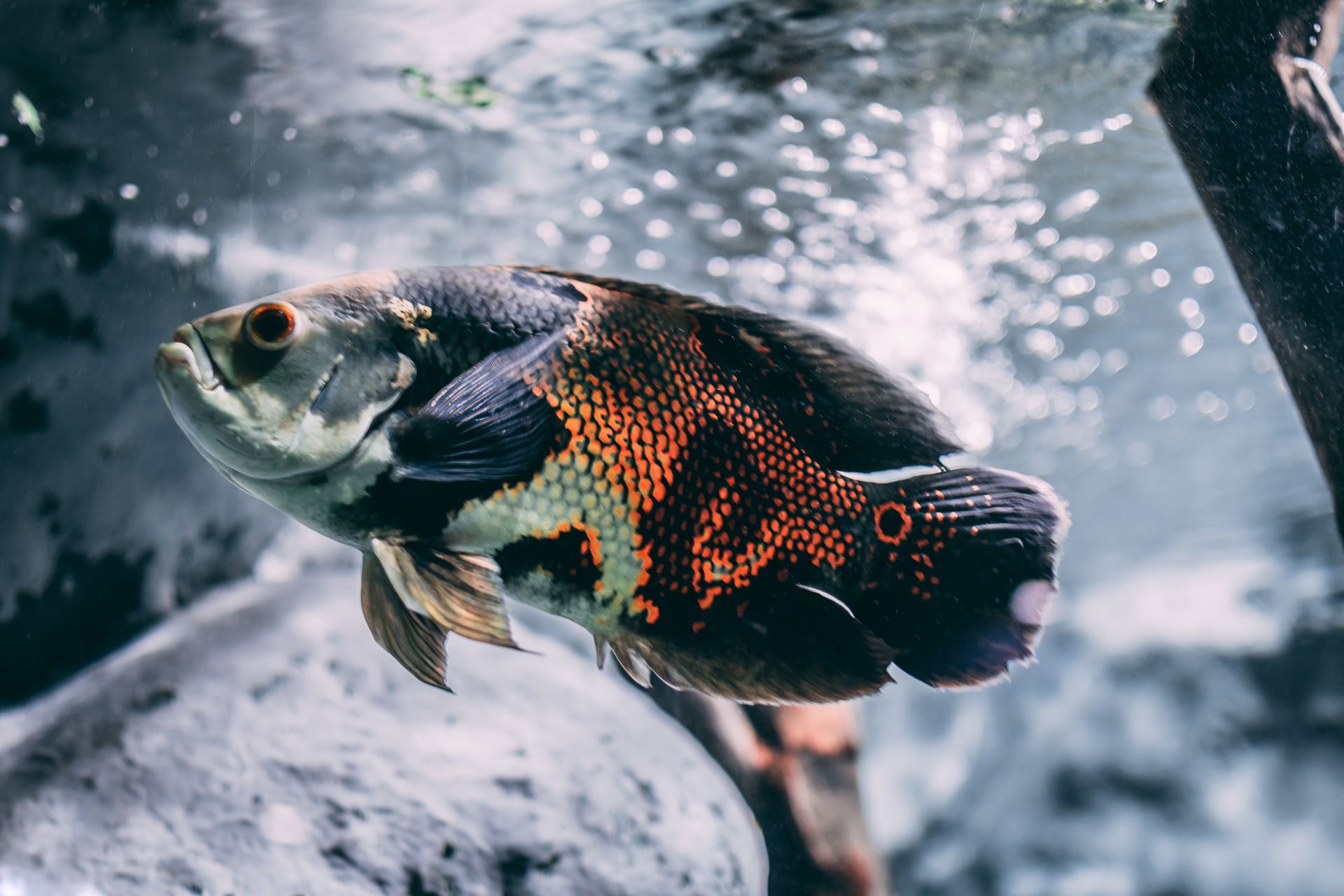
The Astronotus species is a fascinating group of cichlids that can make great pets for aquarists of all levels. They are native to the warm, freshwater lakes and rivers of South America.
One of the most distinctive features of Astronotus is their size - they can grow up to 18 inches in length. Their large size requires a spacious tank with plenty of swimming room.
Astronotus are carnivores and need a diet rich in protein to thrive. They are opportunistic feeders and will eat a wide variety of foods, from meaty commercial pellets to live or frozen brine shrimp.
To keep your Astronotus happy and healthy, it's essential to provide them with regular water changes and a balanced diet.
Classification
The Astronotus genus is comprised of three recognized species: Astronotus crassipinnis, Astronotus ocellatus, and Astronotus mikoljii. Astronotus ocellatus, commonly known as the Oscar, is found in the Amazon River basin and is known for its spotted pattern.
The genus Astronotus is derived from the Greek words "astra" meaning ray and "noton" meaning back. This refers to the fish's ray-like fins and its back.
Here is a list of the three recognized species in the Astronotus genus:
Taxonomy
The oscar's taxonomy is a fascinating topic. The oscar was formally described in 1831 as Lobotes ocellatus by Jean Louis Rodolphe Agassiz.
However, this original placement was based on an error in the locality information, as the oscar is actually a freshwater fish found in South America. The genus Lobotes is entirely marine, and the fish in this genus are known as tripletails (Lobotidae).
Astronotus, the current taxonomic placement of the oscar, is derived from the Greek words “astra” = ray and “noton” = back. The species name ocellatus is Latin for spotted, referring to the spotted pattern on the body of this fish.
Astronotus has long been considered a monotypic genus, but recent studies indicate that a number of other species of “oscar” abound in South America. The genus currently includes three recognized species: Astronotus crassipinnis, Astronotus ocellatus, and Astronotus mikoljii.

Here are the recognized species of Astronotus, along with their common names and distributions:
Geographical Distribution
The oscar is a freshwater species, found in the Rio Ucayali drainage and upper Amazon river of Peru and Brazil.
Many early species descriptions were based on specimens shipped to zoologists from far-flung locales, often with little specific locality data, which can lead to errors like the one committed by Agassiz.
A non-native population of oscars is well established in South Florida, USA.
The type locality for Agassiz' specimen was published as "Atlantic Ocean", but this was an error due to the lack of specific locality data at the time.
Origin
Oscars are native to the slow-moving rivers and streams of the Amazon River basin in South America.
Their preferred habitat includes slow or still waters with heavy vegetation and plenty of submerged plants.
They can be found in countries such as Brazil, Colombia, Peru, and Venezuela.
In the wild, these fish are often found in areas with a muddy or sandy substrate where they can hunt for small fish, invertebrates, and plant matter.
Care and Description
Astronotus are relatively small fish, typically growing to a maximum length of 12 inches.
They have a robust body shape with a rounded belly and a pointed snout.
Breeding
Breeding Oscars can be a challenge primarily because of the difficulty in determining the sex of the fish and the need for a compatible pair. To encourage breeding, provide a spacious tank with a flat rock substrate, subdued lighting, and no tank mates.
Slowly raising the water temperature and performing large water changes can simulate the warm spring rains of their natural habitat, which often triggers spawning behavior. This can increase the chances of successful breeding.
During breeding, the pair will swim around each other, clean the breeding site, and lay up to 2,000 eggs. Fertilized eggs turn yellow-orange within 24 hours, while non-fertilized eggs remain white.
Inexperienced parents may eat their eggs or fry, but with practice, they will improve in caring for their young. If the parents eat the eggs or fry, consider removing them to a separate tank and simulating the fanning motion that the parents usually perform.
The eggs hatch within 3 days, and the fry become free-swimming after an additional 4 days.
Short Description

The Oscar fish is a large and highly intelligent cichlid known for its striking appearance and strong personality.
They come in various color variants, including Tiger Oscar, Red Oscar, Albino Oscar, and more.
Oscars are known for their interactive behavior, often recognizing their owners and even allowing gentle petting.
However, they require a spacious and well-maintained aquarium to thrive.
With a lifespan of up to 18 years, Oscars are a long-term commitment, offering aquarists a fascinating and dynamic aquarium inhabitant.
Frequently Asked Questions
What is the biggest Oscar fish?
The largest recorded Oscar fish weighed 3.5 pounds, caught in Florida. However, the maximum weight of an Oscar fish is still unknown.
Why is it called Oscar fish?
The Oscar fish is believed to be named after the scientific name "Astronotus" or the Tupi word "Acara", which refers to a type of larger cichlid. The origin of the name "Oscar" is still debated among experts, with multiple theories suggesting its possible connection to these sources.
Featured Images: pexels.com