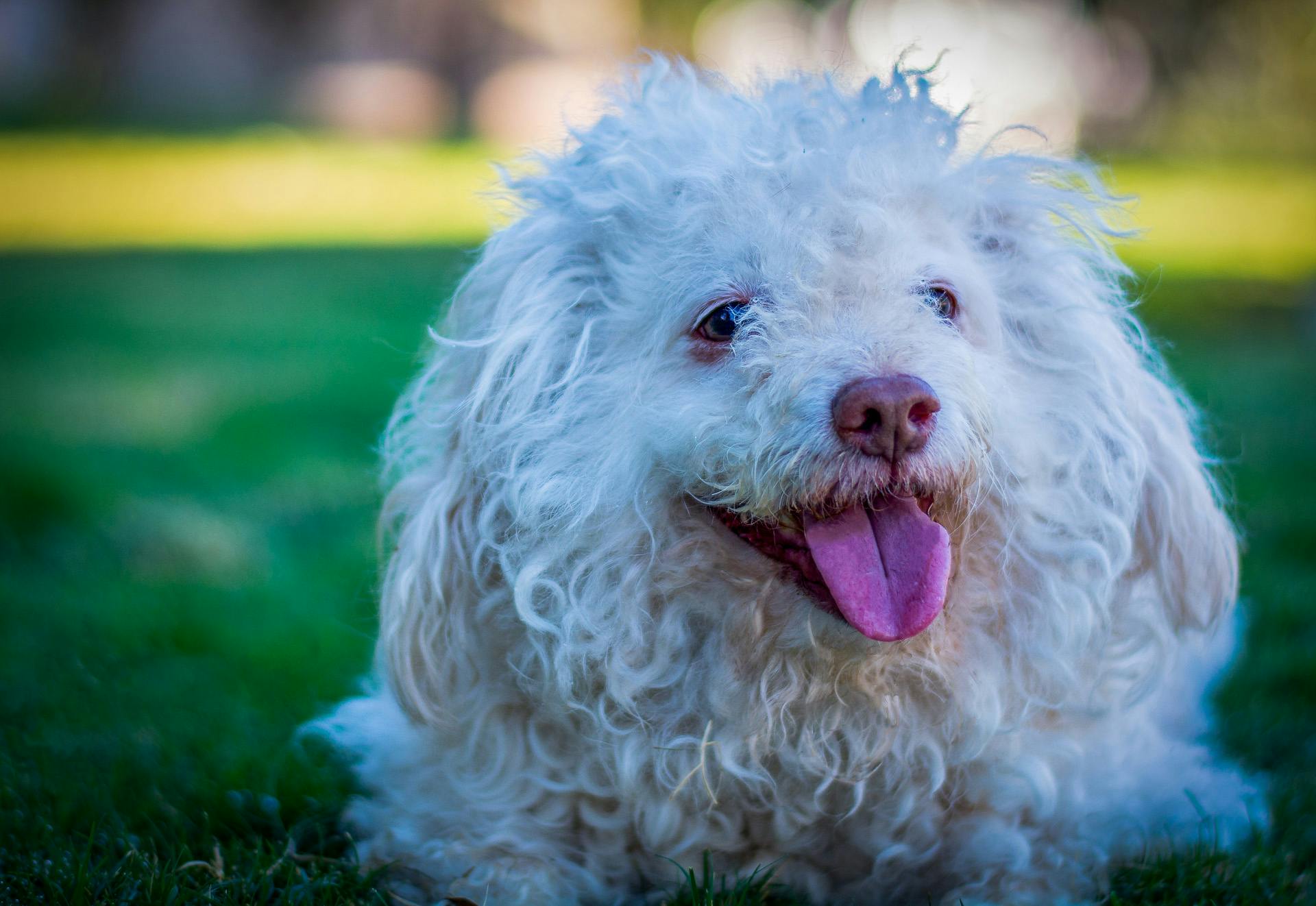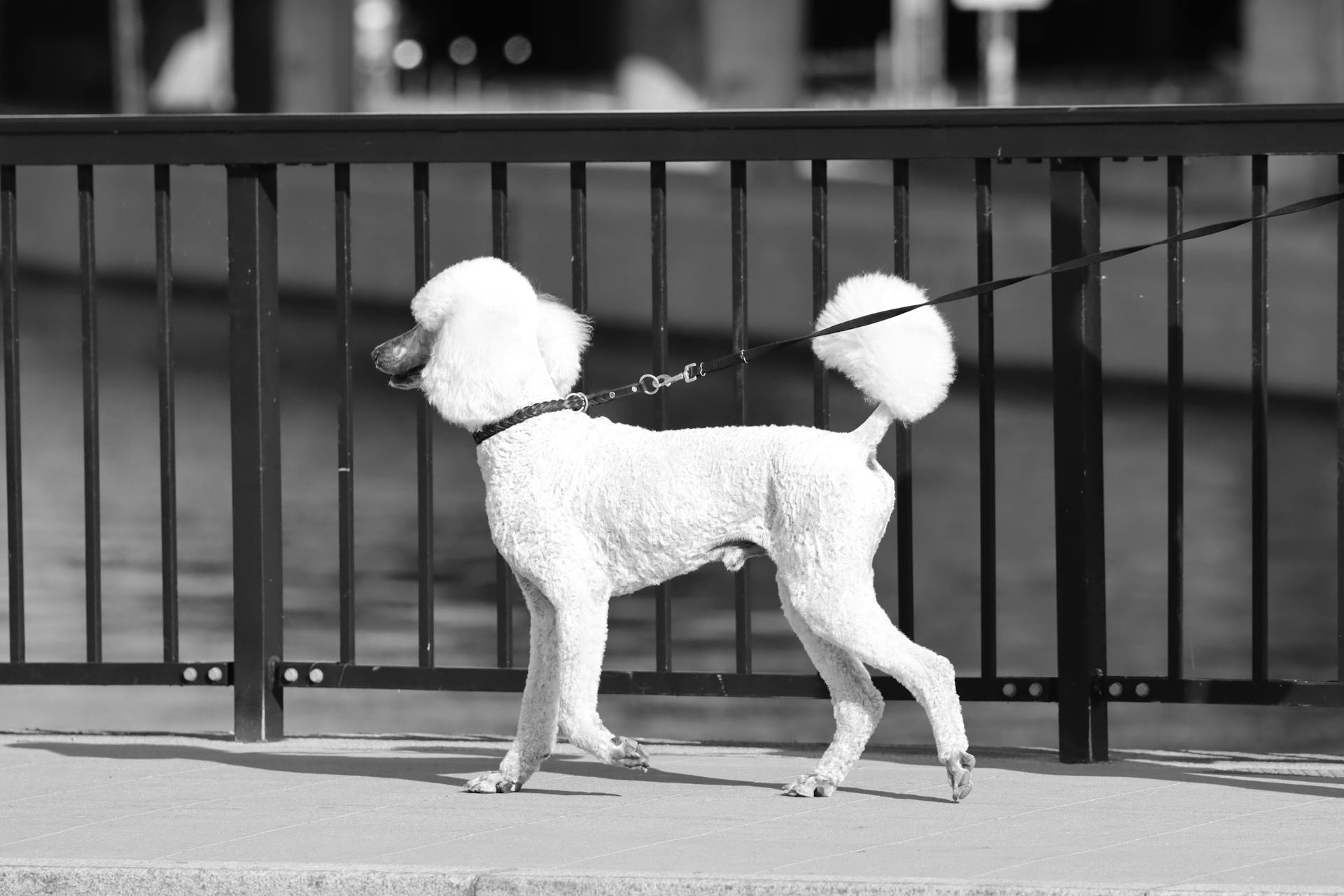
Toy Poodles are known for their intelligence, ranking 4th in Stanley Coren's book "The Intelligence of Dogs" among the top 10 smartest breeds. They're highly trainable and quick to pick up new commands.
Their intelligence is matched by their eagerness to please, which makes them highly responsive to positive reinforcement. With consistent training and socialization, Toy Poodles can thrive in a variety of living situations.
One key factor in a Toy Poodle's intelligence is their ability to learn and adapt quickly to new situations. This makes them well-suited for families with children or for owners who enjoy taking their dogs on adventures.
You might like: Are Beagle Dogs Smart
Temperament & Personality
Toy poodles are highly intelligent dogs that thrive on attention and mental stimulation. They're known to be whip smart, picking up new tricks quickly and loving to play with kids.
Their intelligence comes with a downside, however - they can become easily bored if not mentally stimulated and well exercised. This can lead to negative habits, such as acting out of spite to do the opposite of expectations.
Toy poodles are also prone to separation anxiety and don't cope well with being left alone for a long time. This can cause them to become passive aggressive and do things they know you don't like.
If you're considering bringing a toy poodle into your family, it's essential to remember that they're still dogs and should be allowed to be a dog. Let them walk and play, and avoid carrying them everywhere, as this can create unwanted behavior.
Here are some key personality traits to keep in mind when living with a toy poodle:
- Highly intelligent and eager to please
- Playful and self-confident when socialized at a young age
- Gentle with children and other pets, but require supervision
- Can be wary of strangers until they get to know them
- Prone to barking at visitors due to a strong territorial instinct
- Require regular exercise and mental stimulation to prevent boredom and negative habits
Overall, toy poodles are loyal and loving companions that thrive on attention and interaction. With proper training and care, they can make wonderful additions to any family.
History & Background
Toy poodles have a rich history that's often overlooked. They originated in Germany as water fowl retrievers.
Their German name, Pudel or Pudelin, literally means "splashing the water." This breed was bred for retrieving abilities, not for being fancy show dogs.
Toy poodles come from a lineage of retrievers that were bred to please their human companions. They were bred from smaller standard poodles, but they retained their instincts.
The American Kennel Club recognized the toy poodle as an official breed in 1887.
Training & Behavior
Toy Poodles are a breeze to train thanks to their intelligence and eagerness to please their owners. They thrive on having a job to do and will pick up new tricks quickly if training is kept fun and positive.
Consistency is key when training a Toy Poodle, so make sure to establish clear rules and boundaries from the start. Be prepared to reward their good behavior with praise and tasty treats, but don't overdo it or they might get spoiled.
Toy Poodles are naturally wary of strangers, so it's essential to socialize them with children and other animals from an early age to help them feel more at ease. With proper training and socialization, they can become loyal and loving members of your family unit.
Training & Exercise
Training your Poodle requires consistency and positive reinforcement. They respond well to training, especially when it's fun and engaging.
Toy Poodles, in particular, are eager to please and quick to learn new tricks. They thrive on having a job to do and will pick up new skills in no time.
Poodles need at least an hour of physical exercise every day, with two good walks as part of the routine. This will help burn off excess energy and prevent boredom.
Adult Poodles also need access to a secure, well-fenced garden where they can stretch their legs and go to the toilet. This will help them feel more relaxed and content.
Poodles are natural swimmers and love being in the water. In fact, they were originally bred as water retrievers, and their name comes from the German word "Pudeln", which means to splash.
Here are some fun activities to keep your Poodle's mind and body active:
- Hide and seek games that test their strong sense of smell and hunting instinct
- Tracking training with tasty treats
- Dog puzzles to challenge their brain power
- Agility and obedience training courses
- Games like Flyball, which involve teams of dogs collecting balls from a Flyball box
Remember, Poodles are intelligent and adaptable, but they can also be stubborn and aloof if not mentally stimulated and well-exercised.
In This Article
The Toy Poodle is one of the smartest dog breeds, making them a joy to train. They are known for their big, playful personalities that can fill up a room.
Their intelligence is a result of being bred down from the larger Standard Poodle.
Pet Parent Considerations
As a pet parent, you'll want to consider the unique needs of Toy Poodles. They require a lot of mental stimulation.
Toy Poodles are extremely intelligent and eager to please, making them easy to train. Treats and praise go a long way in keeping them engaged and motivated.
Their intelligence also means they need a lot of activities that challenge their minds, such as scent walks and puzzle toys. This will help prevent boredom and destructive behavior.
Toy Poodles are generally gentle with children and pets when socialized early in life. This makes them a great addition to families with kids or other pets.
Expand your knowledge: Do Toy Poodles Bark a Lot
Fun Activities
Toy poodles are highly intelligent dogs that thrive on mental and physical stimulation. Obedience training is an excellent way to challenge their minds and strengthen the bond between you and your furry friend.
One of the most fun activities for toy poodles is nose work or tracking. This activity allows them to use their keen sense of smell and problem-solving skills.
Enrichment puzzles are another great way to keep your toy poodle's mind active and engaged. These puzzles come in various shapes and sizes and can be filled with treats or kibble to keep your dog guessing.
Agility training is also an excellent option for toy poodles, providing them with a fun and physically demanding workout.
Poodles should be bathed every two to four weeks to keep their skin healthy and their curls looking their best.
Frequently Asked Questions
Do Poodles have a high IQ?
Poodles are considered one of the most intelligent dog breeds, ranking high in trainability and cognitive abilities. Their high IQ can sometimes make them stubborn and prone to boredom if not provided with engaging activities.
Featured Images: pexels.com