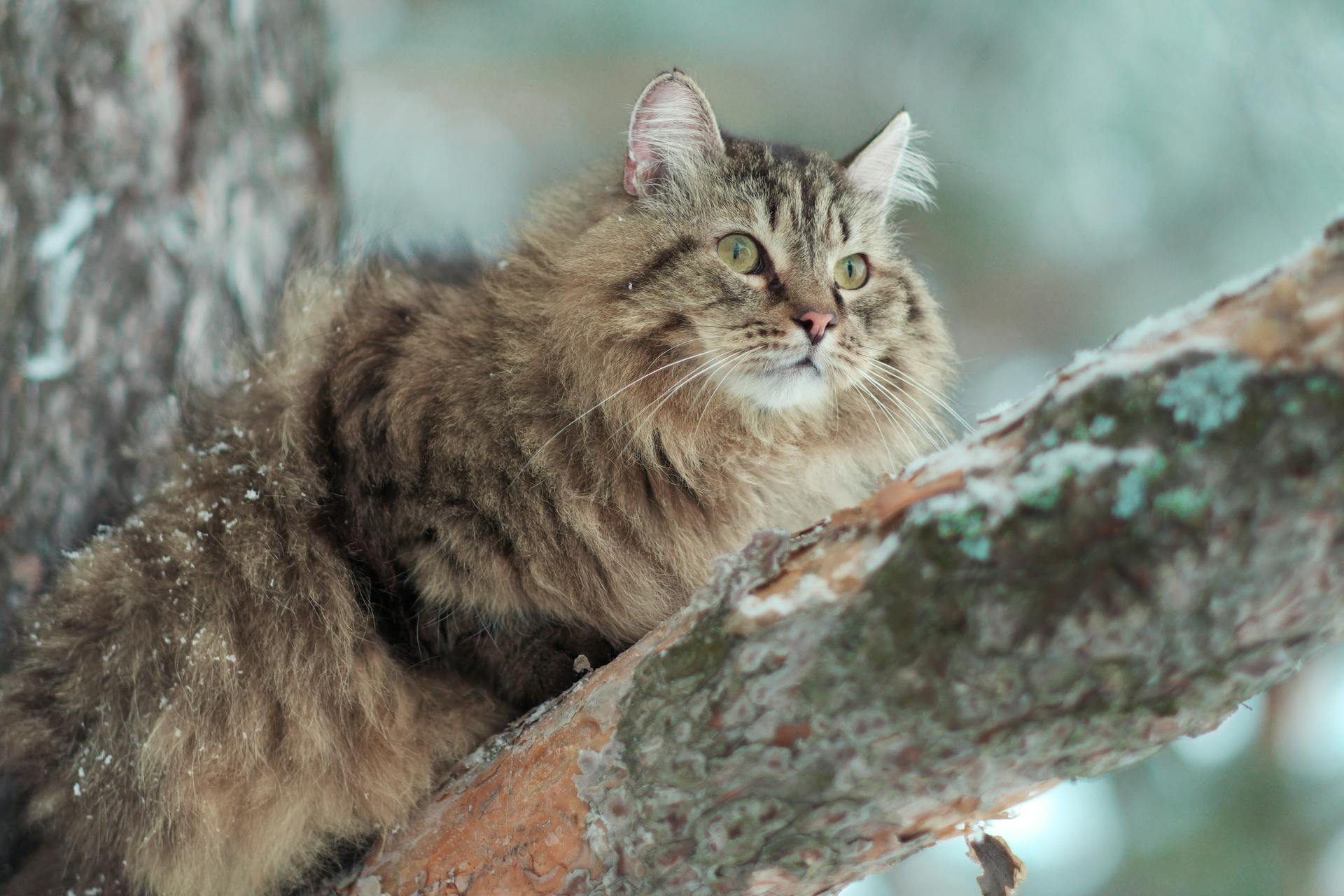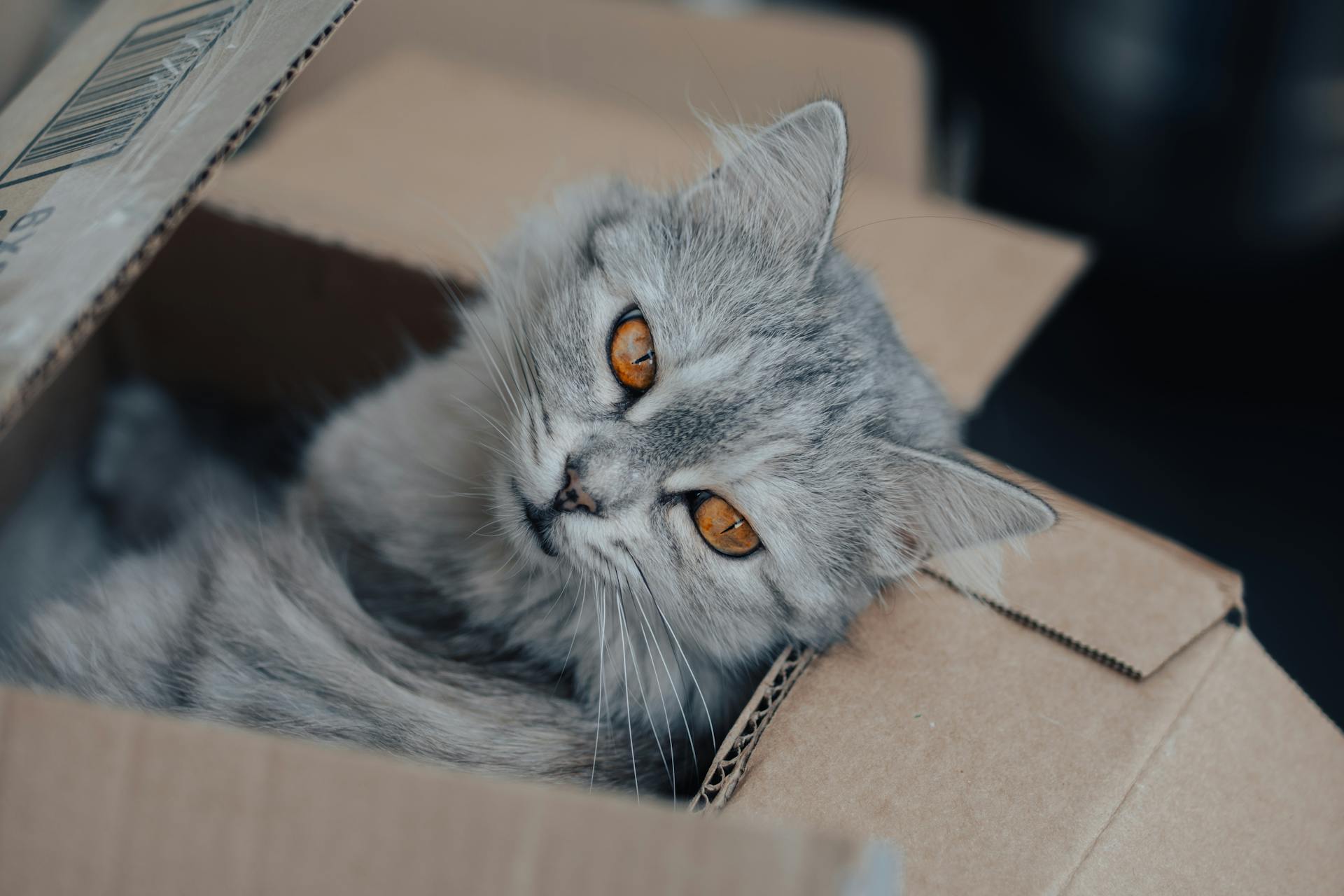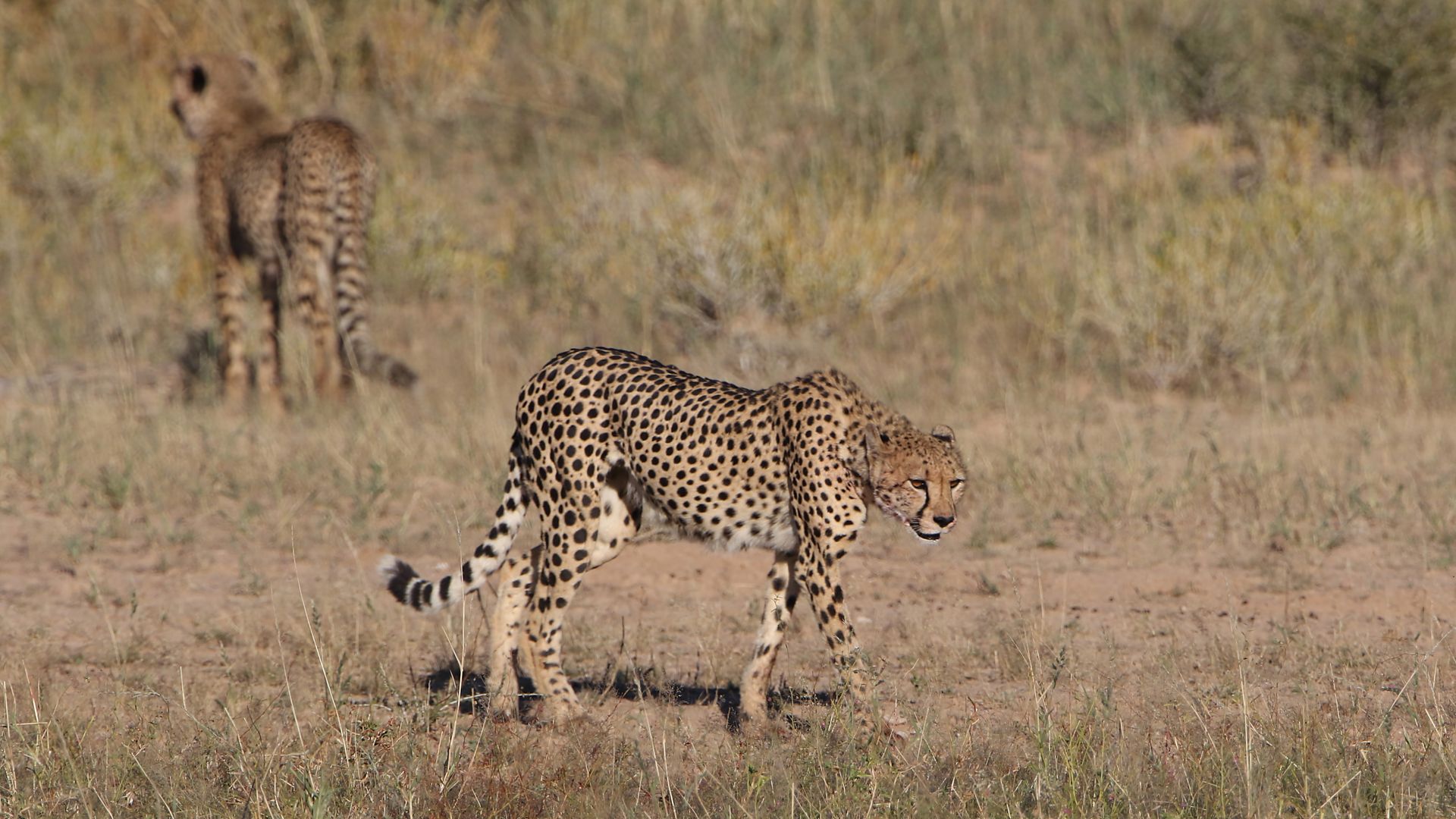
Savannah cats are a unique breed that can make great pets for the right owner. They are a cross between a domestic cat and a serval, a wild African cat. This mix of genetics gives them distinctive physical and personality traits.
Savannah cats are known for their tall ears and striking coat patterns, which can be a real showstopper. Their large eyes and slender bodies make them look like they're from a different world. With proper care, they can live up to 12-17 years, which is a significant commitment for any pet owner.
One thing to consider before bringing a Savannah cat into your home is their high energy level. They require a lot of exercise and stimulation to stay happy and healthy. This can be challenging for owners who are away from home for long periods or don't have a lot of space for a cat to run around.
For more insights, see: Life Expectancy of a Savannah Cat
Characteristics and History
Savannah cats are a unique breed that has a rich history. They originated in the 1980s as a cross between a domestic cat and a serval, a wild cat native to Africa.
Their distinctive appearance is due to their serval ancestry, with tall ears, long legs, and a coat that can be brown, silver, or black. They are often described as having a wild appearance, but are still domesticated.
In terms of temperament, Savannah cats are known for being energetic and playful, requiring plenty of stimulation and exercise to keep them happy and healthy.
Check this out: Serval Cats
Characteristics
The Savannah cat is a unique and loving companion. They're highly intelligent and always willing to greet their owners with friendly head bumps.
Savannah cats are very social and need a home that will give them plenty of exercise and playtime. They're not the type of cat to sleep all day and cuddle on your lap.
If you're looking for a cat that gets along with other pets and kids, a Savannah might be a great fit. They generally get along well with other cats and dogs, and are good with older children.
However, toddlers may be easily overwhelmed by these large, playful cats. It's essential to choose a breeder who has socialized the kittens in a home with pets and kids.
Here are some key characteristics of Savannah cats:
History of Cat
The Savannah cat breed has a fascinating history. The first known Savannah cat was born in 1986, and it was aptly named Savannah.
In the early 1990s, Patrick Kelley and Joyce Sroufe played a crucial role in developing the breed into what we know today. Thanks to their efforts, The International Cat Association recognized the Savannah as a breed in 2001.
A unique perspective: Savannah Cats Dangerous
Care and Maintenance
Savannah cats are not for the faint of heart and require much more exercise and attention than the typical house cat. They can even be clicker- and leash-trained.
Their large size and potential for aggressive tendencies if their needs are unmet calls for an experienced owner, well-versed in feline body language and communication. They require a home with an experienced owner, and are certainly not recommended as a first-time family pet.
To keep them entertained, provide plenty of activity, including access to outside space, hunting and chasing games, and opportunities to climb, jump, and run. If indoor, they will need a whole host of enrichment, from cat trees to high perches, puzzle games to chasing practice.
If this caught your attention, see: Pets Not Dogs or Cats
Care

Savannah cats need plenty of exercise and attention, so be prepared to spend quality time with your pet. They can even be clicker- and leash-trained.
Savannahs love to play in water, so fill a kiddie pool and let them explore at their own pace. Don't plunk them into the pool, but rather let them discover it on their own terms.
They require a home with an experienced owner who can provide a stimulating environment. A house with a large yard or access to outdoor space is ideal.
Savannahs need plenty of activity, including access to outside space, hunting and chasing games, and opportunities to climb, jump, and run. If indoor, they'll need a whole host of enrichment, such as cat trees, high perches, puzzle games, and chasing practice.
Their large size and potential for aggressive tendencies mean they need to be handled consistently and conditioned early to scenarios like transport, grooming, and handling. This will help prevent wrestling them into a cat carrier for vet visits.
Suggestion: Why Are My Cats so Staticy?
Savannahs are highly territorial and may conflict with other cats, usually winning by their size and boldness. Early socialization is key to helping them adjust to life with a dog, but it's not a guarantee.
They require a good deal of time and attention, and cannot be left alone without proper preparation, environmental medication, and enrichment.
Grooming
The Savannah's grooming needs are relatively low maintenance. They have a short coat that only requires a weekly brushing.
One thing to keep in mind is that they tend to shed less and produce less dander than other cats. This makes them a good option for people with mild cat allergies.
If your Savannah spends time outdoors, you'll need to groom them more often. But even then, it's not as much as you'd need to do for a cat like a Maine Coon.
They also love water and can be great swimmers. Just be sure to keep them on a leash, as they don't have a great sense of direction.
If this caught your attention, see: Do Great Pyrenees Make Good Pets
It's essential to show respect to your Savannah and teach them the correct way to pick them up. Grabbing them by the neck can be scary and stressful for them.
Let your Savannah get used to its new environment before introducing it to your kids. This will help them feel more relaxed and secure.
Older children are best suited to care for a Savannah, as they can understand the responsibility that comes with owning one.
Here's an interesting read: Savannah Cat
Exercise and Training
Savannah cats are highly trainable and love to play fetch, making them a great fit for active families.
They can be clicker-trained to do tricks and obey commands, just like a dog.
Savannahs need a lot of attention and playtime, which is perfect for families with high-energy children.
However, be cautious when leaving younger children alone with a Savannah, as it may become demanding of their attention.
For active adults, a Savannah makes a great companion for outdoor adventures, but always keep them on a leash unless they're highly trained.
In general, Savannahs require a lot of stimulation to prevent boredom and destructive behavior.
Exercise
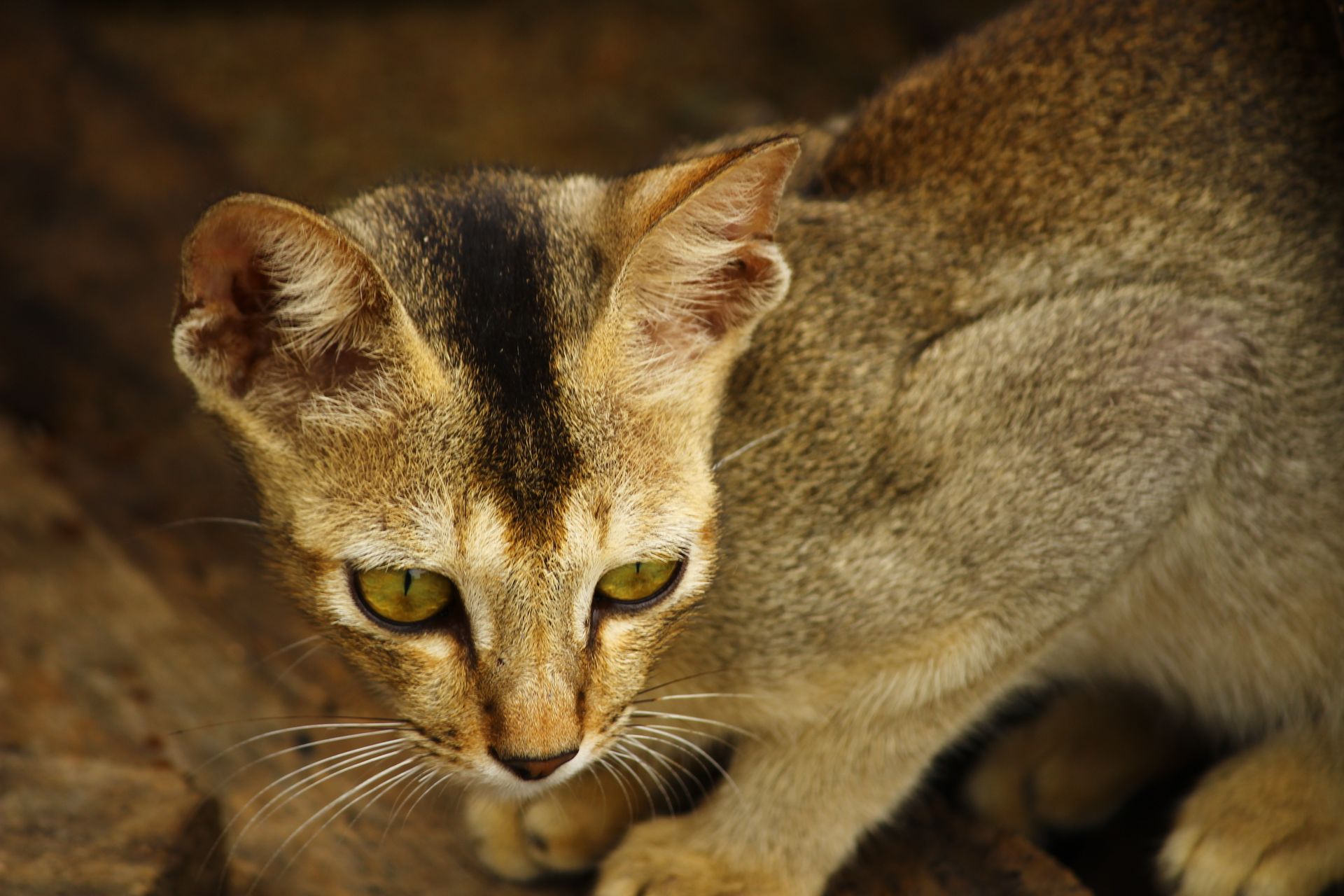
Savannah cats are natural-born jumpers, so they need plenty of opportunities to leap and bound around. They love landing on high surfaces, so a tall cat tree or other safe climbing spot is a must.
Their long legs and athletic build also make them great at scaling tall objects, so be prepared for them to try and climb onto cabinet tops, shelves, and even refrigerators.
Just make sure to provide safe and sturdy climbing opportunities, and secure any breakable items out of reach.
If you're feeling adventurous, you can even try taking your Savannah on an outdoor walk with a harness and leash.
Take a look at this: Chia Pets Safe
Training
Savannah cats are highly trainable, often described as dog-like in their love of playing fetch.
With the right approach, you can clicker-train them to do tricks and obey commands, just like you would with a dog.
Their intelligence and eagerness to please make them a joy to train.
Pros and Cons
Savannah cats can make great pets for the right owner, but it's essential to consider both the pros and cons.
One of the biggest advantages of owning a Savannah cat is their high energy level, which makes them a great fit for active owners who can provide plenty of exercise and stimulation. They love to play and climb, and with the right environment, they can burn off excess energy.
However, their high energy level also means they require a lot of attention and can be destructive if left alone for too long. As mentioned earlier, Savannah cats are known to be prone to destructive behavior, such as scratching furniture and knocking over objects, if they don't receive enough mental and physical stimulation.
Despite the potential drawbacks, many owners find that the benefits of owning a Savannah cat far outweigh the costs. With proper care and attention, they can make wonderful and loving companions.
Pros of the

The pros of the Savannah Cat are definitely worth noting. They are extremely affectionate and social with pets and children, making them a great fit for families.
Their intelligence is another major plus. They are highly intelligent and trainable, which means you can teach them to do all sorts of cool tricks.
One of the most impressive things about Savannah Cats is their loyalty. They are extremely loyal to their owners, and will often form strong bonds with their family members.
Here are some key pros of the Savannah Cat:
- Affectionate and social with pets and children
- Highly intelligent and trainable
- Extremely loyal to their owners
Cons of the
If you're considering bringing a Savannah cat into your home, it's essential to know the potential downsides.
Savannah cats can be quite expensive, with prices ranging from $5,000 to $20,000. They also require a lot of attention and time, which can be challenging for busy owners.
One of the main concerns with Savannah cats is their health. They're prone to heart disease, and some generations may even require special permits to own.
Here are some of the key cons of owning a Savannah cat:
- Relatively rare and expensive
- Prone to heart disease and other health issues
- Banned in some states, such as Georgia, Hawaii, Nebraska, and Rhode Island
- Requires a lot of attention, time, and space
- May not be a good fit for first-time owners or those looking for a lazy cat
These factors can make owning a Savannah cat a significant commitment, but it's crucial to weigh the pros and cons before making a decision.
Behavior and Temperament
Savannah cats are highly energetic and need plenty of mental and physical stimulation to prevent boredom and destructive behavior.
They love to climb and have a strong prey drive, making them difficult to keep with other pets, especially small mammals.
Savannahs are highly territorial and can be extremely aggressive towards other cats, so socialization is crucial from an early age.
If you're looking for a lap cat, a Savannah might not be the best fit, as they tend to follow their owners around the house and love to play.
They're highly people-oriented and love their owners, often greeting them at the door and following them around the house.
A lot of play and toys are essential for Savannahs, and they can be great companions for active adults who enjoy outdoor activities.
However, they may not be suitable for younger children, as they can become demanding of attention and may be difficult to handle.
Types and Compatibility
Savannah cats are a unique breed that can make great pets for the right owner. They are a hybrid of a domestic cat and a serval, a wild African cat.
Savannah cats come in six different types, each with its own distinct characteristics. These types include F1, F2, F3, F4, F5, and F6, with F1 being the most exotic and F6 being the most domesticated.
They require a lot of space to roam and exercise, which can be a challenge for owners with small living spaces. In fact, they need a minimum of 2,000 square feet of outdoor space to thrive.
Savannah cats are generally not compatible with other pets, especially small animals like rabbits or guinea pigs. Their strong prey drive and hunting instinct can make them a threat to these animals.
However, they can get along with other cats, especially if they are introduced at a young age and socialized properly. In fact, many Savannah cat owners have reported successful multi-cat households.
Frequently Asked Questions
Do Savannah cats like to be held?
Savannah cats are not typically lap cats and prefer not to be held, but they do enjoy being petted and interacting with their owners.
Are Savannah cats high maintenance?
Yes, Savannah cats are considered high maintenance pets due to their specific needs for space, exercise, and attention. They can thrive in the right environment, but may become unmanageable if not provided with the necessary care and resources.
Featured Images: pexels.com