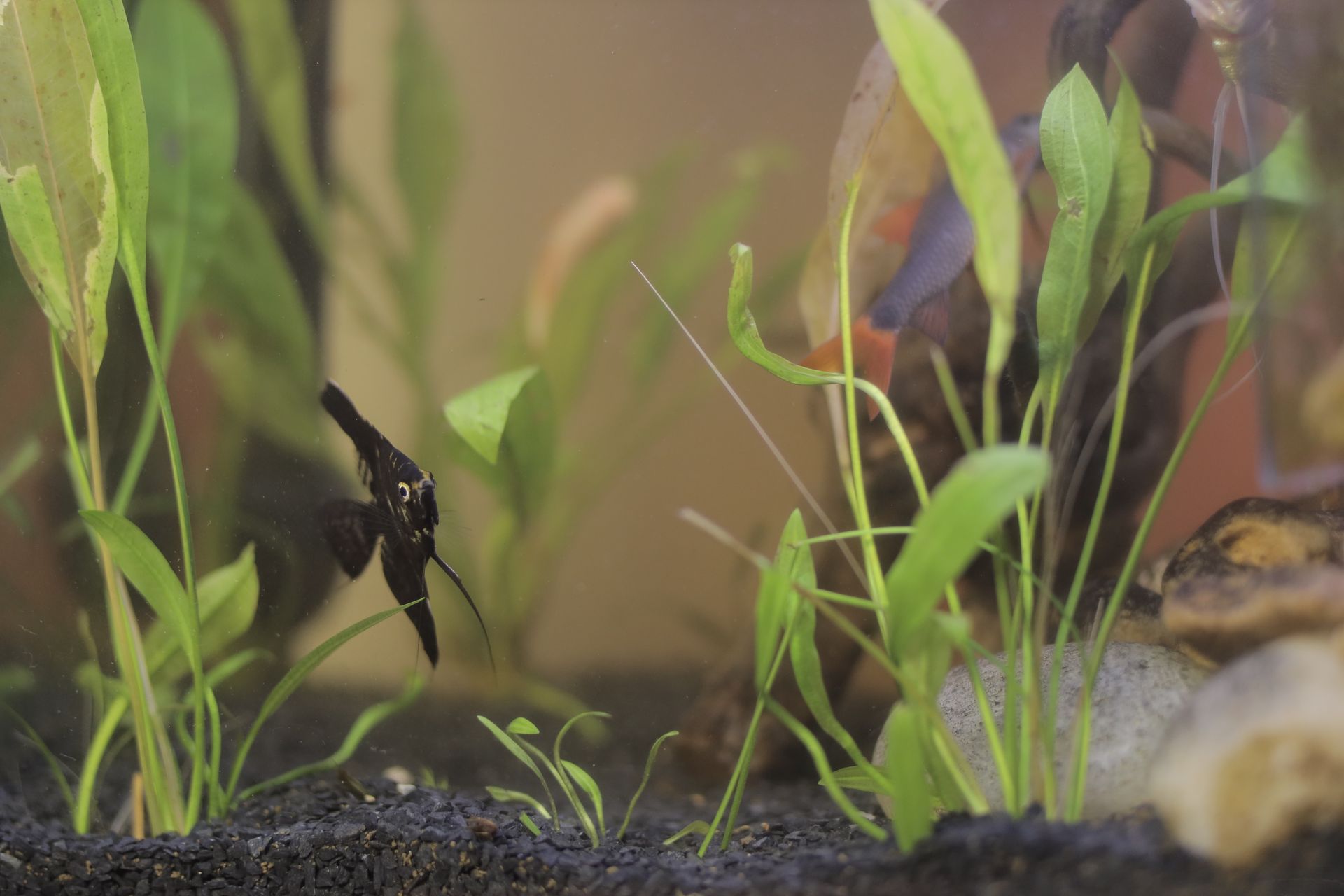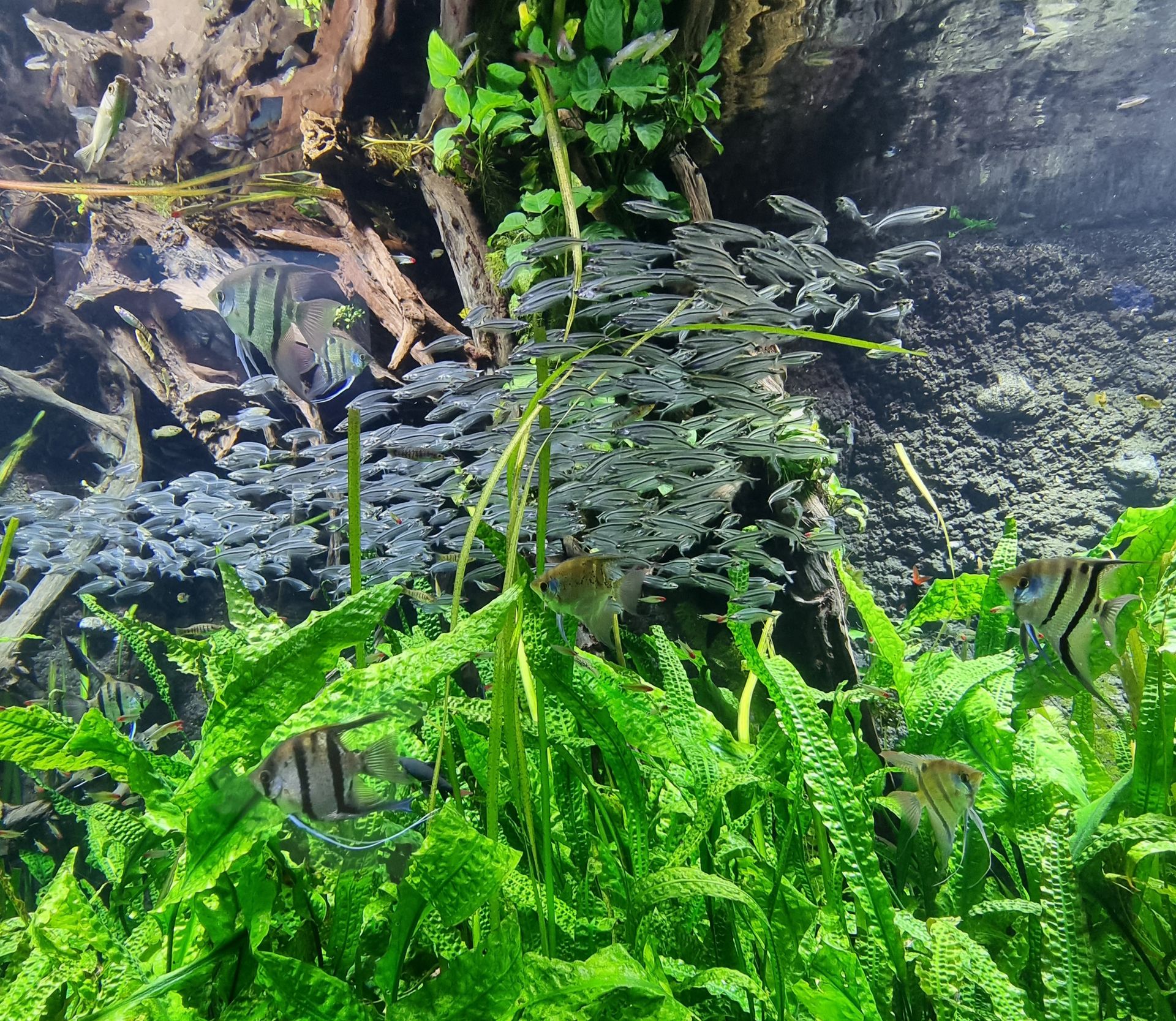
Starting an aquarium can be a thrilling experience, but it can be overwhelming, especially for beginners.
The first thing to consider is the type of plants you want to grow in your aquarium. There are many species to choose from, but some popular options for beginners include Java Moss, Anubias, and Amazon Swords.
Lighting is crucial for healthy plant growth, and most live freshwater aquarium plants require low to moderate lighting.
Water and Nutrients
Aquatic plants do best in water with a pH between 6.5 and 7.8.
Proper circulation is crucial for plants, ensuring a steady supply of nutrients, inhibiting algae growth, and preventing organic debris accumulation.
For most plants, a general hardness of 50-100 ppm, alkalinity of 3-8 dKH (54-140 ppm), and nitrates below 10 ppm are ideal conditions to prevent nuisance algae.
Liquid fertilisers are a common choice for aquarium plants, and should be used weekly, or as specified by the manufacturer.
Aqueon Aquarium Plant Food provides proper liquid nutrition for most aquatic plant species, and can be dosed weekly or in partial doses every few days.
Substrate fertilisers can be added when setting up the aquarium from scratch, and are ideal for heavily planted tanks, providing sufficient nutrients for many years.
On a similar theme: Is Plant Food Toxic to Dogs
Water Requirements
To keep your aquatic plants happy and healthy, you'll want to get their water requirements just right. Most aquarium plants do best in a pH between 6.5 and 7.8.
The general hardness of the water should be between 50 ppm to 100 ppm. Alkalinity should be between 3° and 8° dKH, which is equivalent to 54ppm – 140 ppm.
Nitrates should be kept below 10 ppm and phosphates below 0.5 ppm to prevent nuisance algae from growing on leaves.
Temperature should be between 74° and 80° F.
Regular water changes are essential – aim to change 10% of the water weekly or 25% bi-weekly.
Nutrients
Aquatic plants use nitrogen, phosphorous, potassium, iron, magnesium, manganese, and other minerals to grow. Most of the nitrogen and phosphorus comes from fish food and waste.
To provide a steady supply of nutrients, dose Aqueon Aquarium Plant Food weekly or add partial doses every few days. This will ensure your plants have the necessary nutrients to thrive.
Some aquatic plant enthusiasts mix laterite, an iron-rich clay, into the substrate when setting up their aquariums. This method helps to provide nutrients to plants that take in nutrients through their roots.
Substrate fertilisers can be added when setting up an aquarium from scratch and can last for several years. They are a good option for creating a heavily planted tank.
Liquid fertilisers are the most common type of aquarium fertiliser used today. They should be used weekly, but be sure to check the manufacturer's instructions.
Liquid fertilisers are ideal for plant species that absorb nutrients directly through their foliage, such as Egeria densa and java moss. However, they may not provide sufficient nutrition to species like Amazon swords, so a combination of fertilisers may be necessary.
If you have a heavily stocked aquarium, consider using a liquid fertiliser that does not contain nitrogen or phosphor. This will prevent excessive algae growth caused by too much of these nutrients in the aquarium.
For more insights, see: Long Live Dogs Food
Lighting
Lighting is crucial for aquarium plants to thrive. You'll want to choose a light source specifically designed for growing aquarium plants, as those designed for houseplants don't have the correct Kelvin rating.
Aquatic plants do best under full spectrum light with a Kelvin rating between 6,500K and 8,000K. Some plant species need more intense light to thrive, and because light doesn't penetrate water very well, a stronger light source is needed for taller aquariums.
High Output T5 fluorescent and LED offer the best lighting for aquarium plants. Always replace High Output T5 and other fluorescent bulbs every 12 months to get the best light output.
Aquatic plants do best with 10 to 12 hours of light per day. Leaving the light on longer will not compensate for weak lighting.
LED aquarium lighting has become extremely popular, and with good reason. They last over 50,000 hours and emit no heat, so can be placed very close to the water surface.
Try to avoid using incandescent light bulbs, as they are of little to no use with many plant species. They simply don't emit the correct type of light needed by your plants.
Aim to have your aquarium illuminated for 8 to 10 hours per day. Using a timer with your light unit will ensure you achieve this daily.
As for the amount of light, we would recommend that your aquarium has at least 2 watts per gallon (4.54 litres) as an absolute minimum.
Plant Care
Plant Care is crucial for the health and beauty of your freshwater aquarium.
To keep your plants thriving, you'll want to provide them with the right amount of light. Most aquarium plants require 10-12 hours of light per day, but some may need more or less depending on the type.
Regular water changes are also essential to keep your plants happy. Aim to change 10-20% of the water every week to maintain optimal water quality.
Some plants, like Anacharis, can even help purify the water for your fish.
Explore further: How to Keep Birds Out of Plants?
Why Keep?

Keeping plants in your aquarium has numerous benefits. Live aquarium plants improve water quality by using up carbon dioxide and ammonia produced by your fish.
Plants also use nutrients needed for algae to grow, reducing or eliminating algal growth. They provide cover for your fish, keeping them stress-free.
Territorial species appreciate natural boundaries created by plants, while small fry find cover in their leaves.
Shrimp Killing!
Commercial aquarium plants are treated with pesticides to prevent the import of unwanted pests like Tobacco Whitefly, which can destroy millions of dollars worth of crops.
These pesticides have no effect on aquarium fish but can kill shrimp. In fact, they can wipe out all of your shrimp very quickly.
Not all aquarium shops know about this or remind their customers to be careful. Online companies might pack plants straight out of the box without warning.
To avoid killing your shrimp, it's essential to soak your newly acquired plants in a bowl or bucket of water at room temperature for around eight hours.
Plant Species
Plant species to start with are commonly available and affordable, and can tolerate a wide variety of water conditions and lower light levels. These plants have no specific feeding needs or CO2 requirement, making them ideal for beginners.
Some popular plant species for beginners include Anubias Nana Petite, Dwarf Baby Tears, and Java Moss. These plants are easy to grow and can thrive in a variety of environments.
Here is a list of some beginner-friendly plant species:
- Anubias Nana Petite
- Dwarf Baby Tears
- Java Moss
- Java Fern
- Willow Moss
- Water Wisteria
These plants are great options for creating a lush and healthy aquarium environment. They can add beauty and balance to your tank, and provide a natural habitat for your fish.
Plant Selection
Choosing the right plants for your aquarium can be a daunting task, but it's essential to get it right to create a thriving environment for your fish. Start by selecting plants that are tolerant of a wide variety of water conditions and lower light levels.
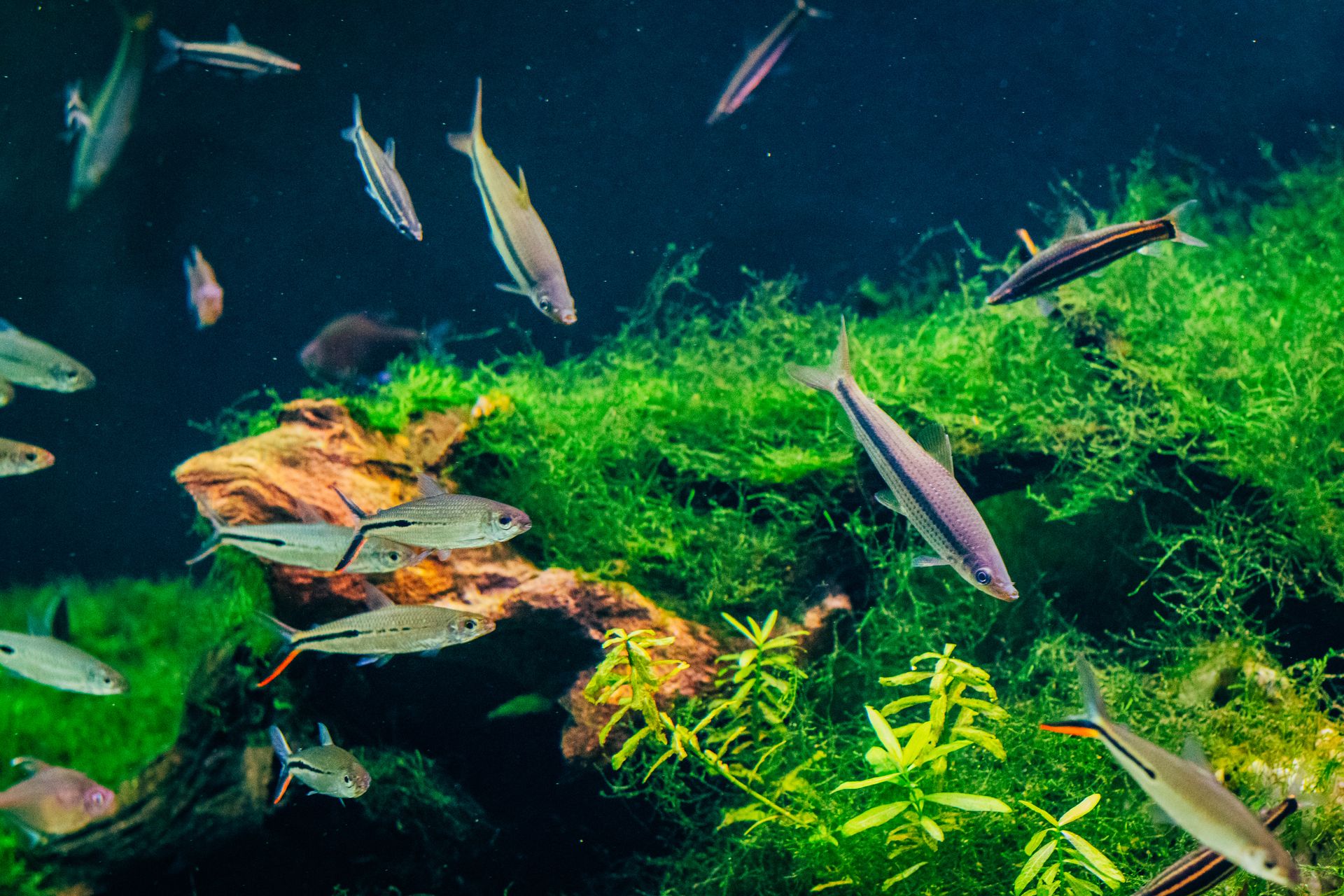
As a beginner, it's best to avoid plants with challenging specific requirements. Consider plants like Echinodorus tenullus, which can thrive in a wide range of water conditions and can be used to create a lawn-like effect in your aquarium.
Some plants are more suitable for beginners than others. For example, Java Moss is a hardy and easy-to-grow species that can tolerate a wide range of water conditions and can survive in fairly dimly lit tanks. It's also a great option for fish breeders as it provides safe cover for small fry and can be used as a great egg-laying medium.
Here are some commonly available species that are ideal for beginners:
- Echinodorus tenullus
- Java Moss (Taxiphyllum barbieri)
- Anubias Nana
- Hygrophila polysperma
- Amazon Sword
These plants are all relatively easy to care for and can thrive in a variety of water conditions. Be sure to research each plant's specific needs and requirements to ensure you're providing the best environment for your aquarium.
Remember, selecting the right plants for your aquarium is just the first step. Proper care and maintenance are also crucial to creating a thriving environment for your fish.
If this caught your attention, see: Freshwater Angelfish Care
Fern: Microsorium Pteropus
Java fern is a bomb-proof plant that can thrive in a wide range of water conditions and low light conditions.
It's one of the most popular plants in aquaria and terraria, and its tough fibrous foliage makes it resistant to being eaten by fish.
The plant has a horizontal rhizome from which leaves grow in an upright manner, and it's essential to tie it to rocks or wood using dark-colored cotton or a low-breaking strain fishing line to keep it in place.
Alternatively, you can purchase commercially available pieces of bogwood with java fern already attached.
There are three cultivars of java fern available in the trade: M. pteropus 'narrow leaf', M. pteropus 'Windelov', and M. pteropus tropica.
The 'tropica' cultivar grows large, up to 50cm in height, making it suitable for large, tall aquaria.
Java fern is easily propagated by removing plantlets from leaves or from the eyes of the rhizome.
This makes it a great option for aquarists looking to add some variety to their aquarium.
Readers also liked: Plant Dog Names
Setting Up
Setting up your aquarium is a crucial step in creating a thriving environment for your freshwater plants.
First, you'll need to provide light for your plants to undergo photosynthesis, which gives them energy and nutrients. Full-spectrum fluorescent and LED tank lights are great options.
Lighting is essential, but you should also quarantine and treat new plants before adding them to your tank. This will help prevent pests like snails or shrimp from introducing bacteria or diseases to the water.
A nutrient-rich substrate is also necessary for your plants to absorb needed nutrients. This type of substrate can initially be a bit more expensive, but it's worth it for the health of your plants.
You can anchor plants that need to be rooted in the substrate by placing their roots just under the substrate, but be careful not to bury them deep.
Some plants, like moss, Java Fern, or Anubias Nana, prefer to root into rock or wood. You can tie these plants to rocks or wood using fishing line, then add the rock and plant to your tank.
After setting up your plant garden, it's essential to wait a week for your tank to stabilize before adding fish. This will ensure a healthy environment for both your plants and your fish.
Suggestion: Angelfish Freshwater Tank
Tips and Precautions
Starting small is key when introducing plants to your aquarium. Begin with a few hardy plants and gradually add more as they establish themselves.
If you have an algae problem, consider adding glass or ghost shrimp to your tank. These freshwater shrimp are algae-eaters and can help prevent an algae explosion.
Choose plants that are compatible with your fish, as some fish may see them as a snack. Research the specific needs of your fish and select plants that will thrive in their company.
Some fish, like tetras and guppies, get along great with glass or ghost shrimp, making them a great addition to your tank.
Discover more: Freshwater Angelfish Tank Mates
Featured Images: pexels.com