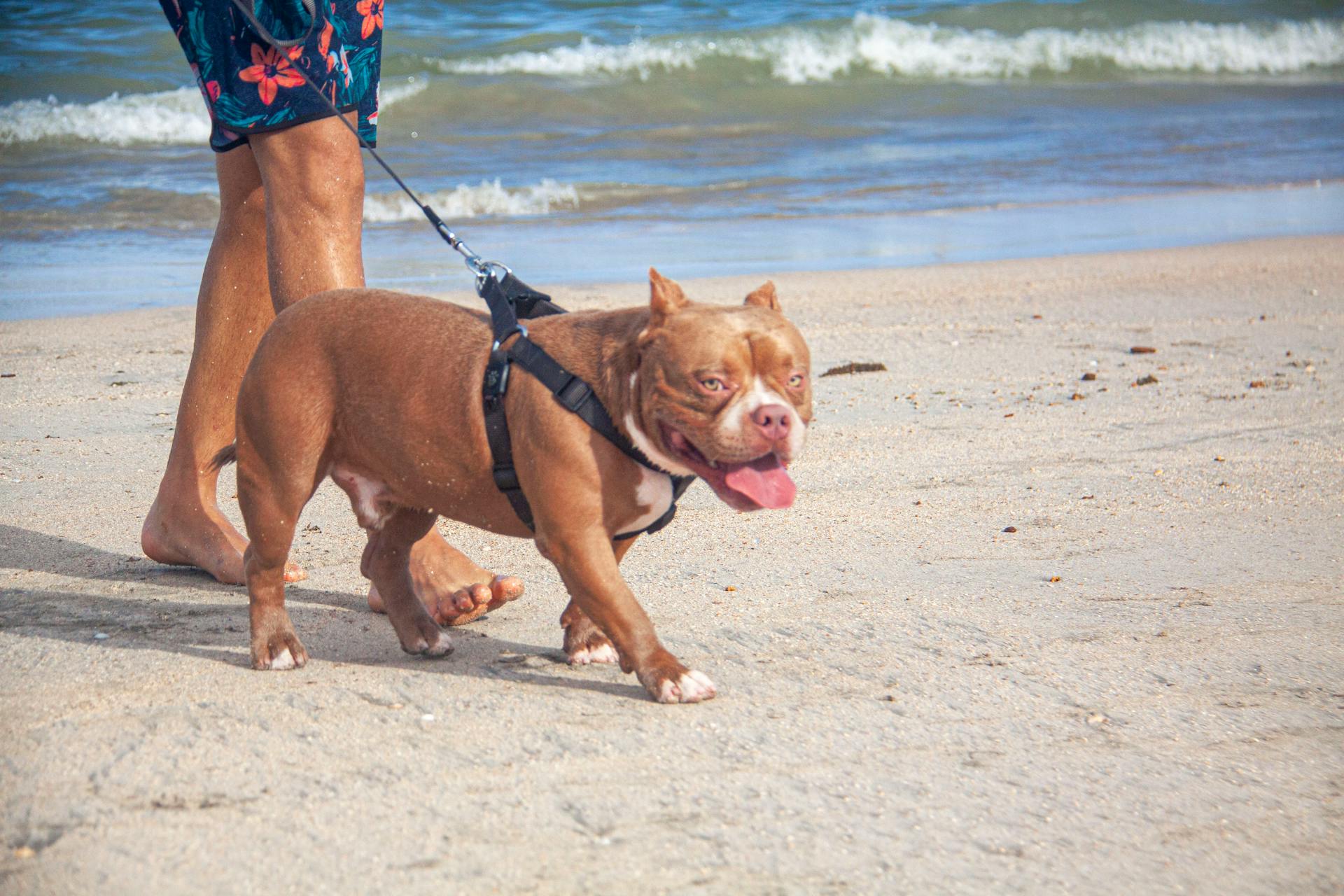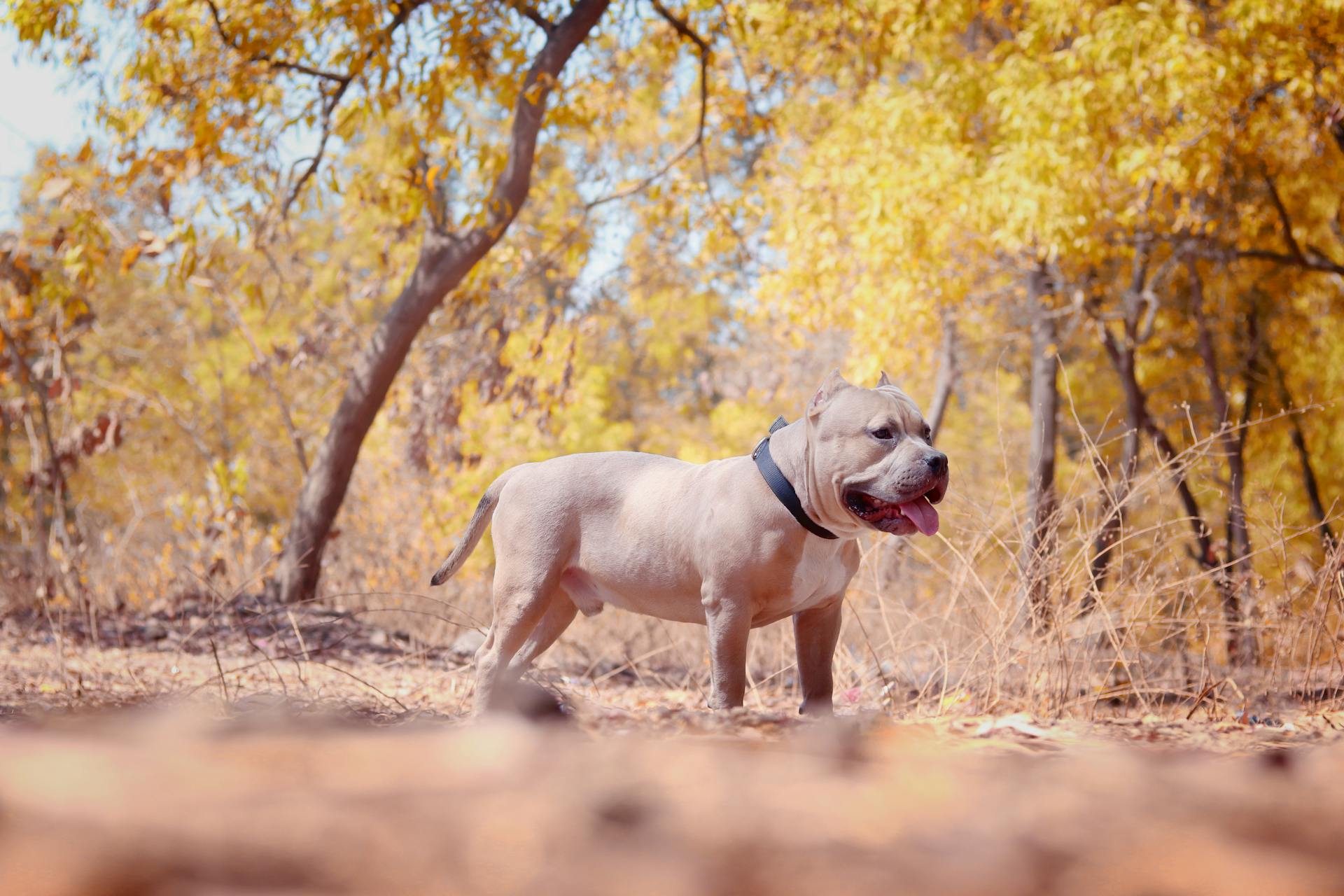
The American Bulldog is a breed that's often misunderstood. They're not just a tough-looking dog with a rough exterior, but they're actually known for being gentle and affectionate with their families.
Their calm and patient nature makes them a great companion for families with children. American Bulldogs are often described as "laid-back" and easy-going.
In fact, they're so laid-back that they can get along with other pets, including cats, if socialized properly. This is a big plus for families who have multiple pets.
Despite their tough appearance, American Bulldogs are actually quite sensitive and can be prone to separation anxiety if left alone for too long.
A unique perspective: Do American Bulldogs Have a High Prey Drive
American Bulldog Personality
The American Bulldog personality is a unique blend of traits that make them a beloved companion for many families. They are fiercely loyal and protective of their families, but also gentle and patient with children.
American Bulldogs are highly energetic and playful, making them a great addition to an active household. They love to engage in games and activities with their families, and they're always up for an adventure.
One of the most important things to remember about American Bulldogs is their strong prey drive, which can make them wary of unfamiliar dogs. They're also naturally suspicious of strangers, so early socialization is crucial to ensure they interact well with new people and animals.
Here are some key traits that define the American Bulldog personality:
- Loyal and affectionate
- Protective of family
- Highly energetic
- Playful and bouncy
- Outgoing and friendly
- Can be dominant and strong-willed
- Needs a confident owner
- Watchful and alert
- Great guardians
- Intelligent and quick to learn
- Adventurous and loves the outdoors
- Needs lots of exercise and mental stimulation
- Can be suspicious of strangers
- Wary of unfamiliar dogs
- Some may have a strong prey drive
- Doesn’t like being left alone
American Bulldogs are also highly intelligent and adaptable, making them easy to train with the right technique and positive reinforcement. However, they do have a dominant personality that requires a confident owner to establish authority and lead the way.
Overall, the American Bulldog personality is a unique and lovable combination of traits that make them a wonderful companion for those who are willing to put in the time and effort to understand and meet their needs.
Training and Care
American bulldogs are highly trainable, but they can be stubborn at times. They respond well to positive reinforcement and consistent training.
To care for an American bulldog, you'll need to provide regular exercise, such as daily walks and playtime. They require at least 30 minutes of exercise per day to stay happy and healthy.
Their short coats require minimal grooming, but they do need regular nail trimming and ear cleaning to prevent health issues.
Pros and Cons
Training an American Bulldog requires patience and consistency, as they can be stubborn and strong-willed. This is especially true for first-time owners, who may find it challenging to handle their rambunctious and boisterous puppies.
Their loyal and devoted nature makes them excellent family pets, but they do require extensive socialization and training to ensure they get along with other animals. With proper training, they can become intelligent and trainable companions.
One of the biggest advantages of owning an American Bulldog is their low maintenance grooming needs. They are also strong and athletic, making them a great choice for active families.
For your interest: American Bulldog Training
However, their potential aggression towards other animals and fair amount of drool, slobber, and gassiness can be drawbacks for some owners. To minimize these issues, it's essential to provide them with regular exercise and training.
Here's a summary of the pros and cons of owning an American Bulldog:
Training and Exercise
Training and Exercise is a crucial aspect of American Bulldog care. They require a lot of exercise and a wide range of activities that involve a companion.
Puppy training classes and early socialization are highly recommended to establish proper boundaries. This helps them become well-behaved and confident dogs.
American Bulldogs are very energetic and athletic dogs, making them perfect for active families or individuals. They need constant stimulation to prevent boredom and destructive behavior.
They require quite a lot of exercise, so regular hikes, jogs, and playtime are a must. This can be as simple as a walk around the block or a game of tug-of-war.
They don't like being left alone in a backyard, so they need to be part of the family and included in daily activities. This can help prevent separation anxiety and destructive behavior.
Additional reading: Training Cutting Horses
How to Train
Training is a crucial part of a dog's life, and it's essential to start early. According to research, puppies can start learning basic obedience commands as early as 8 weeks old.
Consistency is key when training a dog. As mentioned in the article, a routine of short training sessions, 2-3 times a day, is more effective than one long session.
Positive reinforcement is the best approach to training. Rewarding good behavior with treats and praise can lead to faster learning and a stronger bond between dog and owner.
Socialization is also vital for a dog's development. Exposing your dog to new people, places, and experiences between 8-11 weeks old can help prevent anxiety and aggression.
Training should be a fun and enjoyable experience for both dog and owner. Keep training sessions short and engaging, and always end on a positive note to keep your dog motivated and eager to learn.
If this caught your attention, see: Olde English Bulldogge vs Victorian Bulldog
Socialization and Compatibility
Socialization is key for American Bulldogs to develop into balanced adult dogs. They need to be exposed to a variety of people, animals, sounds, and sights during their critical developmental stages to become well-adjusted and less prone to anxiety or aggressive behaviors.
Gradual introductions to new dogs and people in controlled environments, reward-based training, and consistent exposure to different social settings help normalize these experiences. Identifying triggers that cause fear or aggression and working on desensitizing them through gradual exposure is also essential.
American Bulldogs can get along with other pets, including cats and dogs, but only if they've been extensively socialized and well-trained from a young age. They're a protective breed that can be territorial, so some might not tolerate living with another dog at all, especially of the same sex.
Here are some tips for introducing new animals into the pack:
- Monitor their body language and provide space.
- Reward good behavior.
Remember, every American Bulldog is unique, so it's essential to tailor your approach to their individual needs and personality.
Socialization Needs
Socialization needs are crucial for American Bulldogs to develop into balanced adult dogs. Early socialization helps them become well-adjusted and less prone to anxiety or aggressive behaviors.
Exposing them to a variety of people, animals, sounds, and sights during their critical developmental stages is essential. This can be done by introducing them to different environments and situations, ensuring they experience positive interactions that build confidence and trust.
Some common challenges during socialization include dog-aggressive tendencies and possessiveness over food or toys. These issues can stem from a lack of exposure to other dogs during their formative weeks.
To address these issues, you can use positive reinforcement training techniques. Gradual introductions, reward-based training, and consistent exposure to different social settings can help.
Here are some strategies to keep in mind:
- Gradual Introductions: Introduce your Bulldog to new dogs or people slowly and in controlled environments.
- Reward-Based Training: Use treats and praise to reinforce good behavior when they interact peacefully with others.
- Consistent Exposure: Regularly expose your pet to different social settings to normalize these experiences.
- Identify Triggers: Observe what causes fear or aggression and work on desensitizing those triggers through gradual exposure.
- Train with Patience: Consistent, patient training methods will help mitigate possessive behaviors over time.
By following these strategies, you can help your American Bulldog develop into a well-adjusted and friendly companion.
English vs Bulldog: Which One's Right for Me?
English Bulldogs are perfect for apartment living due to their smaller size and less energetic nature.
They're content with short walks and cuddles, making them ideal for people who want a low-maintenance companion.
English Bulldogs may require extra care due to their brachycephalic features, which can lead to breathing issues.
However, they're loving companions and thrive on affection, so if you're looking for a snuggle buddy, an English Bulldog might be the perfect fit.
English Bulldogs are laid-back couch potatoes, famous for their wrinkly faces and affectionate nature.
Their calm demeanor makes them suitable for families or individuals who want a relaxed pace.
You might like: French Bulldogs Personality
Behavior and Challenges
American bulldogs can be quite the handful, especially when it comes to their size and strength. They have a tendency to unintentionally knock over smaller children during playtime, which is why constant supervision is a must, especially with very young children.
Size and strength aren't the only concerns, though - their protective instincts can sometimes get in the way of their social skills. Without proper socialization, they may exhibit dog-aggressive tendencies and even become possessive over food or toys.
This possessiveness can lead to conflicts with other pets, so it's essential to work on their socialization from an early age. With consistent training and socialization, you can help your American bulldog become a well-rounded companion that's great with kids and friendly towards other dogs.
Here are some potential challenges to be aware of:
- Size and Strength: Due to their size and strength, there’s a risk of unintentionally knocking over smaller children during playtime.
- Supervision Needed: Constant supervision is essential, especially with very young children, to ensure safe interactions.
- Dog-Aggressive Tendencies: Without proper socialization, they may exhibit dog-aggressive tendencies.
- Possessiveness: Some American Bulldogs can be possessive over food or toys, leading to potential conflicts with other pets.
While some American bulldogs may have behavioral issues due to their history of aggression, most responsible breeders only breed dogs that are agreeable. This minimizes the risk of behavioral issues, but it's still essential to provide obedience training and socialization to ensure your dog grows into a well-adjusted companion.
Suggestion: American Bulldog Health Problems
Family and Living
American Bulldogs are wonderful family dogs, but they do require some special considerations. They're perfect for active owners who can meet their exercise and training needs.
These dogs are devoted, loving, and affectionate, and they utterly adore their humans. They'll even protect them at all costs. Despite their imposing looks, American Bulldogs can be real snuggle monsters!
They're strong-willed and powerful, so they need a confident hand when it comes to training. They're not suitable for families with very young, frail, or vulnerable members.
American Bulldogs are people-oriented pets and love being around their owners and families. Family occasions are a blast for them, and they love getting involved in family activities.
They're loyal and affectionate dogs that form strong bonds with their families, including young ones. However, they can easily knock down toddlers and cause injury, so they're better suited to households with older children or teens.
It's essential to teach children how to properly interact with dogs, regardless of breed. This includes no pulling, smacking, poking, or disturbing them while they're eating and sleeping.
Curious to learn more? Check out: Do Labradors Attack Their Owners
History and Information
The American Bulldog is a breed with a rich history dating back to the early 18th century. They originated in England and were brought to the United States by English settlers.
Originally bred for guarding and farm work, American Bulldogs were known for their strength and tenacity. They were often used to protect livestock and property.
In the 19th century, the breed was further developed in the United States, where they became a popular companion animal. American Bulldogs were often kept as family pets and were known for their loyalty and affection towards their owners.
Despite their tough exterior, American Bulldogs are known for being gentle and patient with children. They make great family pets, but they do require regular exercise and training to stay happy and healthy.
The average lifespan of an American Bulldog is 10-15 years, which is relatively long compared to other breeds.
Fun Facts and Characteristics
American Bulldogs are a unique breed, and once you get to know them, you'll fall in love with their charming personalities. They're not recognized as a breed in the UK, but they're officially recognized by The United Kennel Club.
There are two types of American Bulldogs: the Johnson American Bulldog (the Classic), and the Scott American Bulldog (the Standard), named after the breeders who saved them from extinction after World War II.
American Bulldogs have a strong bite force of 305 pounds per square inch (PSI), which is strong enough to crush bone. They're also known for their loyal and confident temperament.
Here are some key characteristics of the American Bulldog breed:
American Bulldogs are high-energy dogs that require 1–2 hours of exercise per day. They're perfect for active owners, families with children, and protection roles.
Understanding and Managing
They're incredibly loyal to their families, so be prepared for a lifelong companion.
To ensure a smooth transition, it's essential to socialize your American Bulldog properly, especially when it comes to interaction with children.
Their natural protective instincts make them great watchdogs, but this also means they can be assertive at times.
With patience and consistency, you can manage their independent nature and keep them happy and healthy.
Here are some key traits to keep in mind when managing your American Bulldog's personality:
By understanding and managing these traits, you can build a strong and loving relationship with your American Bulldog.
Intelligence and Playfulness
American Bulldogs are known for their sharp intelligence, making them quick learners that can pick up commands and tricks in no time. Their playful nature is a perfect match for their clever brains, ensuring there's never a dull moment when they're around.
Their intelligence allows them to think creatively, which can sometimes be a double-edged sword, as they may use their smarts to test boundaries. However, with proper training and mental stimulation, they can channel their energy into positive behaviors.
Here are some key traits that showcase their intelligence and playfulness:
- Intelligence: Quick learners that enjoy mental challenges.
- Playfulness: Energetic and fun-loving, always ready for playtime.
With their adaptable nature, American Bulldogs can thrive in different environments, as long as they receive proper exercise and mental stimulation. This means they can make great companions for families with varying lifestyles.
Loyalty and Affection

American Bulldogs are known for being extremely loyal to their owners, a trait that comes with a strong protective instinct. This loyalty is a result of their background as working dogs on farms, where they were instilled with a sense of responsibility and watchfulness.
They show great affection towards their family members and close friends, often seeking out cuddles and attention. This breed thrives on human interaction and loves being involved in family activities.
Their tough appearance belies their loving nature, making them a one-of-a-kind breed that blends loyalty with affection. Similar to the Cane Corso, another breed known for its loyalty and protective nature, the American Bulldog also shares these remarkable qualities.
American Bulldogs love being part of the family and will often follow their owners around the house, eager to be close to them.
A unique perspective: Do Doberman Pinschers Turn on Their Owners
Assertiveness and Independence
American Bulldogs are often misunderstood due to their assertive nature.
This assertiveness can sometimes be mistaken for aggression, but it's actually a sign of their confidence and self-sufficiency.
Proper training and socialization are key to directing this assertiveness in positive ways, ensuring they remain well-behaved companions.
With the right guidance, an American Bulldog's assertiveness can be channeled into a strong sense of self, allowing them to thrive in a variety of situations.
Their independence is also a notable trait, but it's essential to remember that this doesn't mean they don't crave attention and affection from their family.
Frequently Asked Questions
Are American Bulldogs more aggressive than pit bulls?
American Bulldogs are generally more gentle than American Pitbull Terriers, with a larger and more laid-back temperament. While both breeds can be loving companions, their temperaments differ, making the American Bulldog a great choice for families seeking a calm companion.
Can an American Bulldog be left alone?
American Bulldogs need regular exercise and mental stimulation, so leaving them alone for extended periods can lead to behavioral issues. They require frequent attention and interaction to thrive.
Featured Images: pexels.com