Allotoca is a genus of livebearing fish that belongs to the family Goodeidae.
There are currently 12 recognized species of Allotoca, which are found in Mexico and Central America.
These species are divided into two subgenera: Allotoca and Hubbsina.
Allotoca fish are relatively small, with most species reaching a maximum length of about 5-7 centimeters.
Taxonomy and Classification
The Allotoca genus is a fascinating group of fish, and understanding their taxonomy and classification is essential to appreciating their unique characteristics.
The Allotoca genus belongs to the kingdom Animalia, specifically to the phylum Chordata, and is classified as a freshwater fish within the class Actinopterygii.
Allotoca fish are part of the family Goodeidae, subfamily Goodeinae, and are found in Mexico.
Here is a list of the species within the Allotoca genus:
- Allotoca catarinae (Catarina allotoca)
- Allotoca diazi (Patzcuaro allotoca)
- Allotoca dugesii (Opal allotoca)
- Allotoca goslinei (Banded allotoca)
- Allotoca maculata (Blackspot allotoca)
- Allotoca meeki (Zirahuen allotoca)
- Allotoca regalis (Balsas allotoca)
- Allotoca zacapuensis (Zacapu allotoca)
The taxonomy of the Allotoca genus is complex, and some species are still in need of review. For example, the species A. regalis is sometimes placed in its own genus, Neoophorus.
Genetic Analysis

Genetic diversity parameters reveal that Allotoca diazi has a relatively high genetic diversity, with 35 individuals and 5 haplotypes, while A. meeki has lower genetic diversity with 22 individuals and 3 haplotypes.
The genetic diversity of A. diazi is also reflected in its nucleotide diversity (π = 0.0030) and haplotype diversity (h = 0.78), which are higher than those of A. meeki (π = 0.0007, h = 0.52).
A. catarinae shows the lowest genetic diversity among the three species, with a single haplotype and no nucleotide diversity.
Genetic Diversity and Neutrality Tests from Cytb Sequences
The sample size for A. diazi is 35, while A. meeki has a sample size of 22, and A. catarinae has a sample size of 52.
The haplotype number for A. diazi is 5, which is significantly higher than A. meeki's haplotype number of 3.
A. catarinae has a haplotype number of 1, indicating a very low level of genetic diversity.
The nucleotide diversity for A. diazi is 0.0030, while A. meeki has a nucleotide diversity of 0.0007.
The haplotype diversity for A. diazi is 0.78, whereas A. meeki has a haplotype diversity of 0.52.
The proportion of segregating sites per site for A. diazi is 0.0016, while A. meeki has a proportion of 0.0010.
A. catarinae has a proportion of segregating sites per site of 0, indicating a lack of genetic variation.
The segregating sites per locus for A. diazi is 1.70, while A. meeki has a segregating sites per locus of 1.10.
A. catarinae has a segregating sites per locus of 0, indicating a lack of genetic variation.
The Fu's FS test for A. diazi shows no significant deviation of neutrality, while A. meeki also shows no significant deviation of neutrality.
The Tajima's D test for A. diazi is 1.61, which is not significant, while A. meeki's test result is -0.87, also not significant.
A. catarinae's Fu's FS test and Tajima's D test results are not provided, indicating a lack of data or significance.
Here's a summary of the genetic diversity parameters and neutrality tests for the three species:
Phylogenetic Inference Based on Haplotypes Using Neighbor-Joining
A phylogenetic inference based on haplotypes using Neighbor-joining, Maximum likelihood, and Bayesian inference of the Cytb gene was conducted on three species: Allotoca diazi, A. meeki, and A. catarinae.
The analysis revealed that the three species form distinct clades, with Allotoca diazi being the most divergent.
Support values for the Neighbor-joining analysis were represented by numbers above the nodes, indicating the confidence in the clade formation.
The results showed that Allotoca diazi had 35 individuals with 5 haplotypes, A. meeki had 22 individuals with 3 haplotypes, and A. catarinae had 52 individuals with multiple haplotypes.
The yellow circles in the figure represent the median-vectors, providing a visual representation of the haplotype diversity.
The analysis was conducted using three different methods: Neighbor-joining, Maximum likelihood, and Bayesian inference, which provided a comprehensive understanding of the phylogenetic relationships among the three species.
The results of the Maximum likelihood analysis were similar to those of the Neighbor-joining analysis, indicating that the three species are distinct and form separate clades.
The Bayesian inference analysis provided the highest support values for the clade formation, indicating that the results are robust and reliable.
The haplotype diversity among the three species was high, with multiple haplotypes present in each species.
The figure shows the phylogenetic relationships among the three species, with the red asterisk representing Allotoca diazi, the blue asterisk representing A. meeki, and the green asterisk representing A. catarinae.
Genetic Diversity and Bottleneck Test for Microsatellite Loci
Genetic diversity is the variety of genetic characteristics within a species or population. In the A. diazi complex, observed heterozygosity (Ho) ranged from 0.30 to 0.84, while expected heterozygosity (He) ranged from 0.20 to 0.92.
The Hardy-Weinberg deviation test (HW) revealed significant deviations from expected heterozygosity in some loci, indicating potential genetic structure. The endogamy coefficient (FIS) was significant (P < 0.05) in several cases, suggesting inbreeding or genetic drift.
Genetic differentiation was detected among the three members of the A. diazi complex, with the lowest FST value of 0.084 between Allotoca diazi and A. meeki. The number of migrants (Nm) between members of the species complex was not significant, indicating limited gene flow.
A bottleneck test was performed using microsatellite loci, and significant bottlenecks were detected in A. diazi and A. catarinae using the stepwise model (SMM). The bottleneck detected in A. meeki was associated with higher than expected heterozygosity and allele size differences in the IAM analysis.
Here is a summary of the genetic diversity and bottleneck test results for the A. diazi complex:
Conservation and Distribution
The Allotoca species is found in Mexico's central region, specifically in the basins of the Zirahuén, Pátzcuaro, and Cupatitzio rivers.
These species have been affected by human activities such as overfishing, drought, and introduction of exotic species, which has led to their decline in certain areas.
The Pátzcuaro and Zirahuén lakes, which are home to the Allotoca species, are areas with a high degree of alteration due to human activities.
According to the study, the two operational conservation units (OCUs) proposed for the Allotoca species are the Pátzcuaro and Zirahuén lakes, which are areas with a high degree of alteration.
These OCUs are crucial for the conservation of the Allotoca species, as they provide a habitat for the species to survive.
However, the results of the future ecological niche modeling for Allotoca diazi and A. meeki show a reduction of potential habitats, questioning the survival of the species.
The implementation of effective conservation and management strategies is necessary to protect the Allotoca species and its habitats.
Lista de Especies
The Allotoca genus is home to just two species: Allotoca dugesii and Allotoca goslinei. These species are part of the Cyprinodontiformes order, which primarily consists of freshwater fish.
The Cyprinodontiformes order is quite diverse, encompassing popular aquarium fish like killi and oviparous fish such as guppies, mollies, platys, and xifos.
These fish are found in freshwater environments, which is a crucial aspect of their conservation and distribution.
Evolutionary Significant Units
Allotoca dugesii, a species of fish, is divided into four Evolutionary Significant Units (ESUs), each with its unique characteristics and geographic distribution. The ESUs are designated as Altdu1, Altdu2, Altdu3, and Altdu4.
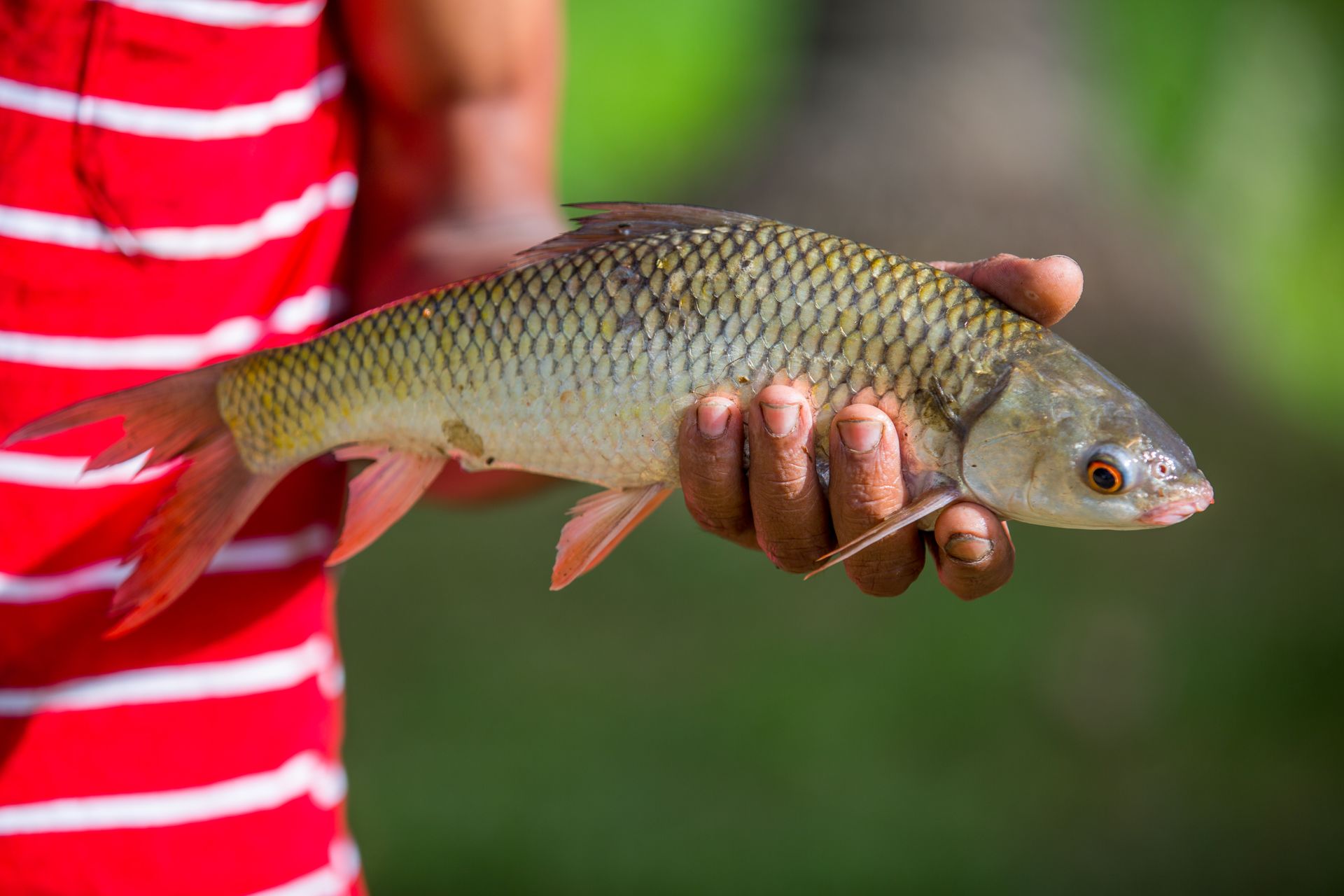
The ESU Altdu4, also known as the Rancho Molino location, is a specific designation for the fish in this area. When sharing or collecting these fish, it's essential to include the ESU ID to ensure accurate identification and conservation.
Here are the four ESUs for Allotoca dugesii, listed with their corresponding geographic locations and water bodies:
Each ESU has its unique characteristics, and understanding these differences is crucial for conservation efforts. By designating the ESU ID, we can better manage and protect the genetic diversity of Allotoca dugesii.
Operational Conservation Units and Future Distribution Predictions
The researchers identified two operational conservation units (OCUs) for the species complex, which are the Pátzcuaro and Zirahuén basins. These areas are crucial for the conservation of the species.
The predictions for the future distribution of Allotoca diazi and A. meeki suggest that the ecological niches available for the two species will be located at higher altitudes than they are currently distributed. This is expected to happen between the years 2041 to 2060.
The area of ecological niches predicted for A. diazi will increase in the second period of the future (2061–2080), but the probability of occurrence in the Pátzcuaro Lake is low. In contrast, the ecological niches predicted for A. meeki could decrease drastically.
The two proposed OCU's are areas with a high degree of alteration, including eutrophication and introduction of exotic species. This has led to the extirpation of A. diazi from the main Pátzcuaro basin and A. meeki from Zirahuén Lake.
The results of the future ecological niche modeling show a reduction of potential habitats, which questions the survival of the species. This is particularly concerning given the species' genetic vulnerability to climate fluctuations and human activity.
Methods and Data
The Allotoca, a genus of fish in the family Goodeidae, has been extensively studied in the wild and in captivity.
Researchers have used a variety of methods to study Allotoca, including field observations and laboratory experiments.
The Allotoca is found in the wild in Mexico and Central America, where it inhabits freshwater habitats such as rivers and lakes.
Allotoca are small fish, typically growing to a length of 2-5 cm.
In laboratory settings, Allotoca have been bred in captivity to study their behavior and life cycle.
The Allotoca is a relatively small fish, with a maximum recorded length of 5 cm.
Breeding and Isolation
Breeding Allotoca dugesii can be a rewarding experience, as I was able to collect and raise a diverse group in a 15-gallon long tank. The tank's temperature ranged from 65F to 73F, and filtration was provided by a Swiss Tropicals matten filter.
The fish thrived on a diet of Repashy Spawn and Grow gel food, which was fed every other day to promote robust vigor. After the fish grew to about two inches, I noticed gravid females, but no fry, suggesting that the adults may have been picking off the tiny babies.
To successfully breed Allotoca, it's essential to move gravid females to a specialized brood tank, where they can deliver their fry safely. In my experience, the fry were initially slow swimmers and needed to be fed live baby brine shrimp for the first couple of weeks.
Research suggests that Allotoca diazi and A. meeki were once connected through Pátzcuaro and Zirahuén lakes, but were isolated due to geological and climatic events. This isolation occurred around 400-7000 years ago, resulting in low genetic diversity in A. meeki.
Fish DNA Isolation
Fish DNA isolation is a crucial step in understanding the genetic diversity of a species. One hundred and twenty specimens were collected from six populations throughout the distribution range of the species complex.
To isolate DNA, a 2 mm tissue sample was used from the pectoral or caudal fin clips of the fish. This sample was then digested with ATL QIAGEN Buffer and Proteinase K.
The DNA extraction process was performed using the BioSprint DNA Blood Kit QIAGEN according to the manufacturer’s instructions. This method allowed for the purification of the DNA sample.
Approximately 2 mm of tissue was used for DNA extraction, which is a relatively small sample size. This suggests that even a small amount of tissue can be sufficient for genetic analysis.
The DNA samples were then frozen at -20°C for preservation. This is a common method for storing biological samples for later analysis.
The researchers were able to collect and analyze DNA samples from 120 fish specimens. This is a significant number of samples, and it provides a good representation of the species complex.
Breeding
Breeding is a crucial aspect of working with livebearers, and it requires careful planning and attention to detail.
To get started, you'll need to collect a diverse group of specimens, like I did with Allotoca dugesii, which I collected in November 2014 in "Rancho Molino, MX".
A good starting point is to provide a suitable environment, such as a 15-gallon long tank without a heater, with temperatures ranging from 65F to 73F.
Filtration is also essential, and I used a Swiss Tropicals matten filter for this purpose.
Adding a thick mat of Java Moss can help create a safe haven for your fish, but it's also important to provide a balanced diet to bring them into condition.
Feeding Repashy Spawn and Grow gel food every other day can give your fish robust vigor, but be sure to reduce feeding frequency once they reach a certain size.
Gravid females can be a sign that breeding is imminent, but it's not uncommon for adults to pick off the tiny babies, even with heavy plant cover.
To increase the chances of successful breeding, it's a good idea to move gravid females to a specialized brood tank, like I did with one of my Allotoca dugesii females.
This can help reduce stress and provide a safe environment for the fry to develop.
The fry themselves are initially small, around 3/8" long, and may take some time to develop their swimming abilities.
Providing live baby brine shrimp as food can be an excellent way to support their growth, and they're able to take them immediately.
However, it's worth noting that the fry are slow growers and may need to be kept on baby brine for the first couple of weeks.
Featured Images: pexels.com